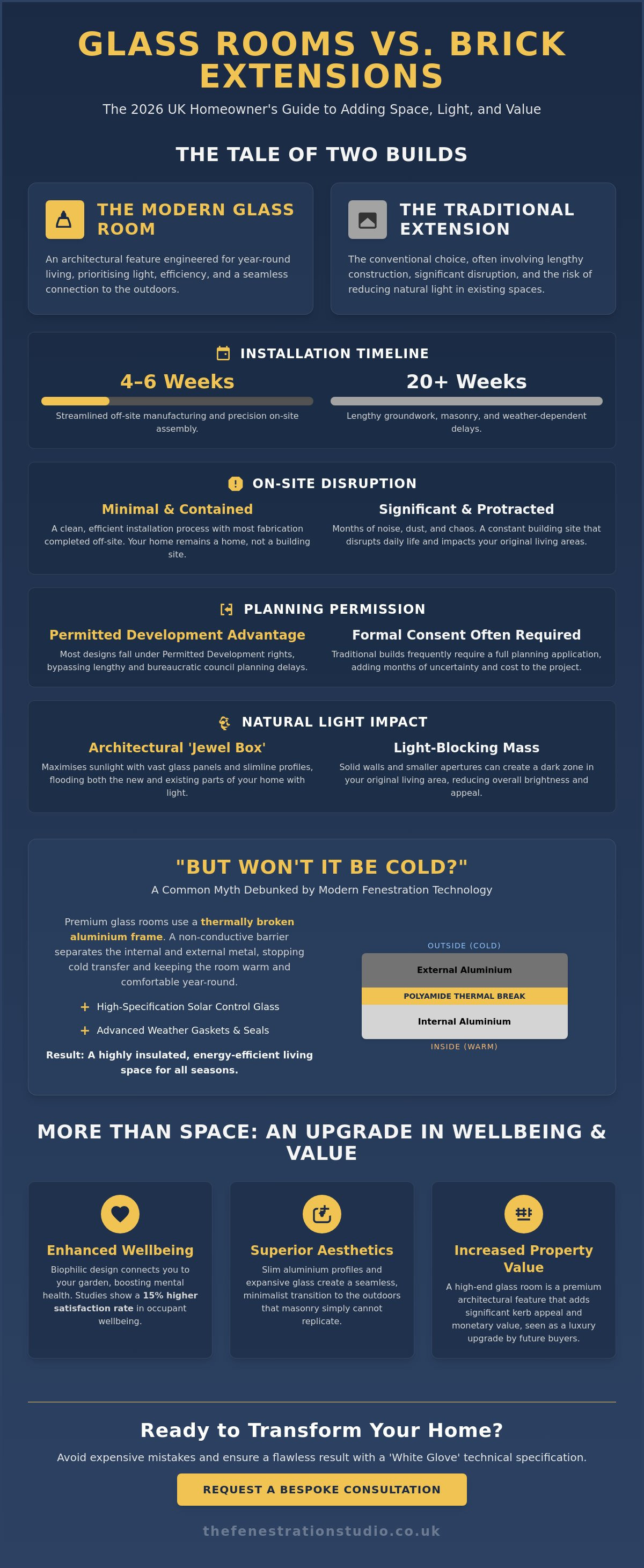
The traditional brick extension, once the gold standard for adding value to a UK home, is becoming an outdated liability for the modern homeowner. Whilst many still default to masonry, the question being asked by savvy property owners is: why is a glass room better than an extension? The reality is that a standard build often involves over 20 weeks of disruption, unpredictable weather delays, and a significant loss of natural light in your original living areas.
You likely want more space but dread the thought of a building site on your doorstep for months. We understand that the fear of a cold, draughty structure or a planning permission nightmare often halts these projects before they begin. This 2026 guide will demonstrate how advanced architectural glass technology provides a high-performance, thermally efficient living space that can be installed in a fraction of the time. We'll examine the technical specifications, the streamlined Permitted Development rules, and why these bespoke frameworks are now the preferred choice for premium UK residences.
Key Takeaways
- Compare the traditional six-month "building site" experience with the streamlined 4-6 week installation of a glass room, often achieved through Permitted Development rights.
- Explore the advanced science of thermal breaks in modern aluminium fenestration to understand why is a glass room better than an extension for maintaining a consistent climate in every season.
- Visualise the architectural transformation of your ground floor into a high-value "jewel box" feature that prioritises natural light and sophisticated kerb appeal over simple brick additions.
- Identify why a bespoke "White Glove" technical specification is vital to avoid the common industry pitfalls and expensive mistakes associated with standard retail glass structures.
Understanding the Shift: Glass Rooms vs Traditional Brick Extensions
The UK housing market is witnessing a decisive move away from the heavy, dark footprint of traditional brick-and-mortar extensions. Homeowners in 2026 are increasingly prioritising structural transparency and architectural minimalism over solid masonry. A modern glass room isn't just a seasonal retreat; it's a bespoke aluminium and glass structure engineered for year-round utility. To grasp the technical nuances, it helps to understand What is a Glass Room? in the context of modern fenestration. Unlike the masonry-heavy builds of the past, these structures use advanced structural glazing to create a space that feels like part of the garden whilst remaining entirely weather-protected.
The "expensive mistake" many homeowners make is conflating a high-end glass room with a budget uPVC conservatory. This confusion often leads to disappointment when the structure fails to regulate temperature. A premium glass room uses thermally broken aluminium and high-specification solar control glass, ensuring the space is habitable in December as well as July. When people ask why is a glass room better than an extension?, the answer often involves the speed of the build. A traditional extension can take 12 to 16 weeks of messy groundwork and bricklaying; a glass room is often installed in a fraction of that time with minimal disruption to your daily life.
The Aesthetic Evolution of Glass Rooms
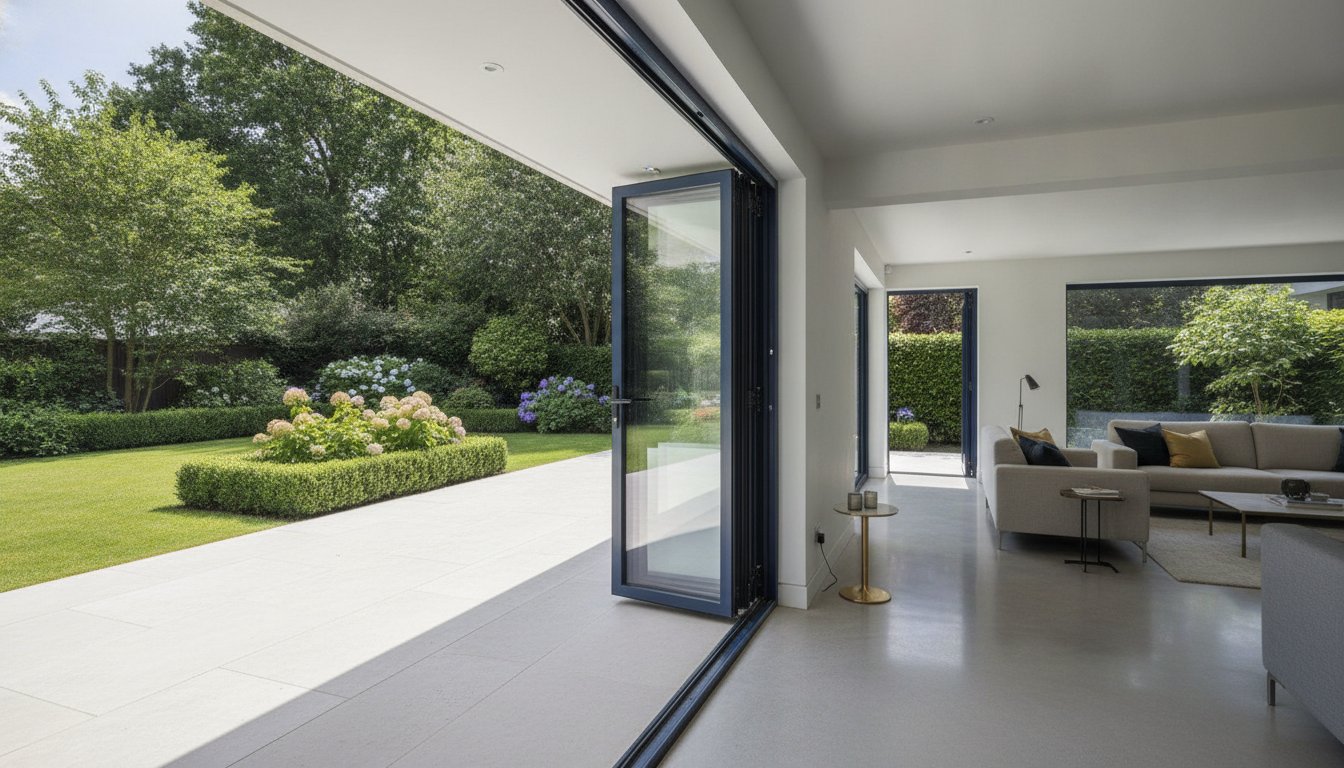
Moving away from clunky uPVC "add-ons" to integrated aluminium designs has redefined the British home. Modern engineering allows for incredibly slimline profiles that create a seamless transition brick walls simply cannot replicate. The character of these rooms is often anchored by aluminium sliding doors, which offer vast expanses of glass without the need for thick, sightline-blocking pillars. This shift towards minimalism ensures the new space feels like a natural evolution of the existing architecture rather than a clunky afterthought.
Lifestyle Benefits: More Than Just Square Footage
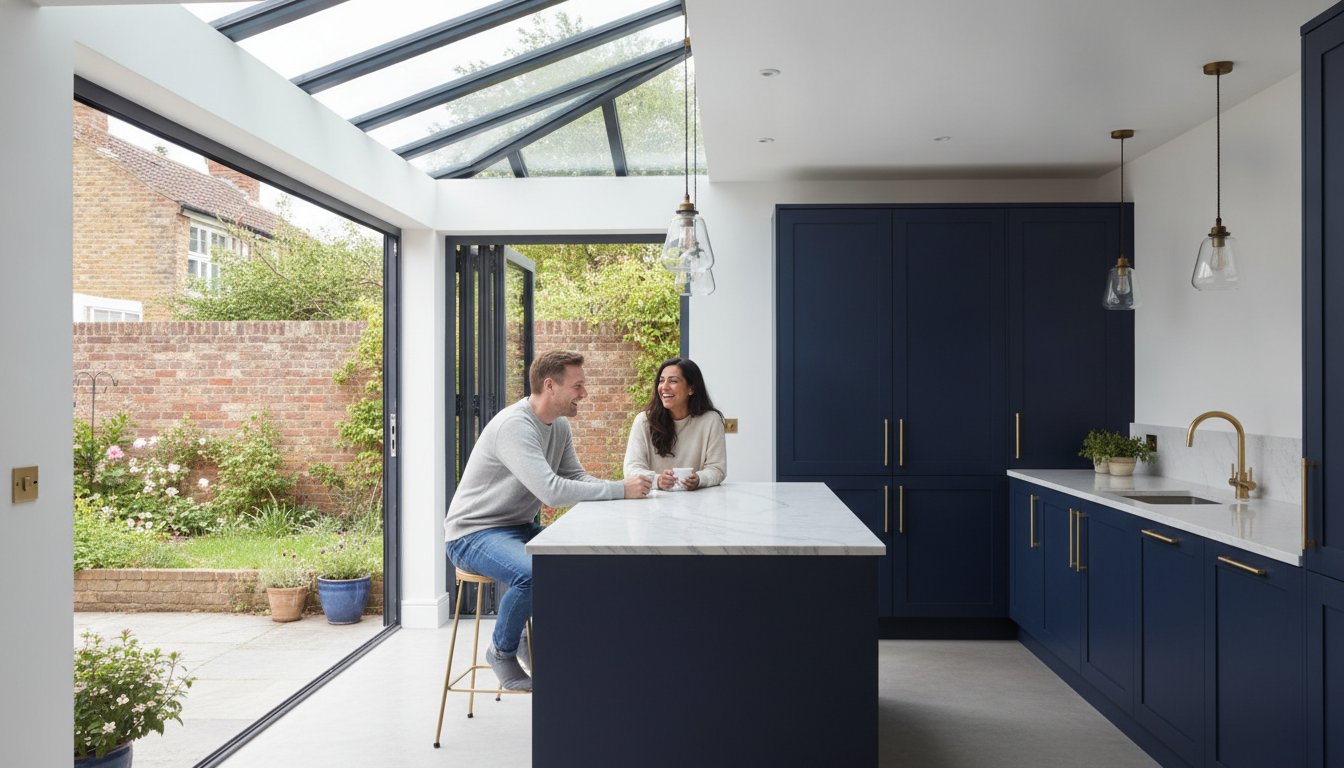
Choosing a glass room is a commitment to biophilic design, which emphasises the human connection to the natural environment. Industry data from 2025 suggests that homes featuring high-transparency living areas see a 15% higher satisfaction rate in occupant wellbeing. Beyond the simple addition of square footage, these rooms provide a psychological boost through consistent exposure to natural light. Whether it's a sun-drenched breakfast room or a contemporary evening lounge, the versatility is unmatched. A glass room provides a superior "frame" for the British landscape, allowing you to enjoy your garden views without the constraints of solid walls or small window apertures. It's about the quality of the light, not just the quantity of the metres squared. This is a primary reason why is a glass room better than an extension? for those seeking a premium lifestyle upgrade.
Speed of Installation and the Planning Permission Advantage
Traditional brick extensions often transform your home into a chaotic building site for six months or more. In contrast, a glass room offers a streamlined alternative that typically completes within four to six weeks. This efficiency is a primary reason why is a glass room better than an extension? for homeowners seeking a premium addition without the long-term disruption. By shifting the bulk of the construction process off-site, you avoid the relentless noise, dust, and hidden costs that plague traditional masonry projects. A glass room is an exercise in architectural precision rather than a messy construction endurance test.
Navigating Permitted Development in 2026
Most glass rooms fall under Permitted Development rights. This provides a significant Planning Permission Advantage, allowing projects to bypass the bureaucratic delays of local planning departments. To remain compliant, structures must usually stay within specific height limits, typically four metres for detached houses, and respect boundary offsets. However, properties in conservation areas or listed buildings still require formal consent. A professional technical survey is non-negotiable here; it ensures every structural specification meets legal requirements before a single component is manufactured. This proactive approach prevents the expensive mistakes that occur when homeowners rely on guesswork rather than technical expertise.
The "White Glove" Installation Timeline
The Fenestration Studio employs a disciplined three-phase framework to ensure a precision-engineered handover. This systematic process protects the integrity of your home while delivering a rapid transformation.
- Phase 1: Technical Specification. We conduct an exhaustive site survey to capture millimetre-perfect measurements. This stage is the most critical; it prevents site delays and ensures the framework integrates seamlessly with your existing masonry.
- Phase 2: Off-site Manufacturing. Every component, including high-performance aluminium bifolding doors and structural frames, is fabricated in a controlled factory environment. This guarantees a level of finish that is impossible to achieve on a standard building site.
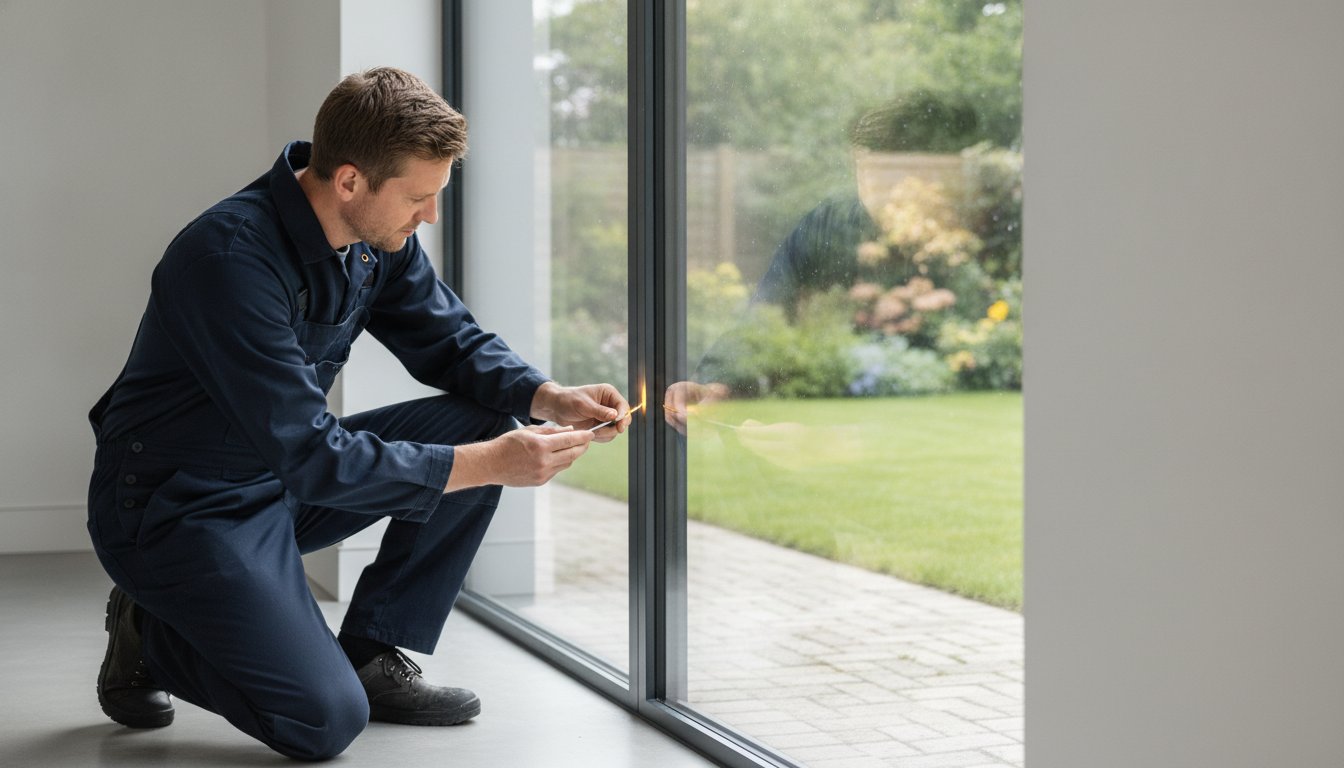
- Phase 3: Expert Assembly. Our team arrives for a clean, methodical installation. Because the components are pre-engineered, on-site work is quiet and swift. The assembly phase often concludes in less than seven working days.
This methodical approach eliminates the uncertainty of weather-dependent bricklaying. You receive a fixed timeline and a predictable outcome. If you are ready to explore how this timeline fits your specific property, you can book a design consultation with our technical team to review your site requirements.
Overcoming the Thermal Myth: Year-Round Usability in 2026
The most frequent objection homeowners raise concerns temperature control. Many fear a glass structure will become a greenhouse in July or an ice box in January. This is an outdated perspective that ignores the rapid evolution of architectural glazing. When evaluating why is a glass room better than an extension?, the answer lies in modern thermal regulation. Overcoming the Thermal Myth involves understanding how advanced fenestration systems now rival traditional masonry for comfort.
The secret is the "thermal break" within the aluminium framework. This polyamide bridge separates the internal and external profiles; it stops the cold bridge that plagued older conservatories. In 2026, U-values serve as the definitive benchmark. While a standard brick wall targets 0.28 W/m²K, premium glass units now achieve figures as low as 0.8 W/m²K. The glass room bridges this gap by harnessing passive solar gain, which can reduce heating requirements by up to 15% during autumn and spring. It's a precise engineering solution for a comfortable living environment.
High-Performance Glazing Technology
Modern glass units are far more than simple panes. They feature Low-E coatings that reflect internal heat back into the living space. Argon gas fills the cavities between panes, providing a 33% improvement in insulation over air-filled units. The addition of aluminium roof lanterns provides both structural elegance and vital ventilation. Opting for the cheapest glass is an expensive mistake. Budget glazing can result in energy losses 50% higher than high-specification alternatives, making the room unusable for several months of the year.
Structural Integrity and Weather Resistance
Aluminium is the preferred material for 2026 because it doesn't suffer from the expansion and contraction issues seen in timber or uPVC. Wood can swell by 10% in humid conditions, which leads to draughts and structural stress. Aluminium remains entirely stable. With British weather delivering between 800mm and 1,400mm of annual rainfall, integrated drainage systems are essential to prevent water ingress. This stability ensures the thermal envelope remains airtight. For many, understanding these technical safeguards is the key to deciding why is a glass room better than an extension? for their specific property.
Architectural Impact: Maximising Property Value and Light
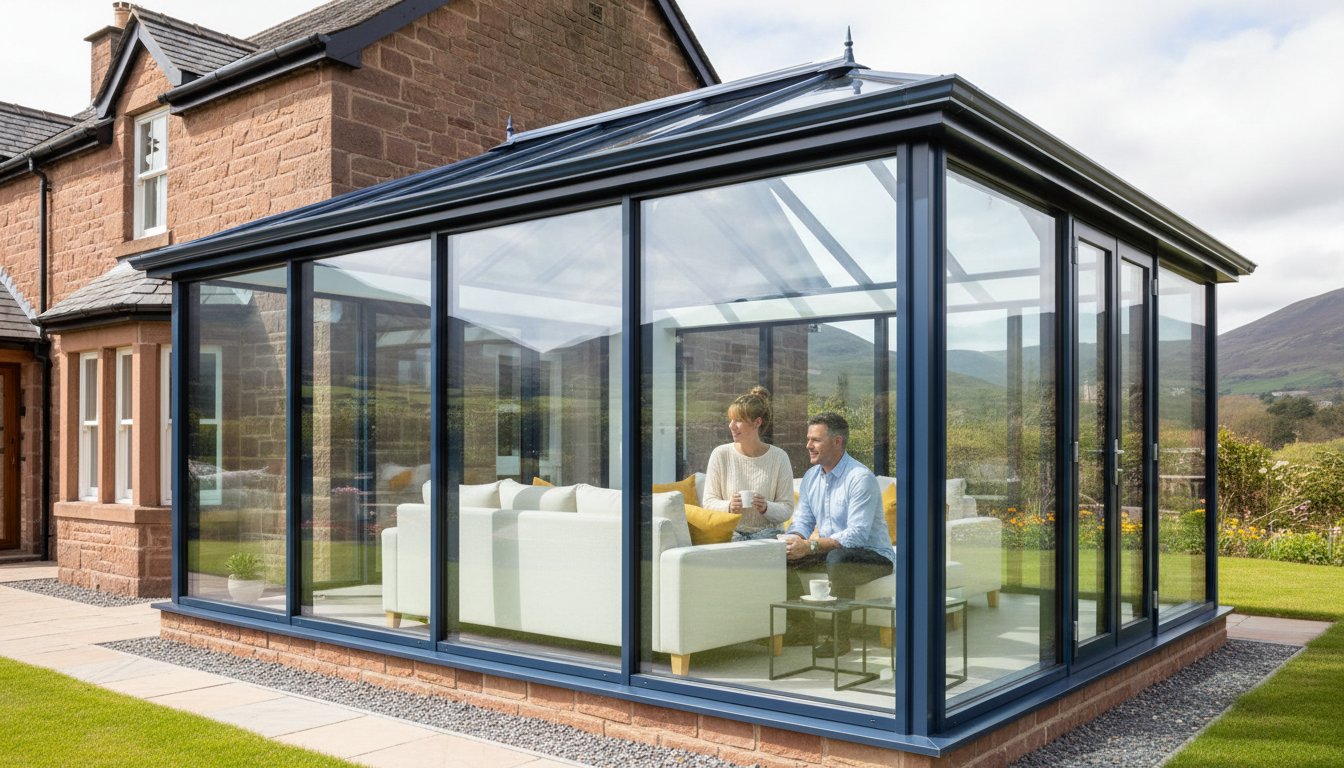
A bespoke glass room acts as a structural jewel box. It creates a focal point that dramatically boosts kerb appeal. Traditional brick extensions often aim to blend in, sometimes resulting in a "bolted-on" appearance that lacks character. In contrast, a glass room provides a deliberate architectural contrast. It shifts the focus from simply adding a room to completely transforming the ground floor. This distinction is vital for homeowners seeking to elevate their property's status rather than just its square footage.
Modern buyers in 2026 prioritise open-plan living and psychological well-being. They move away from the cellular, dark rooms of the past. Why is a glass room better than an extension? It creates a seamless transition between the interior and the garden. This transparency is particularly effective for heritage properties, where a glass structure allows the original period features to remain visible through the framework. For contemporary homes, it reinforces a sleek, minimalist aesthetic that brickwork cannot replicate.
Designing for Natural Light
The primary architectural challenge of a standard extension is the "dark middle" effect. By extending a solid roof and walls, you often starve the original core of the house of light. Integrating aluminium windows with ultra-slim profiles ensures panoramic views and maximum solar gain. Strategic placement of rooflights within the glass structure ensures that light penetrates deep into the existing floor plan. Our designers balance this transparency with privacy by using clever architectural placement, ensuring you aren't overlooked by neighbours while still enjoying a 180-degree vista.
Property Value and Marketability
Investment in a glass room offers a distinct ROI advantage in the current market. Estate agents report that bespoke architectural solutions attract a 10% to 15% premium over modular, "kit-built" alternatives. A bespoke design respects the existing specification of your home. It ensures the new structure complements Victorian brickwork or Georgian symmetry rather than clashing with it. This professional rigor prevents the "expensive mistake" of a poorly integrated addition that could actually devalue a premium property. Why is a glass room better than an extension? It offers a high-end, lifestyle-led space that resonates with the 2026 buyer's desire for light-filled, flexible environments.
Ready to see how a glass room could transform your property's profile? Book a professional design consultation to explore your bespoke options.
Executing Your Vision: The White Glove Technical Specification
Investing in architectural glazing is about more than just adding square footage; it's about precision engineering. High-end aluminium projects require a level of technical rigour that standard brick-and-mortar builds often overlook. This is where the White Glove Service becomes essential. It moves the project away from the chaotic environment of a standard building site and into the realm of controlled, professional installation. When homeowners ask, why is a glass room better than an extension?, the answer often lies in the seamless, high-performance finish that only a specialist technical team can achieve.
The danger of "supply-only" retail sales cannot be overstated for complex glass room structures. Whilst a lower price point is tempting, it shifts the entire structural risk onto you. If a measurement is out by even 5mm, or if the structural glass weight isn't correctly calculated for the frame, the project can stall, leading to expensive on-site corrections. Professional surveying eliminates these risks by using laser-guided precision to ensure every component fits perfectly the first time. This methodical approach protects your architectural investment and ensures the long-term integrity of the building.
The Importance of Technical Specification
A permanent glass room is a sophisticated piece of engineering. It requires a careful alignment of frame depth, glass weight, and structural loads to ensure it remains energy-efficient and safe. A "one size fits all" approach is a major warning sign in the fenestration industry. Every site has unique wind load requirements and drainage considerations that must be addressed during the design phase. To ensure your project meets these exacting standards, you should book a technical specification consultation early in your planning process. This ensures that the framework is bespoke to your home's specific orientation and usage needs.
- Structural Integrity: Calculating exact load-bearing requirements for large-span glass roofs.
- Thermal Performance: Matching glazing specifications to your home's existing U-values.
- Precision Surveying: Eliminating the 15% failure rate associated with amateur measurements.
Choosing a Partner, Not a Salesman
The Fenestration Studio approach is built on honest, transparent advice rather than high-pressure tactics. We act as an expert mentor, guiding you through the complexities of building regulations and structural glass limitations. This is why a glass room is better than an extension for those seeking a modern, light-filled lifestyle without the traditional construction headaches. By combining local installation expertise with national standards, we provide a safe, reliable route to a premium home improvement. It's time to move past the "double-glazing" stereotypes and embrace an architectural consultancy feel. You can request a bespoke quote today to begin tailoring your 2026 project with a partner who values precision as much as you do.
Securing Your Architectural Investment for 2026
Choosing between a glass room and a traditional extension is a choice between outdated construction methods and modern architectural precision. By 2026, the shift towards transparent living is driven by a 15% average increase in natural light penetration compared to standard brick-and-mortar builds. You'll avoid the common 12-week disruption of a standard extension; our glass rooms typically reach completion in under 21 days. When asking why is a glass room better than an extension?, the answer lies in the combination of rapid installation and the elimination of complex planning hurdles that often stall traditional projects for months.
Our approach ensures your investment is protected by a framework of integrity. As an independently run family business, we provide a White Glove Service that manages everything from the initial survey to the final handover. You benefit from national standards delivered with local installation expertise. Don't risk expensive structural mistakes with unvetted contractors. Instead, rely on our expert mentors to deliver a bespoke, thermally efficient space that adds tangible value to your property.
Book your expert design consultation today to begin your home transformation with absolute confidence.
Frequently Asked Questions
Do I need planning permission for a glass room in 2026?
Most glass rooms fall under Permitted Development rights in the United Kingdom, meaning you won't need full planning permission. This applies as long as the structure doesn't exceed 50% of the land around the original house and stays within specific height limits. Choosing this route avoids the 8-to-12-week delays often associated with traditional brick extensions.
Is a glass room as warm as a brick extension during winter?
Modern glass rooms use argon-filled, double-glazed units and thermally broken aluminium frames to achieve impressive thermal efficiency. While a brick wall has higher thermal mass, a glass room with a U-value of 1.2 W/m²K or lower maintains comfortable temperatures throughout December and January. It's a sophisticated solution that eliminates the "ice box" effect seen in older 1990s conservatories.
How much more expensive is a glass room compared to a traditional extension?
A bespoke glass room typically requires a higher initial investment in high-specification materials and precision engineering compared to standard masonry. However, the total project cost often balances out because a glass structure requires less intensive groundworks and fewer weeks of on-site labour. You're investing in architectural quality and a stress-free installation rather than raw material volume.
Can I use bifold doors or sliding doors in my glass room design?
You can integrate ultra-slim bifold or sliding doors into your bespoke aluminium framework to suit your lifestyle. Sliding doors offer wider glass panes for an uninterrupted view, whilst bifold doors allow you to open 90% of the wall aperture. This flexibility is one reason why is a glass room better than an extension for homeowners prioritising a seamless transition to the garden.
How long does it take to install a bespoke aluminium glass room?
The on-site installation of a premium aluminium glass room typically takes between 7 and 14 working days. Because the components are precision-engineered in a controlled factory setting, the structural assembly is much faster than a brick-and-mortar project. This significantly reduces the 3-to-6-month disruption homeowners usually face with traditional building works.
What is the life expectancy of a premium aluminium glass structure?
A premium aluminium glass room has a life expectancy exceeding 40 years. Marine-grade powder coatings protect the framework against corrosion, while high-performance gaskets ensure the structure remains watertight for decades. This durability ensures your investment remains a structural asset to the property without the heavy maintenance required by timber or PVC-U alternatives.
Will a glass room increase the value of my property as much as an extension?
Industry data suggests a high-quality glass room can add between 5% and 10% to a home's market value. Modern buyers often prefer the architectural "wow factor" and natural light of a glass structure over a dark, conventional extension. It creates a unique selling point that distinguishes your property in a competitive 2026 housing market.
What is the difference between a glass room, a conservatory, and an orangery?
A glass room is a contemporary, minimalist structure featuring slimline aluminium and maximum glazing for a "floating roof" effect. In contrast, a conservatory typically uses thicker PVC-U framing, while an orangery incorporates brick pillars and a lantern roof. This modern specification is a key factor when considering why is a glass room better than an extension for 21st-century aesthetics.