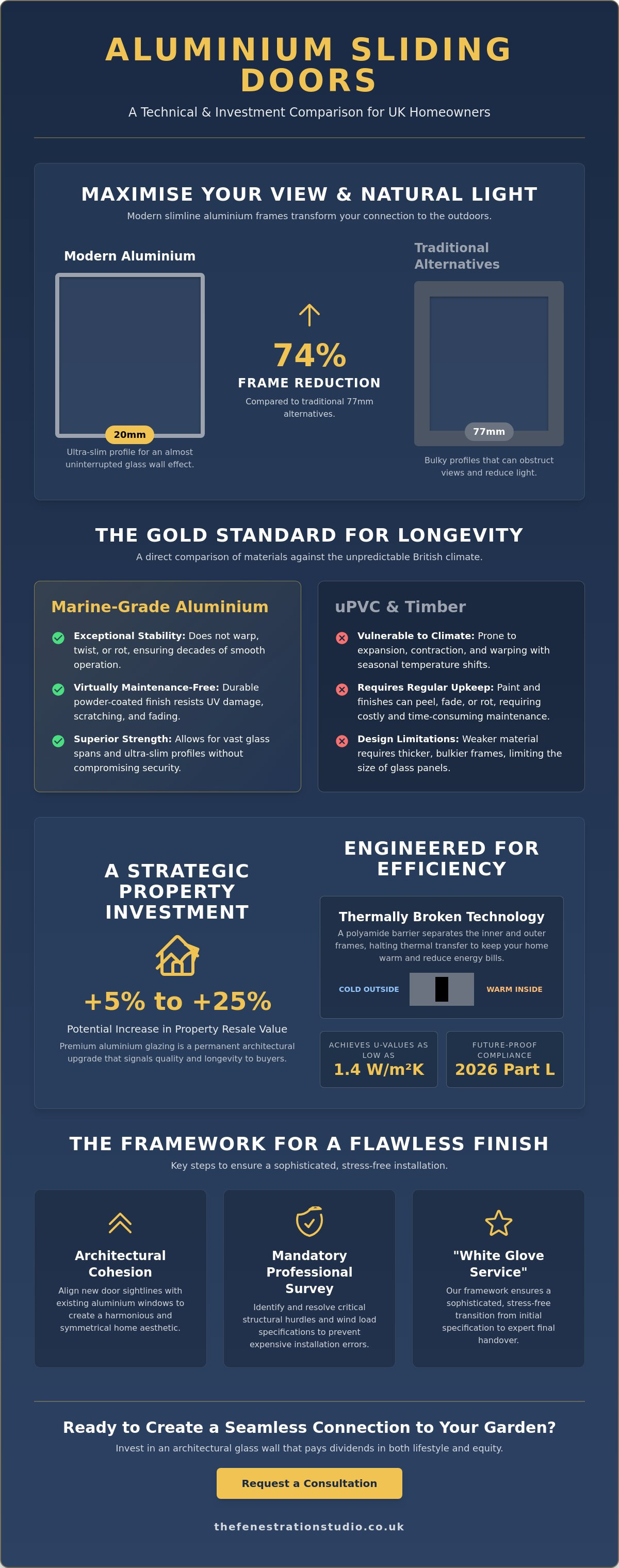
Did you know that modern slimline aluminium systems can now feature frames as narrow as 20mm, representing a 74% reduction compared to traditional 77mm alternatives? Most homeowners recognise that a fluid connection to the outdoors is the hallmark of a premium property, yet they often hesitate due to fears of bulky profiles or the unpredictable British climate. Choosing the right **aluminium sliding doors for your garden in the UK** requires more than just an eye for design; it demands a technical understanding of how specific fenestration choices impact your home's thermal envelope and long-term market value.
You likely want to eliminate the boundary between your living room and the garden without worrying about structural issues or rising energy bills. This guide demonstrates how bespoke architectural glazing serves as a strategic investment that pays dividends in both lifestyle and equity. We'll explore how to navigate the 2026 Building Regulations, including Part L thermal standards, to ensure your installation achieves U-values as low as 1.4 W/m²K. You'll learn the precise specifications needed to create a maintenance-free glass wall that provides a secure, high-performance connection to your garden.
Key Takeaways
- Understand why bespoke aluminium sliding doors to garden UK projects are considered permanent architectural glass walls that significantly boost property resale value.
- Learn why marine-grade powder-coated aluminium is the gold standard for enduring the British climate whilst remaining virtually maintenance-free.
- Discover how to align your new door sightlines with existing aluminium windows to create a symmetrical, architecturally cohesive aesthetic.
- Identify the critical structural hurdles and wind load specifications that only a professional architectural survey can resolve to prevent expensive installation mistakes.
- Explore the "White Glove Service" framework that ensures a sophisticated, stress-free transition from initial specification to expert final handover.
The ROI of Light: How Aluminium Sliding Doors Enhance Property Value
A modern sliding glass door is no longer viewed as a mere utility for garden access; it has evolved into a permanent architectural glass wall. In the current UK property market, buyers increasingly prioritise "inside-out" living, where the boundary between the interior and the landscape is virtually erased. Whilst general garden improvements can increase a property's value by 5% to 25%, the specific installation of aluminium sliding doors to garden UK projects acts as a significant value multiplier. Unlike standard uPVC alternatives that can appear bulky and dated, bespoke aluminium systems are perceived as a high-specification structural upgrade that signals quality and longevity to surveyors and prospective buyers alike.
The financial return on investment for premium glazing is driven by the shift toward high-performance fenestration. By choosing aluminium sliding doors over cheaper materials, you're investing in a system that won't warp, fade, or require replacement within a decade. This durability, combined with superior thermal efficiency that meets 2026 Building Regulations, ensures the upgrade is viewed as a long-term asset rather than a temporary fix.
Maximising Resale Desirability Through Design
Slimline profiles are the secret to the "wow factor" that estate agents often highlight during high-end viewings. When frames are reduced to as little as 20mm, the eye is drawn past the structure and directly to the garden, making even modest interior spaces feel significantly larger. This influx of natural light doesn't just improve aesthetics; it changes the categorisation of the room. Agents frequently describe these light-drenched areas as "bonus square footage" because the visual transparency extends the perceived floor plan into the outdoor space. To ensure a consistent architectural language, many homeowners choose to align these door sightlines with their aluminium windows, creating a symmetrical finish that reinforces the home's premium status.
The Lifestyle Dividend: Beyond Financial Gain
While the equity growth is compelling, the immediate benefit lies in the creation of a multifunctional transition zone. Modern aluminium systems allow for an effortless connection that facilitates alfresco dining and entertaining, effectively extending the usable season of your home. The psychological benefits are equally profound. Having an unobstructed view of your garden whilst remaining thermally protected by high-performance glazing creates a sense of calm and openness. This connection to nature, maintained even during the harshest British winter, provides a daily lifestyle dividend that standard doors simply cannot replicate. It's a strategic architectural choice that balances technical precision with emotional appeal.
Aluminium vs. Alternatives: The Gold Standard for Longevity
Aluminium stands as the definitive material for high-end fenestration in the British Isles. Whilst timber and uPVC remain common, they often struggle with the thermal expansion and contraction caused by our unpredictable seasonal shifts. Aluminium is inherently stable; it doesn't warp, twist, or rot, even when subjected to the salt-heavy air of coastal regions. This material integrity is why aluminium sliding doors to garden UK architects specify are frequently the centrepiece of modern extensions. The structural strength of the metal allows for vast glass spans that would be impossible with other materials, supporting frames as narrow as 20mm whilst maintaining absolute security.
The longevity of these systems is further enhanced by marine-grade powder-coated finishes. Unlike paint, which can flake or peel, this finish is baked onto the metal, creating a maintenance-free surface that resists UV degradation and scratching. It's a "fit and forget" solution that ensures your home's exterior remains pristine for decades, protecting your architectural investment from the elements.
The Technical Superiority of Bespoke Frameworks
Modern aluminium systems aren't just strong; they're incredibly efficient. High-performance frameworks utilise "thermally broken" technology, where a polyamide bridge separates the inner and outer sections of the frame. This barrier is essential for meeting modern Energy Performance Ratings and preventing the internal condensation often found in legacy metal windows. Beyond thermal performance, aluminium is 100% recyclable. This makes it a sustainable choice for homeowners looking to reduce their carbon footprint without compromising on design or durability.
Avoiding the "Cheap Quote" Trap
Selecting a low-grade sliding system is often an expensive mistake that devalues a property over time. Budget-focused doors frequently use inferior nylon rollers or thin-gauge tracks that begin to bind after just a few years of use. A premium system, conversely, employs stainless steel tracks and precision-engineered hardware to ensure a "one-finger" gliding operation. When choosing your specification, consistency is key. You should ensure that your aluminium sliding doors to garden UK installation features RAL colour matching that aligns perfectly with your existing aluminium product range.
As 2026 Building Regulations continue to tighten, choosing high-specification aluminium future-proofs your home against evolving thermal standards. If you're ready to explore how these systems can transform your living space, you can book a design consultation with our technical team to discuss bespoke configurations tailored to your property.
Architectural Cohesion: Matching Your Garden Doors to Your Home
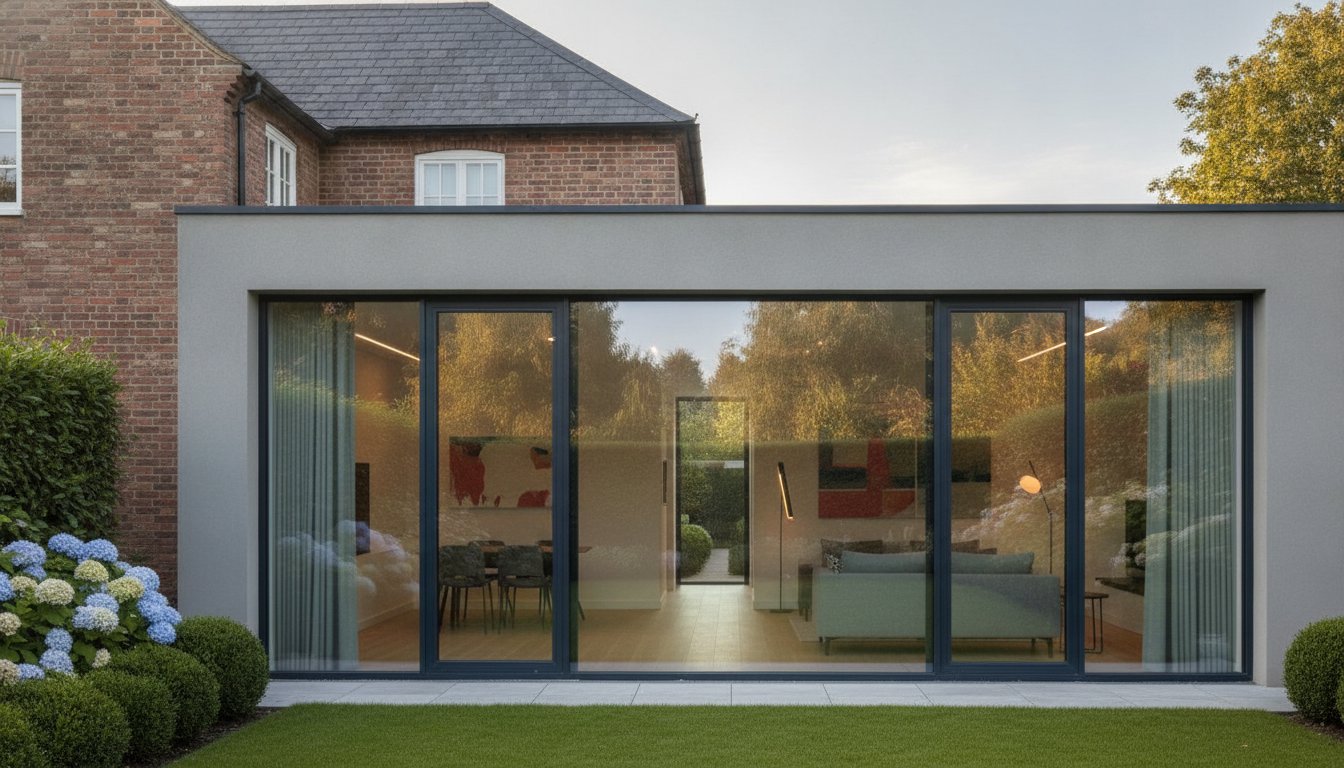
Designing a high-end property requires a holistic approach to fenestration. A common industry pitfall is treating a new extension as a standalone project rather than an evolution of the home's existing character. When specifying aluminium sliding doors to garden UK homeowners should prioritise a unified architectural language. This involves more than just selecting a door; it requires the deliberate coordination of frame profiles to ensure the new glazing acts as a seamless extension of your property's structural framework. When you align these sightlines with your aluminium windows, you create a symmetrical aesthetic that signals professional design and increases the perceived value of the building.
Consistency in colour is equally vital for achieving a premium finish. Subtle variations in RAL shades between different manufacturers can ruin the visual flow of a facade. To avoid this expensive mistake, ensure that your sliding systems, aluminium bifolding doors, and even your entrance doors utilise a consistent powder-coating specification. This methodical approach to colour matching ensures that every element of your home's exterior works in harmony, rather than competing for attention.
Integration with Verandas and Roof Lights
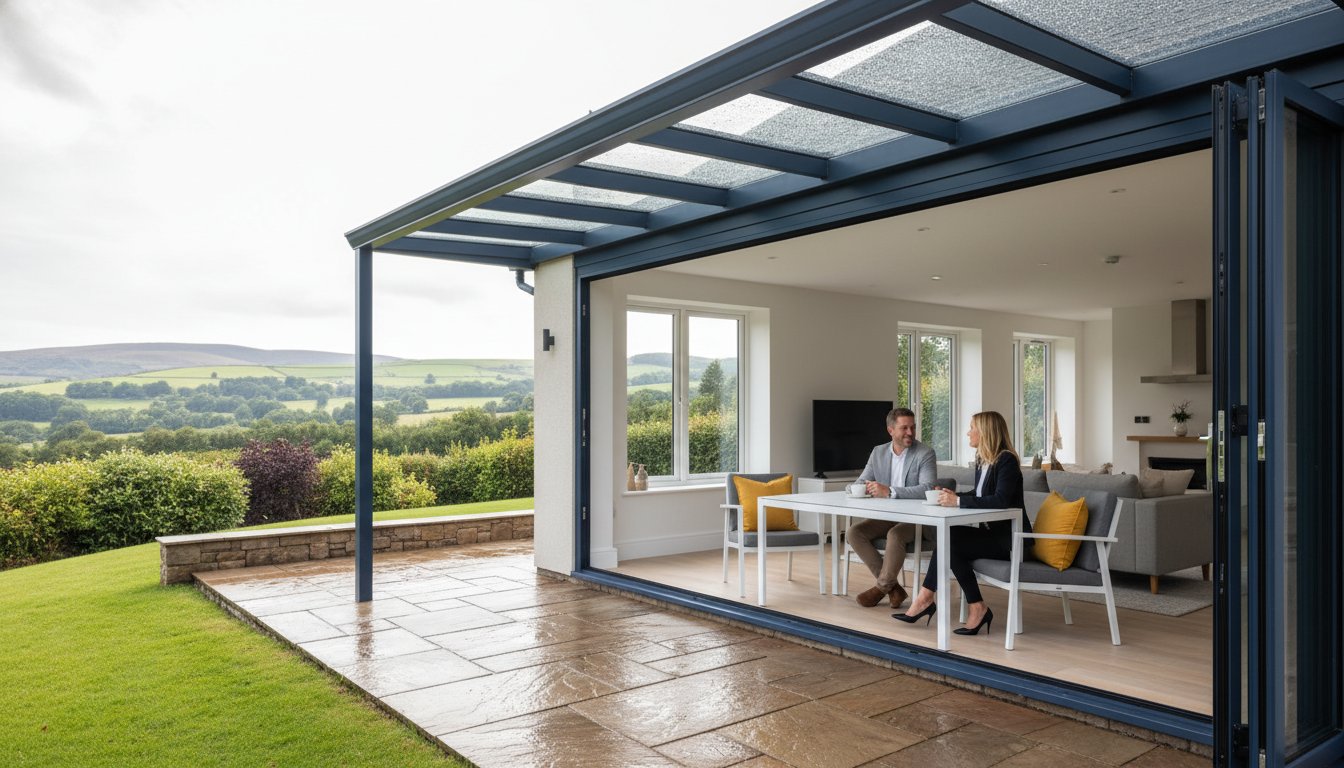
If your project includes an external veranda or canopy, the door height must be specified with precision to complement the overhead structure. Minimalist profiles in your sliding doors should mirror the clean lines of any aluminium roof lanterns installed above. This alignment creates a vertical consistency that draws the eye upward, enhancing the sense of volume within the room. Furthermore, professional surveying must ensure that the drainage systems for both the doors and the garden structures are integrated. This prevents water ingress and ensures the longevity of the threshold, particularly in exposed UK garden aspects.
Creating the Flush Threshold Experience
The hallmark of modern architectural flow is the level floor transition. Achieving a true flush threshold requires careful technical planning during the structural phase, as the track must be recessed into the floor slab. This configuration eliminates physical barriers, enhancing accessibility whilst creating a sophisticated "glass wall" effect. It transforms the garden into an outdoor room, effectively blurring the boundary between your interior living space and the landscape. Architectural cohesion is the deliberate alignment of frame depth, colour, and sightline. By adhering to these principles, your aluminium sliding doors to garden UK project will deliver a consistent, high-performance result that stands the test of time.
Navigating Technical Specs: Why Professional Surveying is Mandatory
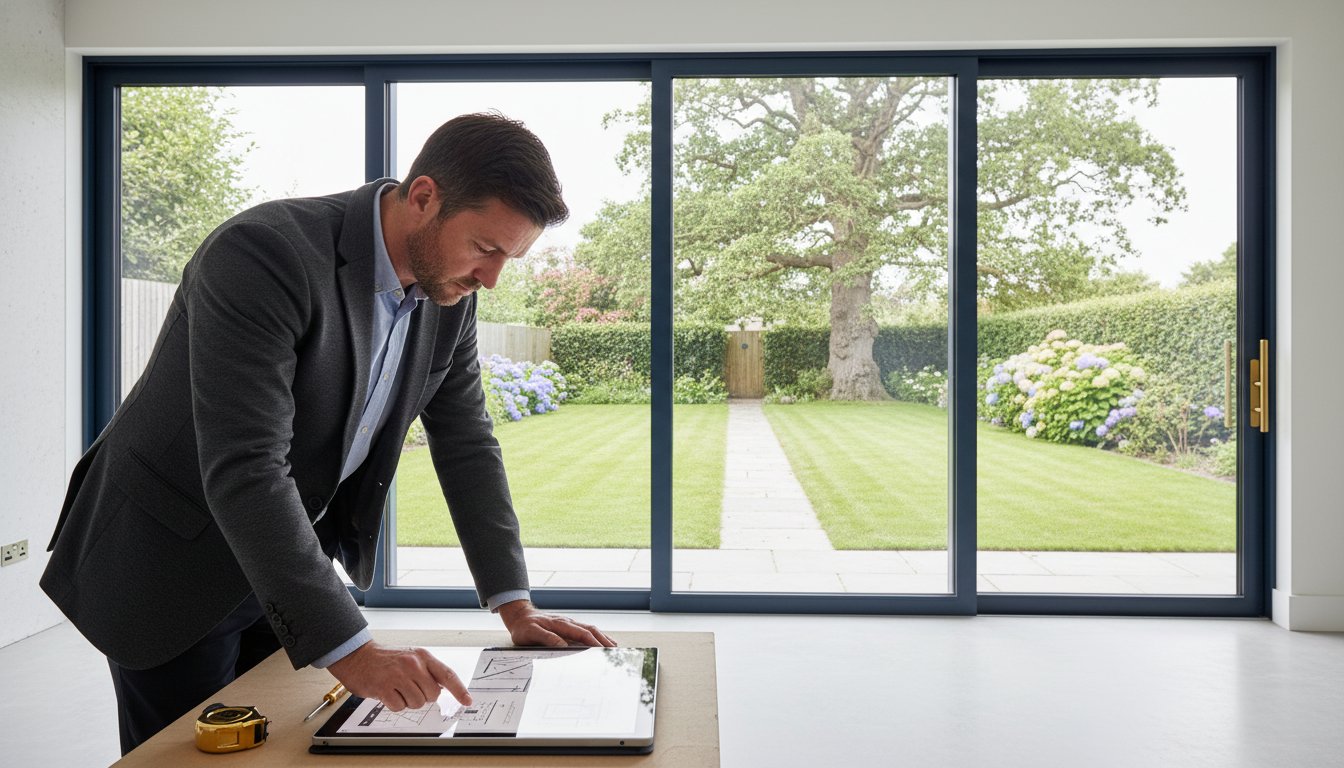
Relying on "supply-only" kits or DIY measurements is one of the most expensive mistakes a homeowner can make. In the architectural world, precision is the difference between a high-performance glass wall and a structural liability. A professional survey for aluminium sliding doors to garden UK projects serves as a diagnostic audit of your home’s structural integrity. It identifies hidden hurdles, such as sagging lintels or uneven floor slabs, before the manufacturing process begins. Bespoke engineering ensures your doors are fabricated to the exact millimetre of your specific opening; this is a level of accuracy that mass-produced, off-the-shelf kits simply cannot match.
Environmental factors also dictate the technical specification. For exposed garden aspects in the UK, understanding wind load is critical. A professional surveyor calculates the required glass thickness and frame reinforcement to ensure the system remains stable during high-velocity gusts. This technical rigour prevents the whistling or rattling often associated with inferior installations. By specifying high-performance glass, you protect the internal environment from the elements whilst maintaining the minimalist aesthetic of a slimline profile.
Precision Engineering and Thermal Performance
Optimal thermal performance is achieved through laser-accurate measurements that eliminate air leakage. As of May 2026, replacement doors must meet a U-value of 1.4 W/m²K to comply with Building Regulations Part L. Achieving this standard requires a perfect interface between the frame and the structural opening. Our technical team manages complex lintel requirements for large spans, ensuring the weight of the masonry is correctly supported. We also integrate advanced drainage solutions within the track system to manage the heavy rainfall typical of the British climate, ensuring your flush threshold remains weather-proofed year-round.
Security and Building Regulations
Security is a non-negotiable element of modern fenestration. Every aluminium sliding doors to garden UK installation we manage is specified to meet PAS24 and Building Regulations Part Q standards. This involves multi-point locking systems and toughened or laminated glass that acts as a robust deterrent against intruders. For those living in conservation areas, navigating planning permission requires a nuanced understanding of local heritage requirements. We provide the technical documentation and architectural drawings necessary to demonstrate that your new glazing respects the character of the area whilst delivering 21st-century performance.
Don't risk the integrity of your project with generic measurements. You can request a quote today to begin your journey toward a professionally surveyed, high-specification installation.
The White Glove Experience: Investing in The Fenestration Studio
The Fenestration Studio's "White Glove Service" represents the definitive benchmark for premium glazing projects in the United Kingdom. We recognise that high-end fenestration is a complex technical process rather than a simple retail transaction. As an independently run family business, we prioritise honest, technical advice over aggressive sales tactics, positioning ourselves as a knowledgeable partner in your home's evolution. We manage the entire journey, from the initial architectural specification to the expert final handover, ensuring a stress-free experience that mirrors the precision of our engineering. Investing in bespoke aluminium sliding doors to garden UK projects is a commitment to a legacy improvement that enhances both your property's equity and your daily quality of life.
Our methodical approach ensures that every structural hurdle identified during the survey is resolved with professional rigour. We don't believe in "one size fits all" solutions; instead, we provide a dedicated framework that accounts for the unique requirements of your property's orientation and usage. This steady rhythm of project management reinforces our promise of premium reliability, moving you away from the typical industry stereotypes toward a more sophisticated, architectural consultancy experience.
National Standards, Local Expert Installation
Local Expertise. National Standards. This signature tagline serves as the rhythmic anchor of our identity. Whilst we maintain a national reach to ensure consistent quality across all UK projects, our installation teams possess the practical, local experience necessary for successful site management. This consultative approach is specifically designed to prevent the common industry pitfalls that lead to expensive mistakes. By providing dedicated aftercare and comprehensive long-term product guarantees, we offer the reassurance that your architectural investment is protected. We remain entirely in control of the project lifecycle, providing a calm and methodical service that budget providers simply cannot replicate.
Start Your Architectural Transformation
Your home deserves a connection to the outdoors that is as secure as it is beautiful. You can book a design consultation to explore bespoke options with our technical advisors, ensuring your project meets the highest standards of modern fenestration. Start by viewing our extensive range of aluminium sliding doors for inspiration on how to frame your landscape with minimalist precision. Requesting a technical quote tailored to your specific garden project is the first step toward a legacy architectural improvement. Let us guide you through the specification process to ensure your aluminium sliding doors to garden UK installation provides a seamless, high-performance transition for years to come.
Future-Proof Your Home with Architectural Precision
Investing in premium fenestration is about more than aesthetics; it's about securing long-term property equity and superior thermal performance. We've explored how aluminium sliding doors to garden UK projects demand a technical approach that balances minimalist design with the rigorous 2026 Building Regulations. By choosing a system that achieves U-values as low as 1.4 W/m²K, you ensure your home remains an efficient, light-filled sanctuary for decades. This strategic architectural choice transforms your living space whilst providing a maintenance-free connection to the outdoors.
The Fenestration Studio provides the authoritative guidance required to navigate these complex specifications. As an independently run family business, we offer professional technical surveying to identify structural hurdles before they become expensive mistakes. Our White Glove Service ensures complete end-to-end project management, where national standards are delivered by expert local installation teams. This methodical journey from consultation to handover guarantees a result that is both architecturally cohesive and structurally sound.
Your garden transformation begins with a professional specification. Request a bespoke quote for your aluminium sliding door project today to discuss your vision with our technical team. We look forward to helping you create a seamless connection to the outdoors that stands the test of time.
Frequently Asked Questions
Do aluminium sliding doors add value to a house in the UK?
Yes, high-specification aluminium sliding doors can significantly increase property resale value by creating the "inside-out" living space UK buyers currently prioritise. Estate agents often categorise these as "bonus square footage" because the 20mm slimline profiles extend the visual floor plan. Investing in architectural glazing is a permanent structural upgrade that differentiates your home from properties with standard uPVC fittings.
Do I need planning permission for larger aluminium sliding doors?
Most installations fall under Permitted Development, but you may need planning permission if you're significantly enlarging an opening or live in a Conservation Area. If your property is a listed building or the new aluminium sliding doors to garden UK project involves a substantial structural extension, consulting your local planning authority is essential. Our technical team provides the necessary architectural drawings to support these applications.
What is the difference between sliding doors and bifold doors for garden access?
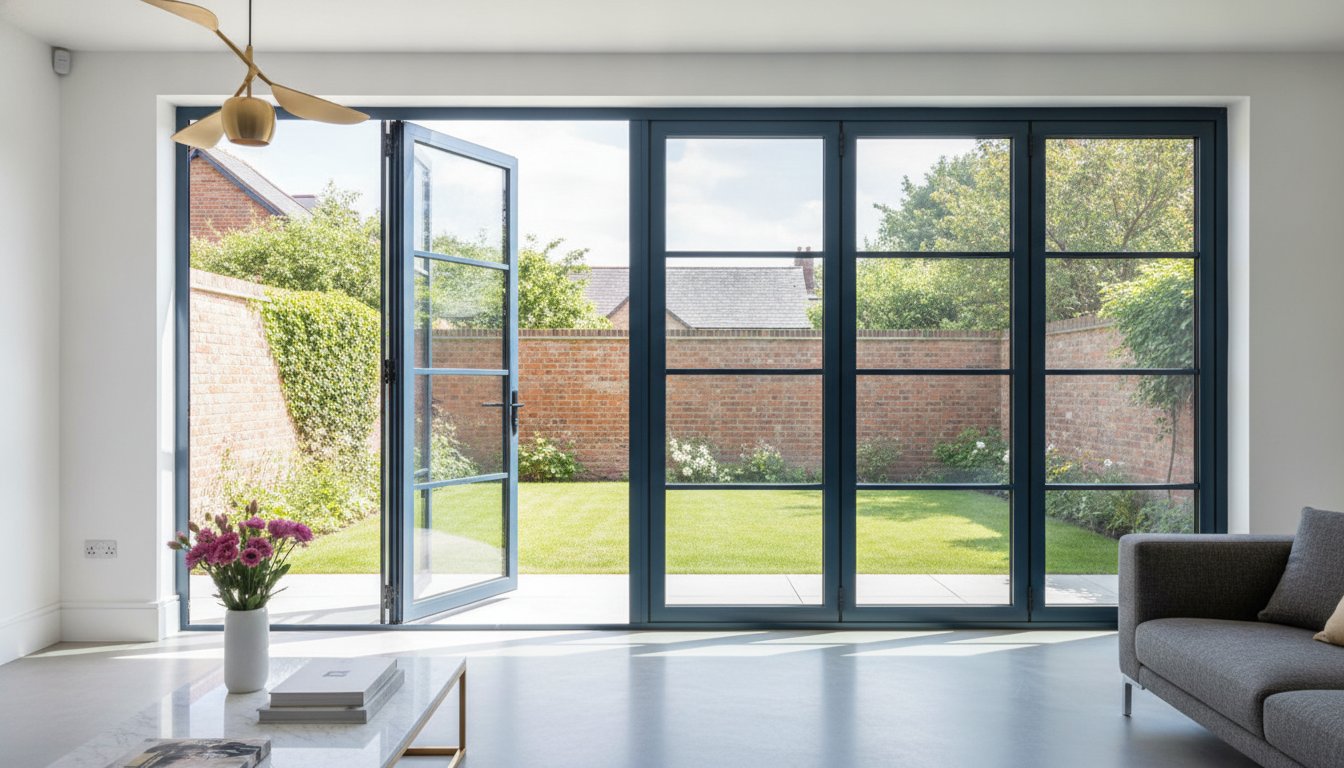
Sliding doors offer larger glass panes and narrower sightlines, whilst bifold doors allow for a 100% clear opening. Sliding systems are superior for unobstructed views because they require fewer vertical frames, which can be as narrow as 20mm. Bifolds are often preferred for smaller openings where the ability to stack the doors completely out of the way is the primary requirement for garden access.
How much maintenance do aluminium sliding doors require?
Aluminium systems require very little maintenance beyond regular cleaning with soapy water and keeping the stainless steel tracks free of debris. The marine-grade powder-coated finish is baked onto the metal to prevent peeling or UV fading for decades. Unlike timber, these frameworks don't require repainting or sealing, making them a "fit and forget" solution for the busy homeowner.
Are aluminium sliding doors thermally efficient enough for UK winters?
Yes, modern aluminium doors are engineered with thermal breaks to exceed the 2026 Building Regulations Part L requirements. A high-performance aluminium sliding doors to garden UK installation can achieve U-values as low as 1.4 W/m²K with double glazing, or 0.8 W/m²K with triple glazing. This ensures your living space remains warm and energy efficient even during the harshest British winters.
What are the maximum sizes for aluminium sliding door glass panes?
Maximum glass pane sizes vary by system but can often reach heights of 3000mm and widths of 3000mm per panel. These large-scale panes are supported by the high strength-to-weight ratio of aluminium, allowing for massive "glass walls" with minimal structural interruption. Specifying these dimensions requires a professional survey to account for wind load and structural lintel support.
How long does a professional sliding door installation typically take?
A standard professional installation typically takes between one and three days to complete depending on the project's complexity. This timeframe includes the removal of existing fenestration and the precision fitting of the new tracks and glass. Our White Glove Service manages this entire process, ensuring a methodical handover that respects your home's cleanliness and structural integrity.
What security features should I look for in external sliding doors?
You should prioritise doors that meet PAS24 and Building Regulations Part Q security standards for external garden access. Look for multi-point locking mechanisms, anti-lift tracks, and internal glazing beads that prevent the glass from being removed from the outside. These features, combined with toughened or laminated glass, provide a robust deterrent against intruders whilst maintaining a minimalist aesthetic.