What if the expansive open-plan layout you invested in is actually the primary source of daily friction in your home? Whilst the initial sense of space is undeniable, the reality of noise travel from the kitchen and the lack of a distinct workspace often leads to a cluttered, chaotic environment. Adding a traditional wall might solve the privacy issue, but it frequently results in dark, cramped rooms that lose the very light you sought to maximise. A bespoke room divider offers a sophisticated architectural solution that defines your living space without compromising on the flow of natural illumination.
You recognise that a premium interior requires more than just temporary screens or cheap-looking partitions that ruin a professional aesthetic. This guide will show you how to intelligently zone your home using high-end fenestration that preserves light and adds structural elegance. We will examine the technical specifications of slimline frames and internal glazing systems that elevate both your daily lifestyle and your property's market value. This is your professional blueprint for moving from a chaotic open space to a series of purposeful, quiet, and beautifully curated zones.
Key Takeaways
- Understand the evolution from open-plan to "broken-plan" living and why permanent architectural zoning is becoming the new standard for luxury UK homes.
- Avoid "expensive mistakes" by learning how to differentiate between temporary furniture screens and high-specification aluminium glazed partitions.
- Discover how to select a bespoke room divider style that preserves natural light whilst enhancing the structural elegance of your existing interior.
- Master the technicalities of acoustic insulation, including how decibel ratings and glass thickness impact the practical privacy of your living space.
- Recognise the importance of survey precision and why a professional White Glove installation is critical for a seamless architectural finish.
Beyond the Screen: Reimagining the Modern Room Divider
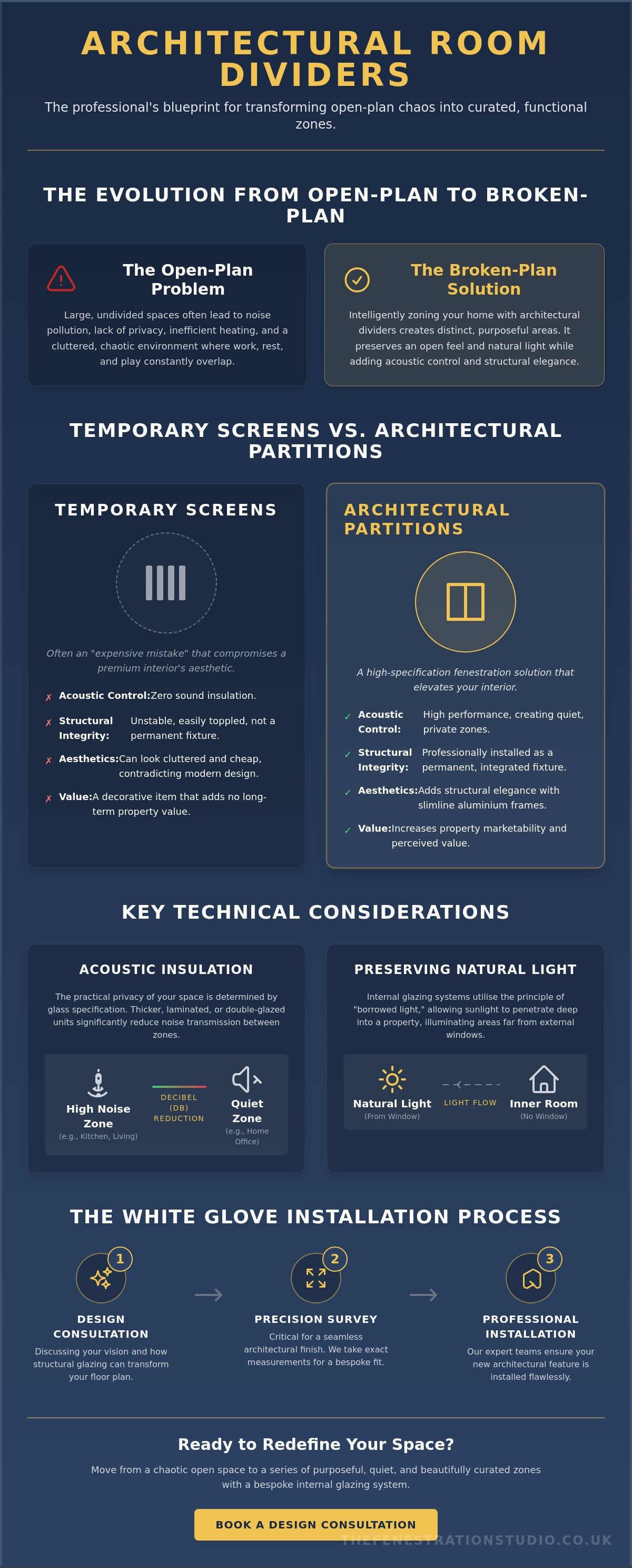
The traditional concept of a room divider has evolved significantly from the portable folding screens of the past. Today, architects and developers across the UK specify these elements as permanent, structural fixtures designed to define a property's character. Unlike furniture pieces that merely obscure a view, an architectural room divider integrates into the building's framework. It offers a deliberate solution to the acoustic and thermal challenges inherent in large, undivided footprints. This isn't just a decorative choice. It's a technical specification that dictates how a home performs.
The shift toward "broken-plan" living represents a sophisticated response to the total open-plan trend that dominated the 2010s. Modern homeowners now prioritise zoning to manage the complexities of 21st-century life. This transition is a functional requirement for UK luxury homes where space must adapt to multi-generational use. By installing a structural room divider, you create distinct environments that serve specific purposes without the claustrophobia of traditional stud walls.
A well-specified divider reduces cognitive load by creating clear boundaries between work, rest, and play. When a home office is visually and acoustically distinct from a living area, the brain can more easily transition into a state of relaxation. From a commercial perspective, adding structural zoning can increase a property's marketability. Clearly defined, versatile spaces often command a premium over poorly utilised "dead space" in oversized rooms. It's about making every square metre work harder for the occupant.
The Evolution of Open-Plan Living
The 2010s saw a rush to remove internal walls, yet this often led to unintended consequences. Large, echoing spaces proved difficult to heat efficiently, particularly during British winters when thermal retention is critical. Flexible zoning allows for the retention of volume whilst addressing noise pollution. By using glazed systems, designers maintain visual connectivity without the acoustic chaos of a fully open floor plan. It's a balance of scale and intimacy.
Zoning Without Compromising on Natural Light
The "borrowed light" principle is essential for deep-plan properties where central areas might otherwise feel subterranean. Glass dividers allow sunlight to penetrate through the building's core, reaching areas that lack external windows. Choosing a bespoke internal system over a solid partition ensures that visual flow remains uninterrupted. In technical terms, fenestration refers to the arrangement, proportion, and design of window and door openings within a building's envelope or internal partitions. This precision ensures that even when a room is divided, the sense of space remains expansive.
If you're planning a renovation, you can book a design consultation to discuss how structural glazing can transform your floor plan. Avoiding the "expensive mistakes" of poor zoning requires a methodical approach to both aesthetics and engineering.
Temporary vs Architectural: Finding the Right Specification
Choosing a room divider involves a fundamental decision between a temporary fix and a permanent architectural specification. Many homeowners begin with a freestanding screen, viewing it as a low-risk trial for their open-plan space. However, in premium UK renovations, these items often become expensive mistakes that compromise the property's visual integrity. A high-end interior requires a solution that respects the building's structural language. It's about precision, not just placement.
The pivot point between furniture and fenestration occurs when the requirement shifts from simple decoration to functional zoning. If your goal is to manage heat, sound, or light, a piece of furniture will always fall short. Professional architectural solutions integrate with the floor and ceiling, becoming a part of the home's permanent framework rather than a cluttered addition.
When Freestanding Screens Fall Short
Temporary solutions like wood, rattan, or fabric screens often introduce a "cluttered" aesthetic that contradicts the clean lines of modern design. These materials lack the structural rigidity needed for high-traffic areas. Stability is a constant concern; a freestanding screen is easily toppled and offers zero acoustic insulation. In a 2023 survey of luxury interior designers, 74% noted that temporary partitions were the most common element replaced within two years of a renovation. They fail to meet the "White Glove" standards expected in a sophisticated home. Acoustic leakage remains the primary complaint, as fabric and thin wood cannot block the sound of a television or a kitchen extractor fan.
The Case for Permanent Glazed Partitions
Bespoke aluminium partitions offer a level of performance that furniture cannot match. These systems use slimline profiles to maximise glass surface area, ensuring that natural light penetrates deep into the floor plan. Unlike bulky timber frames, aluminium provides immense structural strength with a minimal footprint. You can explore the full range of aluminium products to see how these internal systems mirror the high-end aesthetics of external bifold or sliding doors. This consistency creates a unified architectural theme throughout the property.
Permanent glazing allows for a seamless transition. Floor-to-ceiling heights can be achieved without the risk of warping or bowing. This is particularly vital in properties where ceiling heights exceed 2.5 metres. By specifying a permanent system, you invest in the long-term value of your home. To ensure your project benefits from this level of technical rigor, you may wish to book a design consultation with a specialist who understands the nuances of internal fenestration.
Exploring Internal Glazing Systems: Styles and Configurations
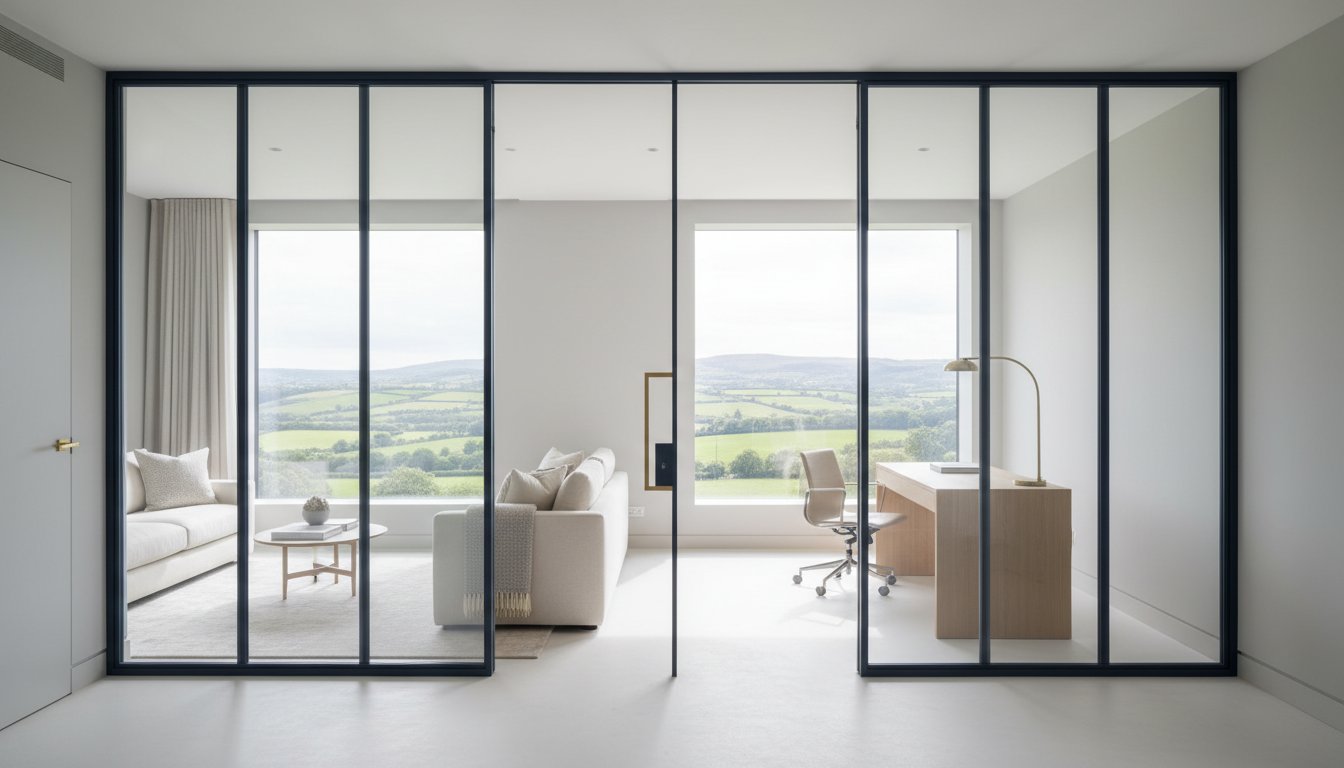
Effective spatial organisation relies on more than just furniture placement; it requires a structural approach to defining boundaries. Architectural glass and aluminium systems provide a sophisticated method for partitioning a home without sacrificing the sense of scale. A glass room divider ensures that natural light permeates deep into the floor plan, preventing the "boxed-in" feeling often associated with traditional stud walls. By using slimline profiles, you can create distinct zones for working, dining, or relaxing while maintaining a visual connection across the entire floor.
Heritage and Industrial Aesthetics
The resurgence of the industrial aesthetic has transformed modern British interiors. Often referred to as the "Crittall-style" look, this design uses slimline aluminium profiles and multiple glazing bars to create a distinctive grid-like appearance. For homeowners seeking a classic yet contemporary feel, the AD55 Heritage style provides an ideal solution. These systems serve as a visual anchor in a room. They offer the structural integrity of high-grade aluminium while maintaining a delicate, heritage-inspired profile that complements both Victorian renovations and minimalist modern new-builds.
Sliding vs Hinged Internal Doors
Choosing the right configuration is a matter of both ergonomics and floor-space management. Sliding glass dividers are the preferred specification for smaller footprints where every centimetre counts. By eliminating the swing arc, you can reclaim approximately 1.5 square metres of usable floor area per door. Many high-end projects now incorporate a "pocket door" configuration. This allows the panels to slide into a recessed wall cavity, making the room divider disappear entirely when you want a fully open-plan experience.
In contrast, hinged French-style dividers are better suited to larger properties where a sense of ceremony is desired. They provide a grand transition between rooms, such as moving from a formal dining area into a lounge. The choice depends on your home's traffic flow and how often you intend to keep the spaces separated. Hinged systems offer a more traditional tactile experience, while sliding systems prioritise modern efficiency.
Consistency is the hallmark of professional fenestration design. It's vital to ensure that the framework colour and finish of your internal partitions align with your external windows and doors. Whether you select a textured anthracite grey or a sleek matt black, maintaining a uniform RAL colour across all systems creates a cohesive architectural narrative. This level of detail prevents the interior from feeling disjointed and ensures the installation looks like an original architectural feature rather than an afterthought.
Technical Considerations: Glass, Acoustics, and Framework
The most frequent objection we encounter from homeowners is a practical one: "Will it actually stop the noise?" It's a valid concern. An open-plan space looks beautiful but often fails the "conference call test" or the "noisy teenager test." A glass room divider should do more than just segment a floor plan; it must provide a genuine acoustic barrier to be considered a successful architectural solution.
Acoustic performance is measured in decibels (dB). Standard 6mm toughened glass typically offers a sound reduction of around 30dB. For clients requiring a "hush zone" for a home office, we often recommend acoustic laminated glass. This specialised glazing uses a clear interlayer to dampen sound vibrations, potentially increasing the reduction to 40dB or higher. This difference is significant; a 10dB increase represents a perceived halving of the noise level. Safety is also a non-negotiable factor. All internal partitions must utilise toughened glass to BS EN 12150 or laminated glass to BS EN 14449, ensuring the system is robust enough for high-traffic family environments.
Acoustic Performance and Sound Insulation
Internal acoustics differ fundamentally from external thermal efficiency. Whilst external doors focus on heat retention, an internal system prioritises the "seal." Sound behaves like water; it finds the smallest gaps. High-quality EPDM gaskets and brush seals are essential components that prevent sound leakage around the perimeter of the frame. Double-glazed internal systems provide a dual-layered defence, creating a silent sanctuary even when the rest of the house is in full swing.
Selecting the Right Aluminium Framework
Aluminium is the professional's choice for internal fenestration. Unlike timber, which is prone to moisture absorption, aluminium framework prevents the warping and sticking common in timber dividers. It allows for incredibly slimline profiles that maximise the glass-to-frame ratio, ensuring your room divider feels like a transparent wall rather than a heavy obstruction.
- Structural Integrity: Aluminium supports larger, heavier glass panes without the bulk of uPVC.
- Aesthetic Versatility: Modern powder-coating technology allows for a vast array of finishes, from industrial "Crittall-style" black to soft architectural greys that blend with your interior palette.
- Precision Engineering: Our frames are manufactured to millimetre-perfect tolerances, ensuring the "White Glove" fit required for acoustic excellence.
Choosing the wrong material is an expensive mistake that often leads to poor alignment and failed seals within just 24 months. By opting for a high-specification aluminium system, you're investing in a permanent structural upgrade to your property. If you're ready to discuss the technical specifications for your own project, you can book a design consultation with our technical team today.
Executing Your Vision: The White Glove Installation Process
Moving from a conceptual design to a physical reality requires more than a simple tape measure. It demands a rigorous technical specification that treats your project as an architectural intervention rather than a furniture purchase. A bespoke room divider functions as a structural component of your interior. Achieving a flush finish or a silent glide depends entirely on the calibre of the initial engineering framework.
The Fenestration Studio approach eliminates the friction between design and handover. We replace the uncertainty of standard contracting with a methodical, professional programme. Our goal is a stress-free transition where the technical complexities are managed by experts, leaving you to enjoy the aesthetic transformation of your home.
Why Professional Surveying is Essential
Precision is the primary difference between a high-performing installation and a costly failure. Our surveyors operate to a 0.5mm tolerance level. This millimetre-perfect accuracy ensures that sliding or swinging mechanisms function without resistance for decades. Standard retail solutions often overlook the nuances of floor levels; a 3mm deviation across a wide opening can cause significant operational drag.
Structural integrity is another critical factor. A single 10mm toughened glass panel weighs approximately 25kg per square metre. When specifying a large-scale room divider, we must assess the load-bearing capacity of your ceiling joists or floor slabs. Identifying these requirements early prevents "expensive mistakes" such as structural sagging or cracked plasterwork that often occur when using unqualified installers. We ensure every track and pivot point is anchored to meet British Standard BS 6180 requirements for safety and stability.
Seamless Integration into Your Home
The installation phase is often where homeowners feel the most anxiety. We address this through our White Glove promise. Our technicians treat your property with the respect of a gallery space. We use protective floor runners and integrated HEPA-filtered dust extraction systems to maintain a clinical environment whilst we work. You can expect a quiet, disciplined presence in your home, focused on technical execution rather than speed.
- Site Protection: Comprehensive shielding of furniture and floor finishes.
- Precision Alignment: Laser-levelling of all tracks to ensure perfectly plumb vertical lines.
- Technical Calibration: Fine-tuning of soft-close buffers and magnetic catches for tactile perfection.
The process concludes with a formal handover and aftercare briefing. We demonstrate the optimal maintenance routine to ensure your system performs at its peak for its 20-year design life. This isn't just about fitting a product; it's about delivering a lasting architectural asset. To begin your journey from inspiration to execution, you can book a design consultation with our specialist team today.
Refining Your Space with Architectural Precision
Selecting the right architectural solution transforms a property's flow and functionality. Moving beyond basic screens requires a dedicated focus on technical specification, particularly regarding acoustic performance and structural framework. A high-quality aluminium room divider doesn't just separate space; it enhances light distribution whilst maintaining the integrity of your home's design. Choosing a bespoke system ensures your internal glazing meets exact requirements for both aesthetics and durability.
As an independently run family business, we provide a personal touch that larger corporations often lack. Our team delivers premium aluminium profiles tailored to your specific technical needs. We manage the entire lifecycle of your project through our expert White Glove installation service available nationwide. This meticulous approach prevents the expensive mistakes often associated with budget alternatives. Our specialists ensure every detail is accounted for, providing you with a seamless transition from initial concept to final execution.
Book a Professional Design Consultation for Your Room Divider Project
We look forward to helping you refine your living space with confidence and clarity.
Frequently Asked Questions
How do you divide a room without a wall?
You can divide a room without a wall by installing internal glazing systems, bespoke cabinetry, or floor-to-ceiling shelving. These solutions create distinct zones whilst preserving the architectural integrity of an open-plan layout. Our internal room divider systems utilise slimline aluminium frames to maximise light transmission. This approach avoids the cramped feel of traditional stud walls and maintains a sense of flow.
Are glass room dividers safe for homes with children?
Glass room dividers are entirely safe for family homes when specified with toughened or laminated safety glass. Under British Standard BS EN 12150, all internal glazing in critical locations must meet rigorous impact-resistance criteria. This engineering ensures the glass withstands the pressures of daily family life. It provides a secure environment without compromising on the sophisticated, transparent aesthetic of your living space.
Do internal room dividers help with soundproofing?
Internal room dividers provide substantial acoustic benefits when correctly specified. A standard 10mm toughened glass partition typically achieves a sound reduction of approximately 33dB. If you require higher levels of privacy, acoustic laminated glass can improve this performance to 40dB or more. This technical specification effectively dampens ambient noise between a kitchen and a quiet home office or media room.
What is the difference between a room divider and a partition?
The distinction between the two lies in their architectural intent and permanence. A partition is generally a fixed, full-height wall used to isolate a room completely. Conversely, a room divider is a more flexible solution designed to zone a space whilst preserving light and sightlines. These can be bespoke sliding systems or fixed glazed screens that offer a more sophisticated, less restrictive feel than a standard partition.
Can I install a room divider on top of underfloor heating?
You can install a divider over underfloor heating, provided you follow a precise technical framework. It's vital to locate heating pipes using thermal imaging cameras before any floor fixings are drilled. Many modern installations utilise high-bond adhesives or shallow-track systems to mitigate the risk of puncturing the manifold. This professional approach ensures your architectural vision doesn't result in an expensive heating repair.
Will a room divider make my house feel smaller?
A professionally designed divider actually enhances the perception of space by introducing structure. By creating dedicated zones for dining or working, you give the floor plan purpose and depth. Using slimline aluminium profiles ensures that visual links remain unbroken. This prevents the cluttered feel often associated with poorly planned open-plan areas and keeps the eye moving to the furthest point of the room.
What is the best material for a permanent room divider?
Aluminium is the optimal material for permanent architectural dividers due to its superior strength-to-weight ratio. Its structural integrity allows for ultra-slim frames that support large expanses of glass without bulky supports. Unlike timber, aluminium doesn't warp or require seasonal maintenance. It offers a crisp finish that remains consistent for decades, making it a sound long-term investment for a modern UK property.
How much does a bespoke architectural room divider cost?
The cost of a bespoke divider depends on your specific architectural requirements and material choices. According to current UK market benchmarks for 2024, a fixed glazed screen typically starts around £1,500. For more sophisticated configurations like sliding Crittall-style doors, you should budget between £4,000 and £9,000. These prices include the technical survey and the professional installation necessary to avoid the pitfalls of cheaper, DIY alternatives.