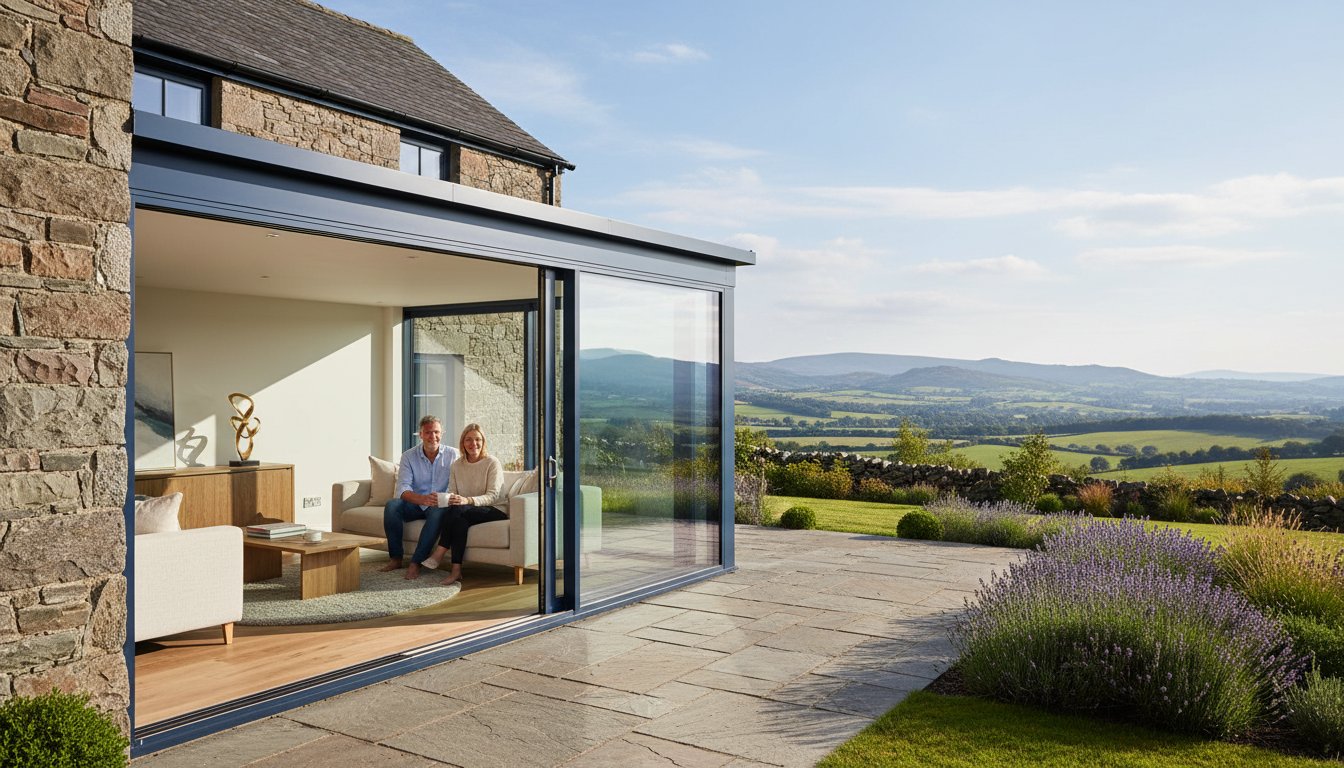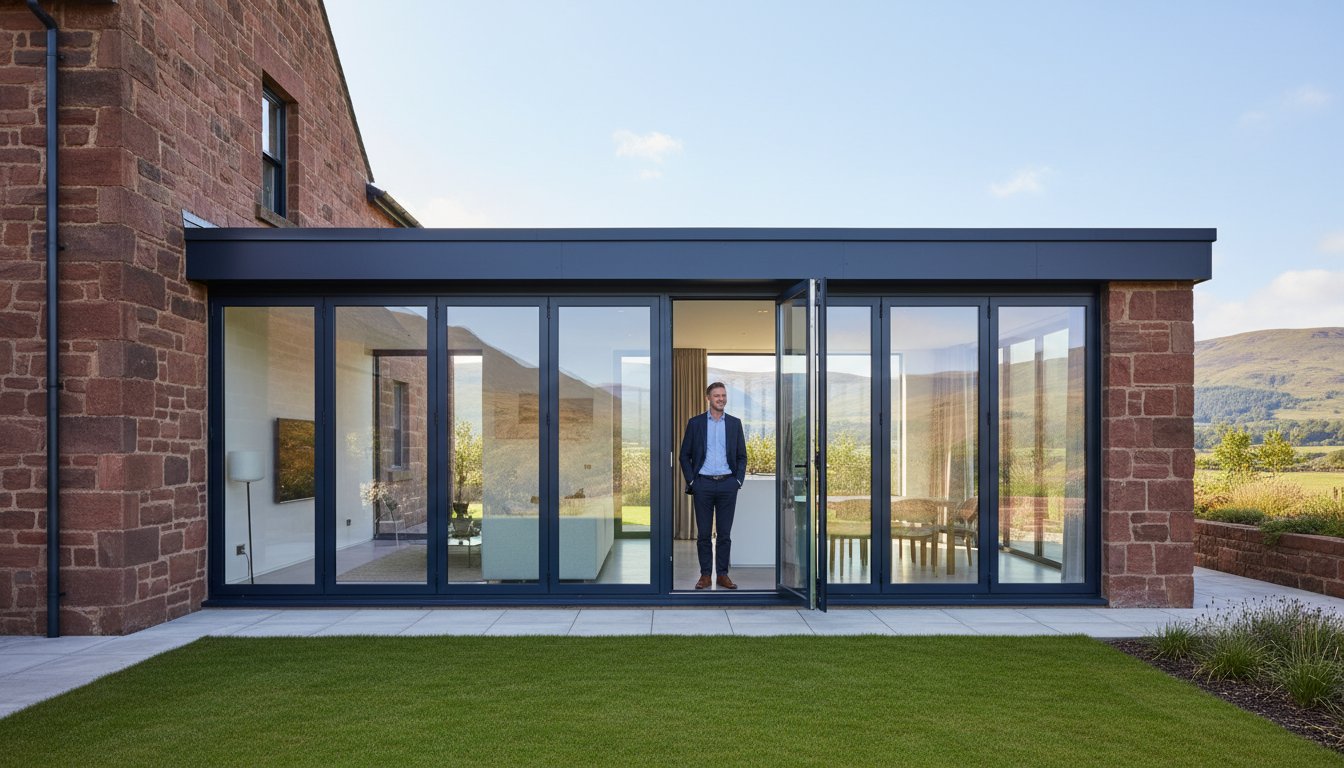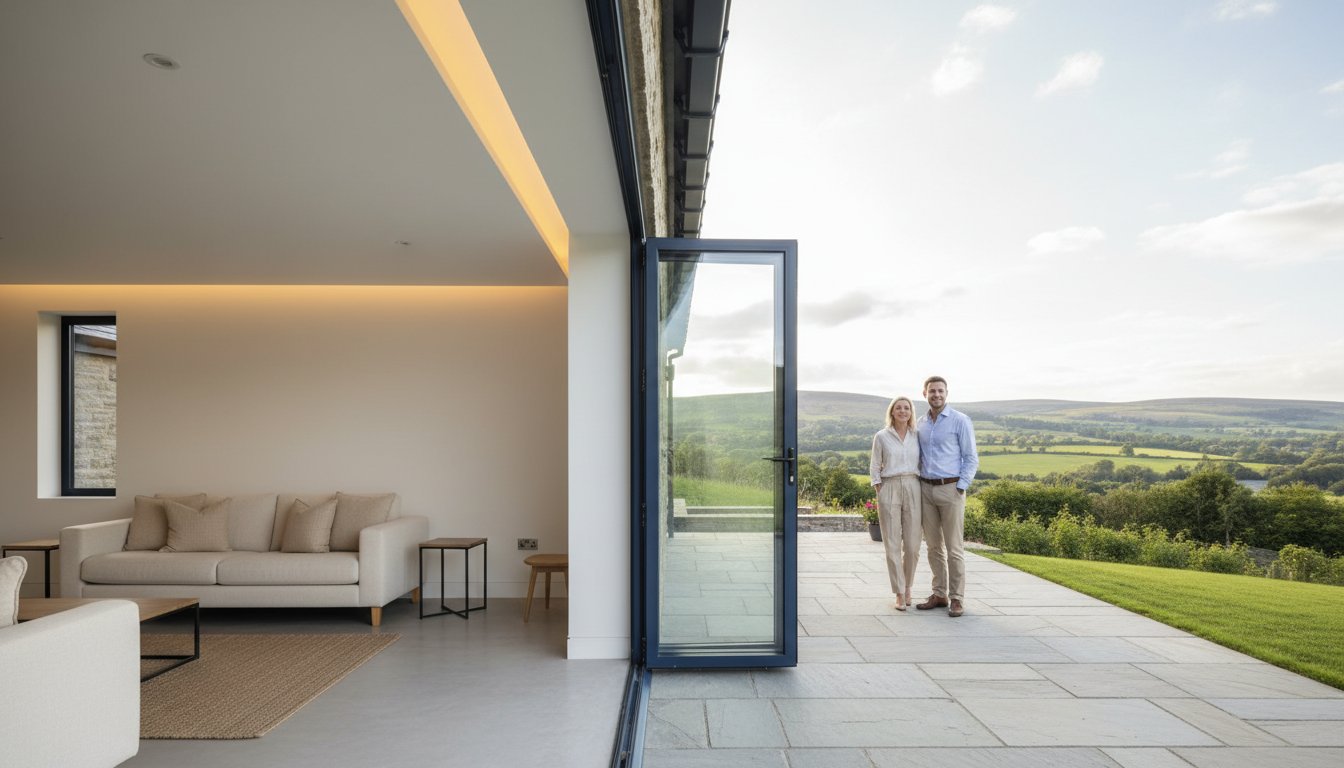
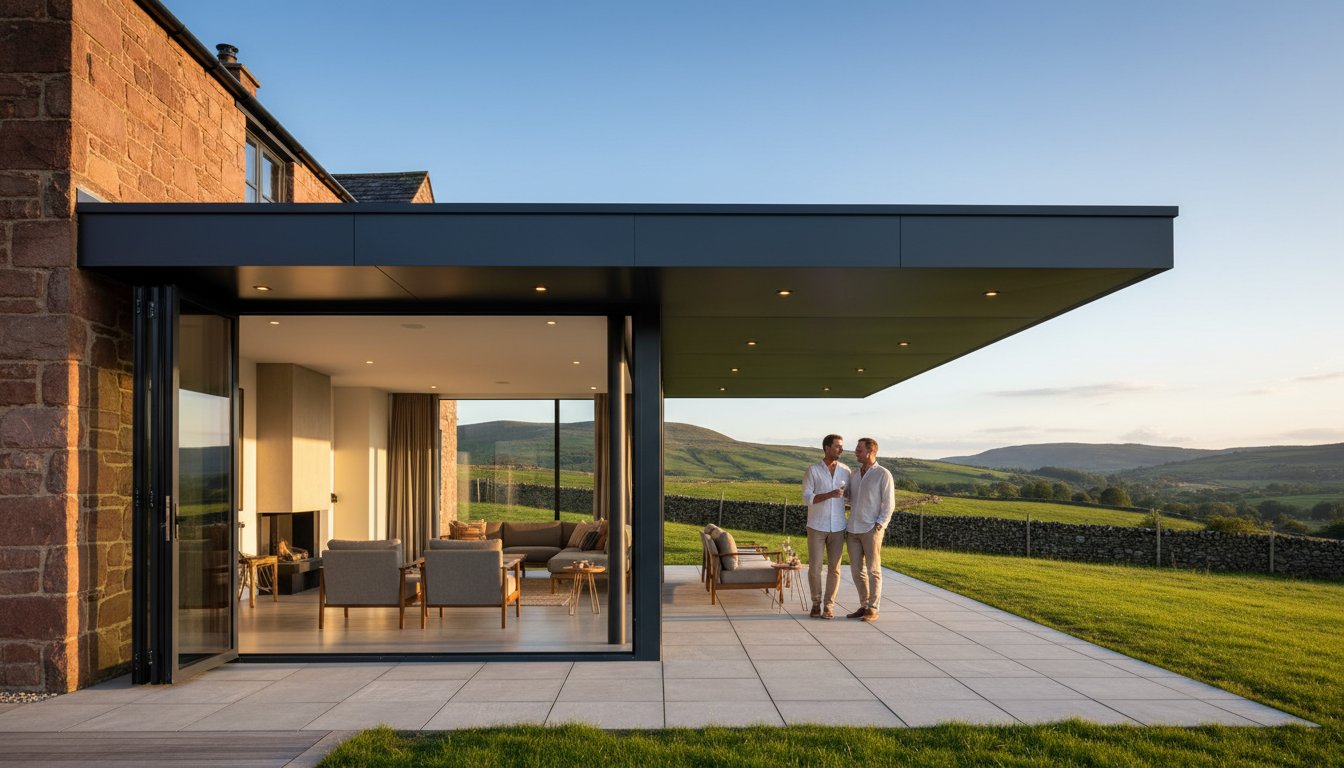
Why do homeowners invest heavily in precision-engineered bifold doors only to compromise the entire architectural aesthetic with a budget, "clip-on" shelter? It's a common mistake that turns a premium facade into a disjointed project. You likely recognise that your home’s exterior should be a cohesive statement. A flimsy uPVC alternative doesn't just look out of place; it often lacks the structural integrity to handle the 100mph wind gusts recorded during recent UK storms like Arwen or Eunice.
Choosing high-end Aluminium Canopies requires the same technical rigour as specifying your primary windows and doors. This guide promises to help you navigate the transition from a mere "add-on" to a permanent, maintenance-free architectural feature. We'll examine how to achieve a perfect RAL colour match with your existing slimline frames, ensuring your new installation enhances kerb appeal whilst providing robust weather protection. You'll also learn the specific engineering standards required to ensure your canopy remains stable under heavy British snow loads, creating a seamless finish for your property.
Key Takeaways
- Move beyond temporary shelters by specifying Aluminium Canopies as permanent structural components that offer superior architectural longevity compared to uPVC or timber.
- Understand the critical engineering requirements for the UK climate, including structural load-bearing for snow and the inclusion of thermal breaks for attached living spaces.
- Identify the ideal configuration for your property, whether choosing the minimalist "floating" aesthetic of cantilevered designs or the robust support required for larger patio spans.
- Achieve a seamless architectural finish by matching your canopy’s framework to existing bifold doors or windows using precision RAL colour coding and integrated LED lighting.
- Ensure project success through a professional technical survey and our signature White Glove Service, which prioritises precision and protects your property's integrity.
What Defines a Premium Aluminium Canopy?
A premium aluminium canopy is more than a simple weather shield; it's a permanent, rigid extension of your property's architecture. While the historical definition of what is an awning? often focuses on secondary fabric attachments, modern Aluminium Canopies are engineered as structural fenestration components. They provide a sophisticated solution for homeowners who refuse to compromise on aesthetics or structural longevity. This shift toward high-grade aluminium reflects a broader move away from the "disposable" building culture of the early 2000s, prioritising materials that withstand the test of time.
Investing in a high-specification canopy serves a dual purpose. First, it offers essential protection for your primary entrance doors, shielding expensive timber or composite finishes from UV degradation and driving rain. Second, it adds measurable kerb appeal. A well-specified framework doesn't look like an afterthought; it looks like a built-in feature of the original build. By selecting a material that mirrors the precision of your windows, you create a cohesive visual narrative across the entire facade.
Aluminium vs. uPVC and Timber: The Durability Debate
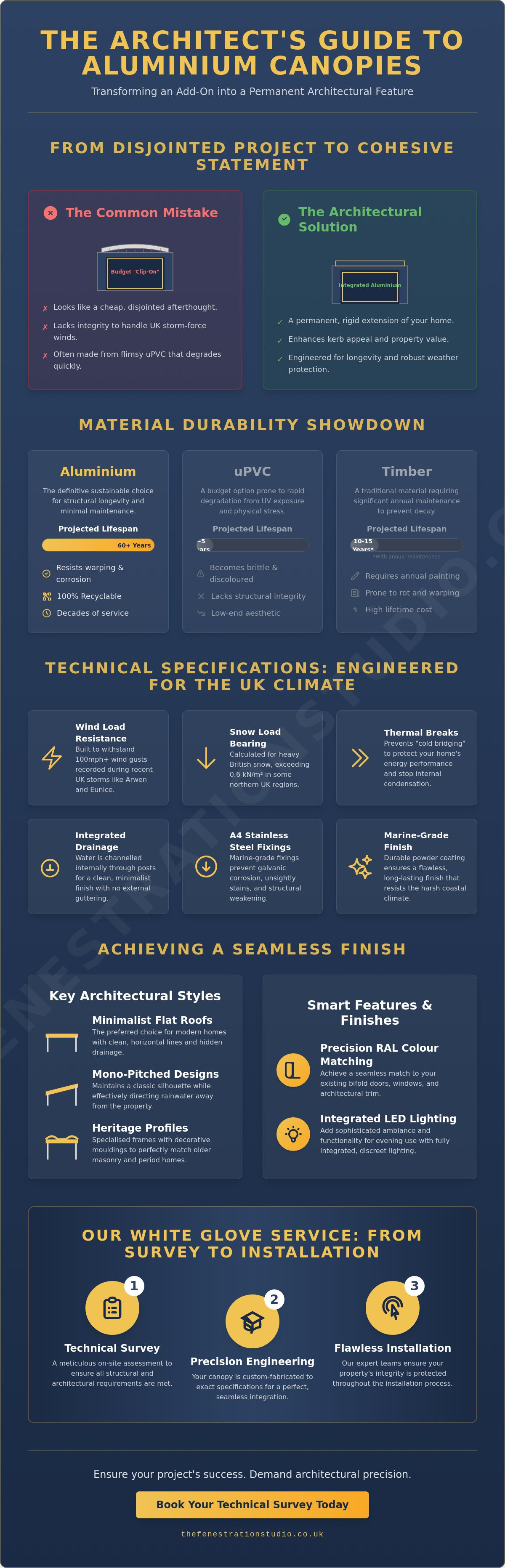
The technical superiority of aluminium lies in its incredible strength-to-weight ratio. Timber requires annual sanding and painting to prevent rot, whilst uPVC often becomes brittle and discoloured after five years of UV exposure. Aluminium is entirely different. It resists warping and corrosion for decades, requiring nothing more than an occasional wipe with soapy water. For 2026 UK renovations, aluminium stands as the definitive sustainable choice because it's 100% recyclable and offers a lifecycle that often exceeds 60 years of service.
Key Architectural Styles: From Flat to Mono-Pitched
Your choice of profile should echo the existing sightlines of your home to ensure a seamless integration. Contemporary flat-roof designs are the preferred choice for modern minimalist properties, offering a "floating" aesthetic that complements slimline sliding doors. Conversely, traditional pitched or hipped styles are better suited for heritage or period homes, where a steeper angle mimics the original roofline. Consider the following style markers:
- Minimalist Flat Roofs: Ideal for properties with clean, horizontal lines and hidden drainage requirements.
- Mono-Pitched Designs: Best for directing water away from the house whilst maintaining a classic silhouette.
- Heritage Profiles: Specialised frames that incorporate decorative mouldings to match older masonry.
The goal is total consistency. When the framework profile and RAL colour match your existing fenestration exactly, the canopy ceases to be an accessory and becomes a core part of the building's structural identity.
Technical Specifications: Engineering for the UK Climate
Engineering for the UK climate requires more than a standard "one-size-fits-all" approach. When specifying Aluminium Canopies, structural calculations must account for local wind pressure and potential snow accumulation. According to BS EN 1991, designs should withstand specific load-bearing requirements, which in some northern UK regions can exceed 0.6 kN/m². A premium structure doesn't just sit on the wall; it's calculated to resist these forces without stressing the building’s substrate or compromising the masonry.
Thermal breaks are another critical, yet often overlooked, specification. If your canopy attaches directly to a heated living space or sits above a set of bifold doors, a thermal break prevents cold bridging. This ensures the aluminium framework doesn't transfer freezing external temperatures into your home's structure. It's a technical detail that preserves your property's energy performance whilst preventing internal condensation issues during the winter months.
Architectural integration extends to how the system handles water. While budget options rely on external guttering that breaks the clean sightlines, premium systems utilise internal drainage channels. Water is directed through the rafters and into the support posts, exiting discreetly at ground level. We also specify A4-grade stainless steel fixings to prevent galvanic corrosion. This chemical reaction occurs when dissimilar metals meet, which can lead to unsightly staining or structural weakening of the building envelope over time.
Marine-Grade Powder Coating and RAL Colours
The finish on your framework is as important as the metal itself. We utilise a polyester powder coating process, typically applied at a thickness of 60 to 80 microns, to ensure a flawless finish. For coastal properties within three miles of the sea, marine-grade coating is essential to resist salt-air degradation. This process allows you to perfectly coordinate your aesthetic by matching RAL colours to your aluminium sliding doors, creating a unified architectural statement.
Glazing Options: Toughened Glass vs. Solid Polycarbonate
The choice of infill panels significantly impacts the performance of Aluminium Canopies. Laminated toughened safety glass, often specified at 6mm or 8mm thickness, offers superior acoustic insulation and a high-end crystalline aesthetic. It's the preferred choice for residential entrances where clarity is paramount. Alternatively, solid polycarbonate provides extreme impact resistance for high-traffic areas. Both options should include high UV protection factors to keep the area beneath cool whilst protecting your front door's finish from sun damage. If you're unsure which specification suits your project, you can book a technical design consultation to review the best options for your home's orientation.
Choosing the Right Configuration for Your Property
Selecting the correct configuration for Aluminium Canopies is a decision that dictates both visual harmony and structural viability. Unlike off-the-shelf kits that force your home to adapt to the product, a bespoke approach ensures the canopy adapts to the home. Standard kits often result in "expensive mistakes" where fixing points clash with lintels or drainage pipes. A professional technical survey identifies these constraints early, whether you're mounting onto traditional red brick, decorative stone, or modern K-Rend finishes. This methodical planning ensures the installation remains as robust as the building itself.
A bespoke specification allows for millimetre-precision. This is particularly crucial when matching the height of the canopy to the head of your aluminium windows. By aligning these horizontal datums, you maintain the architectural integrity of the building. This level of detail separates a professional installation from a DIY add-on, ensuring the new structure feels like an original part of the property's design.
Cantilevered Canopies: The Seamless Entrance
Cantilevered systems are the pinnacle of minimalist design, offering an unobstructed view by eliminating vertical posts. These "floating" structures are engineered to carry their own weight plus environmental loads through heavy-duty wall brackets hidden within the framework. Technical limits are vital here; most cantilevered Aluminium Canopies are restricted to a maximum projection of 1,500mm to 2,000mm depending on the substrate strength. They're the ideal specification for entrance doors or narrow side walkways where floor space is at a premium.
Large-Span Patio and Veranda Solutions
When the project requires coverage for large-span areas, such as a garden terrace or a set of aluminium bifolding doors, post-supported configurations are essential. These multi-post systems allow for projections exceeding 4,000mm, effectively creating a sheltered "outdoor room" for year-round use. For enhanced comfort, these structures can integrate side glazing panels to mitigate crosswinds and provide increased privacy from neighbours. The structural requirement for these larger spans often involves concrete pad foundations for the posts, ensuring the canopy remains stable during the 90mph gusts seen in recent UK weather events.
Whether you choose a cantilevered or post-supported design, the mounting substrate must be carefully assessed. Fixing into solid brick requires different anchor specifications than fixing into timber-frame houses with external cladding. Our technical team ensures that every fixing is specified to handle the specific pull-out loads required for your property's unique wall construction.
Architectural Integration and Smart Features
Architectural integration ensures that Aluminium Canopies perform as a structural extension of the home rather than a secondary attachment. Achieving visual continuity requires more than a simple colour match; it involves aligning the framework profiles with your existing fenestration. By matching the canopy framework to premium aluminium bifold doors, you create a unified rear elevation where the horizontal sightlines flow seamlessly from the glass into the shelter. This level of detail is a hallmark of professional specification, preventing the "cluttered" look often associated with budget retrofits.
Rainwater management is another area where architectural integration either succeeds or fails. Whilst budget systems rely on external plastic downpipes that break the clean lines of your facade, premium systems utilise internal drainage. Water is collected in a concealed gutter and directed through the structural posts, exiting discreetly at ground level. This maintains the minimalist aesthetic of the property whilst ensuring the building envelope remains protected from splashback and damp issues.
Future-proofing your installation involves considering environmental controls that extend the usability of your outdoor space. High-specification systems can now include integrated infrared heating elements, which can extend patio usage by up to 120 days a year by maintaining a comfortable ambient temperature during cooler evenings. These elements are built directly into the framework, ensuring that wires and brackets remain hidden from view.
Complementing Modern Glazing Systems
A well-positioned canopy is the perfect partner for large-scale sliding glass doors, particularly on south-facing elevations. According to data from the Professional Awning Manufacturers Association, a fixed exterior shade can reduce solar heat gain by up to 77% on south-facing glass. This significantly lowers the demand on internal cooling systems during peak summer months. Maintaining consistent sightlines between the canopy frame and your aluminium windows ensures that the addition feels like a deliberate architectural choice that enhances the building's energy performance.
Security and Smart Lighting
Security and ambience are enhanced through integrated LED lighting systems. We specify motion-sensor LEDs that are recessed into the canopy rafters, providing a welcoming entrance for guests whilst acting as a deterrent to intruders. These systems require professional installation to ensure all wiring is concealed within the aluminium framework, protecting the electrics from the elements. Many of these smart features are now compatible with home automation platforms like Somfy or Lutron, allowing you to control lighting and automated sensors via mobile apps. To see how these features can be tailored to your property, you can book a technical design consultation with our architectural team.
The White Glove Service: From Survey to Installation
Many online retailers treat Aluminium Canopies as simple retail commodities, shipping "supply-only" kits that leave the homeowner responsible for structural safety and architectural alignment. This approach often results in a disjointed finish that fails to respect the building's original design. We're different. Our "White Glove Service" positions us as your consultative partner, ensuring that every installation meets the same rigorous standards as our premium entrance doors and windows. It's a comprehensive project management framework designed to eliminate stress and guarantee a flawless architectural result.
By choosing a full-service provider, you benefit from "Local Expertise. National Standards." This means your project's handled by a nationwide network of highly skilled fitters who understand the specific masonry and weather conditions of your local area. This expert-led approach provides the peace of mind that comes with a robust aftercare package and a comprehensive warranty, ensuring your investment remains protected for decades to come.
Why Professional Surveying Matters
The technical survey is the foundation of a successful installation. Our surveyors don't just measure the width of the opening; they conduct a thorough assessment of the wall's structural integrity and identify the optimal fixing points for the specific substrate, whether it's traditional brick or modern insulated render. This precision ensures the canopy aligns perfectly with the sightlines of your existing aluminium windows, maintaining the property's visual datums. A professional technical survey prevents the most common installation failures by identifying structural obstructions like steel lintels or concealed utility lines before any components are manufactured.
The Installation Journey
On installation day, you can expect a service that's clean, efficient, and entirely respectful of your property. Our dedicated teams arrive with the technical knowledge required to handle high-specification aluminium components without damaging the building envelope or the product's marine-grade finish. Once the framework's secured and the glazing's perfectly seated, we conduct a final handover. This involves a meticulous quality check to ensure every detail, from the hidden drainage channels to the integrated LED lighting, meets our exacting standards. To begin your project with an architectural partner you can trust, you should book a design consultation with our technical team today.
Elevate Your Property’s Architectural Integrity
Your home’s exterior deserves the same precision engineering as its interior. By prioritising structural load-bearing capacity and seamless RAL colour matching, you avoid the common pitfalls of budget add-ons. You’ve seen how high-specification Aluminium Canopies transform a simple entrance into a permanent architectural feature whilst offering crucial weather protection for your doors and windows. This isn't just an accessory; it’s a structural investment in your property's longevity and kerb appeal.
Since 2021, our independently run family business has delivered national standards through local expertise. We ensure every project features premium marine-grade finishes as standard, expertly surveyed and installed by our nationwide teams to guarantee a flawless result. Our consultative approach means you aren't just buying a product; you’re securing a managed architectural solution that integrates perfectly with your existing fenestration and smart home systems.
Request a bespoke quote for your aluminium canopy project and take the first step toward a more sophisticated, weather-protected home. It's time to create a cohesive facade that reflects the true quality of your property.
Frequently Asked Questions
Do I need planning permission for an aluminium canopy in the UK?
Most Aluminium Canopies fall under Permitted Development rights, meaning formal planning permission isn't required if the structure meets specific criteria. Under the 2015 General Permitted Development Order, the canopy must not exceed 50% of the land area around the "original house" as it stood in 1948. However, if your property is a listed building or situated within a designated Conservation Area, you must consult your local planning authority before commencing any installation.
Can an aluminium canopy be fitted to a house with external wall insulation?
Yes, we can install canopies on properties with external wall insulation (EWI) by utilising specialised "stand-off" fixing systems. These technical fixings involve thermally broken spacers that bridge the insulation layer, allowing the structural load to be transferred directly into the primary masonry. This precision method ensures the canopy remains secure without crushing the insulation or compromising the property's thermal envelope.
How much wind and snow can a cantilevered canopy actually handle?
A professionally engineered cantilevered canopy is designed to withstand significant environmental loads according to BS EN 1991 standards. These systems are typically tested to manage snow loads of up to 1.5 kN/m² and wind speeds exceeding 100mph. This structural rigour ensures the framework remains stable during the extreme weather events that have become more frequent in the UK over the last 10 years.
Will an aluminium canopy rust if I live near the coast?
Aluminium is naturally resistant to the "red rust" that plagues steel, but salt-air environments can cause surface pitting if the metal is left unprotected. To prevent this, we specify a marine-grade polyester powder coating at a thickness of 60 to 80 microns. This architectural-grade finish creates a robust barrier that protects the framework from saline corrosion, even in exposed coastal locations within 500 metres of the shoreline.
What is the typical lead time for a bespoke architectural canopy?
The typical lead time for bespoke Aluminium Canopies ranges from 6 to 10 weeks following the completion of a professional technical survey. This duration allows for the precision engineering of the framework and the application of your chosen RAL colour. Because every component is manufactured to your property's specific dimensions, this timeframe ensures that the final product integrates seamlessly with your existing fenestration.
How do I clean and maintain the powder-coated finish on my canopy?
Maintaining the premium finish on your canopy is straightforward and only requires a wash with warm soapy water and a soft cloth every 4 to 6 months. You should avoid using solvent-based cleaners or abrasive pads, as these can scratch the polyester powder coating and reduce its lifespan. Regular cleaning is particularly vital in urban areas where high pollution levels can lead to a build-up of acidic deposits on the framework.
Can LED lighting be retrofitted to an existing aluminium canopy?
Retrofitting LED lighting is technically challenging and often results in unsightly external conduit because the wiring must be concealed within the structural rafters during fabrication. For a clean, minimalist aesthetic, lighting should be specified at the design stage. This allows our engineers to integrate the circuitry and motion sensors into the framework, ensuring all electrical components remain protected from the elements and hidden from view.
Is toughened glass better than polycarbonate for a front door canopy?
Laminated toughened glass is widely considered the superior choice for residential entrances due to its crystalline clarity and 30% better acoustic insulation compared to polycarbonate. Glass doesn't suffer from the "drumming" sound caused by heavy rain and maintains its aesthetic appeal for decades without discolouring. Solid polycarbonate is generally reserved for high-impact commercial environments where weight reduction is the primary engineering priority over architectural finish.