Why settle for a traditional extension that sections off your garden when you could dissolve the boundary between indoors and out with bespoke Glass Rooms? You likely recognise that a high-end architectural addition should feel like a natural evolution of your home, not a bolt-on afterthought. However, the fear of investing £50,000 or more into a space that fails to maintain a comfortable temperature is a valid concern for any discerning homeowner.
We understand that the glazing industry can be difficult to trust, often clouded by high-pressure sales and confusing technical jargon. This guide simplifies the process, demonstrating how these precision-engineered structures can transform your living space into a light-filled masterpiece whilst avoiding common industry pitfalls. You will discover how to meet the strict 2026 Future Homes and Buildings Standards, understand why a well-designed 20m² extension can add up to 15% to your property value, and learn the exact steps to ensure a stress-free, professionally managed installation. We provide the architectural clarity you need to make an informed, confident investment in your home's future.
Key Takeaways
- Understand the architectural philosophy behind bespoke glass rooms and how they prioritise uninterrupted garden views over traditional brick boundaries.
- Discover the engineering benefits of premium-grade aluminium and why specific glazing specifications are vital for long-term durability in the UK climate.
- Compare the cost and installation speed of Glass Rooms against traditional extensions to determine the best value proposition for your property.
- Learn how to identify and avoid common industry pitfalls, such as failing to account for structural wind loads or falling for low-quality, budget quotes.
- Explore the "White Glove Service" approach to project management, ensuring a stress-free transition from initial technical survey to the final professional handover.
Defining the Modern Glass Room: More Than an Outdoor Enclosure
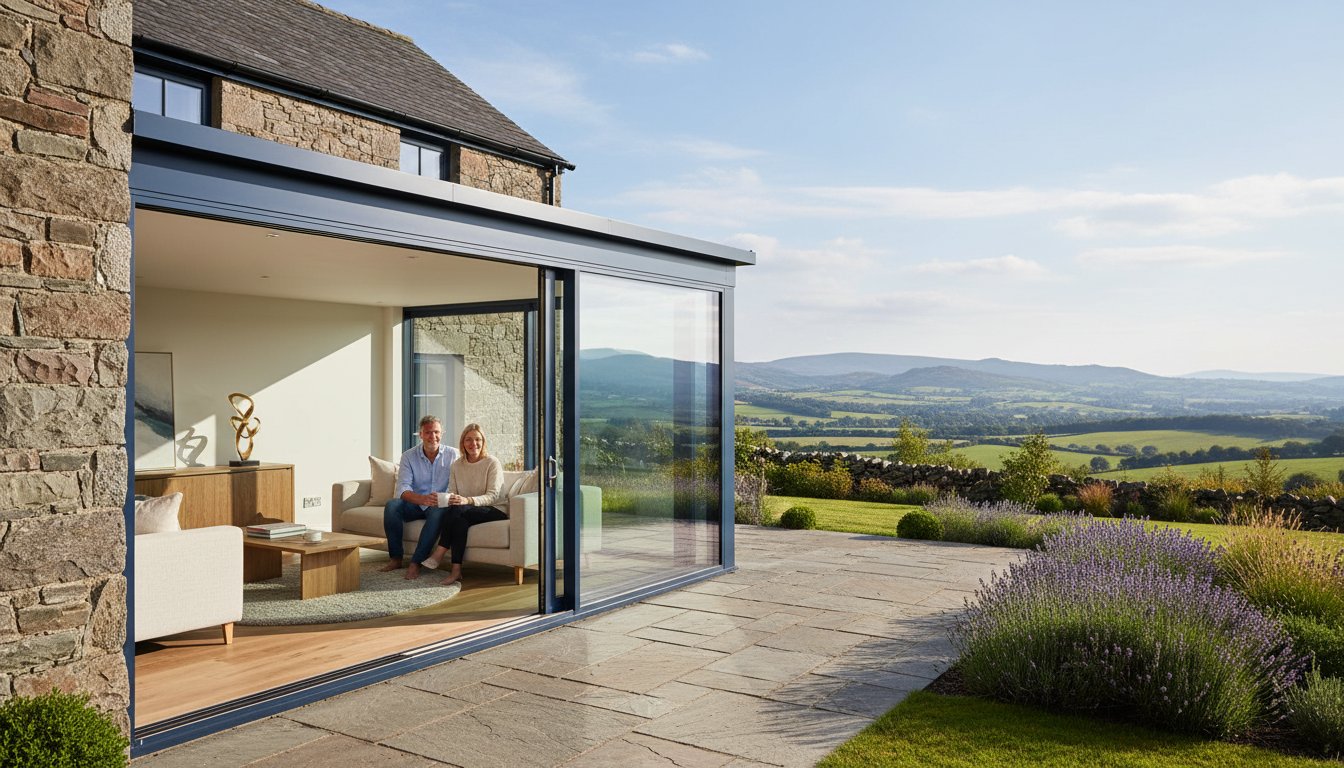
A modern glass room represents a deliberate departure from traditional home extensions. Unlike a standard brick-and-mortar build, these structures are bespoke, uninsulated or semi-insulated aluminium and glass frameworks designed to offer maximum seasonal flexibility. The core architectural philosophy here prioritises uninterrupted views over the heavy, opaque boundaries of traditional masonry. Whilst a veranda provides a simple overhead cover, a fully enclosed architectural glass room creates a protected environment that remains visually transparent. In modern British architecture, this is increasingly referred to as the "third space." It's a transitionary zone that captures the essence of the garden without the exposure to the elements.
These structures are not merely "garden rooms" in the casual sense. They are precision-engineered additions that use high-grade aluminium products to achieve structural integrity with minimal vertical support. This allows for a "glass-to-glass" aesthetic that traditional building methods cannot replicate. By removing the visual clutter of thick pillars and brick piers, you create a seamless transition that makes the garden feel like an integral part of the home's floor plan.
Glass Room vs Conservatory: Understanding the Shift
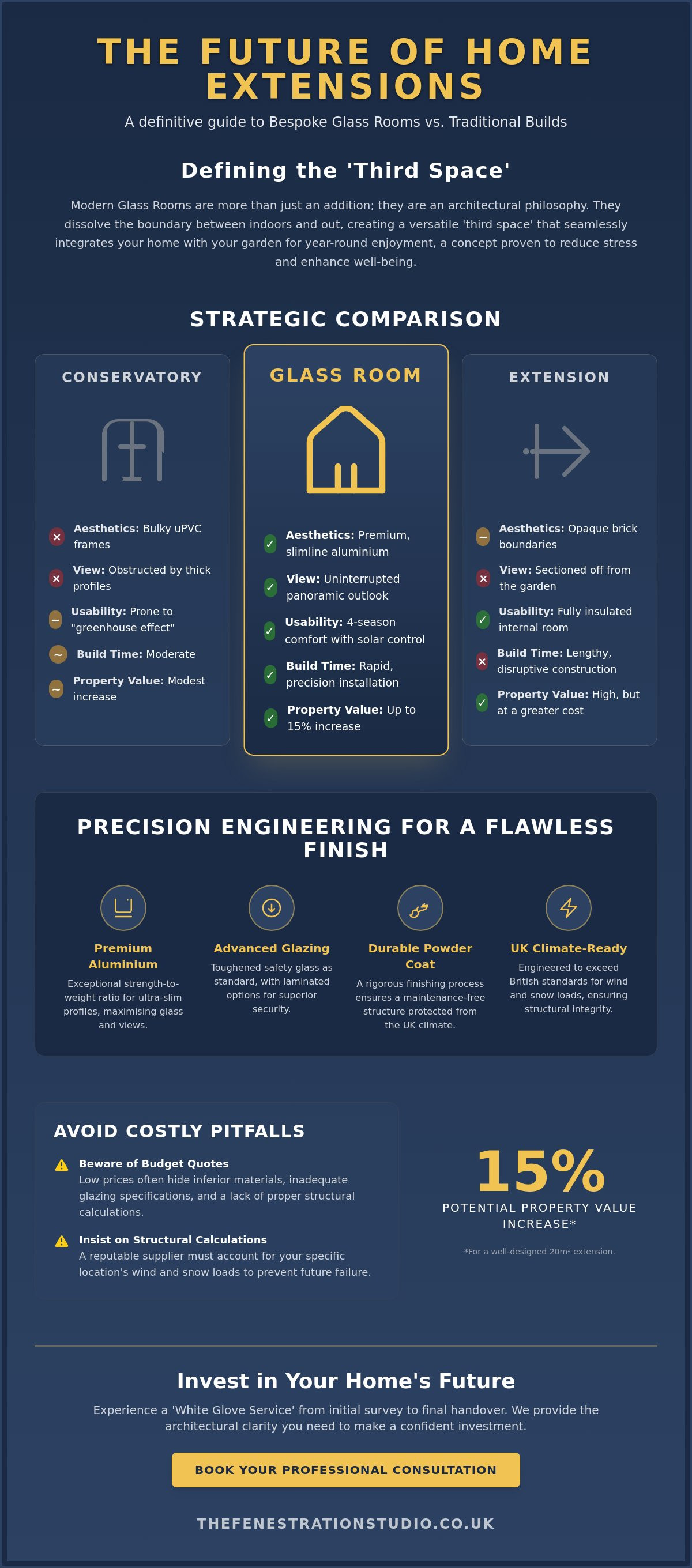
The shift away from uPVC conservatories is driven by a demand for both aesthetics and thermal performance. Traditional conservatories often feature bulky white frames that detract from a home's original character. In contrast, Glass Rooms utilise high-strength, slimline aluminium profiles that allow for significantly larger panes of glass. This engineering shift solves the notorious "greenhouse effect" associated with older designs. By using modern glazing specifications with controlled solar gain, these rooms avoid the extreme temperature fluctuations that once made glass extensions unusable during peak summer or mid-winter. Homeowners are no longer looking for "bolt-on" utility rooms; they're seeking integrated architectural statements.
The Versatility of the 'Third Space'
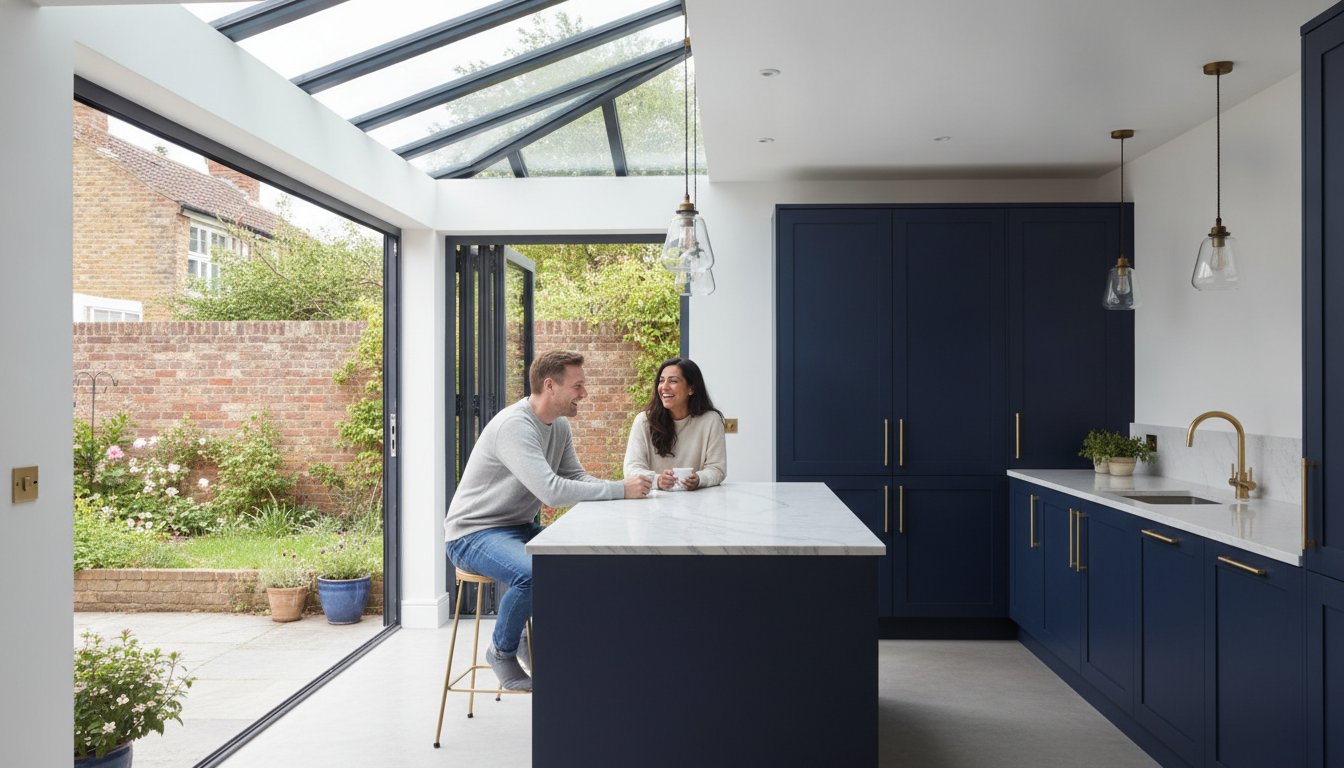
The functionality of a glass room adapts to your lifestyle requirements throughout the year. It serves as a sophisticated setting for alfresco dining, a tranquil garden lounge, or a high-end home office that feels immersed in nature. This connection is central to biophilic design, a concept proven to reduce stress by maintaining a constant visual link to the natural world. Given the unpredictable British climate, where the Met Office records rainfall on average 156 days a year, these spaces provide a vital sanctuary. They allow you to enjoy the garden whilst remaining sheltered from wind and rain, effectively extending the usability of your outdoor space across all four seasons.
The Engineering Behind the View: Aluminium Framework and Glazing Specs
Achieving an expansive, panoramic view requires more than just large panes of glass. It demands a sophisticated understanding of structural engineering. High-end Glass Rooms rely on premium-grade aluminium, a material selected for its exceptional strength-to-weight ratio. This allows us to support significant weights with incredibly slim profiles, ensuring your view remains the focal point. To protect this framework from the corrosive effects of the UK climate, every component undergoes a rigorous powder-coating process. This finish isn't just for colour; it's a protective layer that ensures the structure remains maintenance-free for decades. You can explore our aluminium specifications to see how these engineering principles are applied in practice.
Safety is non-negotiable. We specify toughened safety glass as a minimum standard, which is up to five times stronger than regular glass. For those prioritising security, laminated glass provides an additional layer of protection, as it remains intact even if shattered. This level of specification ensures that your architectural feature is as secure as it is beautiful.
A common industry pitfall is ignoring local environmental factors. Every bespoke design must account for British snow and wind loads. In exposed or coastal locations, wind pressure can exceed 1.0 kN/m², making structural calculations essential to prevent frame deflection or glass failure. Our approach ensures structural integrity is built-in from the initial technical survey.
Slimline Profiles: Why Frame Depth Matters
Thinner frames are the hallmark of modern design. By increasing the glass-to-frame ratio, we maximise natural light and create a sense of weightless architecture. The challenge lies in reducing the visual bulk without compromising the structure's ability to resist torsion. In high-end design, fenestration refers to the precise arrangement and design of openings in a building's envelope, where every millimetre of framework is engineered to balance structural load with visual clarity.
Integrated Drainage and Concealed Engineering
True luxury is found in the details you cannot see. Premium systems feature integrated drainage, where guttering and downpipes are hidden within the aluminium uprights. This creates the clean lines essential for contemporary architecture. Concealed fixings ensure that no unsightly bolts or screws are visible, avoiding the cluttered "DIY look" of budget alternatives. This methodical approach to design ensures that the engineering supports the aesthetic, rather than detracting from it.
Strategic Comparisons: Glass Rooms vs Conservatories and Extensions
Choosing between a traditional brick extension and a bespoke glass room requires a clear understanding of your long-term goals for the property. While a masonry extension offers a fully habitable space year-round, it often demands a construction timeline stretching into several months and a significant financial commitment, with high-quality builds often exceeding £3,000 per m². In contrast, Glass Rooms offer a more agile architectural solution. These structures are typically installed within days rather than months, minimising the disruption to your daily life whilst providing a high-end feature that can increase property value by between 5% and 15% according to 2026 industry data.
One often overlooked factor is the impact on the existing house. A solid-roof extension can inadvertently "landlock" internal rooms, stripping them of natural light and creating dark, stagnant pockets in your home's layout. A glass room avoids this pitfall entirely. It acts as a transparent conduit, flooding the original building with light and maintaining the visual connection to the garden that a brick wall would otherwise sever.
Planning Permission and Building Regulations
The regulatory landscape is often simpler for glass rooms. Under current UK rules, many of these structures fall within "permitted development" rights, provided they don't exceed a depth of 3m for semi-detached houses or 4m for detached properties. Crucially, glass rooms under 30m² are generally exempt from Building Regulations if they maintain thermal separation from the main house via external-quality doors. If you intend to remove the separating doors to create an open-plan "habitable" space, the project must meet stricter Part L requirements, including specific U-values for walls and roofs. We always recommend a professional technical survey to navigate these local authority nuances and avoid expensive compliance mistakes.
Thermal Performance and Solar Gain
Transparency regarding thermal performance is a hallmark of our consultative approach. Unlike a fully insulated extension, an unheated glass room serves as a "thermal buffer." In winter, it captures solar gain to pre-warm the air against the house wall, reducing heat loss from the main building. During summer, the environment is managed through high-specification ventilation. Integrating aluminium sliding doors allows you to open entire elevations, facilitating rapid airflow and preventing the stifling conditions associated with dated uPVC conservatories. This seasonal flexibility ensures the space remains a functional, comfortable retreat for the majority of the year.
Planning for Perfection: Avoiding Costly Mistakes in Glass Room Design
Investing in high-end glazing is a significant commitment. The most common pitfall homeowners encounter is the "cheapest quote" trap; a deceptive shortcut that often leads to compromised structural integrity or poor thermal performance. When specifying Glass Rooms, precision is your primary safeguard. A quote that seems significantly lower than the industry average usually indicates a sacrifice in material grade or the omission of critical structural calculations. Don't let a short-term saving turn into an expensive mistake that requires remedial work just a few years down the line.
The #1 technical error is failing to account for structural wind loads, particularly in exposed or coastal regions. Without a bespoke calculation, a large-span glass roof can flex under pressure, leading to seal failure or, in extreme cases, glass fracture. This is why a comprehensive technical survey is mandatory before any manufacturing begins. It ensures the aluminium framework is specified to withstand local environmental stresses, providing you with long-term security and peace of mind. Design for the future by integrating lighting and heating solutions at the specification stage. Retrofitting these features into a slimline aluminium frame is often impossible without compromising the clean, architectural lines you've invested in. You can book a design consultation to discuss these technical details with an expert advisor.
The Pitfalls of 'Supply-Only' Retailers
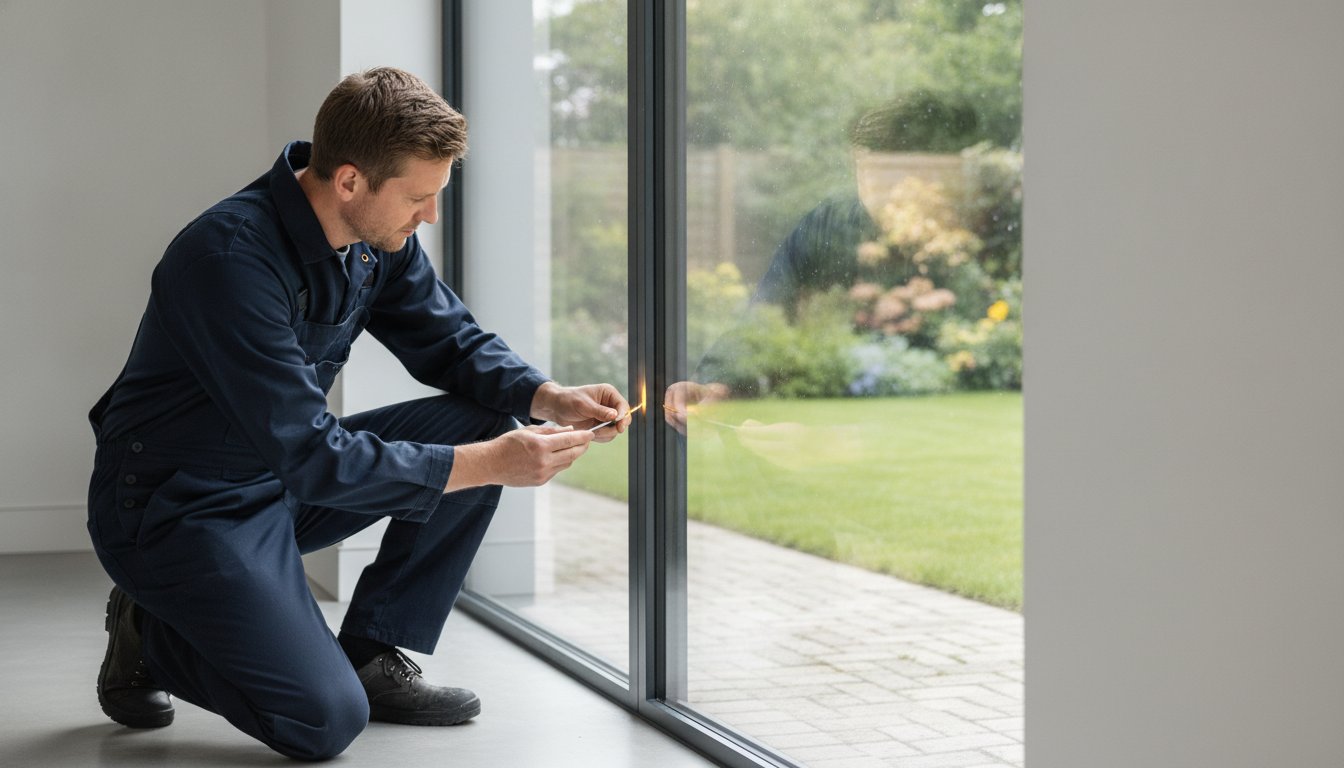
Professional installation is critical for large-scale architectural glazing. Supply-only retailers often leave the complex task of assembly to general builders who may lack the specialist tools or training required for millimetre-perfect alignment. A single measurement error of just 5mm can result in a frame that doesn't fit or doors that fail to glide smoothly. Choosing a partner who manages the entire lifecycle, from survey to final handover, eliminates these risks and provides a single point of accountability.
Integrating with Your Existing Architecture
A successful glass room should feel like a natural extension of your home's DNA. This starts with matching or thoughtfully contrasting your frame colours with your existing aluminium windows. Beyond aesthetics, pay close attention to the transition between internal and external flooring. Achieving a "flush" finish requires precise coordination between the threshold height and your patio levels. This creates a seamless indoor-outdoor flow that is both visually stunning and practical for daily use.
The White Glove Experience: From Technical Survey to Final Handover
The Fenestration Studio’s "White Glove Service" serves as a deliberate antidote to the high-pressure sales tactics that have historically shadowed the glazing industry. We position ourselves as a consultative partner rather than a retail vendor. This journey begins with an initial consultation defined by transparent, honest advice. We prioritse your architectural goals over a sales pitch, ensuring that the proposed solution aligns with the structural realities of your property. By establishing this foundation of trust early, we eliminate the ambiguity that often leads to mid-project complications.
Precision measurement is the bedrock of every successful installation. Our professional technical survey goes beyond simple dimensions; it assesses the load-bearing capacity of your existing walls and the geological stability of the ground. This methodical approach ensures that every component of your Glass Rooms fits with millimetre accuracy. We operate under a unique dual identity: Local Expertise. National Standards. This means you benefit from the personal accountability of a local team whilst being supported by the rigorous engineering benchmarks of a national network. It's a systematic framework designed to deliver premium reliability without compromise.
Bespoke Specification and Manufacturing
Every project enters a dedicated technical specification phase where the aluminium framework is engineered for your specific site requirements. We don't believe in "off-the-shelf" solutions. Whether your home requires a specific heritage finish or a modern slimline aesthetic, the manufacturing process is tailored to achieve your exact vision. This level of customisation ensures the structure complements the existing fenestration of your home perfectly. To begin this tailored process, you can book a design consultation for a personalised assessment of your property’s potential.
Installation and Dedicated Aftercare
On-site, you can expect a professional and methodical installation process. Our teams are trained to maintain a clean, organised workspace, respecting your home as an active living environment rather than just a construction site. This disciplined behaviour is a core component of our service promise. The project only concludes with a comprehensive final handover, where we walk you through the operational features and maintenance requirements of your new space. As an independently run family business, we provide a level of personal accountability that larger corporations cannot match. Our dedicated aftercare ensures that your investment in Glass Rooms remains a high-performing architectural feature for decades to come.
Securing Your Home's Architectural Future
A bespoke glass room is more than a simple home addition; it's a strategic architectural investment that bridges the gap between your interior living space and the natural world. By prioritising premium slimline aluminium engineering and adhering to the 2026 Future Homes and Buildings Standards, you ensure your property remains both visually striking and technically compliant. You now understand the importance of avoiding the "cheapest quote" trap and how a dedicated technical survey protects you from structural failure in high-wind conditions.
Choosing Glass Rooms should be a stress-free experience defined by precision and professional integrity. Our White Glove installation service provides nationwide expertise, ensuring every detail is managed with the rigour of a reliable architect. If you're ready to transform your home into a light-filled masterpiece whilst adding up to 15% to your property value according to 2026 market data, our team is here to guide you through the technical specification.
Request a Bespoke Quote for Your Glass Room Project today to begin your journey toward a seamless architectural transition. We look forward to helping you realise your home's full potential.
Frequently Asked Questions
Do I need planning permission for a glass room in the UK?
Most glass rooms fall under permitted development rights and do not require formal planning permission. For attached houses, you can typically extend up to 3m from the original rear wall, while detached houses allow for 4m. However, listed buildings always require consent, and local Article 4 Directions can restrict these rights in conservation areas. It's always advisable to confirm your specific site requirements through a professional technical survey.
Can I use a glass room all year round, even in winter?
Glass rooms are designed for seasonal flexibility rather than as fully habitable, 365-day living spaces. They act as a thermal buffer, capturing solar gain to pre-warm the air against your home's exterior wall. While they are comfortable for the majority of the year, they don't have the same U-value requirements as a brick extension. Integrating sliding doors allows for effective ventilation during summer months to prevent overheating.
What is the difference between a glass room and a glass veranda?
The primary difference lies in the level of enclosure and protection from the elements. A glass veranda is essentially an overhead canopy supported by aluminium posts, offering shelter from rain but remaining open at the sides. In contrast, Glass Rooms are fully enclosed architectural structures featuring glass walls or doors. This creates a protected "third space" that allows you to enjoy the garden whilst remaining shielded from wind and lateral rain.
How much does a bespoke aluminium glass room cost?
The cost varies significantly based on the specification and size. According to March 2026 industry reports, a typical 20m² framed glass extension ranges between £50,000 and £100,000. For those seeking a frameless glass box aesthetic, a 14m² structure averages approximately £40,000. These figures include high-quality materials and professional installation, reflecting the precision-engineered nature of the aluminium framework and glazing.
Are glass rooms secure against intruders?
Yes, these structures are engineered with security as a priority. We specify toughened safety glass as a minimum standard, which is five times stronger than regular glazing. For enhanced protection, laminated glass can be used to ensure the pane remains intact even if struck. When combined with multi-point locking systems on the doors, your glass room provides a secure barrier that meets the same rigorous standards as your home's primary fenestration.
How do I clean and maintain my aluminium glass room?
Maintenance is remarkably straightforward due to the durable powder-coated aluminium framework. You don't need to paint or treat the frames; a simple wipe down with warm, soapy water twice a year is sufficient to remove environmental debris. The glass should be cleaned using standard non-abrasive window cleaning solutions. We also recommend keeping the integrated drainage channels clear of leaves to ensure efficient water runoff during heavy British rain.
Can I integrate bifold doors into my glass room design?
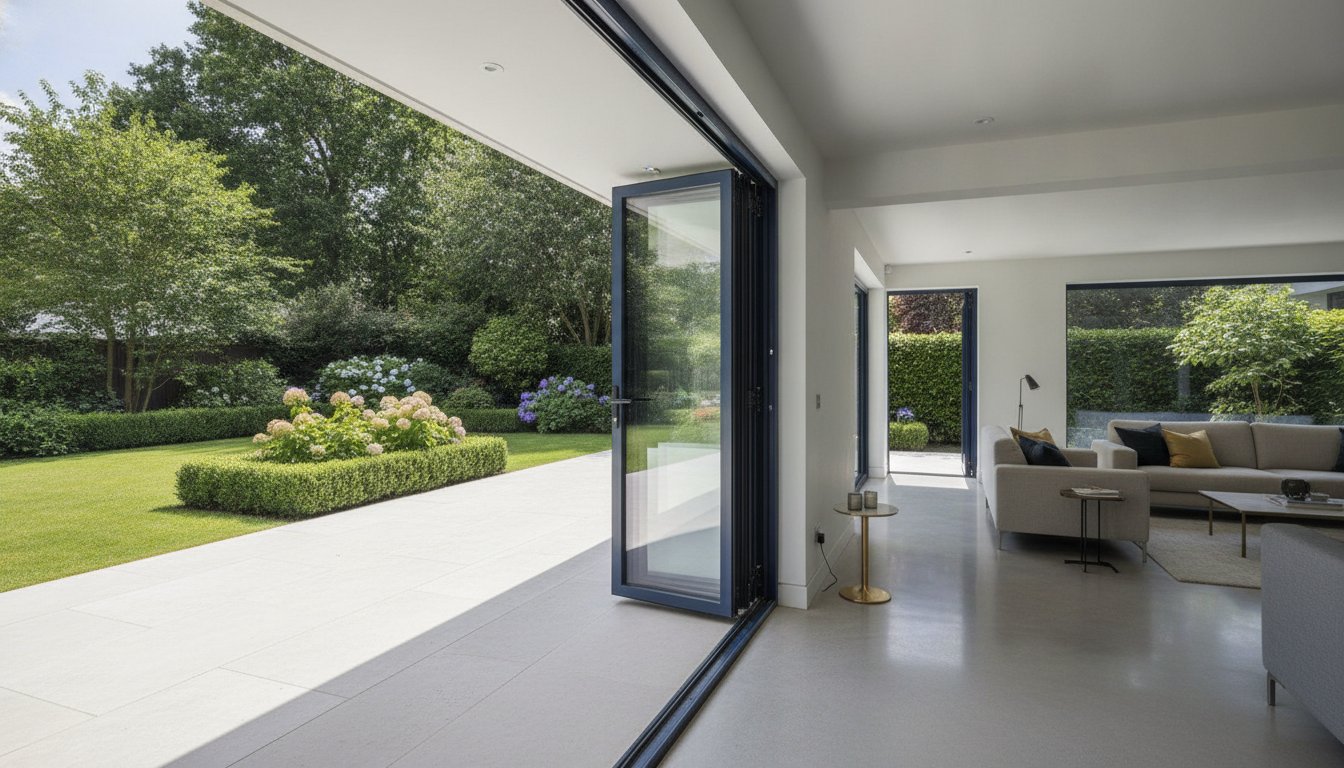
You can certainly integrate bifolding doors to create a truly seamless transition to your garden. While sliding doors offer large, uninterrupted glass spans, bifolds allow you to fold the entire elevation away, opening up 90% of the aperture. This flexibility is ideal for summer entertaining. We ensure the structural framework is engineered to support the specific weight and movement of these door systems without compromising the slimline aesthetic.
How long does the installation of a glass room usually take?
Professional installation of Glass Rooms is surprisingly efficient, typically taking between three and five days once the foundations are prepared. This is significantly faster than the several months required for a traditional masonry extension. Because the components are precision-manufactured off-site to your exact technical specification, the on-site phase is focused on methodical assembly. This reduces disruption to your daily routine whilst ensuring a high-end finish.