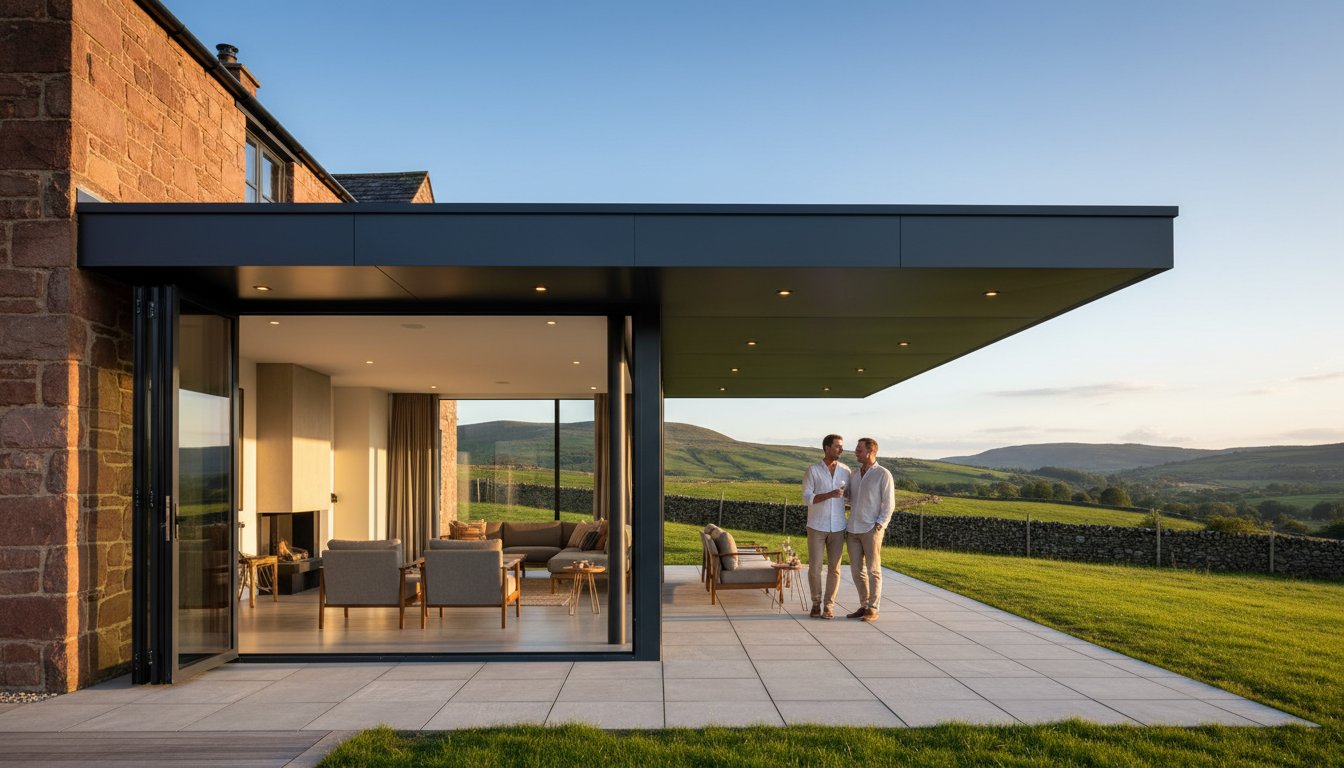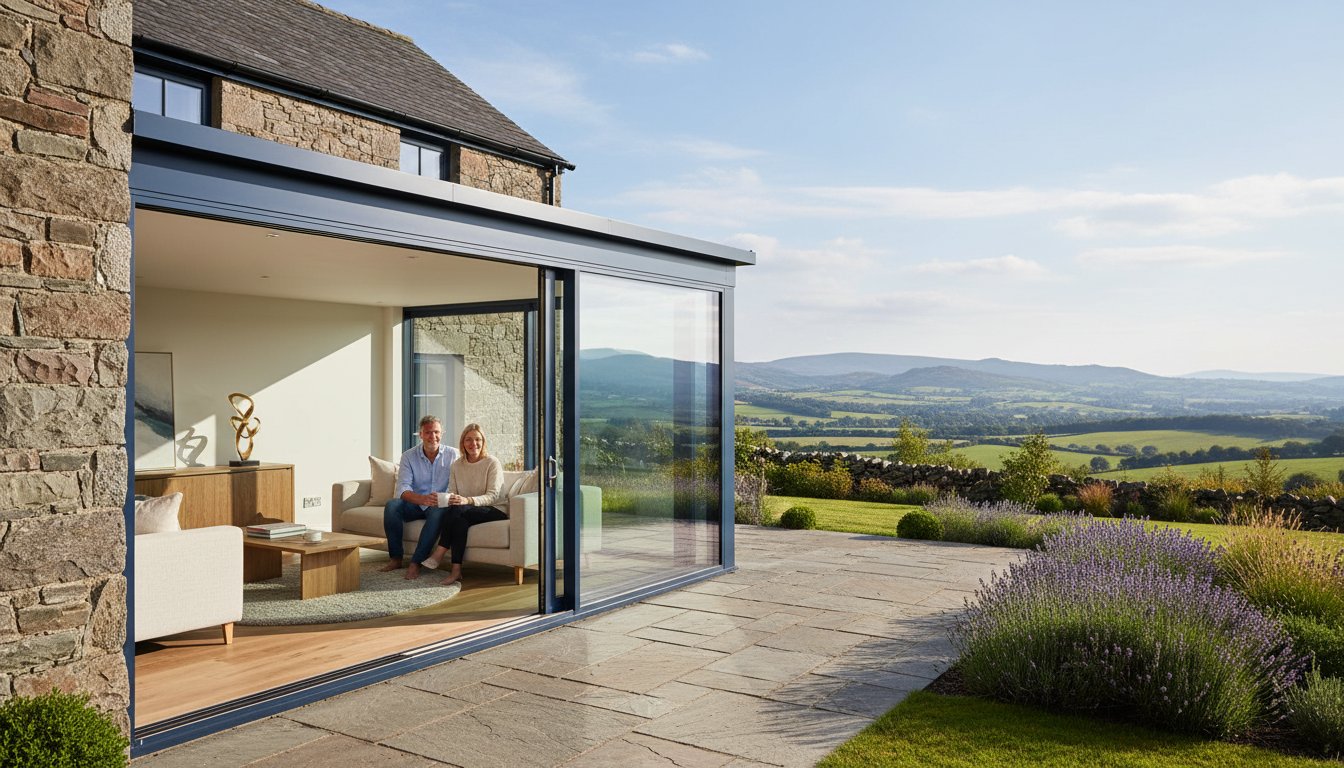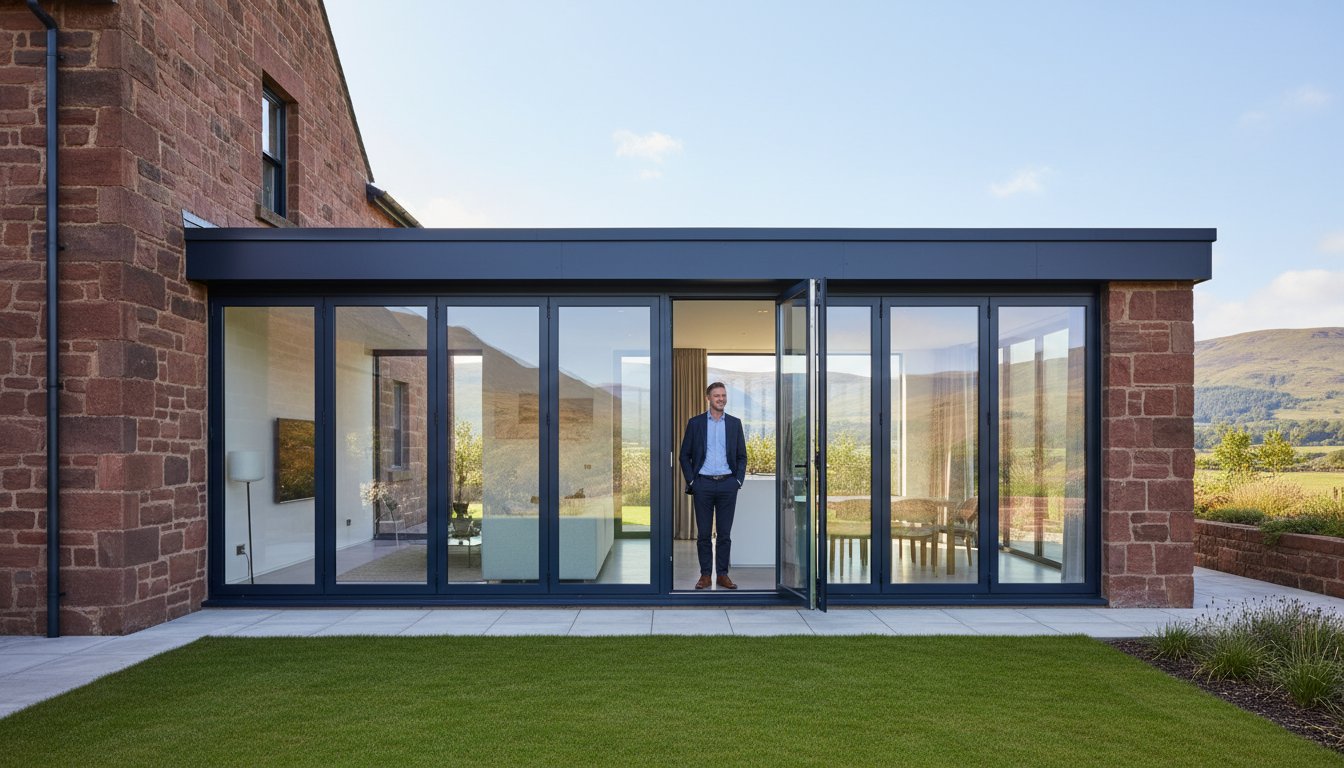
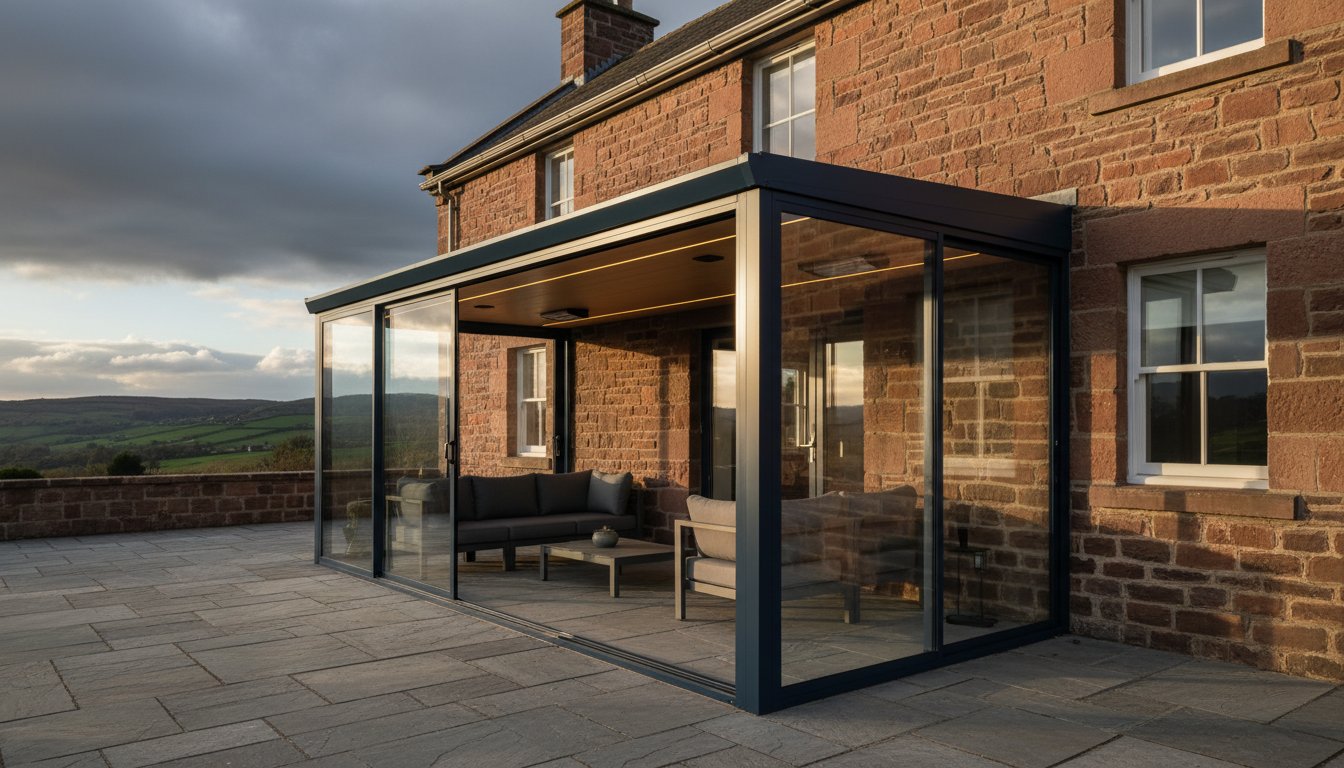
Why do most garden extensions feel like a temporary afterthought rather than a permanent architectural statement? For many homeowners in 2026, the desire for a sophisticated "outdoor room" is often countered by the fear of high-pressure sales or the anxiety that a structure might look like a cheap, plastic add-on. You want a space that mirrors the precision of your home's existing architecture whilst providing year-round protection from the unpredictable British weather. Aluminium Verandas shouldn't be viewed as mere garden accessories; they are sophisticated fenestration extensions designed to add genuine value and structural integrity to your property.
We agree that your home deserves better than a standard, budget-focused approach. This guide provides the expert mentorship you need to commission a bespoke, slimline structure that stands the test of time. You'll discover how to achieve a seamless transition from your interior to the garden using premium powder-coated frameworks. We'll also navigate the technical landscape of 2026, including why 95% of these projects bypass the need for full planning permission, ensuring your journey from initial specification to "White Glove" installation is entirely stress-free.
Key Takeaways
- Define the transition from temporary garden shade to permanent, glass-roofed architectural extensions that integrate seamlessly with your home’s existing framework.
- Identify the critical technical specifications, such as 6063-T6 grade aluminium and marine-grade powder coating, required for structural longevity and weather resistance.
- Discover why premium Aluminium Verandas outperform timber and uPVC in both long-term maintenance requirements and structural span capabilities.
- Learn how to navigate a professional planning process to avoid the common pitfalls and expensive installation mistakes associated with generic, supply-only kits.
- Explore bespoke customisation options, including integrated heating and sliding glass walls, to transform your outdoor structure into a sophisticated, year-round living space.
What is an Aluminium Veranda? Defining the Modern Architectural Extension
British residential architecture is currently experiencing a fundamental shift. Homeowners are moving away from flimsy, temporary garden structures toward permanent, glass-roofed architectural extensions that redefine the footprint of the home. When exploring the historical context of What is a Veranda?, it's clear that the concept has evolved from a simple colonial porch into a sophisticated, high-performance living space. Today, Aluminium Verandas represent the pinnacle of this evolution; they're engineered to provide a fixed, weather-sealed sanctuary that remains functional 365 days a year.
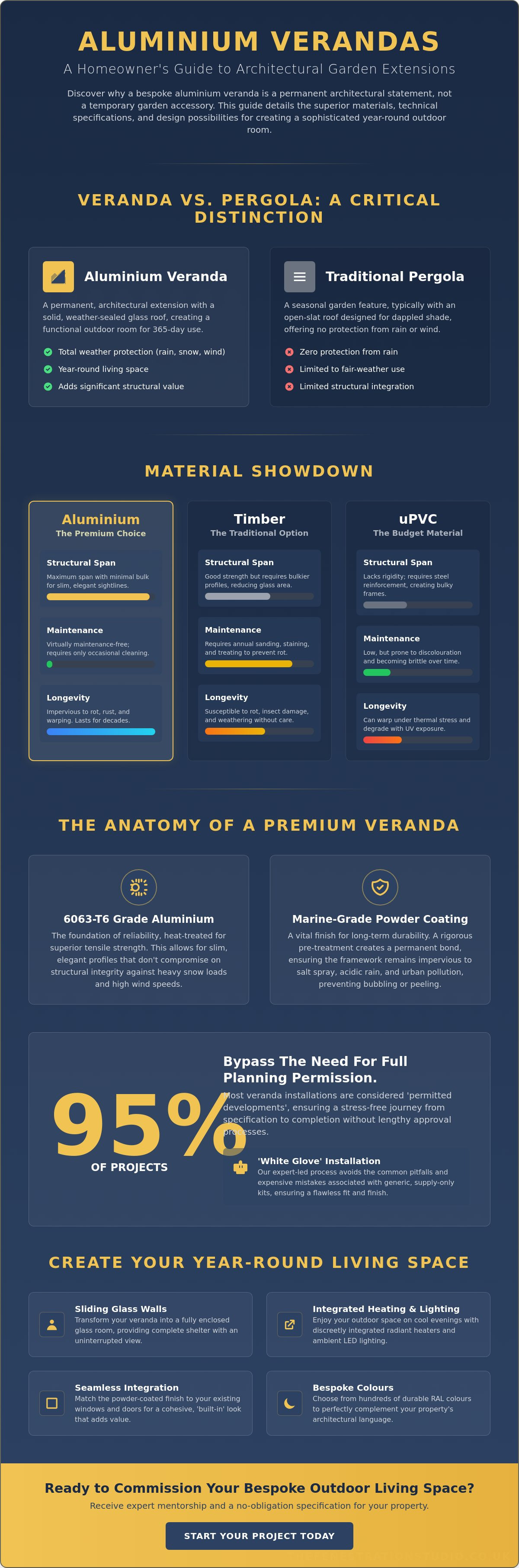
Choosing the right material is the first step in avoiding an expensive mistake. Timber might offer a traditional look, but it requires annual sanding, staining, and treatment to prevent rot. Similarly, uPVC often lacks the structural rigidity required for large glass spans and can discolour or warp under thermal stress. In contrast, architectural-grade aluminium provides the precision and strength needed for a maintenance-free life cycle. A veranda is a structural extension that bridges the gap between the garden and the home's interior.
Veranda vs. Pergola: Understanding the Structural Differences
There's a common misconception that verandas and pergolas are interchangeable. They aren't. A traditional pergola typically features an open-slat roof designed for dappled shade during a heatwave. Whilst this is pleasant for a few weeks in July, it offers zero protection against the 150 plus days of rain the UK averages annually. A premium veranda uses a permanent glass roof to create a weather-sealed environment. This structural difference transforms the space from a seasonal garden accessory into a year-round outdoor room. It ensures your patio furniture and outdoor kitchen remain protected from the elements, regardless of the season.
The Rise of Architectural Glazing in UK Gardens
Modern home design in 2026 prioritises the "indoor-outdoor" flow, where the transition between the kitchen and the patio is almost invisible. Aluminium is the only material that allows for the ultra-slim sightlines required to achieve this aesthetic. Because aluminium is inherently strong, the framework can support massive glass areas with minimal structural bulk. This creates a feeling of openness whilst maintaining total structural integrity. To ensure a consistent architectural language across the property, many homeowners choose to match their veranda's powder-coated finish to their existing aluminium windows. This creates a cohesive, "built-in" look that adds genuine market value to the home rather than looking like a bolt-on addition.
The Anatomy of a Premium Veranda: Technical Specifications and Quality
Quality in architectural fenestration isn't just about appearance; it's about the invisible engineering that ensures a structure remains safe and silent during a gale. For Aluminium Verandas, the foundation of this reliability is the use of 6063-T6 grade aluminium. This specific alloy is heat-treated to provide superior tensile strength, allowing for slim profiles that don't compromise on structural integrity. Whilst mass-produced kits often rely on thinner, lower-grade metals, a premium specification is designed to withstand the heavy snow loads and high wind speeds common in the British Isles. It's the difference between a structure that rattles in the wind and one that offers quiet confidence.
The finish is equally vital for long-term durability. When specifying Aluminium Verandas for coastal locations or high-pollution urban centres, standard paint finishes can bubble or peel within a few years. We specify marine-grade powder coating as standard. This process involves a rigorous pre-treatment phase that creates a permanent bond between the metal and the finish, ensuring the framework remains impervious to salt spray and acidic rainwater. Before beginning your project, it's wise to review the official planning guidance to ensure your chosen specification aligns with local permitted development rights. You can explore our full range of technical specifications in our aluminium products portfolio.
Roofing Options: Glass Line vs. Polycarbonate Performance
While polycarbonate is a lightweight, budget-friendly option, it lacks the acoustic and thermal properties of glass. During a typical British downpour, polycarbonate can be exceptionally noisy, creating a drum-like effect that makes conversation difficult. Toughened safety glass provides a premium acoustic barrier and superior clarity that won't yellow over time. For those seeking privacy or sun shading, 'opal' glass finishes offer a diffused light effect, whereas 'clear' glass provides an uninterrupted view of the sky.
Integrated Drainage and Structural Framework
A common hallmark of a 'cheap' add-on is the presence of unsightly external downpipes and plastic guttering. Professional-grade verandas feature an internal guttering system where the rainwater is channelled through the support posts. This invisible engineering maintains the clean, architectural lines of the structure whilst ensuring water is diverted away from the house foundations through a controlled exit point. If you're ready to see how these technical details can be tailored to your home, you may wish to book a design consultation with one of our technical advisors.
Comparing Outdoor Structures: Why Aluminium Beats Timber and uPVC
Choosing the right material for an architectural extension is the difference between a lifelong asset and a recurring maintenance burden. Whilst timber pergolas or uPVC canopies often appear attractive on a budget quote, they rarely withstand the rigours of the British climate over a five-year period. Aluminium Verandas offer a superior return on investment because they solve the structural and aesthetic problems that other materials simply cannot address. They provide the "quiet confidence" of a permanent installation that won't degrade, warp, or require a seasonal repair budget.
Selecting uPVC for a large-scale outdoor structure is frequently an expensive mistake. The material lacks the inherent tensile strength required for wide, uninterrupted spans. This deficit often results in bulky, unsightly support posts that obstruct your view and a framework that can flex under thermal stress. Aluminium's high strength-to-weight ratio allows for the slimline profiles that modern architecture demands, supporting heavy glass roofs across spans that would cause timber to sag or uPVC to fail. When reviewing UK government planning guidance, it's clear that permanent structures must meet specific criteria; aluminium's structural predictability makes this compliance much simpler for homeowners.
Maintenance and Longevity in the British Climate
The primary advantage of a powder-coated aluminium framework is its resilience against damp UK winters. Unlike timber, which absorbs moisture and is prone to rot, aluminium is chemically stable and entirely waterproof. It doesn't require annual sanding, staining, or chemical treatments. A simple cleaning regime, consisting of a wipe down with warm soapy water every six months, is usually sufficient to maintain the finish. This colour-fastness is equally vital during high-UV summer months, as premium coatings won't peel or discolour like traditional paint or plastic alternatives.
The Aesthetic Advantage: Slimline Profiles and RAL Colours
Consistent property design is achieved by matching the RAL colour of your veranda to your aluminium sliding doors or existing window frames. This creates a unified architectural language that makes the structure feel like an original part of the house rather than a bolt-on accessory. From an "Expert Mentor" perspective, matching these finishes is a critical design choice that protects the aesthetic integrity of your home. The ability to specify slimline profiles ensures that even when the veranda is closed, your connection to the garden remains uninterrupted by heavy, clunky framing.
The 'White Glove' Planning Process: Avoiding Expensive Installation Mistakes
Designing a bespoke architectural extension involves more than selecting a colour from a brochure. A professional technical survey is the foundation of every successful project; it's the phase where theoretical design meets practical reality. Many homeowners are tempted by the lower initial price point of "supply-only" kits, but these generic products often lead to expensive mistakes. A standard kit doesn't account for the fact that few house walls are perfectly plumb or that ground levels can vary by several centimetres across a patio. Our "White Glove" approach eliminates these risks by managing the entire project lifecycle, from the initial specification to the final handover. Precision matters here.
Technical Surveying: More Than Just Measurements
A surveyor's role extends far beyond measuring the width of your patio. They identify critical obstructions that could compromise the installation, such as boiler flues, soil pipes, or existing conservatory roof heights. Assessing the structural integrity of the host wall is equally vital. For example, a timber-framed property requires different fixings and structural considerations than a traditional solid brick home. Professional surveyors ensure your Aluminium Verandas are engineered to divert water away from the property safely, adhering to local building standards whilst maintaining the aesthetic flow of your architecture. We don't leave these details to chance.
Professional Installation vs. DIY Kits
The most frequent failure point in DIY outdoor structures is poor sealing, which inevitably leads to water ingress and damage to the host wall. Professional fitting teams have the specialist equipment required to handle large, heavy panels of toughened safety glass safely. These panels can weigh upwards of 40kg each; attempting to install them without professional lifting gear is a significant safety risk. Choosing a professional installation also provides the peace of mind of a comprehensive aftercare service that "supply-only" retailers simply cannot match. If you're ready to ensure your project is handled with this level of professional rigor, we recommend you request a quote to begin your technical consultation.
Designing Your Bespoke Veranda: Integration and Customisation
A truly successful architectural project is defined by how well it integrates with the existing structure. In 2026, the most sophisticated Aluminium Verandas are no longer treated as standalone garden features; they are designed as "glass rooms" that mirror the home's internal layout. By adding frameless glass sliding walls, you can transform a sheltered patio into a fully enclosed sanctuary that retains an uninterrupted view of the garden. This bespoke approach allows for a high degree of technical customisation, ensuring the new framework aligns perfectly with your existing aluminium bifolding doors or sliding systems. When the sightlines and track heights are synchronised, the boundary between your interior living space and the outdoors effectively disappears.
Year-round usability requires more than just a structural roof. We integrate high-performance infra-red heating and dimmable LED lighting directly into the internal framework. These are not merely lifestyle add-ons; they are essential components of a professional specification that allow the space to function during the 150 plus days of cooler weather the UK experiences annually. As your architectural partner, we ensure these systems are concealed within the aluminium profiles, maintaining the clean, minimalist aesthetic that defines premium fenestration. This level of detail is what separates a professional architectural extension from a generic garden canopy.
Architectural Cohesion: Matching RAL Colours and Styles
Achieving a consistent property finish depends on the precise matching of RAL colours and profile styles. Whether your home features a "Contemporary" aesthetic with square-edged profiles or a "Heritage" look with stepped detailing, the veranda framework must follow suit. A bespoke design offers a significant value uplift compared to generic, off-the-shelf products because it respects the architectural integrity of the building. By selecting a consistent powder-coated finish across all your aluminium products, you create a unified facade that looks intentional and permanent. This methodical approach to design ensures the structure adds genuine market value to the property.
Next Steps: From Design Consultation to Installation
The journey toward a premium outdoor living space begins with a technical assessment of your property. We invite you to book a design consultation to discuss your specific requirements and assess the structural suitability of your host wall. During our "White Glove" installation phase, our dedicated teams manage every detail, from the initial groundworks to the final weather-sealing. The process concludes with a formal handover, where we ensure every element of the installation meets the rigorous technical specification agreed upon during the design phase. It's a systematic, stress-free path to a sophisticated architectural extension.
Elevate Your Outdoor Living with Architectural Precision
Investing in a premium outdoor structure is about more than just aesthetics; it's about the precision of architectural fenestration. As we have explored, Aluminium Verandas offer the structural integrity and slimline profiles required for a permanent, year-round living space. By prioritising high-grade 6063-T6 aluminium and marine-grade finishes, you ensure your property gains a maintenance-free asset that withstands the unpredictable British climate. Avoiding the common pitfalls of DIY kits or inferior materials requires a methodical approach to technical surveying and professional installation.
The Fenestration Studio is an independent, family-run business dedicated to guiding homeowners through this complex process. We include expert technical surveys as standard to ensure every millimetre of your bespoke structure is perfectly specified. Our premium White Glove installation service guarantees a stress-free transition from initial design to final handover. Don't settle for a temporary garden accessory when you can commission a lasting architectural statement. Request a Bespoke Quote for Your Aluminium Veranda today and begin the journey toward a more sophisticated outdoor lifestyle.
Frequently Asked Questions
Do I need planning permission for an aluminium veranda in the UK?
Most Aluminium Verandas do not require a full planning application because they fall under Permitted Development rights. As of May 2026, an estimated 95% of residential installations are exempt, provided the structure is single-storey and the height does not exceed 4 metres. If the veranda is positioned within 2 metres of a boundary, the maximum height is restricted to 3 metres. We always recommend checking with your local authority if your property is a listed building or situated within a Conservation Area.
How much weight can an aluminium veranda roof support?
A premium framework using 6063-T6 grade aluminium is engineered to withstand significant snow loads and high wind speeds common across the British Isles. Our structural specifications ensure the roof can support heavy toughened safety glass and the weight of accumulated snow during winter. The exact load-bearing capacity is determined during the technical survey to ensure the structure remains safe and silent during extreme weather events. This professional engineering provides the quiet confidence that the structure won't flex or rattle.
Can I install an aluminium veranda on a bungalow or single-storey extension?
Yes, bungalows and single-storey extensions are perfectly suitable for bespoke veranda installations. Our technical surveyors assess the host wall's height and the position of existing guttering to determine the optimal pitch for the roof. We use specialised wall plates and bracketry to ensure a secure fix, even when the available mounting height is limited. This ensures the extension feels like an intentional part of the original architecture rather than an afterthought.
What is the average lifespan of a powder-coated aluminium structure?
You can expect a professional-grade aluminium structure to last between 25 and 40 years with minimal maintenance. The longevity is primarily due to the marine-grade powder coating, which creates a permanent, weather-resistant bond with the metal. Unlike timber, which may rot within a decade, or uPVC, which can discolour after several summers, aluminium remains structurally sound and colour-fast. It's a long-term architectural investment that doesn't require a recurring repair budget.
Is it possible to add glass sliding doors to my veranda at a later date?
It's entirely possible to add glass sliding walls later, provided the initial framework was specified to support the additional weight. We recommend discussing this during your initial design consultation so we can ensure the structural headers are prepared for future glazing. This modular approach allows you to upgrade your veranda into a fully enclosed "glass room" as your requirements or budget evolve. It's a flexible way to create a year-round sanctuary without committing to the full enclosure immediately.
How do I clean and maintain the glass roof and aluminium framework?
Maintenance is remarkably straightforward and only requires a wash with warm, soapy water every six months. You should avoid using abrasive chemical cleaners or stiff brushes that could scratch the powder-coated finish or the glass surface. A simple wipe down twice a year removes urban pollutants and salt spray, ensuring the framework looks as pristine as the day it was installed. This low-maintenance profile is a significant advantage over timber structures that require annual sanding and staining.
Can an aluminium veranda be freestanding or must it be attached to the house?
Our systems can be designed as either freestanding structures or attached architectural extensions. Freestanding Aluminium Verandas are ideal for creating a dedicated garden retreat away from the main house, whilst attached versions provide a seamless indoor-outdoor flow. Freestanding models require independent structural foundations to ensure stability against wind lift. Our technical survey will determine the best foundation specification for your specific garden layout and soil type.
Will an aluminium veranda add value to my property?
A bespoke aluminium structure adds genuine market value by increasing the usable living area of your home. Unlike cheap, temporary canopies, a permanent architectural extension is viewed as a high-quality asset by surveyors and prospective buyers. It enhances the property's kerb appeal and provides a sophisticated outdoor room that is functional throughout the year. This structural integrity and aesthetic cohesion ensure the project delivers a strong return on investment compared to budget alternatives.