What if your architect’s most ambitious design for those expansive aluminium sliding doors is actually an engineering impossibility? It's a stressful realisation that often comes too late, leading to expensive revisions or, worse, a high-end installation that eventually leaks or fails. Understanding The Role of a Fenestration Consultant: Why Your Architect Needs Our Technical Input is no longer a luxury; it's a necessity for any premium build.
You likely believe that a talented architect should handle every technical detail, yet the regulatory landscape has shifted dramatically. With the 2026 UK Sustainable Building Materials Regulations now requiring whole-window U-values of no more than 1.4 W/m²K, the gap between aesthetic vision and thermal performance is narrower than ever. We promise to show you how specialist consultancy ensures your heritage style windows or bifold doors are both beautiful and compliant. This article explores how we use our regional experience to bridge the divide between design and manufacture, giving you long-term peace of mind and structural security.
Key Takeaways
- Understand how a specialist consultant acts as the essential technical link between your architect's aesthetic vision and the rigorous engineering required for bespoke aluminium glazing.
- Learn why early collaboration identifies structural constraints and manufacturing limitations before they become costly site-level errors or project delays.
- Discover The Role of a Fenestration Consultant: Why Your Architect Needs Our Technical Input when navigating complex wind loading calculations and the latest thermal efficiency standards for large-scale external sliding doors.
- Explore a methodical "white glove" workflow that ensures precision surveying and a seamless transition from the initial design phase to a flawless final installation.
- Recognise the value of choosing an independent, family-run partner that prioritises technical integrity and long-term reliability over high-pressure sales tactics.
What is a Fenestration Consultant and Why is Their Role Critical?
Fenestration is an architectural term often misunderstood as a simple synonym for windows. It actually describes the strategic arrangement and design of all openings in a building’s facade, including Fenestration (architecture) such as aluminium roof lanterns, internal glazing systems, and complex structural glass interfaces. Whilst your architect is the master of the overall vision, the technical engineering of these interfaces requires a depth of knowledge that general practice often lacks. This is precisely where The Role of a Fenestration Consultant: Why Your Architect Needs Our Technical Input becomes indispensable. We act as the technical bridge, translating a creative concept into a high-performance reality that meets modern structural and thermal demands.
The industry has moved away from "off-the-shelf" products toward bespoke, high-performance systems. These modern solutions offer incredible aesthetics but come with significant technical risks if handled incorrectly. A consultant ensures that the glass isn't just a placeholder in a drawing, but a fully engineered component that contributes to the building's stability and energy profile. Without this specialist input, homeowners often find themselves with beautiful drawings that simply cannot be manufactured or installed to the required standard.
The Evolution of Modern Glazing Consultancy
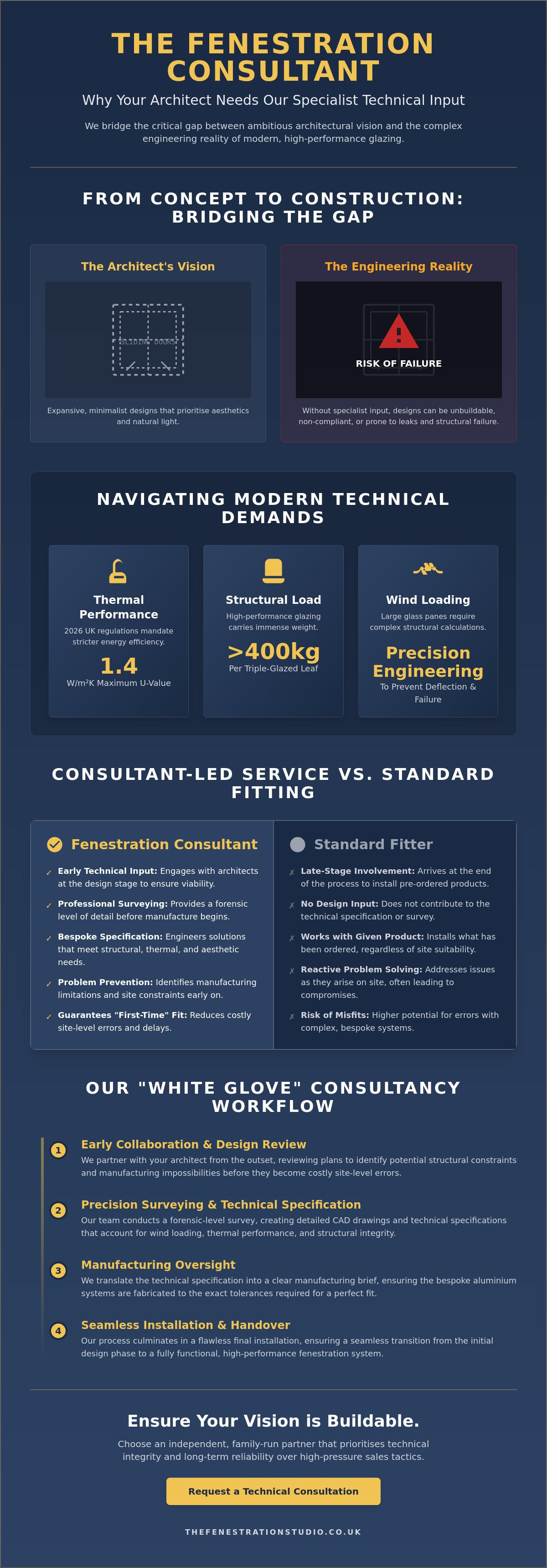
The regulatory landscape has shifted significantly. The 2022 and 2026 updates to Part L of the Building Regulations have made specialist input mandatory for compliance. Achieving the required U-value of 1.4 W/m²K or lower across a whole window system is a complex engineering challenge. As the market moves towards minimalist, ultra-slim aluminium profiles, the margin for error is non-existent. Our role has evolved from a traditional salesperson to a technical advisor who ensures that "minimalist" designs don't compromise on structural integrity or thermal performance.
Fenestration vs. Standard Window Fitting
There's a fundamental difference between a "fitter" and a consultant-led installation. A fitter typically arrives at the end of the process to install pre-ordered products. In contrast, a consultant-led service prioritises the technical specification and professional survey long before manufacture begins. This ensures that aluminium sliding doors or aluminium windows are built to the exact requirements of the site. By providing professional surveying and technical specification, we offer a forensic level of detail that guarantees a "first-time" fit for bespoke systems.
Why Your Architect Benefits from Early Technical Input
Architecture is an art of balance. Whilst an architect designs the aesthetic flow and spatial experience of a home, the technical reality of modern aluminium systems requires a forensic level of detail. This is exactly where The Role of a Fenestration Consultant: Why Your Architect Needs Our Technical Input provides the most value. By integrating specialist knowledge during the early design stages, we catch potential manufacturing impossibilities before they become site-level disasters. It's about ensuring that the "vision" is actually buildable.
Consider the shift toward triple-glazed aluminium sliding doors. With the 2026 energy standards demanding stricter U-values, triple glazing is becoming the default choice for high-performance envelopes. However, the weight of these units can be immense, often exceeding 400kg per leaf. Can the proposed aperture and head track support this load without deflection? We provide the specific structural calculations and CAD threshold sections that allow architects to design with confidence. We align our specifications with the rigorous standards of the Fenestration and Glazing Industry Alliance to ensure every installation is robust and durable.
This collaborative approach protects the original design intent. Instead of compromising on thin sightlines because of structural fears, we engineer solutions that maintain the minimalist aesthetic whilst meeting necessary wind loading requirements. It's a systematic way to bridge the gap between a beautiful render and a functional, secure home. If you're currently in the planning phase, you can book a design consultation to align your technical specifications early.
Preventing Costly Change Orders
One of the most frequent industry pitfalls is the "flush track" failure. Architects often draw a seamless transition between indoor and outdoor spaces without accounting for the specific drainage requirements of the aluminium frame. Discovering this during the build phase leads to expensive structural modifications or compromised floor heights. By consulting early, we align floor level transitions and drainage paths during the design phase, preventing the need for structural steel modifications later in the project lifecycle.
A Partnership of Specialisms
This isn't about replacing the architect; it's about empowering them. We handle the complex mechanics of glazing, from specifying heritage-accurate profiles for sensitive renovations to calculating glass-to-wall ratios for modern extensions. This frees the design team to focus on spatial planning and interior flow. The result is a project that looks exactly like the original drawings but performs with the precision of a high-end, engineered machine.
The Technical "Devil in the Details": Performance and Precision
Precision is the hallmark of premium glazing. Whilst an architect defines the opening, a consultant engineers the performance within that void. This level of technical rigour is why The Role of a Fenestration Consultant: Why Your Architect Needs Our Technical Input is so critical. Modern ultra-slim systems leave no room for error; a single millimetre of misalignment in a thermal break or a poorly specified gasket can lead to catastrophic failure. We focus on the forensic details that prevent these outcomes, ensuring that your high-end installation remains as functional as it is beautiful.
The shift towards performance-driven design has changed how we view the building envelope. The Evolving Role of Facade and Fenestration highlights that the envelope is no longer a secondary element but a primary driver of building efficiency. For large-scale aluminium sliding doors, this means calculating specific wind loading requirements. If a frame is too flexible, the glass can crack or the locking mechanisms can jam under pressure. We ensure every specification meets PAS 24 and Document Q security standards, providing the necessary certification for building control and long-term peace of mind.
Weatherproofing is another area where "off-the-shelf" thinking fails. We design bespoke drainage paths and specify primary sealants that account for the unique exposures of your site. It's about more than just keeping water out; it's about managing condensation and ensuring long-term durability. By specifying high-quality aluminium front doors and windows with the correct thermal breaks, we eliminate the cold bridging that often plagues lower-quality installations.
Managing Complex Transitions
The most vulnerable part of any glazing installation is the interface where glass meets masonry, timber, or cladding. We design effective weep holes and hidden drainage systems to prevent internal water ingress. Large aluminium spans also require careful consideration of building movement. We specify expansion joints and flexible seals that allow the building to "breathe" without compromising the airtightness of your aluminium windows or sliding systems.
Acoustic and Solar Control
South-facing rooms with expansive glass are prone to overheating. We balance light transmission with thermal performance by specifying precise G-values and solar control coatings. For urban properties, we often recommend laminated glass to enhance sound reduction and security. This methodical approach ensures your living space remains comfortable, quiet, and energy-efficient throughout the year, regardless of the external environment.
The "White Glove" Consultancy Workflow: From Survey to Handover
A premium glazing project is not a simple retail transaction; it is a complex engineering project that requires a methodical, unhurried approach. Our "White Glove" workflow is designed to manage this complexity from the first sketch to the final adjustment. By establishing a structured framework, we ensure that The Role of a Fenestration Consultant: Why Your Architect Needs Our Technical Input remains a central pillar of the build. This process begins with an initial consultation where we align your lifestyle requirements with technical possibilities, ensuring that your choice of aluminium windows or doors is grounded in reality. You can book a design consultation to begin this collaborative journey.
Once the design intent is clear, we move into the technical specification phase. This is where we finalise the hardware, bespoke finishes, and specific glass performance metrics. We don't just provide a product; we provide a fully specified system that has been vetted for structural integrity and thermal compliance. This level of professional rigor ensures that the final manufacturing order is flawless, eliminating the risk of site-level errors that often plague budget-focused installations.
The Importance of the Professional Survey
Precision is non-negotiable when working with ultra-slim aluminium systems. A standard measurement is insufficient; we utilise laser-accurate surveying to account for every millimetre of the aperture. This phase is critical for identifying potential structural obstructions that architectural drawings might miss. For oversized aluminium sliding doors, we also assess site access and logistical requirements. Moving glass panels that weigh several hundred kilograms requires a calculated plan for craneage or specialist lifting equipment, all of which is handled during our survey process.
Managed Installation and Handover
The installation of high-performance glazing is a specialist trade that shouldn't be left to general builders. Our project managers coordinate directly with other site trades to ensure that the structural openings and drainage paths are prepared exactly to our specification. This coordination is vital for the flawless operation of aluminium bifolding doors and sliding mechanisms. Upon completion, we conduct a comprehensive handover, providing you with a detailed operation and maintenance manual to protect the long-term performance of your investment.
Our commitment to your project doesn't end when the fitters leave the site. We provide dedicated aftercare to ensure that every internal glazing system and external door continues to perform at its peak. This systematic approach provides the security and peace of mind that only a consultant-led service can offer. To ensure your architectural vision is supported by this level of technical precision, request a quote from our specialist team today.
Choosing the Right Partner for Your Aluminium Glazing Project
Selecting the right partner for a premium build is a decision that carries weight for decades. In an industry often crowded with high-pressure sales tactics and "one-size-fits-all" solutions, the value of independent, honest advice cannot be overstated. A truly consultative approach prioritises the technical integrity of the building envelope over a quick transaction. This is the core of The Role of a Fenestration Consultant: Why Your Architect Needs Our Technical Input; we provide a layer of accountability that ensures your investment in aluminium windows or sliding systems is protected by engineering precision rather than just marketing promises.
Choosing a family-run business offers a distinct advantage in terms of personal accountability. There is a level of care and long-term thinking that often gets lost in larger corporate structures. We combine this personal touch with a nationwide reach, ensuring that whilst our standards are high-level, our installation expertise is grounded in regional experience. Whether you are installing aluminium sliding doors in a coastal environment or heritage style windows in a protected urban centre, the specification must reflect the local climate and structural requirements. This methodical approach is what guarantees long-term reliability and thermal performance.
Evaluating Glazing Specialists
When vetting potential partners, the distinction between a "retailer" and a "consultant" is found in the detail of their process. You should look for specific "White Glove" service markers that suggest a higher level of professional rigour. Consider asking these critical questions before committing:
- Do they provide a comprehensive technical specification or just a basic quote?
- Is the survey conducted by a qualified technical surveyor using laser-accurate equipment?
- Can you see the product profiles in person to assess the finish and build quality?
- Do their professional reviews reflect a commitment to aftercare and technical success?
Next Steps for Your Project
Timing is everything in complex construction. The most effective time to engage a consultant is during RIBA Stage 3 (Developed Design). This is the window of opportunity where the architectural vision is firm, but the technical specifications haven't yet been locked into manufacturing orders. By collaborating at this stage, we can refine the glass performance, adjust threshold details, and ensure the structural openings are perfectly prepared for your bespoke aluminium systems.
The success of your project depends on the synergy between design and engineering. To ensure your architectural vision is supported by uncompromising technical standards, you can Book a Design Consultation to review your plans with our specialist team. Taking this step early provides the security and precision required for a flawless, high-performance glazing installation.
Engineering the Future of Your Architectural Vision
Your architectural vision deserves to be realised without technical compromise or structural failure. We have explored how early collaboration prevents manufacturing errors whilst ensuring your home meets the rigorous 2026 thermal standards. By bridging the gap between design and engineering, we protect the aesthetic integrity of your premium project. This systematic approach ensures that complex glass interfaces perform with the precision of a high-end machine, regardless of the site's environmental challenges.
Understanding The Role of a Fenestration Consultant: Why Your Architect Needs Our Technical Input is the first step toward a flawless installation. As an independently run family business, we provide a nationwide White Glove installation service that specialises in premium slimline aluminium systems. We don't just supply products; we engineer the critical interfaces that make your home perform beautifully. This methodical oversight provides the security and peace of mind you need for a stress-free build journey.
If you're ready to secure the technical success of your build, Request a Technical Quote for Your Project today. Let's transform your architectural drawings into a high-performance reality that stands the test of time.
Frequently Asked Questions
What exactly does a fenestration consultant do?
A fenestration consultant acts as the technical link between your architect's aesthetic vision and the physical engineering of high-performance glazing. We specify precise aluminium systems, calculate structural loads for oversized sliding doors, and ensure every opening meets the latest Building Regulations. This oversight prevents manufacturing errors and ensures that complex designs are actually buildable on-site. It's about managing technical risk so the final installation performs as intended.
Why can’t my architect handle the window and door specifications?
Whilst architects are masters of spatial design, modern aluminium glazing has become a highly specialised engineering field. The 2026 Sustainable Building Materials Regulations require whole-window U-values of 1.4 W/m²K or lower, which demands forensic technical knowledge of thermal breaks and glass coatings. The Role of a Fenestration Consultant: Why Your Architect Needs Our Technical Input is to provide this niche depth, protecting the design from technical failure.
At what stage of the build should I hire a fenestration consultant?
You should ideally engage a consultant during RIBA Stage 3, which is the developed design phase. This timing allows us to review architectural drawings before structural openings are finalised or manufacturing orders are placed. Catching design flaws at this stage prevents expensive site modifications later. It ensures that your heritage style windows or aluminium bifold doors fit perfectly within the engineered aperture from the very first day.
Do you provide professional surveying as part of your service?
Yes, we provide comprehensive, laser-accurate surveying as a core part of our consultancy. This isn't a basic measurement; it's a forensic assessment of the site’s structural readiness and logistical access. We identify potential structural obstructions and drainage requirements that standard drawings might overlook. This precision ensures your bespoke aluminium windows and doors are manufactured to the exact millimetre, guaranteeing a flawless fit and superior weatherproofing.
Is a fenestration consultant more expensive than buying direct from a manufacturer?
A consultant-led approach prioritises long-term value and risk mitigation over the initial purchase price. Buying direct from a manufacturer often leaves the technical burden on the homeowner or builder, which can lead to expensive site-level errors. Our input ensures the specification is correct the first time. This often saves thousands in avoided remedial works and structural modifications that typically occur when technical details are overlooked during the design phase.
How does technical input affect the thermal performance of my home?
Technical input is vital for achieving the 75-80% reduction in CO2 emissions targeted by the Future Homes Standard. We navigate complex thermal calculations to ensure your aluminium sliding doors and roof lanterns contribute to a high-performing building envelope. By specifying the correct thermal breaks and solar control coatings, we eliminate cold bridging. This prevents the overheating and condensation issues common in modern glass-heavy residential designs.
Can you work with my existing architect and builder?
We operate as a collaborative partner to your existing design and construction team. Our role is to empower your architect by providing accurate CAD details and threshold sections whilst coordinating directly with your builder on-site. This clear communication ensures a seamless transition from the drawing board to the final installation. We handle the glazing mechanics, allowing your architect to focus on the broader spatial design of your home.
What is included in your "White Glove Service"?
Our "White Glove Service" represents a premium, end-to-end management of your glazing project. This includes initial design alignment, forensic surveying, technical specification, and installation by our specialist teams. We handle the complex logistics of oversized glass panels and provide a dedicated aftercare package. This systematic approach ensures the long-term performance and security of your aluminium installation, providing a stress-free experience from initial consultation to final handover.