Can a sliding door with a completely flush threshold truly withstand a British winter without compromising your interior? It's a common concern for homeowners who desire a seamless transition to the garden but fear the practicalities of drainage and thermal efficiency. When evaluating Cortizo Cor Vision vs. Cor Vision Plus: Understanding the Threshold & Performance Differences, the choice isn't just about aesthetics; it's about meeting the rigorous 2026 Building Regulations whilst maintaining structural integrity.
You likely want the slimmest possible sightlines without failing the mandatory 1.4 W/m²K U-value for replacement projects or the 0.8 W/m²K target for new builds. This article clarifies the critical technical distinctions between these two leading systems, from their hidden drainage capabilities to their support for automated operation. You'll discover exactly which system supports the 700kg sashes required for large scale architectural openings and how to ensure your threshold remains weather-tight. By the end, you'll have a clear decision framework to select the system that balances expansive glass with uncompromising performance.
Key Takeaways
- Identify why the Plus model is essential for oversized architectural openings, supporting sashes up to 4000mm and integrated motorisation for effortless operation.
- Learn how to navigate the 2026 Building Regulations by matching your project type to the correct system, ensuring your replacement or new build project remains fully compliant.
- Understand the technical requirements for achieving a truly flush threshold whilst maintaining superior weather protection through advanced drainage gutter systems.
- Gain a definitive framework for choosing between Cortizo Cor Vision vs. Cor Vision Plus: Understanding the Threshold & Performance Differences based on your specific structural opening and budget.
- Discover how glazing thickness impacts acoustic and thermal performance, with the Plus system accommodating high-performance triple glazing up to 54mm for maximum insulation.
The Evolution of Minimalist Glazing: Introducing the Cortizo Sliding Range
Modern British architecture has undergone a radical shift. Homeowners and architects now prioritise the "glass wall" aesthetic, seeking to dissolve the boundary between the interior and the garden. Cortizo has emerged as the industry standard for this look, specifically through its Cor Vision range. Unlike traditional sliding doors that rely on heavy mechanical fixing, this series uses structurally bonded glass to achieve its ultra-slim profile. It is a sophisticated engineering solution. Selecting the right system requires a professional partner who understands how to balance aesthetic desire with structural reality.
The Core Philosophy: Maximum Glass, Minimum Aluminium
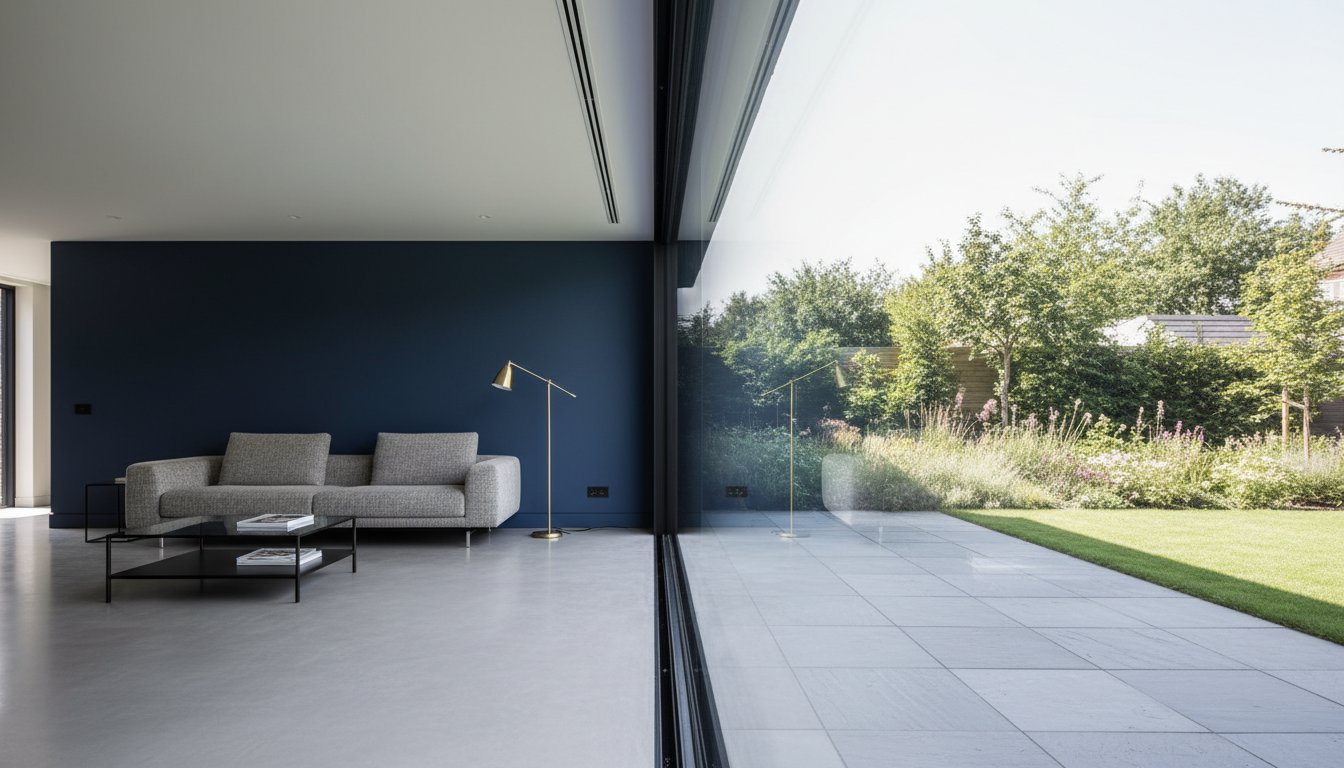
The hallmark of both systems is the 20mm interlock. This central sightline is exceptionally narrow, yet it provides the necessary strength for large spans. By bonding the glass directly to the aluminium frame, Cortizo maximises the glazed area. This technique relies on the inherent strength of Architectural Glass to support the structure, rather than just the metal itself. It is a precise science. The result is a system that supports frameless corners and pocket door configurations, where the glass slides entirely into a wall cavity. These features create a feeling of total transparency that was once reserved for high-end commercial projects.
Cor Vision vs. Cor Vision Plus: A Quick Overview
Choosing between the standard and the Plus model depends on the scale of your architectural vision. The standard Cor Vision is ideal for typical residential extensions. It offers a balance of slim aesthetics and manual ease. However, for those looking to push the boundaries of scale, the Cor Vision Plus is the necessary choice. This distinction is central to Cortizo Cor Vision vs. Cor Vision Plus: Understanding the Threshold & Performance Differences. Whilst both share a minimalist DNA, the Plus model is engineered for significantly larger panels and heavier glazing units. It is the heavy-duty sibling in the family.
We offer both systems through our aluminium sliding doors service. Because these systems are technically demanding, we employ a "White Glove" approach to every installation. This ensures that the precision of the engineering is matched by the precision of the fit. We don't just deliver a product. We provide a managed journey from the initial consultation to the final result, ensuring your investment is protected by professional rigour. In the following sections, we will break down the specific dimensional and thermal performance metrics that define these two systems.
Dimensional Capabilities: Comparing Scale, Weight, and Glass Ratios
The scale of your architectural ambition is the primary driver when choosing between these two systems. Whilst aesthetics are often the initial focus, the physical dimensions of your opening will ultimately dictate the engineering requirements. Large expanses of glass create significant structural loads. Understanding the relationship between panel size, weight, and the resulting "feel" of the door is essential for a successful installation. When comparing Cortizo Cor Vision vs. Cor Vision Plus: Understanding the Threshold & Performance Differences, the distinction becomes clear once you move beyond standard residential sizes.
Standard Cor Vision: The Slimline Specialist
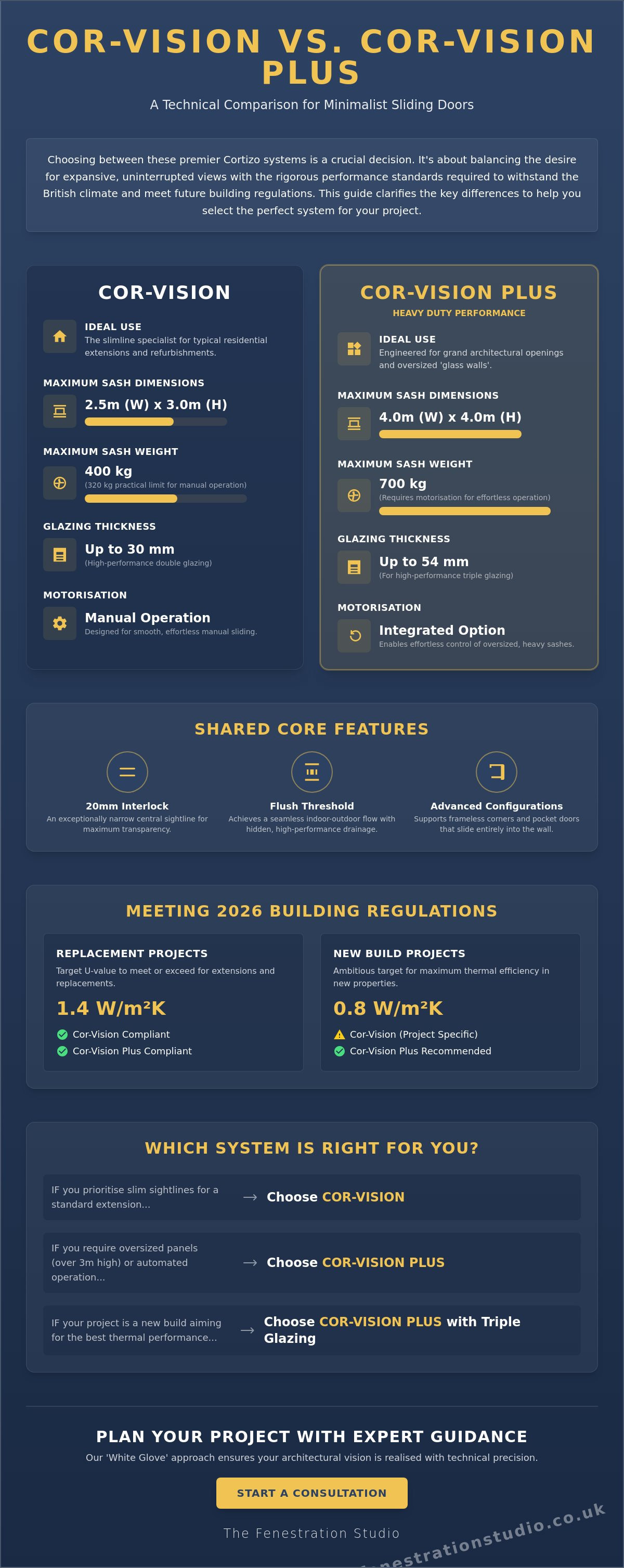
The standard Cor Vision system is engineered for typical residential refurbishments and extensions. It supports maximum sash dimensions of approximately 2.5 metres in width and 3.0 metres in height. Whilst the system is rated for a maximum weight of 400kg per sash, we often advise that 320kg represents the practical ceiling for effortless manual operation. Beyond this point, the physical effort required to move the panels can detract from the premium experience. It remains the preferred choice for projects where slim sightlines are the priority, but the overall structural opening remains within conventional limits.
Cor Vision Plus: Pushing the Boundaries of Scale
For grand architectural projects, the Cor Vision Plus offers true creative freedom. It is designed to accommodate exceptionally large panels, reaching up to 4.0 metres in both width and height. This system achieves a glass-to-frame ratio of up to 94%, maximising the glazed area for an uncompromised view. To support such vast panes, the Plus model features a slightly wider 25mm central interlock. This provides the necessary structural integrity for taller, wind-exposed elevations where a 20mm interlock might lack the required stiffness. When evaluating these systems, understanding Energy Performance Ratings is just as vital as measuring the opening, as larger glass units behave differently under thermal stress.
Weight handling is another area where the Plus model excels. It supports up to 700kg per sash when motorised, utilising specialised roller systems to ensure smooth movement. This makes it the only viable choice for "glass wall" designs that require triple glazing or oversized panels. If you're unsure which system fits your structural opening, you can book a design consultation with our technical team to review your drawings. We prioritise precision in the planning phase to avoid the common industry pitfall of specifying a system that is physically incapable of meeting the site's environmental demands.
The Threshold Challenge: Managing Floor Levels and Drainage Systems
Achieving a level floor finish from your living room to your patio is the ultimate goal of minimalist glazing. However, a flush threshold is more than a design choice; it is a complex engineering challenge. In the context of Cortizo Cor Vision vs. Cor Vision Plus: Understanding the Threshold & Performance Differences, the management of water ingress and floor levels determines the long-term success of your project. Without a robust drainage strategy, the very feature designed to enhance your home could become a liability during a typical British downpour. We prioritise a consultative approach to ensure your architectural vision doesn't compromise your home's protection.
Concealed Tracks and Drainage Gutters
A truly seamless transition relies on an invisible track system where the aluminium frame is recessed entirely into the floor. This creates a continuous surface, but it also creates a channel for rainwater. To counter this, we integrate a dedicated drainage gutter that sits beneath the external paving. Unlike budget alternatives that treat drainage as an optional extra, our approach ensures that heavy rainfall is captured and diverted away from the building's structure. Maintenance is straightforward. A quick seasonal check to keep the tracks clear of debris ensures the drainage remains efficient, protecting your interior from moisture throughout the year.
Threshold Depth and Structural Opening Requirements
The physical footprint of the track system varies significantly between the two models. The standard Cor Vision typically requires a track width of approximately 116mm for a twin-track configuration. In contrast, the Cor Vision Plus demands a much larger footprint, often 180mm or more depending on the number of panels. This increased depth is necessary to support the larger glass units and the more complex roller mechanisms required for heavier loads.
The "Plus" model requires significantly more floor depth for the recessed track to be housed correctly. This has a direct impact on your structural steel placement and wall thickness. If your architect hasn't accounted for this 180mm+ depth early in the design phase, you may find yourself limited to the standard system. Professional surveying is non-negotiable here. We ensure that floor levels are perfectly aligned before the first piece of aluminium is cut, avoiding the common industry pitfall of misaligned thresholds that fail to meet weather-proofing standards.
If you're at the planning stage and need to understand how these dimensions impact your build, you can request a quote to see a technical breakdown for your specific opening. We focus on providing the clarity you need to move forward with confidence, ensuring your threshold is as high-performing as it is beautiful.
Thermal Efficiency and Acoustic Performance: Meeting 2026 Standards
The conversation around minimalist sliding doors has shifted significantly. Whilst the visual appeal of slim sightlines remains a priority, the 2026 UK Building Regulations have introduced a non-negotiable performance mandate. When comparing Cortizo Cor Vision vs. Cor Vision Plus: Understanding the Threshold & Performance Differences, the most critical "threshold" is now the thermal one. For replacement projects in existing dwellings, the required U-value of 1.4 W/m²K is achievable by both systems. However, for new builds aiming for the Future Homes Standard target of 0.8 W/m²K, the choice becomes technically constrained. We provide the expertise to ensure your project doesn't just look modern, but remains legally compliant.
The standard Cor Vision typically achieves a U-value of approximately 1.3 W/m²K. This makes it a compliant and sophisticated choice for most home renovations and extensions. However, its 30mm glazing capacity limits it to double-glazed units. For high-exposure coastal sites or noisy urban environments, the Cor Vision Plus offers a decisive advantage. Its ability to accommodate glass units up to 54mm thick allows for high-performance triple glazing. This is essential for pushing thermal performance closer to the 0.8 W/m²K benchmark required for new constructions.
Triple Glazing and the Quest for the 0.8 U-value
The deeper frame of the Plus model provides the necessary volume for advanced thermal breaks and thicker glass configurations. This extra glazing depth allows for an acoustic insulation rating of up to 43 dB. It creates a sanctuary of quiet, even in busy city centres. Whilst hitting the exact 0.8 W/m²K target for new builds requires specific high-performance glazing specifications, the Plus model is the only system in the range engineered to meet these stringent future standards. It balances architectural scale with uncompromising energy efficiency.
Exclusive Feature: Motorisation in the Cor Vision Plus
A common industry pitfall is the assumption that any sliding door can be automated. This isn't the case. The standard Cor Vision is designed strictly for manual operation. Its rollers are high-quality, but they aren't built for the torque of a motor. If your architectural vision includes panels exceeding 300kg, manual sliding can become a chore rather than a luxury. Precision matters here.
The Cor Vision Plus is the only system in this range that supports fully integrated motorisation. This allows for the effortless movement of sashes weighing up to 700kg at the touch of a button. These systems can be seamlessly integrated with smart home automation, allowing you to control your environment via voice or tablet. It's the ultimate expression of modern convenience. If you're planning a grand-scale project, you can request a quote to explore the specific technical requirements for an automated sliding system.
Selecting the Right System for Your Architectural Vision
Choosing between these two systems requires a clear-eyed assessment of your project's structural limits and your lifestyle expectations. It is not merely a matter of cost. It is a decision about how you will interact with your home daily. When evaluating Cortizo Cor Vision vs. Cor Vision Plus: Understanding the Threshold & Performance Differences, you must weigh the desire for ultra-slim sightlines against the physical demands of your site. We act as your technical partner throughout this process, ensuring that the system you specify today remains high-performing for decades.
When to Choose the Standard Cor Vision
The standard Cor Vision is the definitive choice for most residential refurbishments and extensions where the total opening width remains under 6 metres. It offers a cost-effective route to a high-end minimalist aesthetic without the need for the deeper floor recesses required by the Plus model. If you prefer the tactile feel of manual operation and your design doesn't exceed 3 metres in height, this system provides the slimmest overall frame depth. It is a refined solution for projects where the goal is to modernise an existing dwelling whilst comfortably meeting the 1.4 W/m²K thermal standard.
When the Cor Vision Plus is Non-Negotiable
For grand-scale architectural glass walls, the Cor Vision Plus is the only viable engineering choice. If your design features heights over 3 metres or requires sashes that exceed 400kg, the structural integrity of the Plus system is essential. It is also the necessary specification for projects requiring the absolute highest levels of thermal and acoustic insulation, particularly in noisy urban environments or exposed coastal locations. If motorisation is a key requirement for your smart home integration, the Plus system is your only option. We recommend you book a design consultation to see these systems in detail and discuss your specific structural requirements.
Investing in premium aluminium glazing is a long-term commitment to quality. To protect this investment, we provide a "White Glove Service" for every Cortizo installation. This process begins with a comprehensive technical survey to verify floor levels and drainage requirements before manufacturing begins. These systems are engineered with millimetre precision; they demand an installation team that operates with the same professional rigour. We don't just supply doors. We manage the entire project lifecycle to ensure a stress-free experience and a result that exceeds your architectural vision.
Before making your final selection, consider this summary checklist:
- Scale: Does your opening exceed 6 metres in width or 3 metres in height?
- Functionality: Is automated, motorised operation a priority for your lifestyle?
- Performance: Do you require triple glazing to meet a specific acoustic or thermal target?
- Structure: Does your floor slab allow for the 180mm+ depth required by the Plus track?
By answering these questions early in the design phase, you avoid the common industry pitfalls of specification errors and mid-build delays. Our role is to guide you through these technicalities with quiet confidence, ensuring your home achieves the perfect balance of scale and performance.
Future-Proofing Your Architectural Glazing
Selecting between Cortizo’s flagship systems is a pivotal moment in your project's design. It's about more than just slim sightlines; it's about ensuring your home meets the thermal demands of the 2026 Building Regulations whilst maintaining structural integrity. By evaluating Cortizo Cor Vision vs. Cor Vision Plus: Understanding the Threshold & Performance Differences, you've identified whether your opening requires the 700kg weight capacity of the Plus model or the streamlined elegance of the standard version.
Precision in the planning phase prevents costly errors during installation. We are specialists in structurally bonded minimalist glazing, providing an expert White Glove installation nationwide. Every project we undertake includes a comprehensive 10-year warranty, giving you total peace of mind in your investment. Your architectural vision deserves the technical rigour we bring to every build.
Request a professional technical survey for your Cortizo project to ensure every millimetre of your threshold is perfectly aligned and weather-tight.
Frequently Asked Questions
Can the standard Cortizo Cor Vision be triple glazed?
No, the standard Cor Vision system is specifically designed for double glazing with a maximum unit thickness of 30mm. If your project requires triple glazing to meet the most stringent 2026 thermal standards, you must specify the Cor Vision Plus. This heavy-duty system accommodates glazing units up to 54mm thick, providing the depth necessary for high-performance triple-glazed units.
What is the minimum interlock width for both systems?
The standard Cor Vision features an ultra-slim 20mm central interlock, which is ideal for maintaining a minimalist aesthetic in residential extensions. The Cor Vision Plus uses a slightly wider 25mm interlock. This extra 5mm is a technical necessity to provide the structural stiffness required for panels that reach up to 4 metres in height, particularly in wind-exposed locations.
Is a flush threshold completely waterproof in the UK climate?
Yes, a flush threshold is entirely weather-tight provided it is installed with a dedicated external drainage gutter. This channel is engineered to capture heavy British rainfall before it reaches the track, diverting it safely away from the building. Proper surveying ensures that the internal floor levels and external drainage are perfectly aligned to prevent any risk of water ingress.
How much deeper is the track for the Cor Vision Plus compared to the standard model?
The track for the Cor Vision Plus is significantly deeper, requiring at least 180mm of floor depth for a twin-track configuration. In comparison, the standard Cor Vision only requires approximately 116mm. This is a vital consideration for your structural engineer, as the "Plus" model demands a much larger recessed opening in the floor slab to house its heavy-duty components.
Can I have a pocket door configuration with the Cor Vision Plus?
Yes, the Cor Vision Plus supports pocket door configurations, allowing the panels to slide entirely into a wall cavity. This creates a 100% clear opening that removes all visual barriers between your living space and the garden. When evaluating Cortizo Cor Vision vs. Cor Vision Plus: Understanding the Threshold & Performance Differences, the "Plus" is often chosen for pocket doors due to its ability to handle the larger, heavier panels required for grand architectural spans.
Does the Cor Vision Plus require a motor to operate?
No, the Cor Vision Plus is available with manual operation for sashes weighing up to 400kg. However, if your architectural vision includes oversized panels that exceed this weight, motorisation becomes a necessity. The motorised system can move sashes up to 700kg with total precision, allowing you to control your environment at the touch of a button or via a smart home interface.
What are the maximum panel weights for manual operation?
Both systems are rated for a maximum manual sash weight of 400kg. Whilst this is the technical limit, we typically advise that 320kg is the practical ceiling for the standard model to ensure the sliding action feels effortless. For sashes between 320kg and 400kg, the specialised roller systems in the Cor Vision Plus provide a smoother, more premium feel during manual operation.
How do these systems compare to traditional aluminium bifold doors for thermal efficiency?
These sliding systems generally offer superior thermal efficiency compared to traditional aluminium bifold doors. Because sliding doors have a much higher glass-to-frame ratio, there are fewer thermal bridges where heat can escape. The Cor Vision Plus, in particular, can achieve U-values as low as 0.9 W/m²K, making it a far more efficient choice for meeting the latest UK energy standards than most bifolding alternatives.