Why would one firm provide a proposal for a set of aluminium windows whilst another demands double for what appears to be the same glass? It's a question that leaves many homeowners feeling trapped between the fear of being overcharged and the anxiety of hiring an unreliable installer. You're right to be sceptical. At The Fenestration Studio, we understand this dilemma, and the answer to Why are some window quotes so much cheaper than others? usually lies hidden beneath the surface of the frame and within the small print of the service agreement.
The Fenestration Studio understands that a window project is a significant financial commitment; you deserve to know exactly where your investment is going. This article provides a clear framework to help you compare quotes fairly and identify the technical differences that separate budget products from high-performance solutions. We'll explore how the 2026 Building Regulations, specifically the updated Part L thermal efficiency standards, impact modern installations. You'll discover why the long-term ROI of premium glazing depends on precision engineering, professional FENSA certification, and the invisible components that keep your home secure and warm.
Key Takeaways
- Recognise how high-grade aluminium alloys and advanced polyamide thermal breaks separate architectural-grade investments from budget alternatives.
- Gain clarity on why are some window quotes so much cheaper than others by uncovering the hidden risks of a standard sales measure versus a professional survey.
- Ensure your investment complies with the latest 2026 Building Regulations to avoid future legal complications or issues when selling your home.
- Evaluate the true value of a premium installation service that prioritises property protection, precision fitting, and long-term structural integrity.
- Utilise our professional framework to demand line-item transparency and confirm that essential costs like FENSA certification and waste disposal are included.
Decoding the Discrepancy: Why Window Pricing Varies Across the UK
Receiving a set of wildly different figures for your home renovation is often a source of genuine frustration. You might wonder, Why are some window quotes so much cheaper than others? when the dimensions and materials appear identical on paper. This disparity is what we define as the 'Glazing Price Gap'. It represents the fundamental difference between volume-manufacturing, where speed and cost-reduction are the primary drivers, and bespoke engineering, where the focus remains on long-term structural integrity and thermal performance.
A professional quote is far more than a simple receipt for glass and metal. It's a legally binding specification of performance. When you sign a proposal, you aren't just buying a product; you're securing a guarantee that the installation will meet the 2026 Building Regulations, specifically the Part L thermal efficiency standards. To understand the variance in pricing, we must look at the 'Three Pillars of Cost':
- Material Grade: The difference between primary, high-performance alloys and thinner, recycled profiles that may lack structural rigidity.
- Installation Rigour: The precision of the fit and the quality of the specialised sealing materials used to prevent air leakage.
- Service Lifecycle: The long-term support and FENSA certification that protects your property value and provides peace of mind.
The Illusion of Similarity
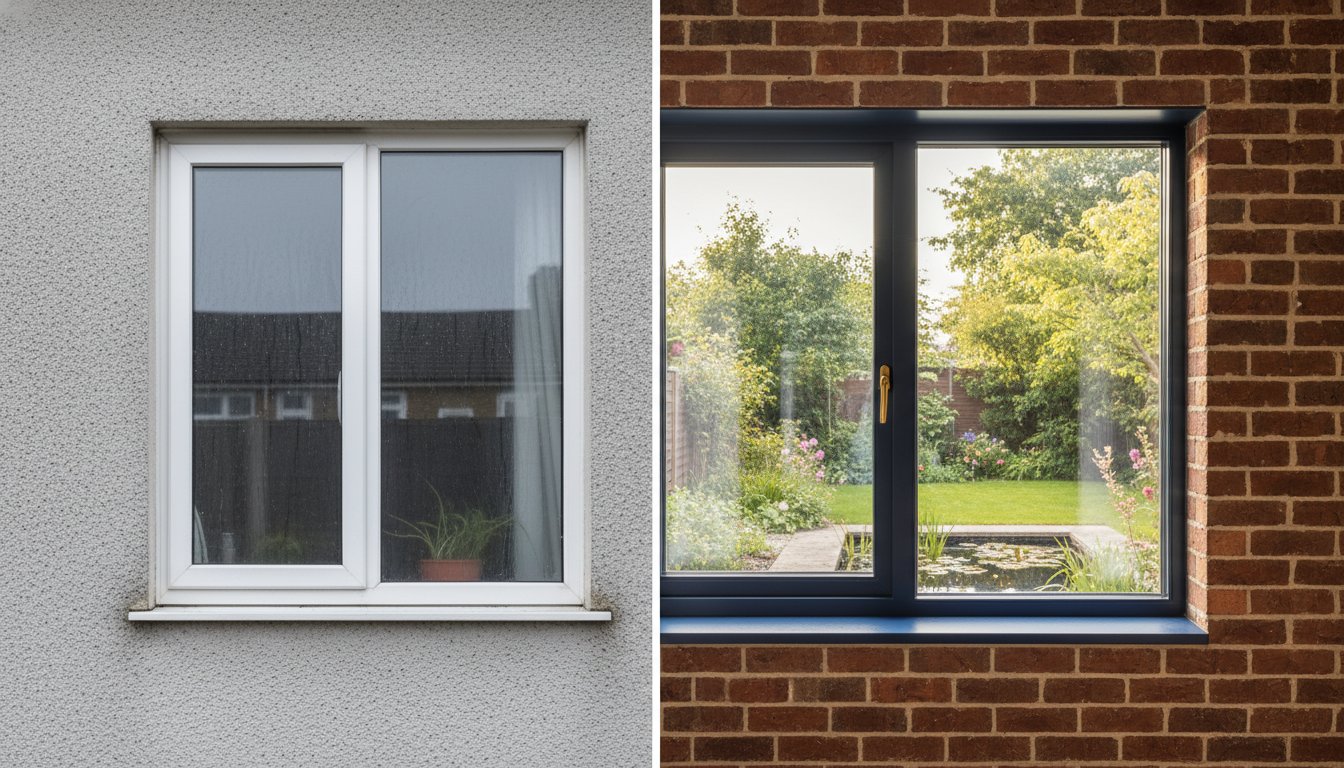
Two aluminium windows can look virtually indistinguishable in a PDF brochure or a showroom. However, their behaviour during a British storm tells a different story. Budget systems often rely on marketing claims that highlight aesthetics whilst obscuring a lack of technical data. In contrast, premium systems are defined by their internal engineering. This includes the complexity of the insulated glazing units, which use specific gas fills and low-emissivity coatings to reach the required U-values. A cheaper quote often masks a compromise in these internal components, leading to condensation or draughts within just a few years.
National Standards vs. Local 'Supply and Fit'
The business model of your chosen provider significantly impacts the final figure. Large national firms often carry heavy overheads and pay high-pressure sales commissions, which are inevitably passed on to you. Conversely, the 'man-with-a-van' model may offer a tempting price, but this often lacks the technical expertise required for complex architectural projects. We advocate for a consultative approach. Here, the price reflects a professional survey and a methodical installation process. It ensures you aren't paying for 'brand fluff', but for a systematic project lifecycle that guarantees precision and genuine ROI. Scrutinising the details now prevents the financial risk of a failed installation later.
Materiality and Engineering: What You Are Actually Paying For
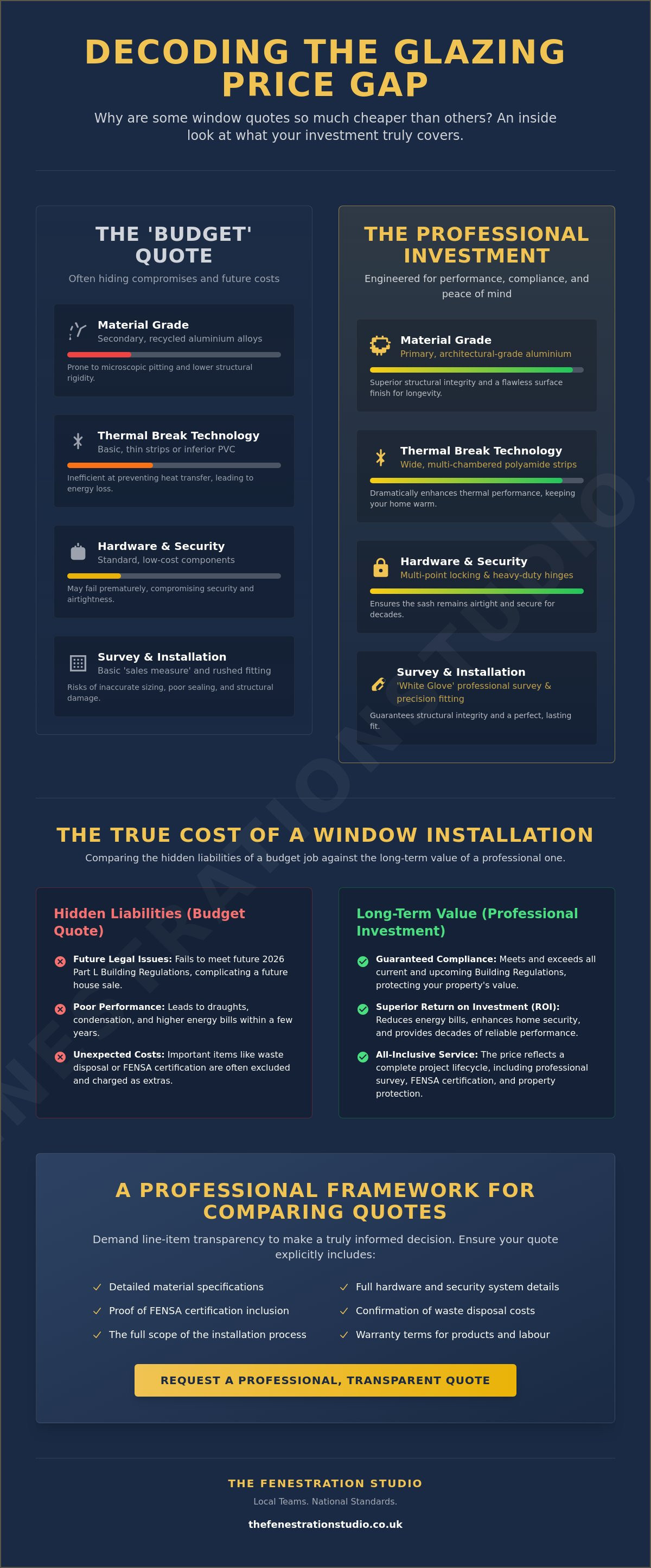
When you evaluate a proposal, you're looking at the culmination of thousands of engineering decisions. The physical components of a window account for a significant portion of the total cost; yet, these are often the areas where budget installers cut corners. Why are some window quotes so much cheaper than others? Frequently, it's because the quote relies on secondary, recycled aluminium alloys rather than primary, architectural-grade billets. Primary aluminium offers superior structural integrity and a flawless surface finish, whilst lower-grade alternatives can be prone to microscopic pitting and structural fatigue over time.
The "heart" of any modern aluminium frame is the thermal break. This internal polyamide bridge separates the inner and outer skins of the profile to prevent heat transfer. Premium systems use wide, multi-chambered polyamide strips that significantly enhance the window’s thermal performance. In contrast, cheaper systems might use thinner strips or even inferior PVC breaks that don't manage thermal expansion as effectively. This choice directly impacts whether your home remains a sanctuary or becomes a source of energy loss. High-quality hardware also plays a vital role. A multi-point locking system and heavy-duty hinges might cost four times more than standard components, but they ensure the sash remains airtight and secure for decades rather than months.
Glass specifications have evolved far beyond simple double glazing. Modern installations often require acoustic laminates for noise reduction or solar control coatings to prevent overheating in south-facing rooms. As noted in this article, the variables in glass and frame technology are vast, and these technical nuances are exactly what separate a high-performance investment from a basic replacement. If you're looking for precision-engineered specifications, you can explore our aluminium windows to see how these materials work in practice.
Powder Coating and the Qualicoat Standard
The finish on your windows must withstand the corrosive nature of the British climate. Standard powder coatings may look acceptable initially, but they often peel or fade within 36 months if not applied to rigorous standards. We insist on Qualicoat-certified finishes, which involve a multi-stage pre-treatment process to ensure maximum adhesion. Qualicoat is the industry benchmark for architectural finishes. Without this certification, a cheaper quote likely lacks the "marine-grade" protection required for long-term aesthetic durability.
Thermal Efficiency and U-Values
As of 2026, Part L of the Building Regulations mandates a maximum U-value of 1.4 W/m²K for replacement windows. Budget quotes often aim for this bare minimum, providing just enough insulation to pass inspection. Premium options, however, frequently reach U-values as low as 0.8 W/m²K through advanced frame depth and triple glazing. This difference might seem marginal on paper, but it results in a substantial reduction in energy bills and a noticeable improvement in internal comfort. Before committing to a project, you might find it helpful to book a design consultation to review these technical performance markers in detail.
The 'White Glove' Difference: Surveying and Installation Standards
High-grade aluminium and precision glass only perform as intended if the installation is flawless. If you've ever asked why are some window quotes so much cheaper than others?, the answer often lies in the human element. A budget quote typically treats installation as a manual task to be completed as quickly as possible. In contrast, a premium service views it as a critical engineering phase. This "White Glove" approach ensures that your home is treated with respect and that the technical specifications you've paid for are actually realised in the final fit.
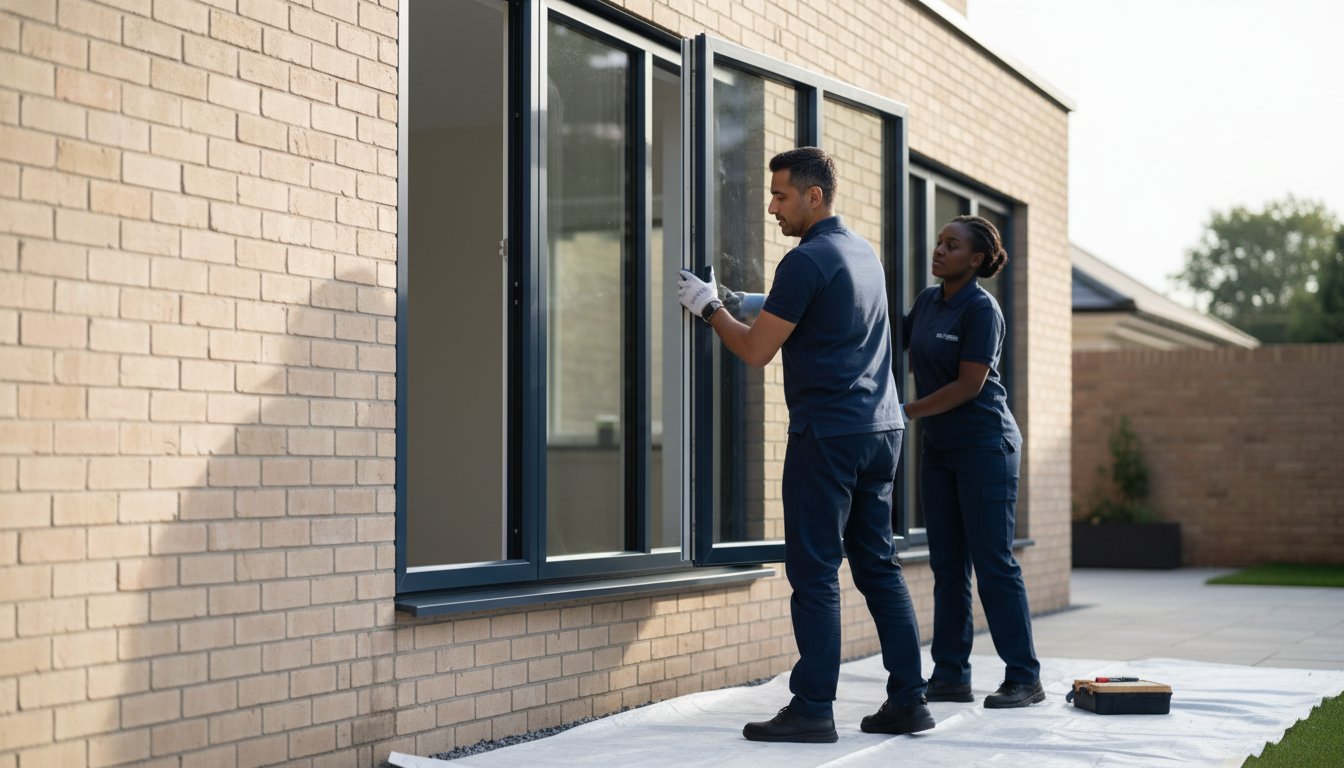
We define White Glove service through a commitment to property protection and absolute precision. It begins with local installation teams who operate with national oversight, ensuring high standards of accountability. From the moment the team arrives, they use specialised floor protection and dust-control measures to safeguard your interior. It's not just about fitting a window; it's about a stress-free experience that ends with a thorough handover. This includes a full demonstration of the locking mechanisms and a clear explanation of your aftercare support, ensuring you're never left with a stiff handle or a mystery draught two years down the line.
The Technical Survey vs. The Rough Guess
The primary cause of installation failure is a poor initial measure. Many budget firms rely on a 'sales measure' to order products, leading to gaps that must be filled with excessive sealant on-site. We utilise laser-level precision during a dedicated technical survey to ensure bespoke engineering fits perfectly the first time. Whilst technical data sheets provide the theory, as seen in guides like understanding the NFRC energy performance label, the survey is what translates that performance into your specific building fabric. Precision manufacturing eliminates the need for 'making it fit' with crude on-site adjustments.
Installation Materials: The Invisible Components
The longevity of your window seal depends on materials that are rarely mentioned in a quote. Cheap expanding foams and basic silicones can shrink or degrade within five years, compromising the thermal break you've invested in. We prioritise high-modulus sealants and specialised fixings that maintain their integrity through decades of thermal expansion and contraction. It's the difference between merely 'fitting' a window and fully integrating it into your home's envelope. You can read our product reviews to see how this attention to detail impacts the final result for our clients across the UK.
Hidden Liabilities: The True Cost of a 'Budget' Installation
Choosing the lowest bid for a glazing project can feel like a strategic victory, yet it often initiates a cycle of hidden financial liabilities. Why are some window quotes so much cheaper than others? The answer frequently lies in the omission of essential legal compliance and long-term security features. A bargain price today can quickly transform into a significant liability when you come to sell your property or when a sub-standard component fails prematurely.
The financial risk of a "cheap" installation is often deferred rather than avoided. For example, a homeowner might save £2,000 on an initial quote by choosing a firm that cuts corners on material quality and survey precision. However, if those windows fail to meet structural or thermal standards, the subsequent remedial work can easily result in a £5,000 repair bill within five years. Beyond the physical product, security remains a paramount concern. Sub-standard locking mechanisms don't just compromise your safety; they can also lead to increased home insurance premiums or, in the event of a break-in, the total rejection of a claim if the hardware fails to meet minimum security ratings.
Compliance and Certification
Attempting to sell a house without the correct glazing certificates is a common cause of delayed or collapsed property chains. When you replace windows in the UK, you must be able to prove that the work complies with all relevant Building Regulations. FENSA/CERTASS registration is a legal requirement for most UK window replacements. A reputable quote should also include an Insurance-Backed Guarantee (IBG), ensuring your warranty remains valid even if the installation firm ceases trading. This protection is vital; a 10-year guarantee is worthless if the company behind it no longer exists.
The Impact on Property Value
The aesthetic difference between architectural-grade aluminium and "uPVC-style" aluminium is stark. High-performance systems offer the slim sightlines and heritage detailing that discerning buyers expect in the current market. Whilst premium heritage doors and windows act as a value-add feature, bulky, low-cost alternatives can actually detract from a home's "kerb appeal" and overall market valuation. Precision-engineered frames maintain their alignment and finish for decades, ensuring your home remains both beautiful and energy-efficient.
Before committing to a low-cost alternative, ensure you are comparing like-for-like in terms of legal protection and long-term security. To see how a professional specification is structured, you can request a professional quote that includes all necessary certifications and high-security hardware as standard.
A Professional Framework for Comparing Glazing Quotes
To make an informed decision, you must adopt a systematic method for vetting proposals. A professional framework allows you to strip away marketing language and focus on the technical reality of the project. Whilst you might still ask why are some window quotes so much cheaper than others?, the answer usually reveals itself through a lack of 'Line Item Transparency'. A premium quote should be an exhaustive document that includes every phase of the project lifecycle, from the initial survey to the final disposal of old frames. Use this 5-point checklist to scrutinise your options:
- Material Integrity: Confirm the use of primary aluminium billets and Qualicoat-certified finishes.
- Thermal Validation: Demand the whole-window U-value, ensuring it meets the 1.4 W/m²K requirement for 2026.
- Installation Protocol: Verify that the quote includes 'White Glove' protection and specialised high-modulus sealants.
- Regulatory Security: Ensure FENSA or CERTASS certification and an Insurance-Backed Guarantee are included.
- Fixed-Price Commitment: Check that the figure is a final contract price rather than a vague 'estimate'.
Prioritising the 'Total Cost of Ownership' over the 'Initial Purchase Price' is the hallmark of a savvy investment. A cheaper quote often ignores the long-term expenses of energy loss, hardware failure, and the potential for retrospective building control fees. If a proposal lacks technical drawings or fails to specify the exact hardware brands, consider it a significant red flag. You can view the specifications for our aluminium products to see how a professional technical breakdown should look.
Questions Every Homeowner Should Ask
Before signing any contract, you must clarify who is responsible for the precision of the project. Is the final survey carried out by a salesperson or a qualified technical engineer? A salesperson often looks for a 'rough fit', whilst an engineer ensures bespoke alignment. You should also ask for the specific U-value of the entire window assembly, not just the centre-pane glass rating. Finally, ask about the aftercare process. If a handle stiffens or a seal fails in three years, you need to know exactly how the company will organise a service call under your warranty.
Spotting Unrealistically Low Quotes
In the UK glazing industry, a quote that sits 30% lower than the market average usually indicates a compromise in safety or service. These 'unbelievable' prices often hide a lack of technical oversight or the use of sub-standard components that won't endure the British climate. The danger of 'estimate' quotes is that they allow for price hikes once the 'real' work begins. A fixed-price proposal provides the security you need for a stress-free renovation. If you're ready to review a transparent, high-performance specification, you can book a design consultation with our team to discuss your project requirements in detail.
Securing Your Architectural Investment
A window project is more than a simple home improvement; it's a long-term commitment to your property's performance and security. We've explored the technical nuances that define the glazing price gap, from the structural integrity of primary aluminium to the invisible precision of a professional survey. Understanding why are some window quotes so much cheaper than others? is the first step toward avoiding the hidden liabilities of sub-standard installations and non-compliant hardware.
By prioritising the total cost of ownership over a tempting initial price, you ensure your home remains energy-efficient and secure for decades. As specialists in high-end aluminium glazing, we provide an end-to-end White Glove Service delivered by nationwide expert installation teams. This systematic approach ensures every detail, from thermal breaks to FENSA certification, is handled with professional rigour. You deserve a result that balances architectural beauty with uncompromising engineering.
Request a transparent, technical quote for your project and begin your journey toward a high-performance home today.
Frequently Asked Questions
Why is aluminium so much more expensive than uPVC?
Aluminium is a premium architectural material that carries higher raw material costs and requires more complex manufacturing processes than bulk-extruded plastic. It offers superior structural strength, which allows for much slimmer sightlines and larger glass spans without the need for internal steel reinforcement. This engineering precision provides a significantly longer lifespan and better resistance to thermal expansion than uPVC alternatives.
Can I get a window quote without a technical survey?
You can receive an initial price based on rough measurements, but a fixed-price formal quote always requires a technical survey to ensure accuracy. A salesperson's measure is rarely sufficient for bespoke manufacturing. A technical survey identifies structural requirements and drainage paths, ensuring the product fits perfectly without the need for crude on-site modifications that might compromise the thermal seal.
Is there a standard UK price per window I should expect in 2026?
There is no single standard price because costs depend on technical specifications, dimensions, and the 2026 Building Regulations requirements. However, current industry data suggests a standard aluminium casement window typically costs between £600 and £850 to supply and fit. Why are some window quotes so much cheaper than others? Often, it's because those lower figures exclude essential components like trickle vents or high-performance thermal breaks.
What happens if my window installer isn't FENSA or CERTASS registered?
You will be legally responsible for obtaining a Building Regulations compliance certificate from your local authority. This process typically costs between £250 and £400 and involves a physical inspection of the work. Without this certification or a FENSA certificate, you'll likely encounter significant legal delays and additional costs when you eventually attempt to sell your home.
Does the colour of the aluminium frame affect the price of the quote?
Yes, choosing a non-standard RAL colour or a dual-colour finish, which is a different shade inside and out, usually increases the final quote. Standard colours like anthracite grey or black are often more cost-effective due to higher production volumes. Bespoke shades require a specific powder-coating run, which adds to the manufacturing lead time and the total investment required for the project.
How much should I expect to pay for a professional window survey?
Most premium installers include the cost of a technical survey within their formal quote rather than charging a separate fee. However, if you're hiring an independent surveyor, you might expect to pay between £200 and £400 depending on the project's complexity. A professional survey is a critical risk-mitigation step that prevents expensive manufacturing errors and ensures the windows integrate correctly with your building fabric.
What is the difference between an 'estimate' and a 'formal quote'?
An estimate is a rough calculation that is subject to change, whilst a formal quote is a fixed-price contract for a specific scope of work. Why are some window quotes so much cheaper than others? Sometimes a firm provides an estimate to hook a client with a low figure, only to increase the price after the survey. Always demand a fixed-price formal quote to ensure your financial security.
Why do some quotes include VAT and others don't?
Legally, quotes for residential work must include VAT at the standard 20% rate unless the project qualifies for a specific exemption, such as certain new-build schemes. Some installers omit VAT from their headline figure to make their price appear more competitive. Always check that your proposal is VAT inclusive to avoid an unexpected 20% surcharge on your final bill once the work is complete.