What if the most ambitious design element of your new extension was engineered to completely vanish? When weighing up Pocket vs. Corner Sliders: Which Architectural Configuration Suits Your Extension?, you aren't just choosing a door; you're deciding on the structural integrity and lifestyle flow of your home. It's natural to feel a sense of hesitation regarding the technical complexity of these installations. You want the expansive glass, but you also need to ensure your build meets the 1.4 W/m²K U-value requirements defined in the 2026 Building Regulations without compromising on thermal efficiency or stability.
We understand that navigating these specifications requires a partner who treats glazing as a precision engineering task rather than a simple retail purchase. This article provides a clear framework to help you distinguish between the hidden pocket system and the dramatic open-corner configuration. You'll discover the specific structural needs for each type and learn how to validate which style aligns with your specific extension layout. From managing the 25 per cent glazing area rule to achieving a flush threshold, we'll give you the confidence to move forward with a professional installation that secures your investment.
Key Takeaways
- Understand why modern British extensions are moving away from traditional patio doors towards integrated glazing that creates a seamless transition between indoor and outdoor living.
- Discover how pocket sliders achieve a 100 per cent clear opening by gliding into hidden wall cavities, offering an unobstructed view that standard stacking systems cannot match.
- Learn the structural requirements for corner sliders, including the cantilevered engineering needed to create a dramatic 90-degree opening without a fixed corner post.
- Compare the technical demands of Pocket vs. Corner Sliders: Which Architectural Configuration Suits Your Extension? to ensure your choice aligns with 2026 Building Regulations and thermal efficiency standards.
- Gain insight into the professional installation journey, ensuring your high-end aluminium sliding doors are specified with the precision required to prevent cold bridging and structural movement.
Understanding the Architectural Shift in Modern British Extensions
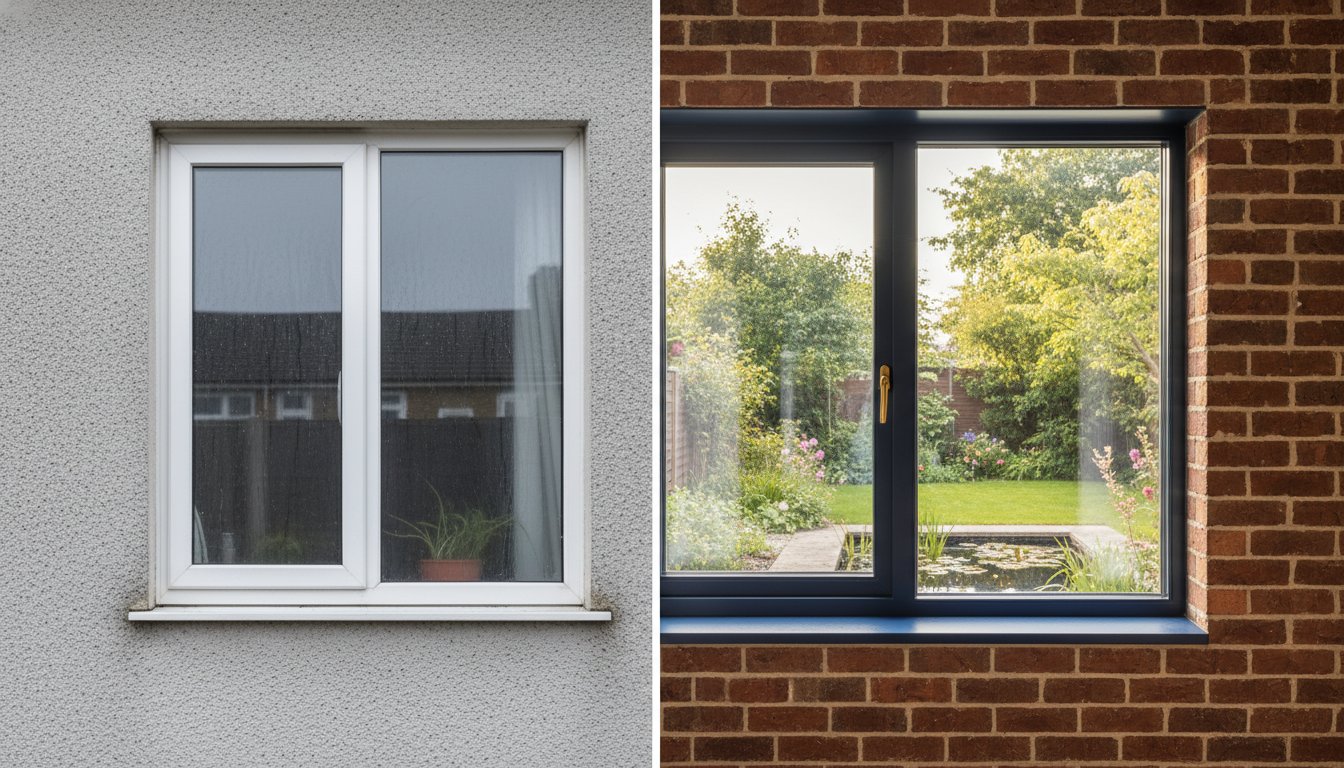
The traditional rear extension has undergone a radical transformation. Whilst previous decades focused on simple utility, the 2026 architectural landscape prioritises the total removal of physical barriers. Modern homeowners aren't looking for a standard patio door; they're seeking integrated architectural glazing that allows the garden to become an extension of the living space. This shift is driven by a desire for "dissolving" boundaries, where the transition between indoors and outdoors is felt rather than seen. Choosing the right system is no longer just a decorative choice, it's a fundamental decision about how you interact with your environment.
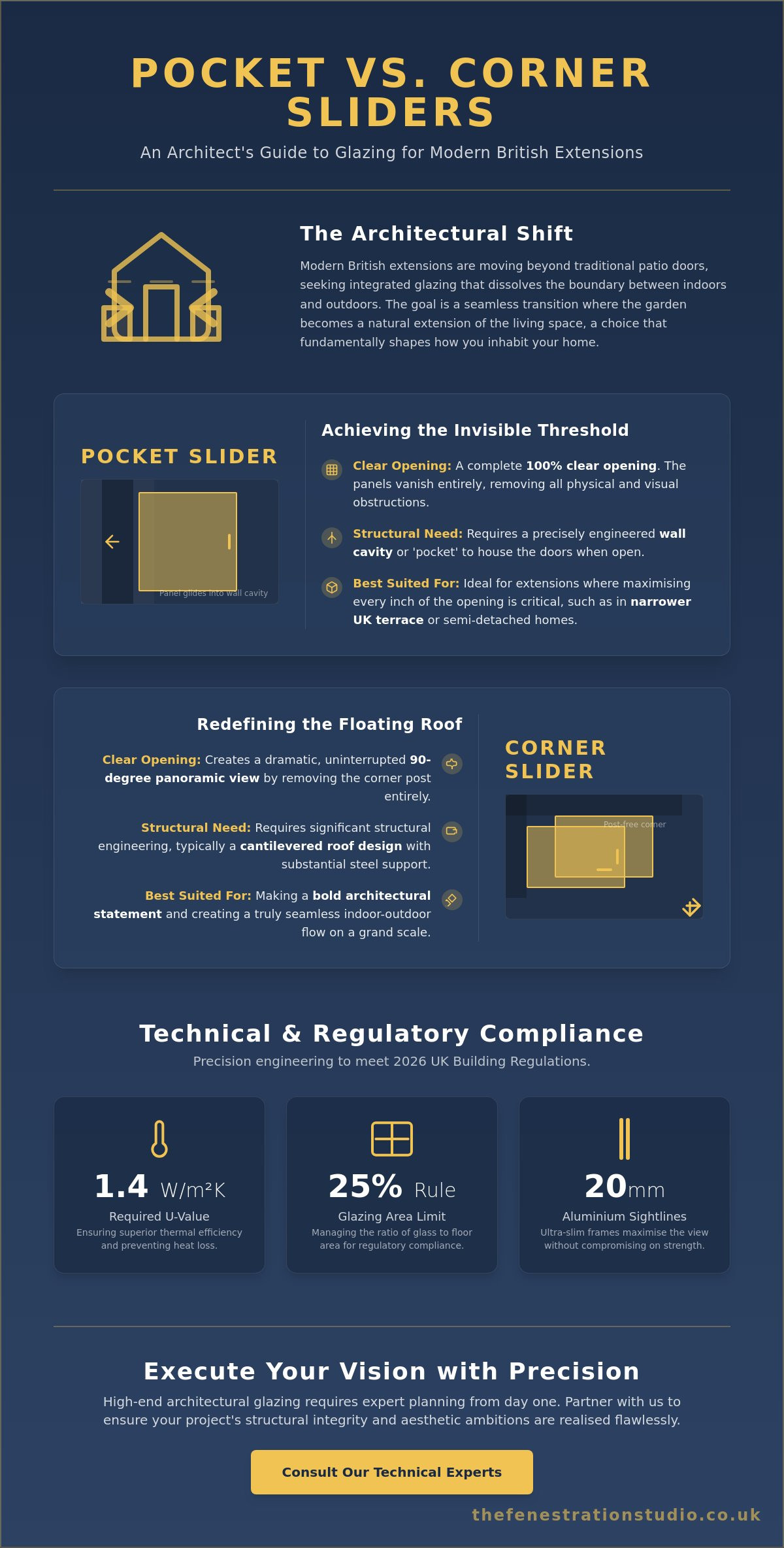
Aluminium is the silent engine behind this movement. Its inherent strength allows for ultra-slim sightlines that keep the focus on the view. Aluminium frames can be engineered with interlock sightlines as slim as 20mm, ensuring that even when the doors are closed, the barrier between the living room and the terrace is almost invisible. Whether you choose a sliding door that disappears into a wall or one that wraps around a corner, the material choice ensures that the frames don't obstruct the visual flow. When asking Pocket vs. Corner Sliders: Which Architectural Configuration Suits Your Extension?, you're really asking how you intend to inhabit the space and how the configuration will dictate your furniture layout.
The Aesthetic Impact of Hidden Glazing
The visual impact of hidden glazing is unparalleled. In a high-resolution minimalist extension, you might see a vast aperture where the frames are completely concealed within the building fabric. This creates a "glass wall" effect that feels permanent yet remains entirely functional. By hiding the vertical profiles, the architectural lines remain clean and uninterrupted, providing a level of sophistication that standard bifold or French doors simply cannot achieve. This approach eliminates the "heavy" feeling of traditional framing, allowing the structure to feel light and airy even in smaller UK plots.
Consultative Planning: Why Configuration Matters Early
Precision engineering starts on the drawing board. You cannot treat high-end glazing as an afterthought. It's vital to coordinate with your architect during the initial design phase to understand how your choice affects the structural steel requirements of the build. For instance, a corner slider often requires a complex cantilevered roof to remove the need for a supporting post. You also need to consider the 25 per cent glazing area rule specified in the 2026 Building Regulations, which dictates how much glass can be used relative to the floor area. This is why The Fenestration Studio takes a consultative approach, acting as a technical partner rather than just a supplier. Resolving the question of Pocket vs. Corner Sliders: Which Architectural Configuration Suits Your Extension? early in the process ensures that the structural integrity of your home is never compromised for the sake of aesthetics.
The Pocket Slider: Achieving the Invisible Threshold
The pocket slider represents the pinnacle of minimalist engineering. By allowing the glass panels to glide entirely into a hidden wall cavity, this configuration offers a 100 per cent clear opening that traditional systems cannot match. When evaluating Pocket vs. Corner Sliders: Which Architectural Configuration Suits Your Extension?, the pocket system is often the superior choice for narrower UK terrace homes or semi-detached properties where internal floor space is at a premium. Unlike a standard aluminium sliding door that stacks panels at one end, the pocket configuration removes the physical obstruction of the glass altogether, turning an entire wall into a gateway.
This configuration is particularly effective for creating a "vanishing" effect. When the doors are open, the transition between your kitchen-diner and the garden is completely unobstructed. There's no stacked glass to block the light or the breeze. However, this level of transparency requires a disciplined approach to maintenance. The internal pocket must remain clear of debris like leaves or grit, which can occasionally enter the track. We recommend specifying high-quality brush seals and ensuring the track is cleaned periodically to maintain the smooth, silent operation that defines premium aluminium systems.
Designing the Wall Cavity
Creating the "pocket" requires meticulous technical planning during the shell stage of your build. The wall must be constructed as a double-skin structure, providing enough depth to house the multiple tracks whilst maintaining its structural role. It isn't just about the width; the structural engineer must ensure the lintel above the opening is correctly specified to support the weight of the masonry above the cavity. Weather-sealing is equally critical. High-performance gaskets must be installed where the door enters the wall to prevent draughts. Whilst an open corner sliding glass door provides a wrap-around panoramic view, the pocket slider offers a clean, linear disappearance that feels integrated into the building's DNA.
Indoor-Outdoor Flow for British Summers
The British summer demands a flexible living space. The ability to fully open a kitchen to the patio transforms how you use your home for entertaining. Flush thresholds are the defining feature of this flow. By aligning the internal floor level with the external terrace, you create a seamless plane that eliminates trip hazards. This requires integrated drainage channels beneath the tracks to manage rainwater effectively, especially in exposed locations. In a well-executed project, the internal floor finish continues perfectly onto the terrace, creating a visual bridge that makes even a modest extension feel significantly larger. If you're currently reviewing your plans, you might want to book a design consultation to ensure your floor levels are correctly set for a flush finish.
The Corner Slider: Redefining the Floating Roof
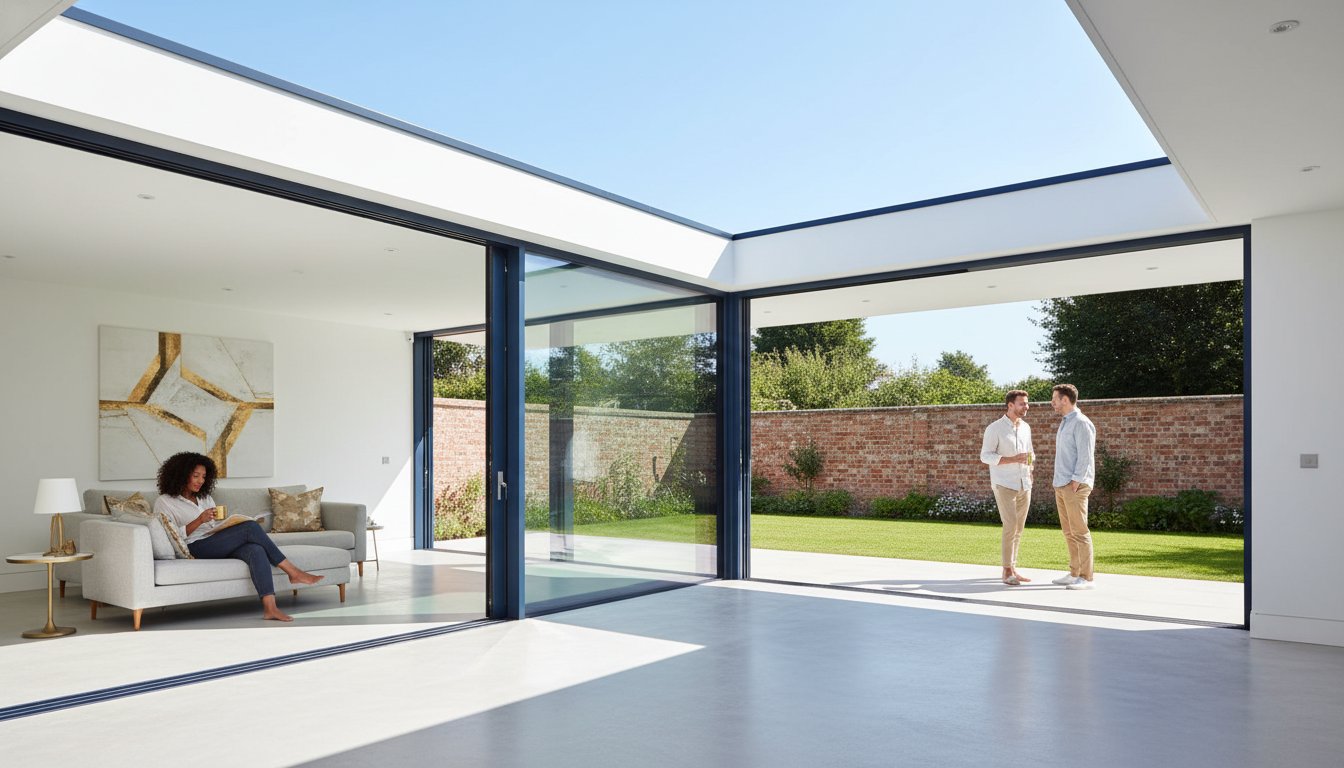
If the pocket slider is defined by its ability to disappear into a wall, the corner configuration is defined by its ability to remove the wall entirely. This setup involves two sets of doors meeting at a 90-degree angle. When retracted, they leave behind a completely open corner with no fixed supporting post. This creates the "floating roof" effect, a hallmark of high-end contemporary architecture that offers a panoramic view that literally wraps around your home. When deciding on Pocket vs. Corner Sliders: Which Architectural Configuration Suits Your Extension?, you must consider if your site allows for this level of structural exposure and whether the resulting "wow factor" aligns with your lifestyle goals.
The mechanics of a corner system rely on precision-engineered meeting profiles. These profiles ensure that when the doors are closed, the corner is weather-tight and secure, meeting the 1.4 W/m²K thermal requirements set out in the 2026 Building Regulations. You can choose between an external corner, which pushes the living space out into the garden, or an internal corner, which creates a sheltered, "carved-out" courtyard feel. Both options utilise the same advanced technology found in an individual-panel sliding glass door system, where each panel is designed to move independently or in sequence to clear the aperture.
The Engineering Challenge: Cantilevered Roofs
Achieving a post-less corner is an engineering feat that requires a cantilevered steel structure. Because there is no pillar to support the roof when the doors are open, the weight must be carried by substantial steel beams hidden within the ceiling void. Precision in this steelwork is non-negotiable. If the steel deflects by even a few millimetres, the track can become misaligned, causing the doors to stick or drag. We manage this risk through a rigorous professional survey and technical coordination with your structural engineer. This ensures the building's "bones" are perfectly prepared for the glazing, providing a stress-free experience from the initial shell to the final installation.
Panoramic Views and Privacy
Corner sliders are unparalleled at framing specific garden features, such as a mature oak tree or a bespoke water feature. By opening two sides of a room, you dramatically increase natural light levels throughout the day, following the sun's path from morning to evening. However, large expanses of glass require careful consideration of solar gain and privacy. We often recommend high-performance solar control coatings for south-facing extensions to prevent overheating during the summer months. You can explore the specific technical data and glass options for our Aluminium Sliding Doors to see how we balance these aesthetic desires with practical thermal performance. Ultimately, resolving the question of Pocket vs. Corner Sliders: Which Architectural Configuration Suits Your Extension? comes down to whether you want to hide your doors or transform the very corner of your world.
Pocket vs. Corner Sliders: Structural and Technical Realities
Choosing between these advanced configurations requires an understanding of the technical commitment involved in each. Whilst a standard Aluminium Sliding Door installation is relatively straightforward, Pocket vs. Corner Sliders: Which Architectural Configuration Suits Your Extension? is a question that hinges on structural engineering. Pocket doors demand a double-skin wall cavity, effectively doubling the thickness of your masonry to house the panels. In contrast, corner sliders require a sophisticated cantilevered steel structure to support the roof without a corner post. Both options represent a premium investment due to the precision required in the manufacturing and the heavy-duty hardware needed to ensure long-term reliability.
Security remains a primary concern for homeowners considering non-standard apertures. We address this through advanced multi-point locking systems that are specifically engineered for these configurations. For corner sliders, the meeting point where the two panels lock must be exceptionally rigid to prevent leverage. For pocket systems, the locking mechanism must be accessible yet entirely secure within the recessed cavity. These are not off-the-shelf solutions; they're bespoke security frameworks designed to provide the same level of protection as a traditional solid wall.
Thermal Performance in the UK Climate
The 2026 Building Regulations mandate a maximum U-value of 1.4 W/m²K for new doors in extensions. Achieving this in complex configurations requires high-specification thermal breaks within the aluminium frames to prevent cold bridging. This is particularly vital in corner sliders where the absence of a pillar creates a potential weak point for heat loss. Triple glazing is frequently specified for these projects to offset the energy loss associated with such large glass areas, ensuring your extension remains comfortable throughout the British winter. If you're concerned about meeting these stringent standards, you can request a quote for a system designed for 2026 compliance.
Space and Furniture Planning
Your glazing choice will fundamentally change how you furnish your room. Consider how these configurations suit different layouts:
- Pocket Sliders: These are ideal for rooms where you need to keep wall space free for artwork, cabinetry, or a television. Because the doors disappear, you gain full use of the internal perimeter.
- Corner Sliders: These create a dramatic focal point that usually dictates a central seating arrangement. Furniture is often oriented towards the "floating" corner to maximise the panoramic view.
- Narrow Extensions: Pocket doors are superior here as they don't require panels to stack and block valuable floor space.
- Large L-Shaped Plans: Corner sliders perfectly complement the existing geometry of the building, enhancing the architectural flow.
Executing the Vision: The Professional Installation Journey
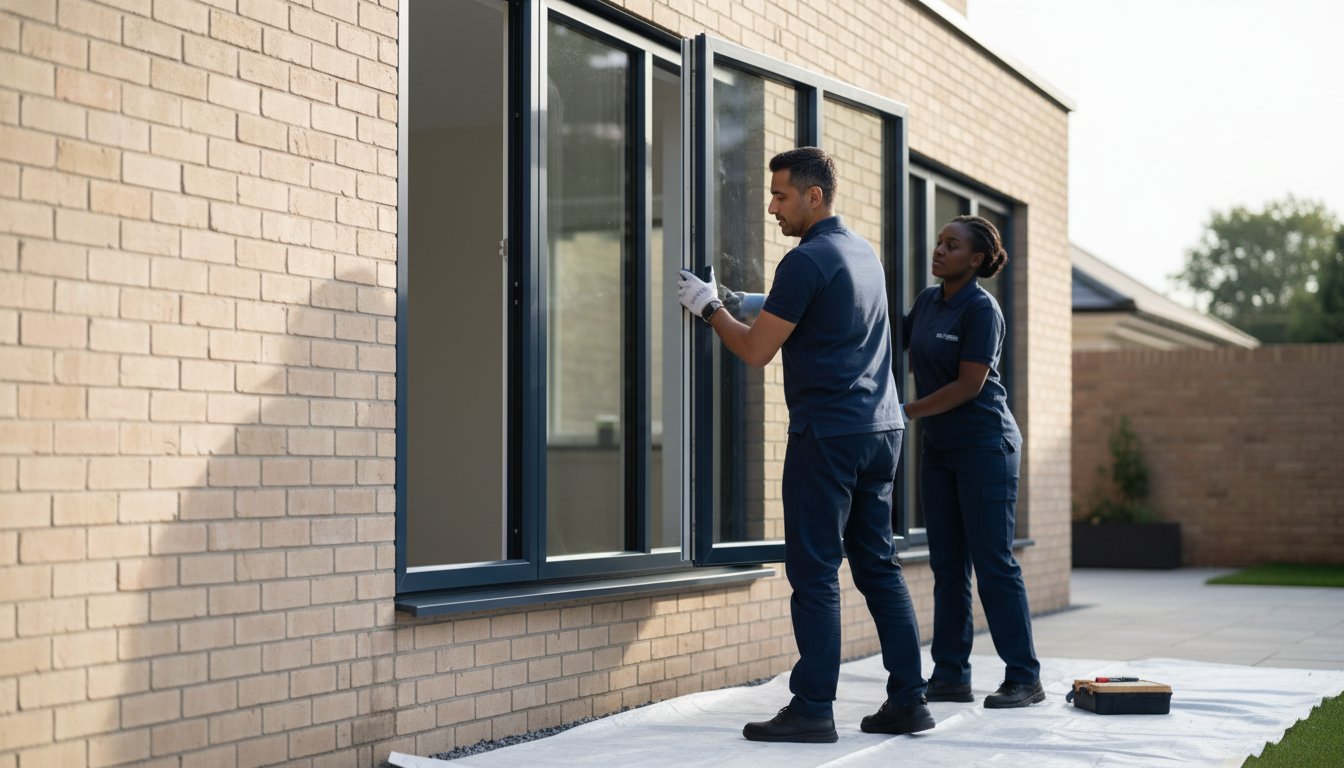
High-end architectural glazing is a significant investment that requires more than a simple retail purchase. The execution of the build determines the long-term success and functionality of your home, often requiring the expertise of a specialist builder like WillsByrne Construction & Landscaping LTD to handle the structural preparation. When resolving the question of Pocket vs. Corner Sliders: Which Architectural Configuration Suits Your Extension?, the difference between a seamless finish and a structural failure lies in the technical specification. We've observed many projects where budget installers fail to account for the minute tolerances required for these complex systems, leading to misaligned tracks or poor thermal performance. Precision is the only way to ensure your vision remains intact.
Our "White Glove" approach positions us as a consultative partner throughout the project lifecycle. We combine high-level industry standards with the attentive, personal service of a family-run business. This methodical flow takes you from initial inspiration to a final result that is entirely in control, a philosophy shared by luxury design specialists Custom Interiors who focus on the journey from concept to completion. We move away from aggressive sales tactics, focusing instead on guiding you through the technical complexities of pocket and corner configurations. By identifying potential pitfalls early, we create a sense of premium reliability and a stress-free experience for every client.
The Importance of a Professional Survey
Precision is the foundation of every successful installation. For pocket systems, millimetre-perfect measurements are non-negotiable. The door must glide into a cavity that has been prepared with absolute accuracy to avoid dragging or sticking. A professional survey identifies potential site issues, such as floor level discrepancies or structural obstructions, before the glass is manufactured. This diagnostic phase prevents costly delays and ensures the final product fits perfectly the first time. If you're ready to move from planning to reality, you should book a design consultation to verify your site's specific requirements.
Expert Installation and Aftercare
The actual installation of a corner slider requires a highly specialised skill set. Aligning the tracks to ensure a seamless 90-degree meet without a post is an exercise in engineering precision. Our installers focus on the details that matter: perfect levelling of the tracks and the integration of sophisticated drainage systems to manage the British weather effectively. We don't simply leave once the doors are in place. Dedicated aftercare is a signature of our service, protecting your architectural investment for the long term. This commitment to quality ensures that whether you choose a pocket or corner configuration, the result is a smooth, well-managed journey that enhances your home's value and your daily lifestyle.
Defining Your Architectural Legacy
Selecting the ideal glazing configuration is a decision that shapes the structural and aesthetic future of your home. Whether you prioritise the total disappearance of a pocket system or the dramatic, post-less vista of a corner slider, the success of your project depends on technical precision. You now understand that Pocket vs. Corner Sliders: Which Architectural Configuration Suits Your Extension? is a question best answered during the early design phase. This ensures that cantilevered steels or wall cavities are engineered to accommodate your vision whilst meeting 2026 thermal standards.
As an independently run family business, we provide nationwide UK coverage combined with deep local expertise. Our White Glove Installation Service ensures that every millimetre is accounted for, protecting your investment from common industry pitfalls. We invite you to book a technical design consultation for your extension project to explore these configurations in detail. Let's work together to create a space that is as technically sound as it is visually breathtaking.
Frequently Asked Questions
Do I need a special architect for a pocket or corner slider?
You don't necessarily need a specialist architect, but your professional must understand the structural implications of cantilevered loads and cavity wall engineering. These configurations require early technical coordination between the designer and a structural engineer. This ensures the building fabric can support the roof weight without a traditional corner post or whilst housing a double-skin pocket wall.
Are pocket sliding doors more expensive to install than standard sliders?
Installation costs for these systems carry a premium because the associated building work is significantly more complex. When asking Pocket vs. Corner Sliders: Which Architectural Configuration Suits Your Extension?, you must factor in the additional masonry or steelwork required. A pocket system involves constructing a bespoke hidden cavity, whilst a corner slider necessitates precision-engineered steel beams to manage the structural load without a pillar.
Can I have a corner slider if I have a load-bearing wall?
You can install a corner slider in a load-bearing location by replacing the masonry with a cantilevered steel frame. This structural modification allows the corner to open fully without a fixed pillar. Your structural engineer will calculate the required steel sizes to ensure the roof remains stable whilst the doors are retracted, providing a safe and permanent architectural solution.
How do pocket doors stay thermally efficient in winter?
Thermal efficiency is maintained through advanced thermal breaks within the aluminium profiles and high-performance glazing. These systems are designed to meet the 1.4 W/m²K U-value limit required by the 2026 Building Regulations for extensions. Precision-fitted brush seals and gaskets at the pocket entry point prevent draughts from entering the living space, ensuring the room stays warm during the British winter.
What happens if a pocket door gets stuck inside the wall?
High-quality pocket systems are designed with maintenance access in mind to prevent panels from becoming trapped. We use precision-levelled tracks and heavy-duty rollers to ensure smooth operation over the long term. If debris enters the track, removable internal trims allow a technician to clear the obstruction without needing to dismantle the structural masonry or the internal plasterwork.
Is a corner slider secure enough for a ground-floor extension?
Modern corner sliders are exceptionally secure and fully compliant with UK security standards for ground-floor installations. They feature multi-point locking mechanisms and toughened or laminated glass as standard. The interlocking profiles at the 90-degree corner are engineered to resist forced entry, providing the same level of protection as a traditional solid wall or a standard sliding door.
Can I combine a pocket door with a corner configuration?
Combining both configurations is possible and represents the pinnacle of modern architectural glazing. This allows you to have an open corner where the panels glide away into hidden wall cavities, leaving no glass visible when the doors are open. When evaluating Pocket vs. Corner Sliders: Which Architectural Configuration Suits Your Extension?, this hybrid approach offers the most dramatic "vanishing" effect for high-end residential projects.
Do these doors require special maintenance compared to bifold doors?
Maintenance is generally simpler than for bifold doors because there are fewer hinges and moving parts to adjust. You simply need to keep the aluminium tracks clear of grit and leaves to ensure the rollers glide smoothly. For pocket systems, we recommend a periodic vacuum of the track entry point to prevent debris from accumulating amongst the rollers inside the hidden cavity.