Could the traditional charm of a timber frame actually be a long-term liability for your property's architectural integrity and your personal time? When weighing up timber vs aluminium bifold doors Exeter homeowners often feel caught between the desire for organic aesthetics and the very real anxiety of wood warping or rotting in the damp British climate. You want a home that looks sophisticated but functions without the burden of constant maintenance.
This guide offers a professional analysis to help you secure a door system that delivers both visual impact and technical precision. You will discover how premium aluminium provides a "fit and forget" solution, achieving the slimmest possible sightlines whilst comfortably meeting the 1.4 W/m²K U-value requirements set by 2026 building regulations. We also preview the essential security benchmarks, including the PAS 24:2022 standard, to ensure your investment provides lasting thermal comfort and total peace of mind.
Key Takeaways
- Compare architectural aesthetics to understand how frame slimness directly dictates the volume of natural light in your home.
- Analyse the thermal performance and U-value compliance of different systems when choosing timber vs aluminium bifold doors Exeter for your project.
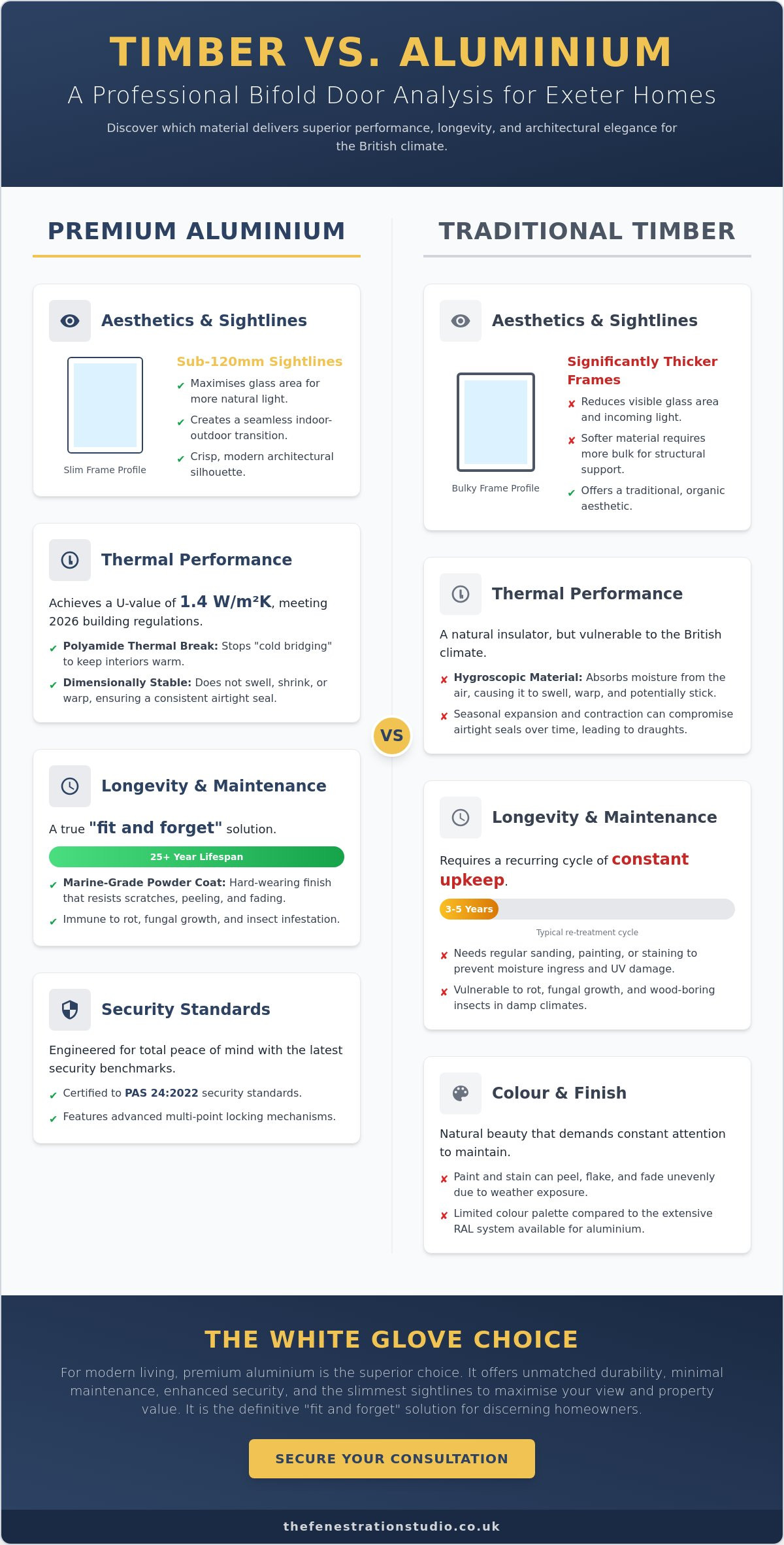
- Evaluate the long-term maintenance reality, contrasting the 25-year durability of aluminium with the recurring three-to-five year upkeep demands of timber.
- Identify the technical security benchmarks for 2026, including the latest PAS 24:2022 standards and advanced locking mechanisms.
- Discover why a consultative installation process is vital for the precision and performance of premium architectural glazing.
The Architectural Debate: Aesthetics and Profile Slimness
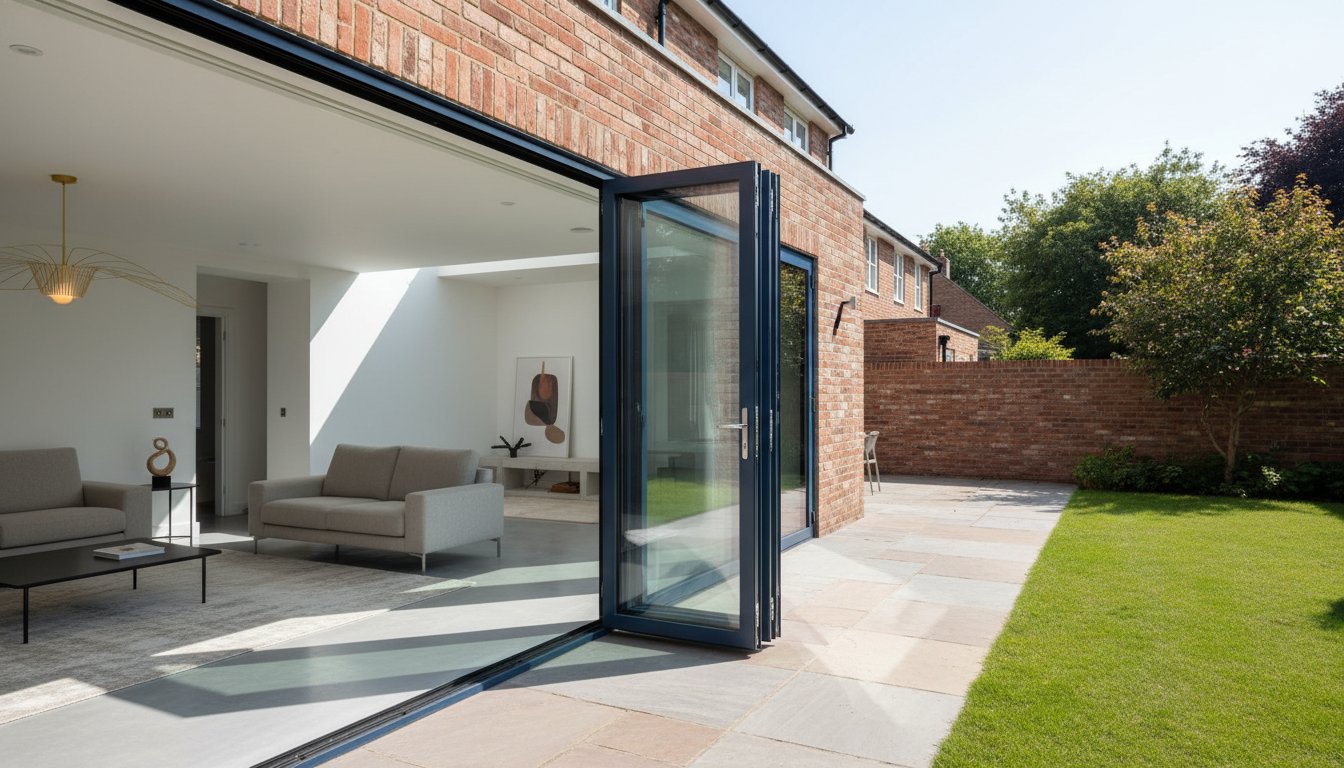
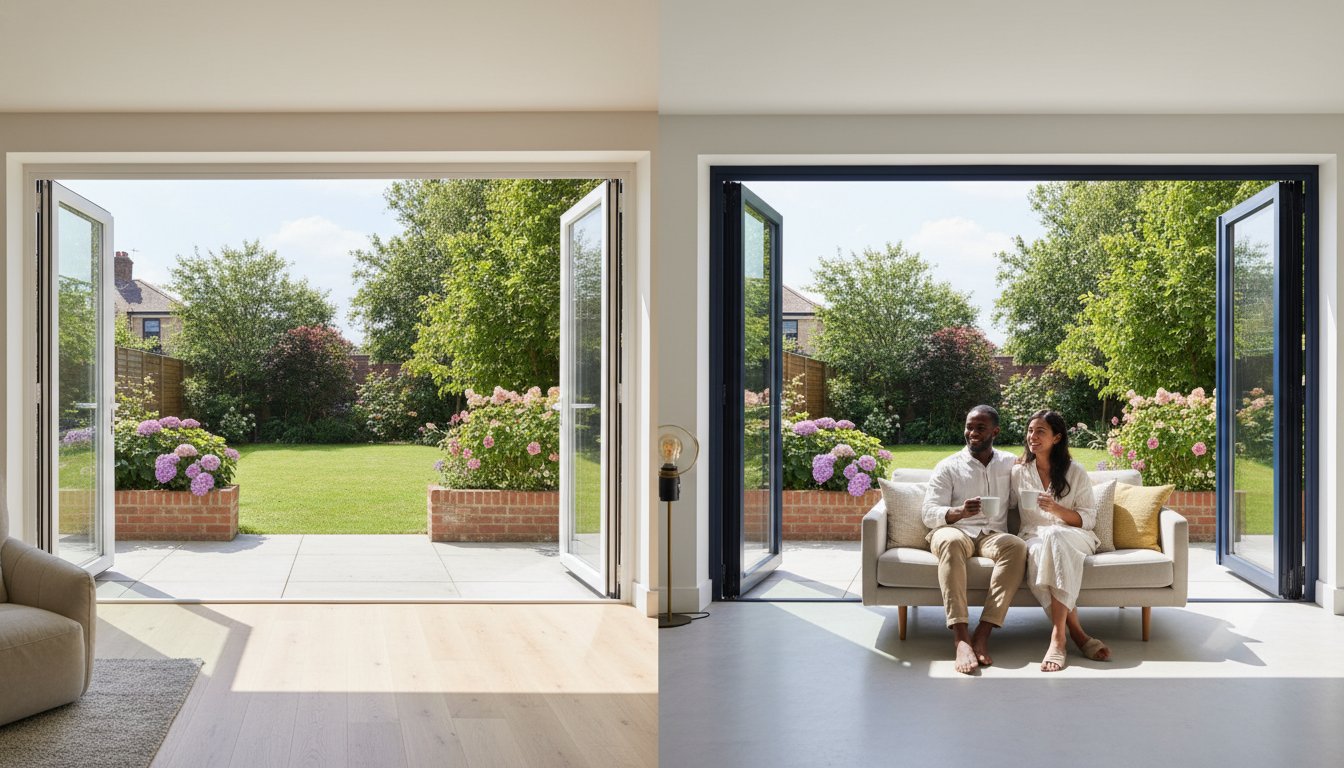
Choosing between Folding doors crafted from natural timber or precision-engineered aluminium is often the first significant hurdle in a Devon renovation. Timber offers a tactile, organic warmth that many find comforting; it suggests a traditional, handcrafted quality that suits older cottages or period properties. However, modern architectural trends in the South West increasingly favour the crisp, industrial precision of aluminium. When considering timber vs aluminium bifold doors Exeter homeowners must decide if that natural wood grain is worth the visual trade-off of significantly thicker frames.
The "Heritage" aesthetic has evolved. Whilst timber was once the only choice for traditional looks, modern aluminium bifold doors can now mimic the slim, elegant profiles of classic steel-framed glazing. This allows you to maintain a historic character without the structural bulk or maintenance burden of wood. Aluminium provides a sleek, powder-coated finish that remains uniform across every millimetre of the frame, creating a sharp, architectural silhouette that timber simply cannot match.
Sightlines: Maximising Your View
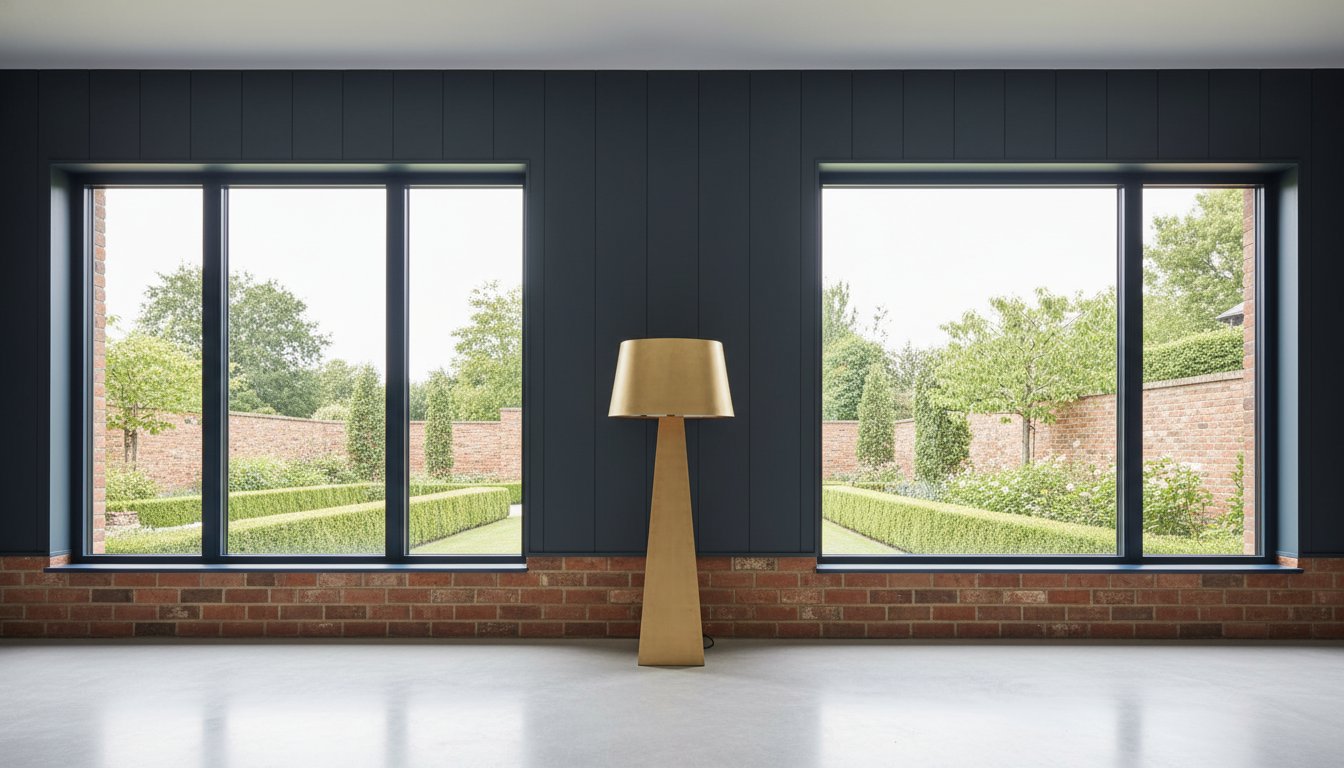
Engineering dictates aesthetics. Because aluminium is inherently stronger than wood, it can support expansive glass units with much less material. This results in sightlines that are often sub-120mm, significantly narrower than their timber counterparts. Timber is a softer material that requires bulkier, deeper frames to prevent the weight of double or triple glazing from causing the structure to sag or twist over time.
The glass-to-frame ratio is the critical metric here. A slimmer frame means more glass, and more glass means a greater volume of natural light flooding your living space. In a standard three-panel configuration, the cumulative difference in frame thickness can result in a noticeable loss of visible garden area. If your goal is to create a seamless transition between your interior and the Exeter landscape, the structural rigidity of aluminium offers a clear performance advantage.
Colour and Finish Versatility
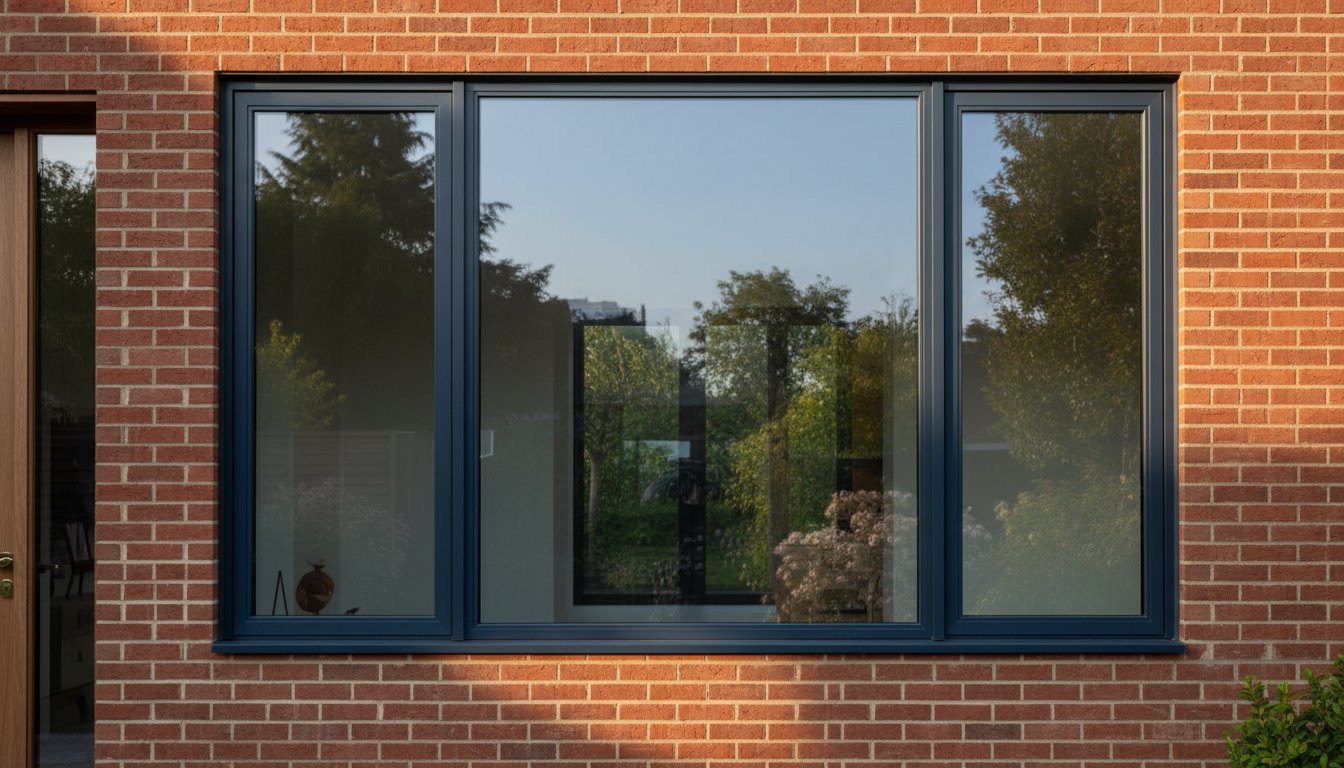
Durability meets design. Aluminium systems utilise the RAL colour system, offering hundreds of shades from deep Anthracite Grey to bespoke heritage greens. These finishes are applied via a marine-grade powder coating process. This creates a hard-wearing surface that resists scratches and environmental wear. Unlike timber, which requires staining or painting every few years to combat UV fading and moisture ingress, a powder-coated aluminium door maintains its "day-one" vibrancy for decades.
- Aluminium: High-performance finishes that don't peel or flake.
- Timber: Natural beauty that demands regular sanding and re-treatment.
- Environmental Resistance: Aluminium is immune to the rot and fungal growth that can plague timber in the damp British climate.
Whilst timber staining can look magnificent initially, the reality of the British weather means the side of the door facing the prevailing wind will often fade faster than the sheltered side. This leads to an inconsistent appearance that requires professional intervention to rectify. Aluminium avoids this inconsistency entirely, providing a stable, premium finish that stays crisp and uniform regardless of the exposure levels.
Performance Under Pressure: Thermal Efficiency and Weather Resistance
The damp, fluctuating climate of the South West presents a unique challenge for external glazing. When comparing timber vs aluminium bifold doors Exeter residents often worry that metal frames will feel cold to the touch or encourage condensation. Historically, timber was the superior insulator. However, modern engineering has introduced the polyamide thermal break. This is a non-conductive barrier that separates the internal and external aluminium profiles, effectively stopping "cold bridging." This technology, as detailed by the Energy Saver guidelines, transforms the efficiency of metal frames, ensuring the interior remains warm whilst the exterior withstands the wind and rain.
Timber is a natural insulator, but it's also a hygroscopic material. It absorbs moisture from the air, which leads to inevitable expansion and contraction. In contrast, engineered aluminium systems are dimensionally stable. They don't swell in the winter or shrink in the summer, meaning the precision-engineered tolerances of the door remain consistent year-round. This stability is vital for maintaining an airtight seal and ensuring the doors glide smoothly without the need for seasonal adjustments.
Understanding U-Values in 2026
A U-value measures the rate of heat transfer through a door or window. Lower numbers indicate better insulation and lower energy bills. For any installation in 2026, building regulations mandate a maximum U-value of 1.4 W/m²K. Premium aluminium bifolding doors frequently exceed this requirement, offering performance that rivals or surpasses high-end solid hardwood. Thermal Efficiency is the ability of the door system to retain internal heat whilst reflecting external cold.
Whilst some budget timber sets may struggle to hit these targets without significantly thicker frames, aluminium's strength allows for advanced thermal technology to be tucked away within a slim profile. This ensures your home stays comfortable without sacrificing the expansive views you desire.
Weather Sealing and Structural Integrity
Precision is the enemy of the British weather. Timber doors are prone to "dropping" or sticking in their tracks because wood is susceptible to the humidity changes common in Exeter. This can compromise the weather seals, leading to draughts. Aluminium avoids this because it's a rigid, inorganic material. To ensure a completely airtight seal, we utilise high-grade EPDM rubber gaskets and weather brushes. These components maintain their elasticity for decades, preventing water ingress even in exposed, coastal locations.
If you're planning a project that requires high-performance glazing, you can request a bespoke quote to see how these technical specifications fit your specific architectural requirements.
The Longevity Audit: Maintenance and Structural Integrity
Beyond the initial installation, the true value of an architectural investment is measured by its performance over decades. When evaluating timber vs aluminium bifold doors Exeter homeowners must consider the "Total Cost of Ownership" beyond the point of purchase. Whilst a hardwood door system possesses undeniable character, it represents a long-term commitment to manual labour. Timber requires a rigorous cycle of sanding, priming, and repainting every three to five years to protect the organic fibres from the moisture-heavy Devon air. Neglecting this schedule doesn't just impact aesthetics; it invites structural failure.
Premium aluminium offers a contrasting "fit and forget" reality. The high-grade powder coating is designed for a 25-year lifecycle, resisting the peeling and bubbling that often plagues painted wood. Maintenance is reduced to a simple wipe-down with soapy water to remove salt and grit. This durability ensures that the system looks as crisp in year twenty as it did on day one, providing a level of premium reliability that justifies the initial expenditure through saved time and material costs.
Resistance to the Elements
Aluminium is an inorganic material, making it entirely immune to the biological threats that target timber. Wood is susceptible to rot, fungal decay, and even insect attacks if the protective finish is breached by a single scratch. In exposed coastal or high-altitude locations around Exeter, the relentless cycle of driving rain and UV exposure can cause timber to warp or twist. Aluminium remains dimensionally stable. It does not absorb water, ensuring the frames never swell or bind, regardless of the season or local humidity levels.
Hardware Durability and Smooth Operation
The operational feel of a door system is dictated by its hardware. Because aluminium is significantly lighter than timber, it places far less strain on the hinges and tracks. This weight reduction prevents the "dropping" effect common in heavy wooden doors, which often leads to sticking and difficult operation. Premium aluminium systems utilise high-spec stainless steel rollers to ensure a near-silent, effortless glide. You can explore the technical specifications of these components on our page for our aluminium bifolding doors, where precision engineering meets architectural elegance.
Choosing aluminium ensures that the structural integrity of your home's transition to the garden remains uncompromised. It's a methodical choice for those who value long-term performance and a stress-free ownership experience over the high-maintenance charm of traditional wood.
Security and Technical Specifications: Protecting Your Home
Security isn't just a feature; it's a fundamental requirement of your home’s envelope. When evaluating timber vs aluminium bifold doors Exeter homeowners must look beyond the surface to the structural integrity of the frame itself. Aluminium possesses a natural rigidity that timber can't match. Whilst a wooden frame might be susceptible to splintering or compression under force, aluminium remains unyielding. This stiffness makes it incredibly difficult for an intruder to jemmy the frame or compromise the meeting stiles where the panels lock together.
We specify multi-point locking systems as standard on all aluminium bifolding doors. These systems engage multiple bolts into the outer frame at several points, rather than relying on a single latch. Combined with anti-snap cylinders, which prevent the most common method of forced entry, these doors create a formidable barrier. Internal glazing beads are another critical technical detail; by positioning the beads on the inside, we ensure the glass units cannot be removed from the exterior.
PAS 24 and Building Regulations
For total peace of mind, you should always verify that your door system carries the PAS 24:2022 certification. This is the latest industry standard for enhanced security performance in 2026. If you're undertaking a new build or a significant extension, your doors must also meet Document Q of the Building Regulations. To verify any product, ensure it features hardened steel multi-point hooks, TS007 3-star rated cylinders, and security-tested hinges that resist tampering. This structured approach to security ensures your investment is protected against evolving risks.
Glazing Options for Enhanced Security
The glass is often the largest surface area of your bifold system. Whilst toughened glass is standard, specifying laminated glass adds a significant layer of protection. Laminated glass features a transparent interlayer that holds the shards together if the pane is struck, making it almost impossible to create a hole large enough for entry. Triple glazing further enhances this physical barrier whilst providing superior acoustic insulation against local traffic noise. This dual-purpose upgrade delivers both safety and a quieter, more tranquil living environment.
To ensure your home is protected by the latest in security technology, book a professional design consultation to discuss our high-security specifications and technical standards.
The White Glove Choice: Why Premium Aluminium Wins for Modern Living
Deciding between timber vs aluminium bifold doors Exeter homeowners often find that the choice comes down to a fundamental lifestyle question: do you want to maintain your home, or simply enjoy it? Whilst timber possesses a natural, traditional beauty, premium aluminium has emerged as the definitive choice for the vast majority of high-end South West renovations. It offers the structural strength required for expansive glass walls, the thermal precision needed for 2026 energy standards, and a "fit and forget" durability that wood simply cannot replicate. For the modern property, aluminium represents a sophisticated, architectural investment that prioritises performance without compromise.
Our "White Glove Service" philosophy ensures that this technical excellence is matched by a stress-free installation journey. We move away from aggressive industry sales tactics, positioning ourselves instead as a consultative partner. This methodical approach begins with the recognition that a bifold system is a complex piece of moving engineering. It requires a level of precision that goes far beyond standard window fitting, ensuring that every component functions perfectly within your home's unique structural context.
The Critical Importance of a Professional Survey
A premium door system is only as effective as the survey that precedes it. Millimetre-perfect measurements are the absolute difference between a door that glides with a single finger and one that sticks, drags, or fails to seal. This is why professional surveying is a mandatory stage of our process. We don't just measure the aperture; we analyse floor levels, structural lintels, and drainage requirements to prevent the "dropping" issues common with poorly planned installations. Technical specification fees are an essential part of this rigour, ensuring that your bespoke frames are manufactured to the exact tolerances your property demands.
The Final Handover and Aftercare
The installation of high-spec glazing should be a premium service experience rather than a manual task. During the final handover, our team provides a comprehensive walkthrough of the multi-point locking systems and the correct operation of the sliding tracks. We believe that professional integrity extends long after the tools are packed away. Dedicated aftercare is vital for high-end glazing; it ensures that your system continues to meet its thermal and security benchmarks for decades to-come. If you are ready to discuss the technical requirements of your project, you can request a quote to begin your journey with a partner that values precision over speed.
As an independent, family-run business, we provide honest, technical advice that prioritises your home's long-term value. We aren't interested in the quick sale of low-cost alternatives that lead to future financial risk. Instead, we offer a structured framework of expertise, guiding you from the initial consultation to a final result that transforms how you experience your living space.
Securing Your Architectural Vision
Choosing between timber vs aluminium bifold doors Exeter requires a calculated balance of aesthetic desire and technical performance. Whilst wood offers an organic warmth, the precision engineering of premium aluminium provides the only "fit and forget" solution for the modern property. You'll benefit from the slimmest possible sightlines to maximise natural light, alongside the peace of mind that comes from PAS 24:2022 security compliance and superior thermal efficiency.
As an independently run family business, we combine national coverage with deep local expertise to ensure your project is handled with professional rigour. Our comprehensive White Glove installation service manages every detail; we take total control of the project lifecycle from the millimetre-perfect survey to the final technical handover. This systematic approach eliminates the risks associated with budget alternatives and ensures your investment delivers premium reliability.
Take the next step toward a seamless transition between your interior and the Devon landscape. Book a technical design consultation for your bifold project and discover how our architectural glazing can transform your home.
Frequently Asked Questions
Which is cheaper: timber or aluminium bifold doors?
Softwood timber is generally the lower entry-point option, whilst premium hardwood can often exceed the cost of aluminium. When comparing timber vs aluminium bifold doors Exeter homeowners should consider the total lifecycle cost; aluminium's lack of maintenance requirements often makes it the more cost-effective long-term investment. You avoid the recurring expenses of professional sanding, priming, and painting that timber demands every few years.
Do aluminium bifold doors look too industrial for a period property?
Modern aluminium systems are specifically engineered to complement period properties through "Heritage" profiles that mimic traditional steel frames. These ultra-slim sightlines allow the architectural character of an Exeter cottage or Georgian home to remain the primary focus. By selecting specific RAL colours and textured finishes, you can achieve a sophisticated look that feels integrated rather than industrial.
How often do I need to paint timber bifold doors?
To maintain structural integrity, timber doors typically require sanding and repainting or re-staining every three to five years. This schedule is critical to prevent the wood from absorbing moisture and warping. In the exposed conditions of the South West, failing to maintain this cycle can lead to rot and mechanical failure within the frame, compromising the door's security and thermal performance.
Are aluminium bifold doors cold to the touch in winter?
No, modern aluminium frames utilise a polyamide thermal break to prevent the transfer of cold from the exterior to the interior. This non-conductive barrier ensures the internal profile remains at room temperature, eliminating the "cold metal" feel associated with older systems. This technology also significantly reduces the risk of internal condensation during the winter months, protecting your interior decor.
Can I get aluminium bifolds that look like wood?
Yes, aluminium can be specified with high-quality woodgrain sublimated finishes that replicate the texture and appearance of oak, chestnut, or walnut. This provides the organic aesthetic of timber with the structural stability and low-maintenance benefits of metal. It's an ideal compromise for those who desire a natural look but wish to avoid the burden of regular staining and weatherproofing.
What is the maximum width for an aluminium bifold door leaf?
Aluminium's inherent strength allows for individual door leaves to reach widths of up to 1200mm and heights of up to 3000mm. These expansive dimensions are far beyond the structural capabilities of timber, which requires more frequent vertical supports. Using wider leaves results in fewer frames and more glass, providing an unobstructed view of your garden whilst maximising the influx of natural light.
Do bifold doors add value to my house?
High-quality bifold doors are a significant asset that can increase both the marketability and the perceived value of your property. They transform living spaces by improving natural light and creating a seamless indoor-outdoor flow, which is a highly sought-after feature for modern buyers. Professional installation using premium materials ensures this value is sustained over the long term without the risk of operational failure.
How long does a professional bifold door installation take?
A standard three or four-panel bifold installation is typically completed within a single day by a professional team. Larger architectural projects or those requiring significant structural alterations may take two to three days to ensure a millimetre-perfect finish. Our methodical process ensures that the site is secured and weather-tight by the end of the first day, minimising disruption to your home environment.