The most historically accurate window for your Guildford heritage property might not be the timber-look uPVC you've been researching. Many homeowners feel trapped between the relentless maintenance of traditional wood and the fear that modern alternatives will look out of place in a sensitive conservation area. You need a solution that satisfies strict planning requirements whilst achieving the 2026 Part L thermal standard of 1.2 W/m²K. It's a complex balance of aesthetics, performance, and long-term investment risk.
This professional architectural comparison addresses the vital question: Should I choose Residence R7 and R9 Timber Look uPVC windows in Guildford? We will guide you through the technical differences in frame depths and flush sashes to help you make an informed decision. You'll also learn why many residents are opting for premium aluminium heritage windows as a more durable, slimline alternative that avoids the common pitfalls of high-end plastic systems. This guide ensures your choice provides both the authentic 19th-century aesthetic you desire and the modern engineering your home requires.
Key Takeaways
- Compare the 75mm R7 and 100mm R9 profiles to determine which frame depth best suits your property's architectural style and required thermal performance.
- When asking "Should I choose Residence R7 and R9 Timber Look uPVC windows in Guildford?", weigh these options against premium aluminium heritage alternatives that offer slimmer sightlines and increased durability.
- Identify the essential heritage hardware, including monkey tail handles and peg stays, required to achieve an authentic 19th-century aesthetic that satisfies local planning constraints.
- Understand the critical role of a precision-led survey and professional installation in meeting the rigorous 1.2 W/m²K U-value requirements of the 2026 building regulations.
Residence R7 vs R9: Defining the Aesthetic Standards for 2026
The Residence Collection represents a shift in how we approach heritage property restoration. It isn't merely a window system; it's a sophisticated engineering response to the limitations of traditional materials. By focusing on the exact proportions of 19th-century timber joinery, these systems offer a way to preserve architectural integrity whilst meeting the rigorous 1.2 W/m²K thermal requirements of the 2026 Part L building regulations. For many homeowners, the fundamental question is: Should I choose Residence R7 and R9 Timber Look uPVC windows in Guildford?
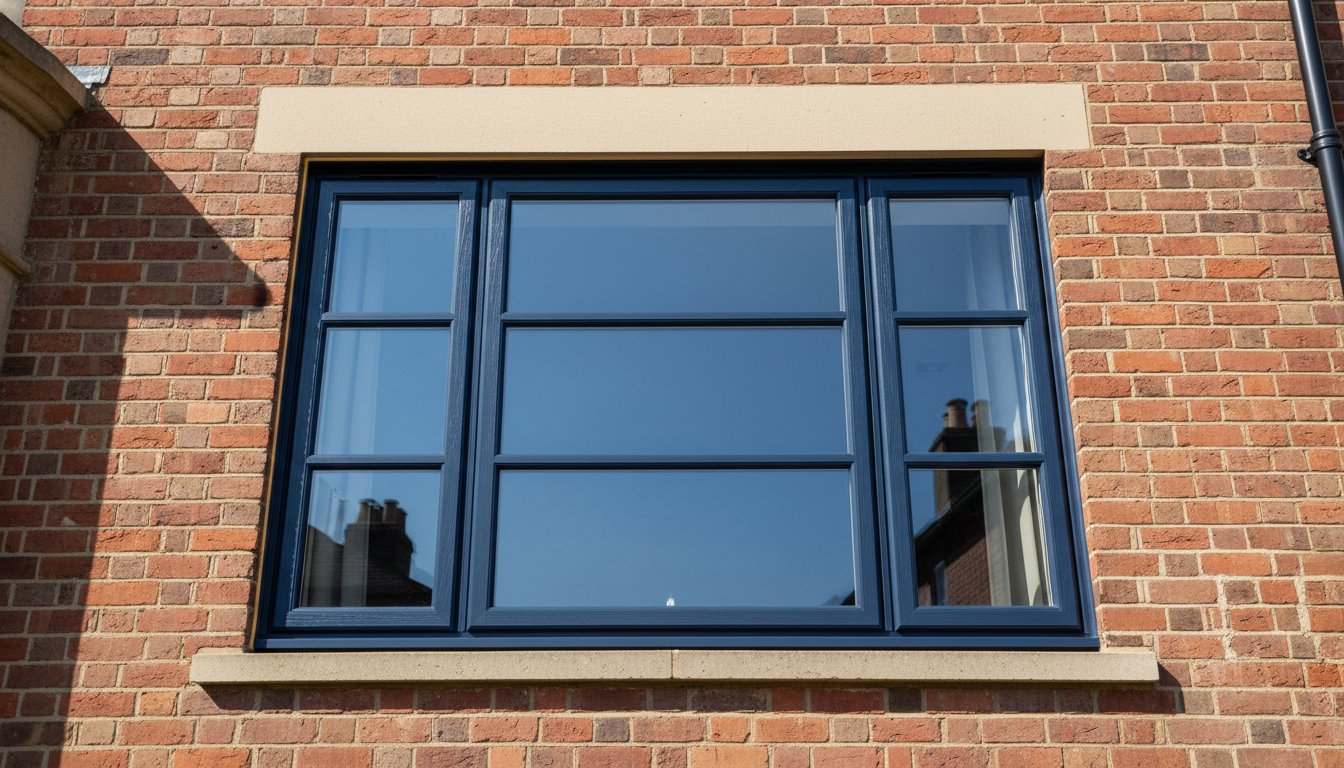
Choosing between these two systems is primarily an architectural decision. Both products share a "flush" exterior sash, meaning the window sits level with the frame to create the flat, clean lines seen in historic Georgian and Victorian cottages. Historically, uPVC and aluminium window frames have often lacked this level of detail, but the Residence Collection utilizes multi-chambered technology to replicate the depth and weight of real wood. However, whilst these are market leaders for timber-look uPVC, discerning clients often weigh them against the slim sightlines of aluminium windows to achieve a more refined, durable finish.
Residence 9 (R9): The Traditionalist’s Favourite
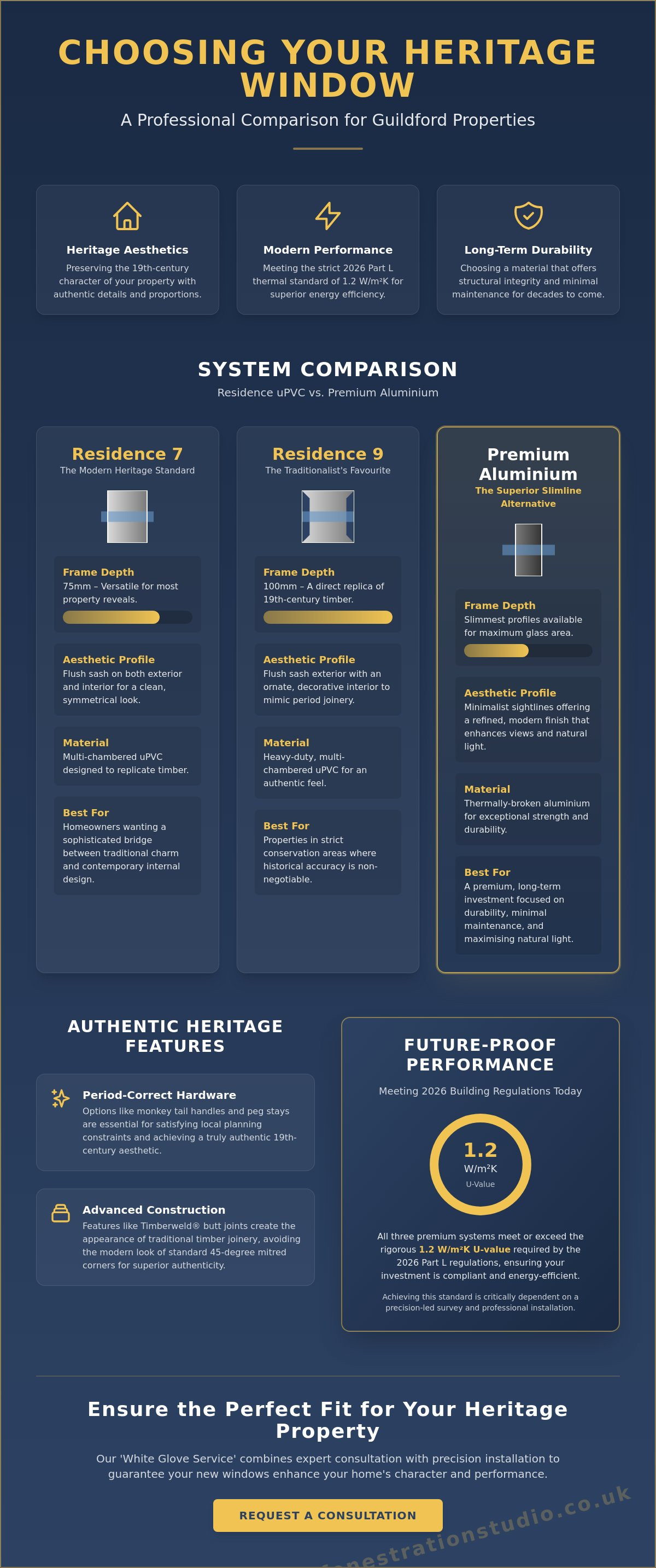
Residence 9 was specifically engineered to satisfy the demanding requirements of conservation areas and Article 4 Directions. Its 100mm frame depth is a direct replication of traditional 19th-century timber dimensions. This system is defined by its ornate, decorative internal detail. It mimics the hand-crafted look of period joinery with remarkable precision. If your property's historical accuracy is a non-negotiable priority, R9 provides the most authentic "like-for-like" replacement. It's a robust, heavy-duty system that feels substantial, though its thicker profile can sometimes limit the amount of natural light compared to modern heritage aluminium alternatives.
Residence 7 (R7): The Modern Heritage Standard
Residence 7 offers a more versatile approach to heritage aesthetics. Unlike the R9, which features a decorative interior, the R7 is "flush-inside-and-out." This creates a cleaner, more symmetrical appearance that sits comfortably amongst both period renovations and modern architectural builds. We've observed a significant shift in consumer behaviour towards this minimalist internal sightline. It provides a sophisticated bridge between traditional external charm and contemporary internal design. With a 75mm frame depth, it's often easier to install in standard modern window reveals, making it a highly practical choice for Guildford homeowners who want a heritage look without the decorative complexity of the R9 system.
Technical Specifications: Comparing 75mm and 100mm Frame Depths
The engineering behind the Residence Collection is what separates these systems from standard retail offerings. Whilst the visual appeal is immediate, the technical specifications dictate how the window performs over decades. Central to this is the frame depth. When asking, "Should I choose Residence R7 and R9 Timber Look uPVC windows in Guildford?", you must first consider your property's existing wall structure. The choice between a 75mm and a 100mm profile isn't just about aesthetics; it's a structural decision that impacts how the window integrates with your property’s masonry.
Thermal efficiency is no longer a luxury. Under the latest Building Regulations for energy efficiency, replacement windows must achieve a U-value of 1.2 W/m²K. Both R7 and R9 meet this 2026 standard through sophisticated multi-chambered designs. These internal chambers trap air to create a thermal barrier, significantly outperforming traditional timber. This engineering ensures your home remains Part L compliant whilst reducing energy consumption and carbon footprint.
Construction methods also differ from standard mass-market windows. Residence systems often utilise Timberweld® technology, which creates a traditional butt joint on the exterior and interior. This replicates the look of timber joinery more effectively than a standard 45-degree mitred corner. When combined with glass bonding, where the glazing is fused to the sash, the result is a window with exceptional structural integrity. To ensure these technical benefits are realised in your specific project, you can book a design consultation with our technical team.
The 100mm R9 Frame: Implications for Installation
The 100mm depth of the Residence 9 system is a deliberate nod to historical British architecture. It's engineered specifically for traditional window reveals to maintain correct proportions. With a 9-chamber design, R9 offers exceptional thermal performance. When deciding if you should choose Residence R7 and R9 Timber Look uPVC windows in Guildford for a heritage project, the R9's depth is often the deciding factor. Precision surveying is essential to avoid installation errors.
The 75mm R7 Frame: Versatility and Efficiency
Residence 7 utilises a 75mm frame depth, making it a highly versatile option for both period renovations and contemporary extensions. Its 7-chamber profile provides high-end insulation whilst maintaining a slimmer profile than the R9. This makes it an excellent choice for new-build projects where modern wall constructions often favour a shallower frame. Beyond thermal gains, the R7 offers superior acoustic performance, which is particularly beneficial for homes situated near busy Guildford transport links.
The Material Debate: Why Premium Aluminium Often Surpasses uPVC
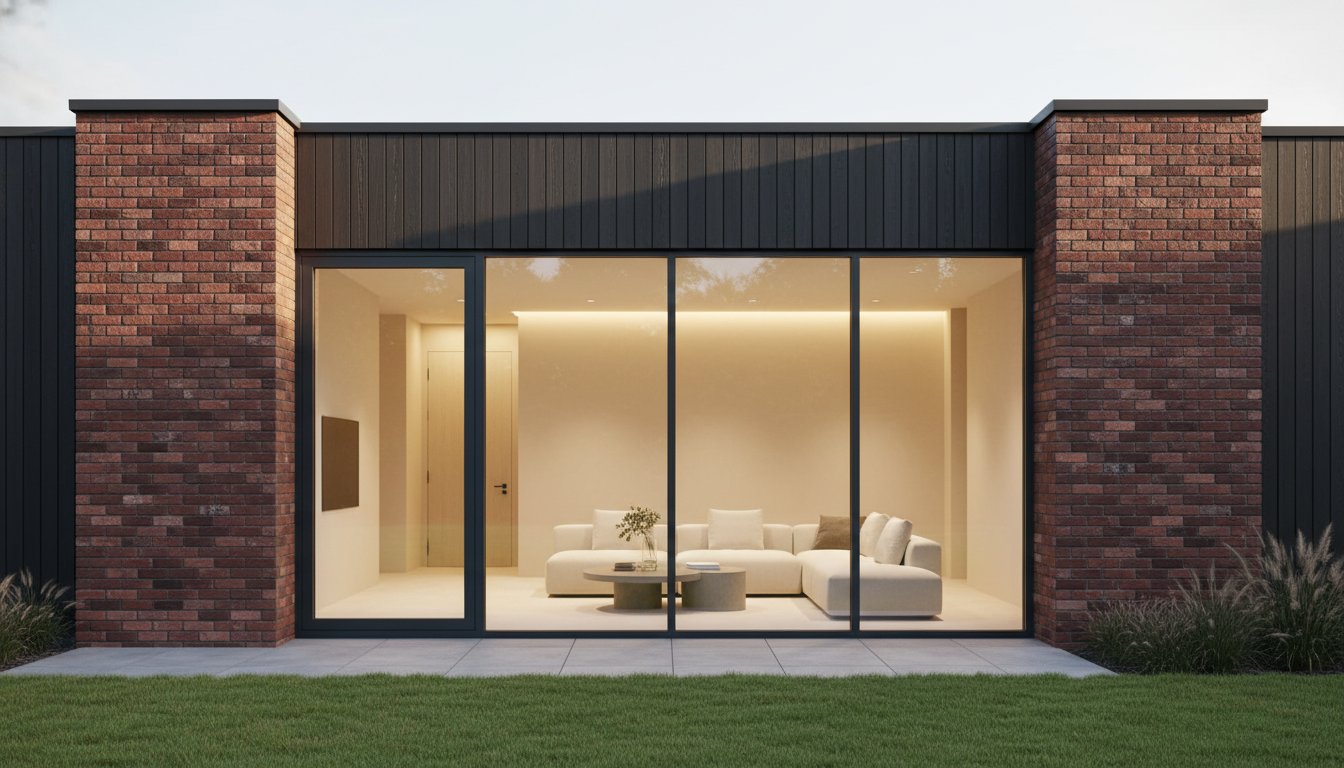
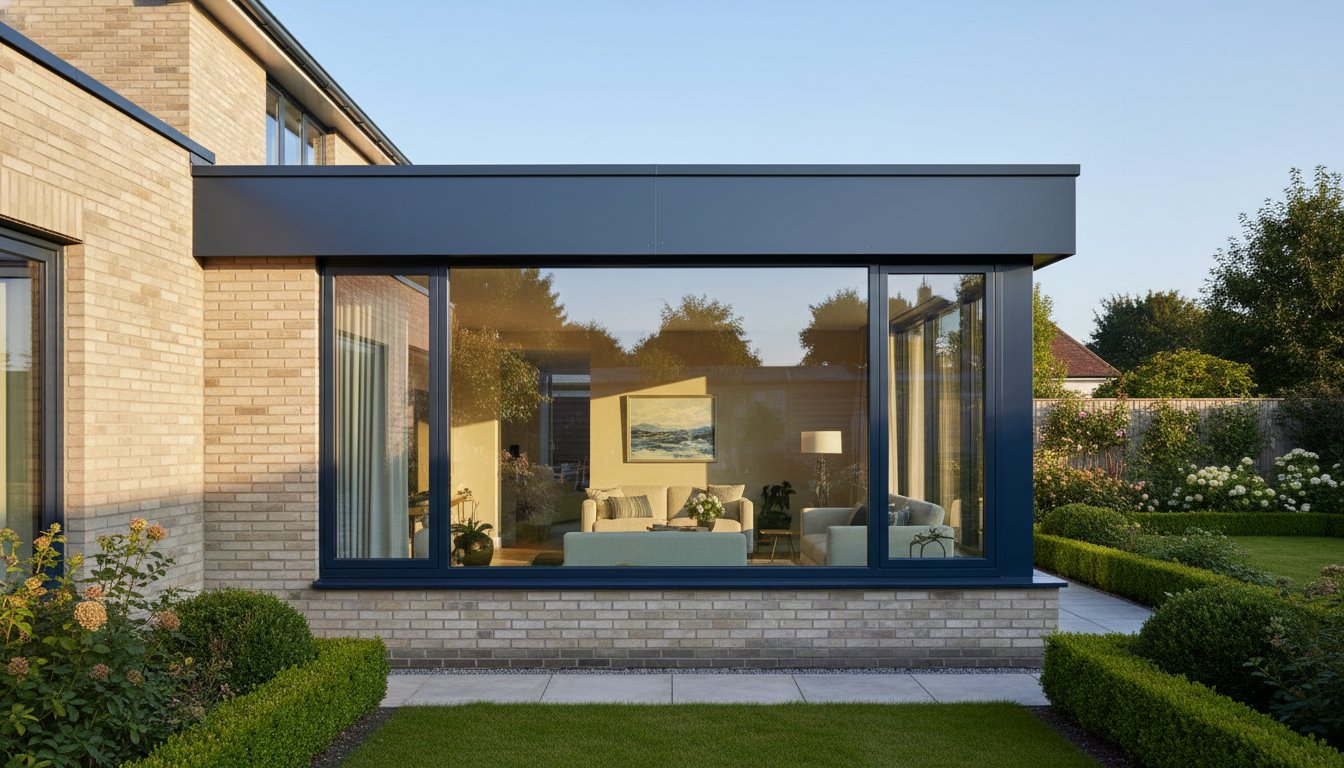
Whilst the Residence Collection successfully replicates the texture of timber, every material has inherent physical limitations. Discerning homeowners often ask, "Should I choose Residence R7 and R9 Timber Look uPVC windows in Guildford?" whilst overlooking the architectural advantages of high-grade metal systems. Aluminium offers a structural strength that uPVC cannot match, allowing for significantly slimmer frames that maximise the glass area. This is a critical consideration for properties where natural light and minimal sightlines are the primary design objectives. Even the most advanced uPVC profiles require a certain bulk to maintain rigidity; aluminium provides a more refined, skeletal alternative.
Colour longevity is another area where materials diverge. Premium uPVC systems use decorative foils to achieve their wood-grain effect. Whilst these are durable, they're ultimately a surface layer applied to the profile. In contrast, aluminium utilizes a marine-grade powder coating process. This finish is baked onto the metal, offering superior resistance to fading, scratching, and peeling over several decades. For those concerned about long-term maintenance and environmental impact, aluminium is also 100% recyclable, making it a more sustainable choice for the modern, eco-conscious renovation project.
Heritage Aluminium: The Professional Architectural Choice
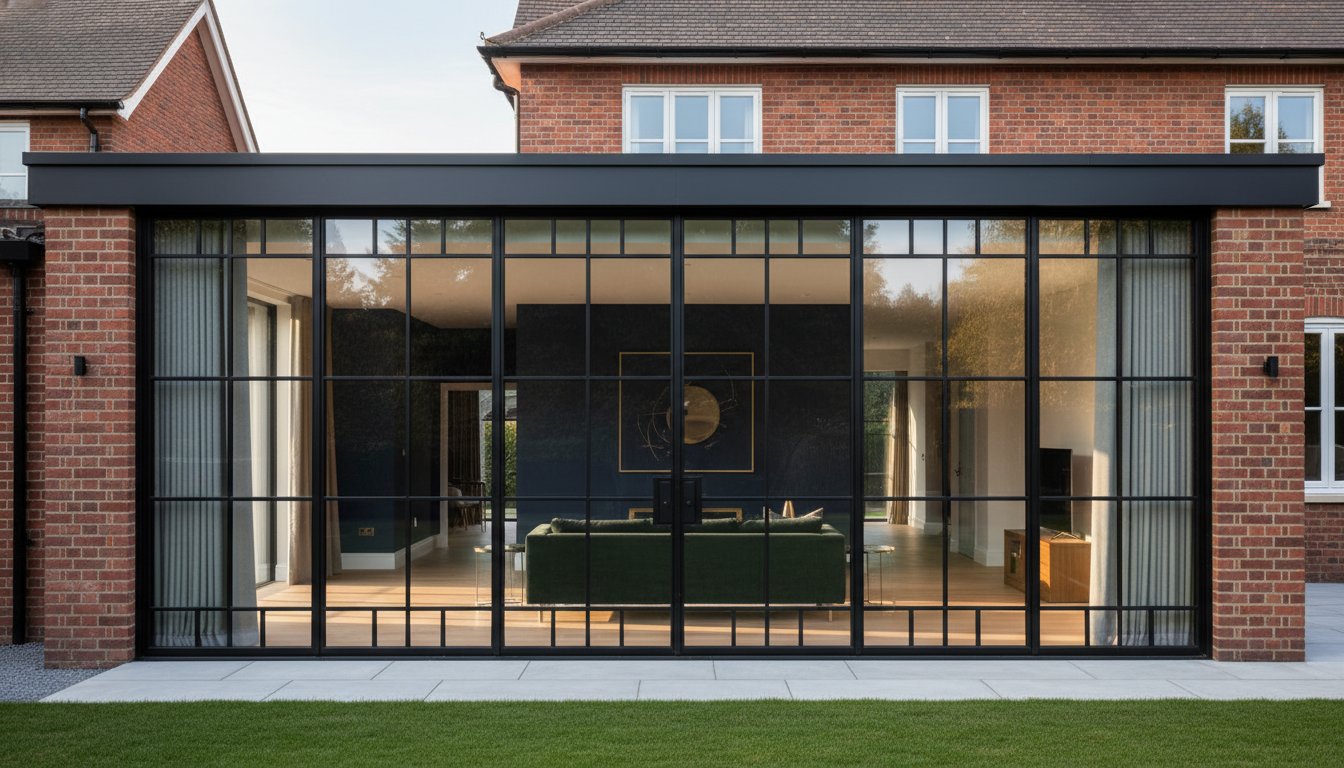
For properties in sensitive locations, following official guidance for windows in conservation areas is essential. Our heritage aluminium windows are designed to capture the "steel-look" aesthetic often found in Guildford's period properties. By utilizing polyamide thermal breaks, these systems achieve the 1.2 W/m²K energy efficiency required by the 2026 Building Regulations whilst maintaining the ultra-slim profiles that uPVC systems simply cannot replicate. It's the professional choice for those seeking a balance of historic charm and industrial-grade performance.
Structural Integrity and Long-Term Value
Aluminium's thermal stability is a significant advantage in the UK's fluctuating climate. It doesn't suffer from the same degree of expansion and contraction as uPVC, which reduces the risk of frames warping or seals failing over time. This structural integrity ensures that hardware, such as handles and hinges, continues to operate with "White Glove" precision for the life of the window. From an investment perspective, premium aluminium glazing often adds more significant resale value to luxury homes, as it's perceived as a permanent, high-end architectural feature rather than a temporary plastic replacement.
Architectural Considerations: Planning, Sightlines, and Conservation
Guildford’s architectural landscape is defined by its diversity, from medieval cottages to Victorian terraces. Each property carries its own set of restrictions. When asking, "Should I choose Residence R7 and R9 Timber Look uPVC windows in Guildford?", the answer often depends on the specific conservation status of your street. Whilst some competitors claim these systems are universally accepted, planning officers can be remarkably stringent. It’s essential to provide technical specifications and physical samples early in the process to avoid costly rejections. We've seen projects delayed because the proposed window profile didn't meet the exact sightline requirements of a specific Article 4 Direction.
Hardware and detailing are the final markers of authenticity. A flush sash window loses its historical credibility if paired with modern, generic handles. We recommend authentic monkey tail handles and peg stays to mirror the ironmongery of the 19th century. Similarly, the application of astragal bars must be handled with precision. These bars should replicate the original grid pattern of your home, ensuring the window doesn't just look "new," but looks "correct." This level of detail is what separates a professional restoration from a standard replacement project.
Planning Permission and Period Properties
For Grade II listed buildings or properties under strict Article 4 Directions, the 100mm Residence 9 profile is often the preferred choice due to its historically accurate proportions. To maintain a cohesive aesthetic across the entire property, we often integrate the AD55 Heritage French Door. This ensures that your garden access points match the window profiles in both colour and architectural detail. Before committing to any system, a professional survey is paramount to ensure the proposed design satisfies local heritage requirements. You can locate your nearest specialist to discuss your project's specific planning needs.
Maximising Natural Light
Frame depth directly influences the "glass-to-frame" ratio. The R9’s 100mm profile is substantial, which can slightly reduce the visible glass area compared to the 75mm R7 or ultra-slim aluminium heritage windows. Choosing between internal decorative beads and a modern flush finish also alters the internal shadow lines. Beyond the frame, your choice of glazing is vital. We offer everything from acoustic laminate to dampen town-centre noise to high-performance solar control glass that prevents south-facing rooms from overheating whilst maintaining high thermal efficiency. A well-considered glass specification can transform the comfort of your living space.
The White Glove Service: Why Professional Installation is Paramount
A premium window system is a significant investment that requires an equally premium approach to implementation. The Fenestration Studio operates on a project lifecycle philosophy, moving away from the "supply and fit" mentality common in the mass market. When homeowners ask, "Should I choose Residence R7 and R9 Timber Look uPVC windows in Guildford?", they're often seeking a result that looks indistinguishable from traditional timber. Achieving that level of authenticity requires more than just a high-quality profile; it demands a technical specification that accounts for every architectural nuance of your property. Even the most advanced system will fail to meet the 1.2 W/m²K thermal standard if the perimeter seals aren't executed with absolute precision.
The integrity of the final result depends entirely on the accuracy of the initial diagnostic phase. We've seen numerous heritage projects compromised by generic surveys that fail to account for the structural settling of period masonry or the specific depth of a Guildford cottage's window reveals. This is why we treat the survey as a specialised engineering task rather than a sales formality. By identifying potential structural constraints early, we prevent the manufacturing delays and on-site adjustments that often plague low-cost installations. Our focus is on providing a protective layer of expertise that ensures your investment is secure from the first measurement to the final handover.
The Survey and Specification Process
Precision is not a byproduct of speed. We charge professional surveying fees because we dedicate the time required to ensure every element of your project is specified correctly. This technical planning phase involves a deep dive into the property's requirements, ensuring that when your windows are manufactured, they fit the aperture with millimetre-perfect accuracy. This methodical approach is designed to eliminate the common industry pitfall of "making it fit" on site, which often leads to compromised thermal performance and poor long-term operation. You can read our product reviews to see how this commitment to accuracy translates into client satisfaction.
Expert Installation and Handover
Our "White Glove" approach to installation is defined by respect for your home and the precision of our engineering. We understand that a heritage renovation is a disruptive process, so our teams operate with a level of cleanliness and care that matches the premium nature of the products we install. The final handover is an educational moment where we demonstrate the operation of your new heritage hardware and provide guidance on maintaining the high-performance finish. To begin your journey towards a stress-free heritage restoration, we invite you to book a design consultation with our technical team today.
Securing Your Property’s Architectural Future
Deciding between R7 and R9 isn't just about aesthetics; it's a structural choice that defines your home's thermal performance and historical integrity. Whilst R9 offers the deep, ornate profiles required for sensitive conservation areas, R7 provides a sleeker, flush internal finish for versatile renovations. The fundamental question, Should I choose Residence R7 and R9 Timber Look uPVC windows in Guildford?, is best answered through a technical lens that prioritises precision over convenience. You must weigh these against the slim sightlines of premium aluminium heritage alternatives to ensure the final result aligns with your long-term architectural goals.
As an independently run family business, we provide a personal touch backed by high-level industry standards. Our nationwide "White Glove" installation service and expert technical surveying ensure your bespoke glazing is specified correctly from the outset. We handle the complexity of 2026 Part L compliance and planning constraints so you don't have to. Book a professional design consultation for your heritage project to ensure your home receives the architectural care it deserves. We look forward to helping you transform your property with precision and pride.
Frequently Asked Questions
Is Residence 9 better than Residence 7 for energy efficiency?
Residence 9 provides superior technical insulation due to its nine-chambered, 100mm profile. Whilst both systems comfortably surpass the 2026 Building Regulations for energy efficiency by achieving U-values of 1.2 W/m²K, the extra chambers in R9 create more air pockets to trap heat. This makes it the preferred specification for homeowners prioritising thermal performance in exposed Guildford locations.
Can Residence Collection windows be used in a Conservation Area?
Residence 9 is specifically designed for use in Conservation Areas, though approval depends entirely on your local planning officer. In Guildford, many Article 4 Directions require a "like-for-like" replacement that mirrors 19th-century timber joinery. When asking "Should I choose Residence R7 and R9 Timber Look uPVC windows in Guildford?", you must first consult the local council to ensure the proposed profile satisfies their specific heritage criteria.
What is the price difference between R7 and R9 windows?
Residence 9 generally requires a higher investment than Residence 7 due to its increased material volume and complex internal structure. The 100mm frame depth and ornate internal detailing involve more intensive manufacturing processes. Homeowners should request a bespoke technical specification to understand the investment implications relative to their property's specific window apertures and installation requirements.
Do Residence windows look like real wood from the street?
The Residence Collection is virtually indistinguishable from real wood when viewed from the street. This authenticity is achieved through flush-fitting sashes and high-definition wood-grain foils that replicate the texture of painted timber. Unlike standard plastic windows, these systems avoid unsightly 45-degree diagonal welds, using traditional joinery techniques to maintain a period-correct appearance that satisfies the most discerning eye.
How do aluminium heritage windows compare to the Residence Collection?
Aluminium heritage windows offer significantly slimmer sightlines and greater structural longevity than any uPVC system. Whilst Residence systems excel at mimicking thick timber frames, aluminium provides a refined, industrial aesthetic similar to original steel windows. For modern Guildford extensions or properties seeking maximum natural light, aluminium is often the superior architectural choice due to its inherent strength and minimalist profile.
What is Timberweld technology and why does it matter for my windows?
Timberweld technology is a patented construction method that creates a traditional butt joint on both the inside and outside of the window. This eliminates the diagonal mitre joints common in budget uPVC products, which are an immediate sign that the material is not wood. It ensures your windows maintain the structural integrity and aesthetic of authentic 19th-century joinery, even upon close inspection.
How long does the installation of Residence windows typically take?
A standard installation typically takes between one and three days, though this varies based on the number of apertures and site complexity. Our methodical approach prioritises a precision-led survey to ensure that every frame arrives on-site ready for a perfect fit. This reduces the need for disruptive adjustments, ensuring a smooth, "White Glove" transition from your old windows to the new system.
Do I need to paint or treat my timber-look uPVC windows?
You don't need to paint, sand, or treat these windows at any point during their lifecycle. The durable foils are designed to resist fading and peeling, even in south-facing positions. A simple wipe with warm, soapy water is all that's required to keep the frames looking pristine, making them a highly practical alternative for those tired of the relentless maintenance associated with real timber.