The most common choice for window replacements in Kent often feels like the safest route, yet it frequently results in a missed opportunity for genuine architectural transformation. When asking yourself, "Should I choose Casement uPVC windows in Ashford?", it's natural to lean towards the familiar profiles found on most suburban streets. You likely want a home that remains thermally efficient and visually striking, without the lingering fear of frames warping or discolouring as the seasons pass.
We understand that navigating conflicting energy efficiency claims and varying installation standards can feel overwhelming. This guide reveals whether standard uPVC truly delivers the long-term value you require, or if premium aluminium alternatives offer a more sophisticated, durable investment for your property. We will examine the latest 2026 thermal regulations, including the 1.4 W/m²K U-value requirements, and show you how a methodical, consultant-led approach guarantees a stress-free transition to a more beautiful, high-performance home.
Key Takeaways
- Understand why the casement design remains the most versatile choice for British homes, offering both traditional charm and modern functionality.
- Assess the aesthetic and structural differences between frame materials to answer the question: Should I choose Casement uPVC windows in Ashford or invest in slimline aluminium?
- Learn how modern aluminium systems utilise advanced polyamide thermal breaks to exceed the 1.4 W/m²K requirements set by the latest 2026 Building Regulations.
- Discover the importance of a professional survey and a bespoke technical specification in ensuring a precise, high-end installation.
- Identify how choosing architectural-grade aluminium over standard budget alternatives provides a superior, long-term investment for your property's value.
Understanding Casement Windows: Functionality and Traditional Appeal
Precision in design meets historical charm. The casement window is the most enduring profile in British residential architecture; a versatile solution that suits everything from rural Kentish cottages to modern urban developments. By definition, a casement window consists of a sash attached to its frame by one or more hinges, typically opening outwards from the side or the top. This outward motion allows the entire window area to open, providing a level of ventilation that other styles simply cannot replicate.
The evolution of this design is a testament to engineering progress. Whilst traditional timber was once the only option, the industry has transitioned through various materials to meet modern demands for thermal efficiency. When homeowners ask, "Should I choose Casement uPVC windows in Ashford?", they're often looking for a balance between this classic silhouette and contemporary performance. The casement remains the backbone of the "Improve, Don't Move" trend, allowing residents to upgrade their property's thermal envelope without sacrificing its original character.
Understanding Casement Windows involves recognising their practical advantages. They offer unobstructed views and are exceptionally easy to operate, even in hard-to-reach areas like above a kitchen sink. Because the sash locks into the frame in multiple places, they're also inherently secure and weather-tight, making them a reliable choice for the unpredictable British climate.
The Anatomy of a High-Quality Casement Window
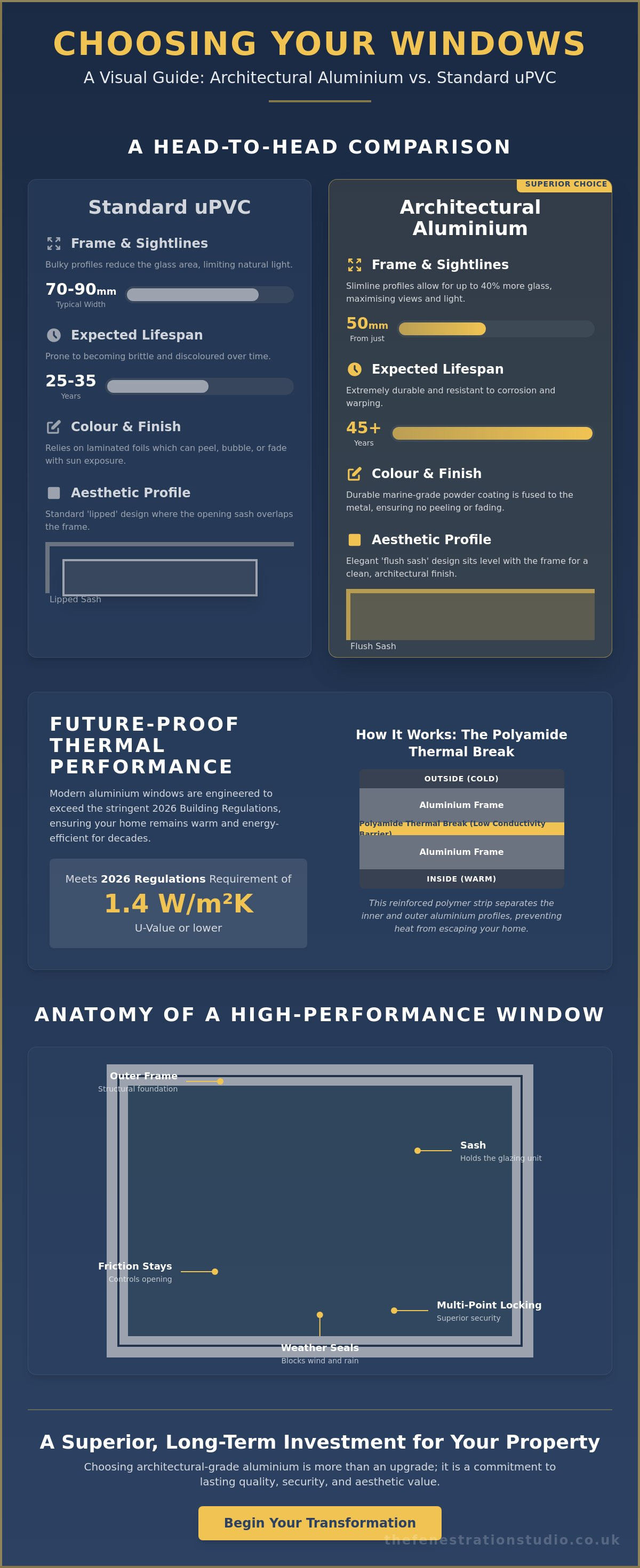
A superior window is an assembly of precision-engineered components. The outer frame provides the structural foundation, whilst the sash holds the glazing unit. Security is dictated by multi-point locking systems that engage at several intervals along the frame. High-performance weather seals are essential; they act as a barrier against Kent's driving rain and biting winds. Friction stays are equally vital, as these specialised hinges allow you to control the opening angle, ensuring the window remains stable even during a breeze.
Style Variations: Standard vs. Flush Sash
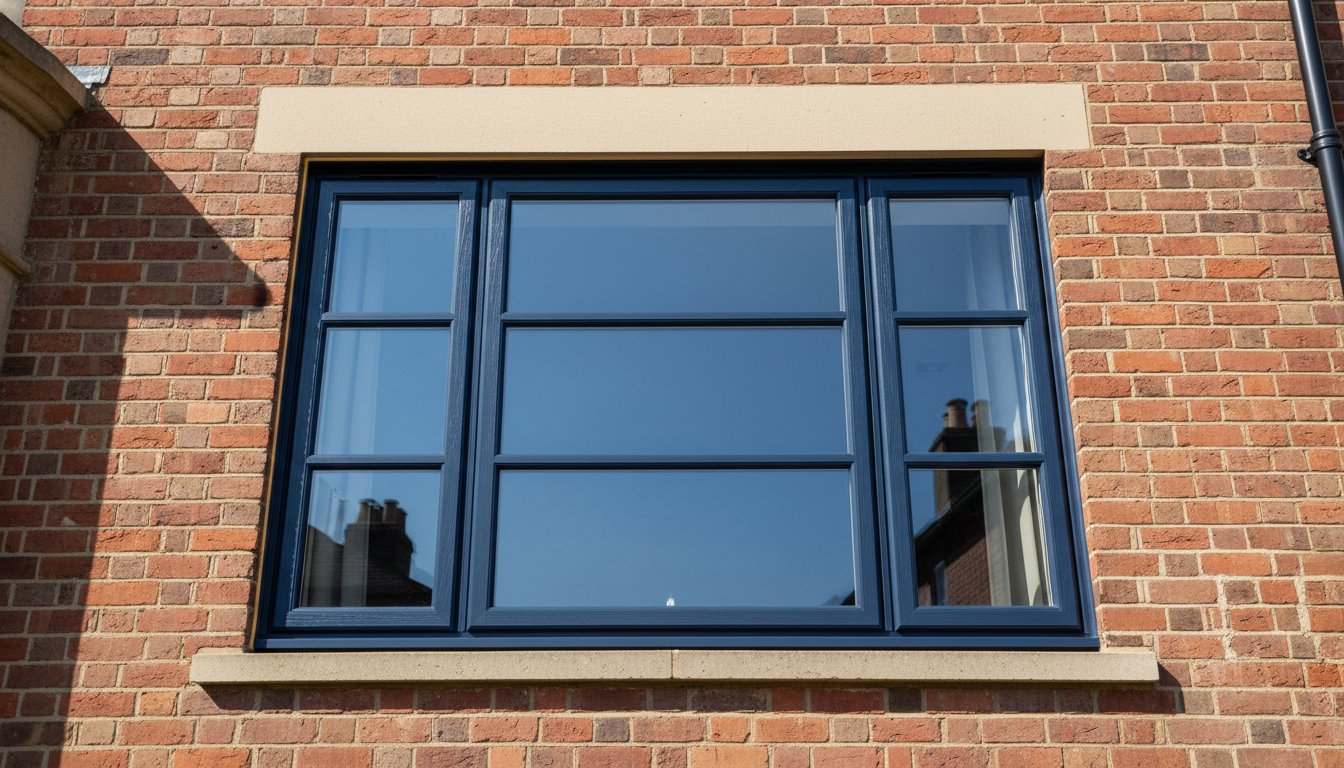
Aesthetic choice often comes down to the profile of the sash. Standard casements feature a "lipped" design where the sash overlaps the frame slightly. This is a common sight across Ashford's housing estates. However, for those seeking a more refined look, aluminium windows often utilise a flush sash design. This sits level with the frame when closed, mimicking the elegant lines of 19th-century timber joinery. Flush sashes are increasingly popular for both heritage restorations and minimalist new builds, providing a cleaner, more architectural finish.
Comparing uPVC and Aluminium Casement Windows for Your Home
When homeowners ask, "Should I choose Casement uPVC windows in Ashford?", they are often weighing immediate costs against long-term performance. uPVC is a ubiquitous material, yet its physical limitations often dictate the final look of your home. Standard uPVC profiles are inherently bulkier, typically ranging from 70mm to 90mm in width. In contrast, aluminium windows offer slimline sightlines as narrow as 50mm. This technical distinction isn't just about style; it's about how much natural light enters your living space.
Longevity is where the investment gap widens. Modern uPVC windows generally offer a lifespan of 25 to 35 years. Whilst this is respectable, aluminium systems frequently exceed 45 years of service. This durability stems from the material's resistance to environmental stressors. Where uPVC relies on laminated foils for colour, aluminium uses a marine-grade powder coating. This finish is fused to the metal, preventing the peeling, bubbling, or fading often seen in older plastic frames, particularly in high-exposure areas.
Structural Integrity and Sightlines
Aluminium's strength-to-weight ratio is a key differentiator in modern architecture. It supports larger glass units without the need for thick, reinforced frames. This allows for an architectural "more glass, less frame" philosophy that transforms the feel of a room. By reducing the frame width by up to 40% compared to standard uPVC, you significantly increase the glazed area. This creates a seamless connection between your interior and the garden, a priority for many Kent residents currently renovating their properties.
Maintenance and Long-Term Appearance
Aluminium is a sustainable choice for the discerning homeowner. It's infinitely recyclable, retaining its properties through multiple lifecycles. Unlike plastic alternatives, it doesn't warp, expand, or contract significantly in direct sunlight. This stability is crucial for Maximising Thermal Efficiency and maintaining a perfect weather seal over decades. If you value a home that looks architecturally sophisticated with minimal upkeep, you might find it beneficial to view our range of premium aluminium products to see the difference in person.
Maximising Thermal Efficiency and Home Security
Technical performance is the silent guardian of your home's comfort. When residents ask, "Should I choose Casement uPVC windows in Ashford?", the enquiry usually stems from a desire to lower energy bills and enhance security. In 2026, the criteria for success are no longer subjective. Replacement windows must now achieve a U-value of 1.4 W/m²K or lower to comply with Part L of the Building Regulations. This metric measures heat loss; a lower value indicates a more efficient thermal envelope. For new-build properties, the requirements are even more stringent, with the Future Homes Standard targeting values as low as 0.8 W/m²K.
Achieving these standards requires more than just thick frames. It demands high-specification glazing units. Whilst double glazing remains the standard, many homeowners are opting for triple-glazed aluminium windows to future-proof their properties against rising energy costs. This extra pane of glass, combined with argon gas fills and low-emissivity coatings, creates a formidable barrier against the Kentish winter. The result is a home that retains heat more effectively, directly translating into reduced demand on your central heating system.
The Role of Thermal Breaks in Aluminium Design
Historically, metal frames were prone to cold bridging. Modern architectural aluminium solves this through polyamide thermal breaks. This involves inserting a reinforced, non-metallic strip between the internal and external profiles. It creates an insulating bridge that significantly reduces heat transfer. By choosing this technology, you eliminate the cold spots and condensation often associated with older installations. This ensures your living space remains temperate year-round, regardless of the external behaviour of the weather.
Security Standards and Peace of Mind
Security is a non-negotiable component of any window replacement. Every casement system we specify features multi-point locking mechanisms that secure the sash at several intervals along the frame. We prioritise systems that meet the PAS 24 benchmark, a rigorous security test designed to resist opportunistic intruders. Our designs also utilise internal glazing beads. This ensures the glass unit is held firmly from the inside, making it impossible for a would-be intruder to remove the pane from the exterior. Robust, heavy-duty hardware and handles provide the final layer of protection, offering a tactile sense of security every time you close the window.
The Importance of Professional Surveying and Technical Specification
Precision engineering is futile without precision measurement. When considering the question, "Should I choose Casement uPVC windows in Ashford?", many homeowners overlook the technical rigour required before a single frame is manufactured. A window is a complex structural component, not a mere piece of furniture. A professional survey involves measuring to the exact millimetre, ensuring the new unit integrates perfectly with your property's unique aperture. This methodical approach prevents the structural gaps and aesthetic inconsistencies that plague budget installations.
Technical specification extends beyond simple dimensions. It involves selecting the correct frame depth to match your property's substrate and ensuring drainage paths are correctly positioned to manage the Kentish climate. Our "White Glove Service" treats the installation as a premium service experience rather than a manual task. This includes a comprehensive site assessment to identify potential structural challenges before they become costly errors. We prioritise protecting your interior and exterior spaces, ensuring the transition to your new aluminium windows is entirely stress-free.
Why Bespoke Manufacturing Matters
Generic, "off-the-shelf" window sizes are fundamentally incompatible with the varied architecture found across Ashford. Whether you own a period property or a contemporary development, bespoke manufacturing is the only way to guarantee a perfect seal. Precise surveying prevents the common pitfalls of draughts and water ingress that often occur when installers rely on excessive trim or sealant to mask poor fits. For larger spans, we conduct structural calculations to ensure the frame can support the weight of high-performance glazing without bowing over time.
The Installation Lifecycle
A successful project follows a logical, unhurried progression from the initial survey to the final technical handover. Our regional installation teams bring specific experience with local building styles, ensuring every detail is handled with professional rigour. This journey doesn't end when the last screw is tightened. We provide a structured aftercare programme, ensuring your investment remains in peak condition for decades. Every installation is certified by registered bodies like FENSA or Certass, providing the essential documentation required for future home sales or mortgage valuations. To begin your technical assessment, you can book a professional design consultation with our specialist team today.
Investing in Quality: Why The Fenestration Studio is Your Ideal Partner
Selecting the right glazing for your property is a significant capital investment. When you ask yourself, "Should I choose Casement uPVC windows in Ashford?", you are seeking more than just a product; you are seeking a long-term resolution for your home's architectural performance. We move away from industry stereotypes to position ourselves as a knowledgeable partner. Our team functions as architectural consultants, guiding you through a complex technical process with quiet confidence and professional rigour. We believe that every project deserves a level of detail that budget alternatives simply cannot provide.
Our family-run ethos is built on the foundation of honest, transparent advice. We understand the financial risks associated with poor-quality installations and the common pitfalls of the mass-market glazing industry. This is why we focus exclusively on premium aluminium systems. Whilst uPVC remains a common choice, we advocate for the superior longevity and aesthetic precision of metal. We invite you to explore our portfolio of high-end national installations to see how our methodical approach transforms residential spaces into sophisticated, energy-efficient environments.
Our Consultative Design Process
Precision begins with a conversation. We help you navigate the vast array of colours and hardware options to ensure your new windows complement your home's existing character. Whether you require a heritage-style finish or a minimalist contemporary profile, our design process is unhurried and systematic. We provide clear, transparent pricing and remain committed to a no-pressure environment. We want you to feel entirely in control of your project lifecycle. To begin this journey and explore the technical possibilities for your home, you can book a design consultation with our specialist team.
The White Glove Difference
The "White Glove Service" is our signature approach to end-to-end project management. It elevates the installation from a manual task to a premium service experience. From the initial site survey to the final technical handover, every stage is handled with an uncompromising focus on quality. We view aluminium windows as a lifetime investment for your property, providing structural integrity that lasts for 45 years or more. This dedication to excellence ensures a stress-free experience and a result that looks architecturally sophisticated. If you are ready to upgrade your home with bespoke, high-performance glazing, please request a quote to receive a detailed technical specification for your project.
Elevating Your Property with Architectural Excellence
Deciding on the right material for your property is a balance of immediate utility and long-term value. Whilst the question, "Should I choose Casement uPVC windows in Ashford?" is a common starting point for many, the evidence suggests that premium aluminium offers a far more sophisticated architectural result. You gain slimmer sightlines, superior structural integrity, and a lifespan that can exceed 45 years. This is a level of performance that standard synthetics simply cannot match.
We provide a methodical, consultative approach that prioritises your home's thermal efficiency and security. As a family-run business, we combine nationwide expertise with the personal touch of local fitting teams. Our premium White Glove installation service ensures that every technical specification is met with professional rigour, protecting your investment from start to finish. Book your expert design consultation today to begin your home's transformation. We look forward to helping you achieve a stress-free, high-end result that stands the test of time.
Frequently Asked Questions
Are casement windows more secure than other styles?
Casement windows are amongst the most secure residential profiles available due to their inherent design. When homeowners ask, "Should I choose Casement uPVC windows in Ashford?", security is often the primary driver behind the enquiry. Because the sash is pressed firmly against the frame when locked, it's exceptionally difficult for an intruder to pry the window open from the outside. Modern multi-point locking systems engage at several intervals, providing multiple anchor points that offer far greater resistance than traditional sliding or sash windows.
Do aluminium casement windows require a lot of maintenance?
Aluminium casement windows require minimal upkeep to maintain their structural integrity and aesthetic finish. Unlike timber, they don't need regular painting or staining; unlike some budget synthetics, they resist warping and discolouration even in direct sunlight. A simple routine of wiping the frames with a damp cloth and ensuring the hardware remains free of debris is typically all that's required to preserve their marine-grade powder-coated finish for decades.
Can I get casement windows in colours other than white?
You can specify casement windows in an extensive range of colours, moving far beyond the standard white associated with budget installations. Aluminium frames utilise a durable powder-coating process, allowing you to choose from hundreds of RAL shades. Popular contemporary choices in Kent include Anthracite Grey and Agate Grey, whilst Heritage styles often feature deeper, traditional tones that mimic historical timber joinery with precision.
How long does the installation of new casement windows usually take?
A standard installation for a three-bedroom semi-detached property typically takes between one and three days to complete. The exact duration depends on the complexity of the apertures and the total number of units being replaced. Our methodical "White Glove Service" ensures that every stage, from removing the old frames to the final technical handover, is managed with precision to minimise disruption to your daily routine.
Will new windows really help reduce my heating bills?
High-specification windows are a primary factor in reducing domestic energy consumption. By upgrading to units that meet the 2026 Part L requirement of a 1.4 W/m²K U-value, you significantly decrease the amount of heat escaping your home. This reduction in thermal loss means your central heating system doesn't need to work as hard to maintain a temperate environment, directly lowering your monthly energy expenditure and carbon footprint.
What is the difference between a flush casement and a standard casement?
The primary difference lies in the aesthetic profile of the sash when it's closed. A standard casement features a "lipped" sash that overlaps the outer frame slightly. In contrast, a flush casement sits entirely level within the frame, creating a sleek, flat exterior surface. This design mimics traditional 19th-century timber joinery, making it an ideal choice for heritage properties or minimalist modern architecture seeking cleaner lines.
Is it worth upgrading from uPVC to aluminium for my home?
Upgrading to aluminium is a strategic move for homeowners seeking a lifetime investment rather than a temporary fix. When asking, "Should I choose Casement uPVC windows in Ashford?", consider that aluminium offers slimmer sightlines and a lifespan exceeding 45 years. The material's inherent strength allows for larger glass spans and a more sophisticated, architectural feel that enhances your property's market value and long-term durability.
What should I look for in a professional window survey?
A professional survey must prioritise technical rigour and millimetre precision. Look for a consultant who examines the structural integrity of the existing aperture, identifies necessary drainage paths, and calculates the required frame depth for a bespoke fit. This diagnostic phase is essential for preventing future draughts or water ingress; a quick or superficial measurement is often a sign of a low-quality installation process that lacks professional detail.