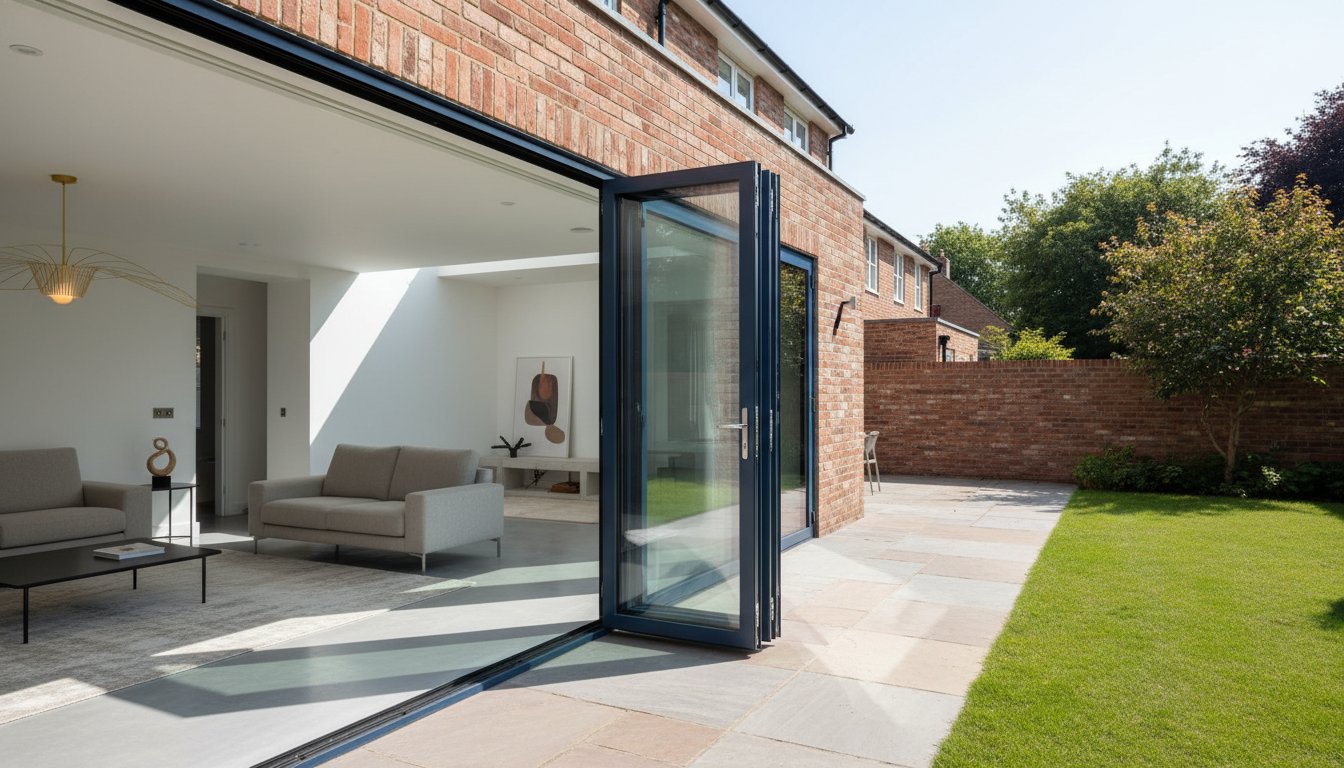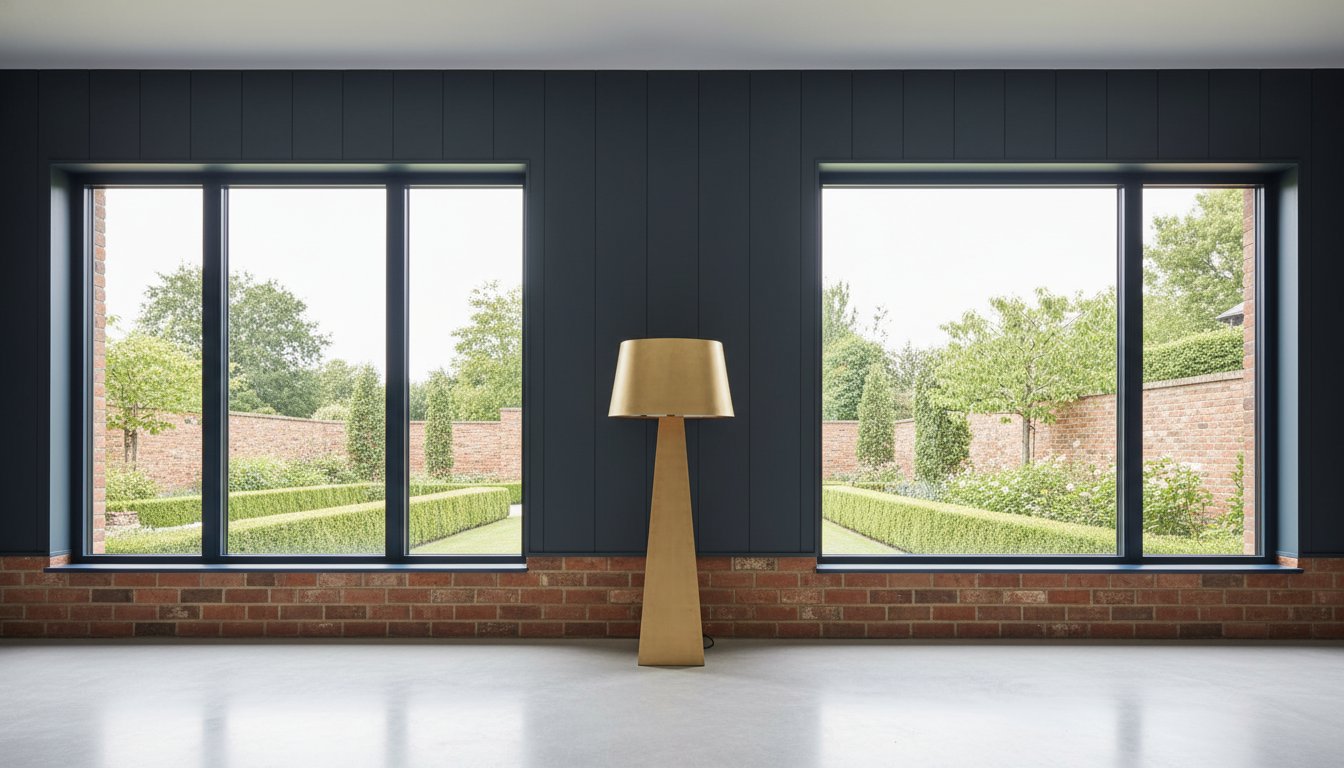
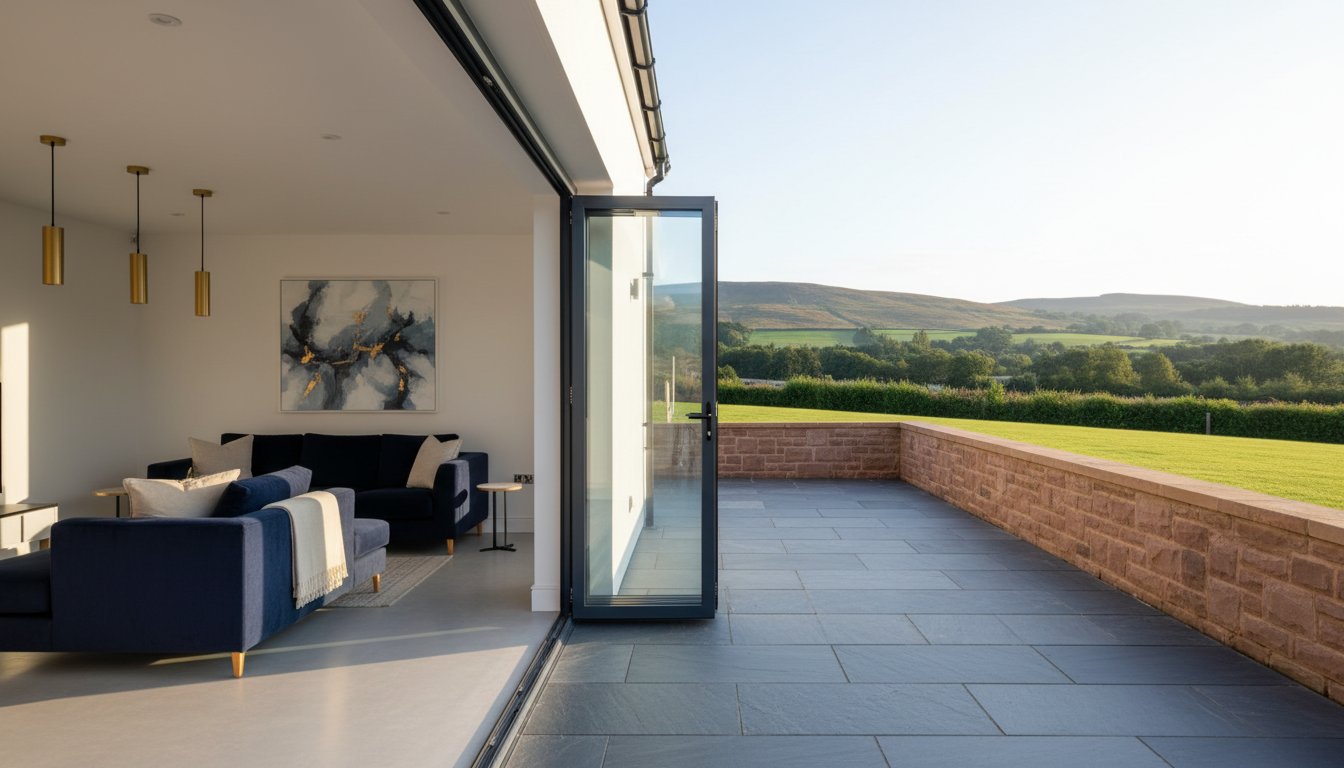
A single structural error during a £15,000 renovation doesn't just ruin a garden view; it compromises the entire thermal integrity of your property. You likely recognise that aluminium bifold doors are the definitive choice for premium home transformations, yet the industry is often clouded by "cowboy" installers and misleading efficiency claims. It's natural to feel concerned that ultra-slim frames might sacrifice security or that complex U-values are merely marketing jargon designed to hide poor engineering. Professional fenestration requires more than just a sleek aesthetic; it demands a calculated approach to structural specification.
We're here to replace that uncertainty with professional rigor and architectural expertise. This guide ensures you master the technical specifications and bespoke design possibilities required to deliver a high-end, stress-free installation. You'll learn how to secure a seamless transition between your indoor and outdoor spaces while increasing your property value through superior glazing. We'll break down the 2026 standards for high-performance thermal breaks and structural stability to ensure your investment stands the test of time. From white-glove service standards to precision engineering, you'll gain the knowledge to avoid expensive mistakes and achieve a flawless finish.
Key Takeaways
- Understand why polyamide thermal breaks and 2026 U-value benchmarks are non-negotiable for maintaining superior thermal efficiency in your home.
- Discover why the exceptional strength-to-weight ratio of aluminium bifold doors makes them the definitive choice for achieving expansive, slimline glass spans.
- Learn how to optimise your aperture configuration, including why an independent traffic door is essential for practical, seamless daily use.
- Avoid the "bifold drop" and other expensive fenestration mistakes by identifying the critical structural requirements of a professional survey.
- Master the technical specifications and White Glove installation standards required to ensure your premium folding system operates with lifelong precision.
Understanding Aluminium Bifold Doors: An Architectural Evolution
A bifold door system consists of a series of interconnected panels that fold back against a wall, effectively removing the physical barrier between internal living spaces and the garden. This Architectural Evolution of Folding Doors has seen a transition from the bulky, high-maintenance timber frames common in the 1990s toward the high-performance aluminium bifold doors we specify for 2026 projects. Aluminium has become the definitive industry standard for premium installations. It offers a strength-to-weight ratio that timber and uPVC cannot match, allowing for larger glass panes and significantly slimmer frames.
Traditional sliding patio doors were often limited by their weight and track capacity. Modern architectural glazing now prioritises expansive, multi-panel configurations that can span widths exceeding 7 metres. Choosing aluminium ensures structural integrity, exceptional weather resistance, and those coveted slim sightlines that define contemporary British homes. It is a material that does not warp, rot, or require the frequent repainting associated with organic materials.
To better understand how these systems operate with precision and ease, watch this demonstration of a smooth-gliding configuration:
The Mechanics of Folding Door Systems
The longevity of a folding system depends heavily on weight distribution. Homeowners must choose between top-hung and bottom-running systems. Top-hung doors depend on the structural lintel for support, whilst bottom-running systems distribute the load across the floor track. We typically specify bottom-running tracks paired with 316-grade stainless steel rollers. This setup ensures a smooth, effortless glide regardless of the panel weight. Bespoke engineering now allows for individual panels to reach widths of 1200mm, reducing vertical interruptions and maximising the natural light entering the property.
Aesthetic Versatility in Modern Fenestration
The current shift in aluminium bifold doors design focuses on minimalist, slimline profiles. By reducing the frame width to as little as 107mm, we maximise the glass surface area. A key requirement for high-end renovations is the integration of internal and external floor levels. Achieving a seamless "flush" threshold requires meticulous technical planning during the structural phase to ensure drainage remains effective. Bespoke sizing is essential. Non-standard architectural openings require precision-engineered frames to avoid the expensive mistakes associated with "off-the-shelf" products that fail to meet strict UK weather-rating specifications.
- Structural Integrity: Aluminium frames support triple glazing without the risk of profile deflection.
- Slim Sightlines: Maximise views and natural light with frames as narrow as 107mm.
- Weather Resistance: High-performance gaskets and thermal breaks protect against the British climate.
Technical Excellence: Thermal Efficiency and Security Standards
Investing in premium aluminium bifold doors requires an understanding of the engineering that separates architectural-grade systems from budget alternatives. Aluminium is naturally a conductive material. To prevent heat loss, high-specification frames incorporate a polyamide thermal break. This high-density nylon barrier separates the internal and external profiles, effectively halting the bridge of cold air and ensuring your living space remains habitable throughout the British winter.
For 2026, homeowners should target U-values below 1.2 W/m²K. While current Building Regulations Part L set a mandatory limit of 1.4 W/m²K for replacements, the most efficient systems already exceed these requirements. Understanding NFRC energy performance ratings helps in evaluating how factors like the U-factor and Solar Heat Gain Coefficient impact your home's thermal envelope and long-term energy costs.
Energy Performance and Glazing Options
Double glazing remains the standard for many, but triple glazing is becoming the preferred choice for those seeking a 25% improvement in thermal retention. The return on investment is found in reduced energy bills and enhanced acoustic insulation. If your extension faces south, solar control glass is essential. It reflects up to 60% of solar heat while maintaining 70% light transmission, preventing the "greenhouse effect" during summer months. High-performance weather seals, often made from EPDM or Q-Lon, ensure the rain and wind stay outside.
Advanced Security Features
Security is a non-negotiable specification. Any reputable system must meet PAS 24:2022 standards and ideally hold Secured by Design (SBD) certification. These tests ensure the door can withstand a sustained physical attack from an intruder. We recommend multi-point locking mechanisms that engage at least six points along the frame; this is often a prerequisite for home insurance compliance in the UK. You can explore these technical details further by viewing our aluminium products to see how we prioritise your home's safety.
Structural integrity is where aluminium bifold doors excel. The material doesn't warp like timber or degrade like uPVC. Premium doors feature internal glazing beads, which means the glass cannot be removed from the outside. We also specify 3-star Diamond rated cylinders to resist snapping, picking, and drilling. This methodical approach to security provides a level of protection that budget systems simply cannot match.
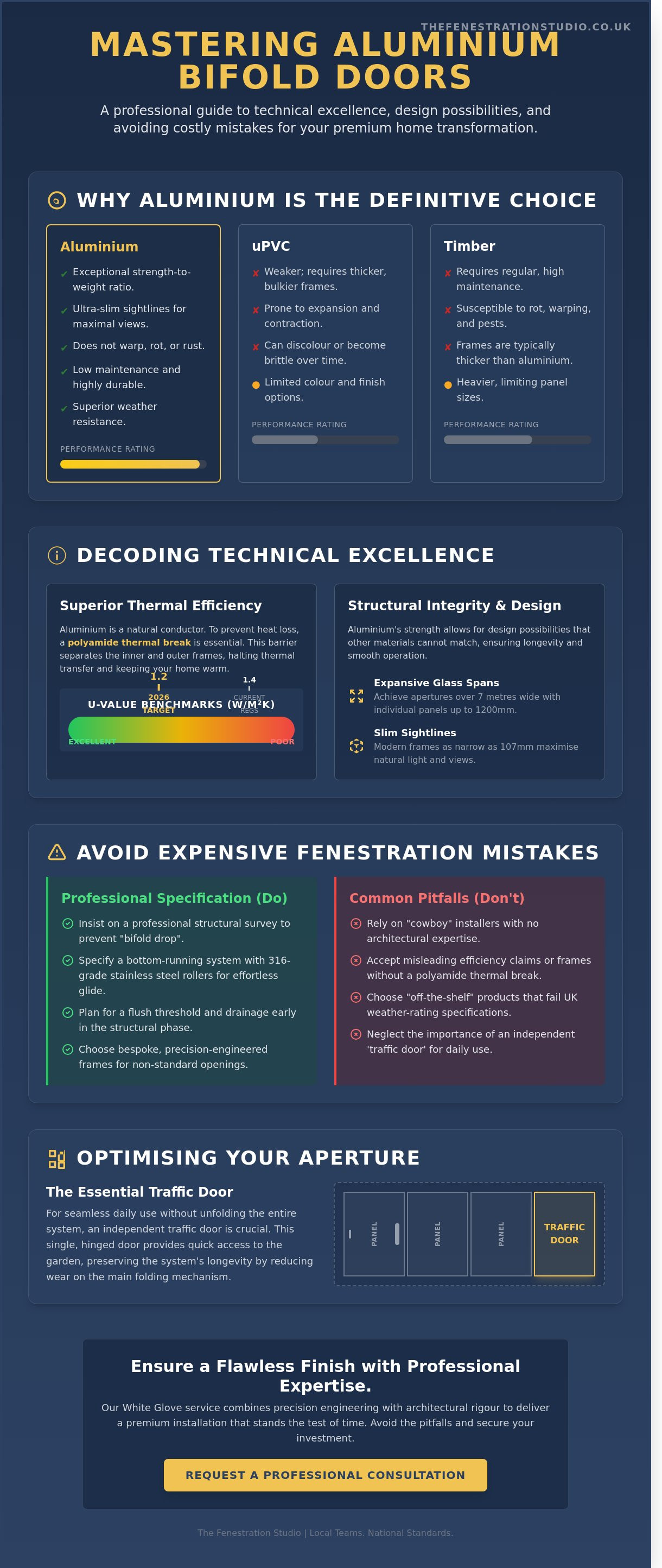
Aluminium vs. Alternative Materials: Making the Right Investment
Selecting the correct frame material is the most critical decision in any fenestration project. It dictates the structural limits of your opening, the thermal efficiency of your home, and your weekend schedule for years to come. While uPVC and timber have historically dominated the UK market, aluminium bifold doors have emerged as the professional standard for 2026. This shift isn't merely a trend; it's a response to the superior physical properties of the metal itself.
Aluminium's strength-to-weight ratio is its primary advantage. This inherent rigidity allows architects to specify much larger glass spans with significantly slimmer profiles. In a standard four-metre aperture, aluminium frames can maintain structural integrity with sightlines as narrow as 120mm. Timber or uPVC alternatives require much thicker sections to support the same weight of triple-glazed units, which ultimately obscures your view and reduces natural light infiltration.
Sustainability is now a core requirement for modern construction. Aluminium is a "circular" material, meaning it's 100% recyclable without any loss in quality. According to data from the International Aluminium Institute, approximately 75% of all aluminium ever produced is still in productive use today. Choosing metal over plastic isn't just an aesthetic choice; it's a commitment to a product that won't end up in a landfill after fifteen years of service.
Why Aluminium Beats uPVC for Bifolds
The most common technical failure in bifolding systems is "thermal movement." uPVC expands and contracts significantly more than metal when exposed to direct sunlight. In a typical UK summer, a dark uPVC frame can expand by several millimetres, causing the doors to catch, stick, or fail to lock entirely. Aluminium is far more stable. It doesn't warp under heat, ensuring the precision-engineered rollers stay aligned. While a uPVC door might require replacement after 15 years, a high-specification aluminium system typically offers a 40 to 45-year lifespan.
Aluminium vs Timber: Performance and Upkeep
Timber doors are often praised for their traditional charm, but they carry a heavy maintenance burden. Without consistent sanding, treating, and repainting every three to five years, wood is susceptible to moisture ingress, rot, and warping. This is particularly problematic for aluminium bifold doors designed for the British climate. Modern powder coatings allow you to achieve a heritage aesthetic or even a realistic wood-grain finish that remains completely impervious to the elements. Aluminium bifold doors represent a superior lifetime investment because they eliminate the recurring costs of structural refurbishment while maintaining their "as-installed" performance for decades.
Designing Your Aperture: Configuration and Colour Options
Designing a bespoke aperture requires more than just measuring a gap in the brickwork; it's about orchestrating movement within your home. Whether you're specifying a compact 2-panel set for a 1.8-metre opening or an expansive 7-panel system for a wide-span extension, the configuration dictates your daily experience. Technical precision at this stage prevents long-term frustration and ensures the installation feels like a natural extension of your architecture.
The "traffic door" concept is a non-negotiable for most functional homes. An independent leaf allows you to use the system as a standard entrance without engaging the entire folding mechanism. This is particularly vital for winter months or quick garden access. Systems with an odd number of panels, such as 3, 5, or 7, naturally facilitate this feature. Even-numbered configurations often require both doors to move simultaneously, which can feel cumbersome during routine daily use.
Opening direction is another pivotal choice. Whilst inward-opening doors are available, 95% of UK installations specify an outward-opening orientation. This keeps the internal floor space clear for furniture and ensures that any rainwater on the external face of the glass doesn't drip onto your flooring when the doors are opened after a typical British shower. Colour choice then adds the final layer of character. RAL shades like Anthracite Grey (7016) remain the industry standard for a reason: they recede visually, allowing the eye to focus on the view rather than the framework.
Practical Configuration Advice
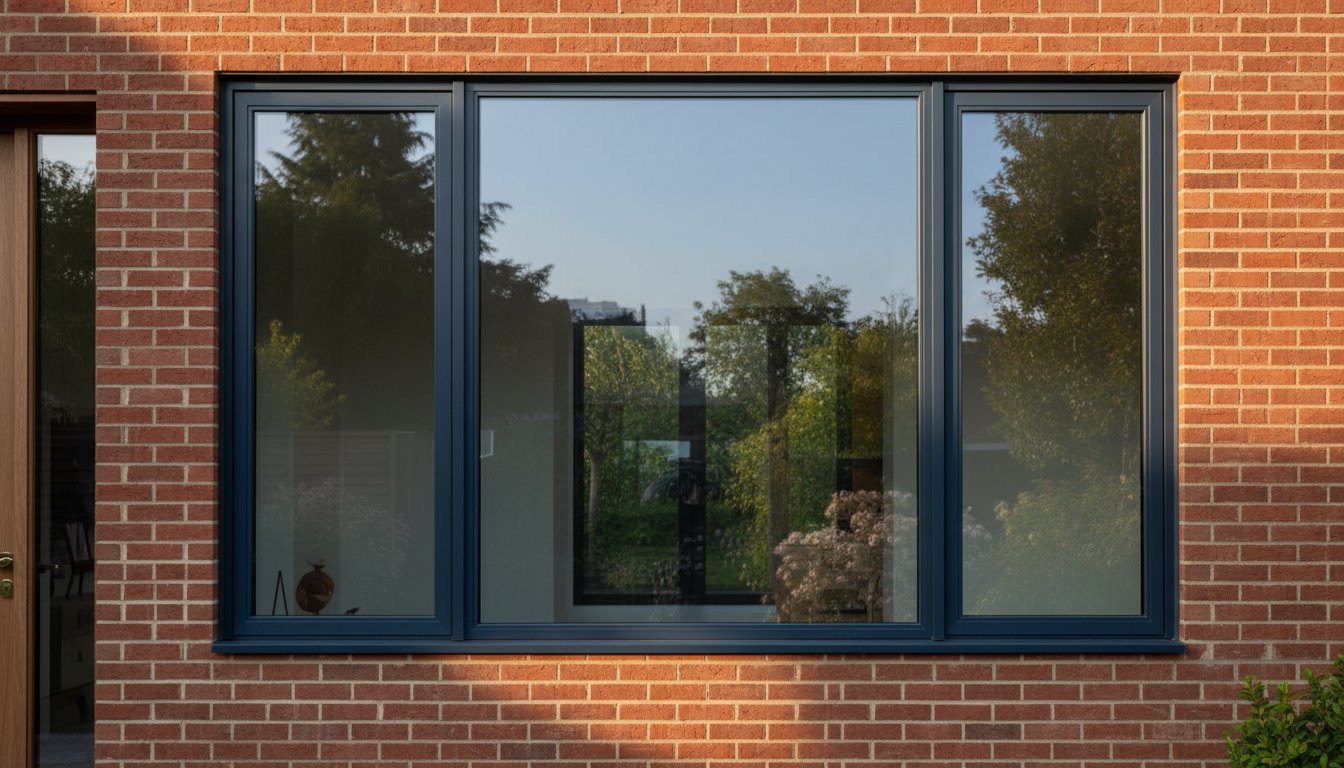
Determining the right leaf count depends on your structural opening and desired aesthetic. Odd-numbered systems are generally preferred for their operational flexibility. You must also consider stacking: left, right, or split-stacking. A split-stack can create a symmetrical frame for your garden, but it requires two clear areas on your patio. For a truly seamless project, ensure your aluminium bifold doors are specified alongside matching aluminium windows to maintain consistent sightlines and thermal performance across the property.
Finishes and Hardware Selection
Durability in the UK's varied climate is determined by your choice of finish. Standard powder coating is robust for most inland locations, but homes within five miles of the coast require marine-grade specifications to resist salt-air corrosion. Hardware selection serves as the tactile signature of the installation. Contemporary matt black handles offer a bold, architectural contrast, while brushed steel provides a softer, premium feel. These details define the "weight" and quality of the user experience every time you engage the lock. To source high-quality components, Door-Tech Services provides an extensive range of specialist hardware that ensures long-term reliability. Choosing the right hardware is what separates a standard aluminium bifold doors installation from a truly bespoke architectural statement.
Fine-tune your project specifications with an expert mentor. Book a design consultation to explore our full range of configurations and finishes.
The White Glove Installation: Avoiding Expensive Fenestration Mistakes
Installation isn't just about fitting a frame into a gap; it's an engineering exercise that dictates the long-term performance of your home. A premium set of aluminium bifold doors is only as good as the aperture it sits in. If the framework isn't perfectly square, the mechanical performance will fail within months. At The Fenestration Studio, we treat every project as a bespoke architectural intervention. The notorious "bifold drop" is a common industry failure, usually caused by poor structural calculations or thermal movement. We prevent this through rigorous technical specification and our White Glove Service, which manages every detail from the first laser measurement to the final handover.
The Importance of Professional Surveying
A professional survey is the foundation of a successful project. We don't just measure the width and height; we inspect the lintel integrity and check for structural deflection. If a lintel bows by even 3mm, it can compromise the entire operation of the folding mechanism. Our surveyors use laser-precise tools to ensure the framework sits perfectly plumb and level. We also pay meticulous attention to floor levels. By identifying the exact Finished Floor Level (FFL) early, we can achieve that sought-after flush threshold without compromising on weather performance. We also map out drainage requirements to prevent water ingress, ensuring your home remains protected against the unpredictable British climate.
On the day of installation, you can expect a methodical and tidy process. Our technicians arrive with a clear plan, protecting your flooring and furniture before any work commences. Precision is our priority. Once the aluminium bifold doors are secured, we conduct a series of rigorous tests. This includes checking the compression of weather seals, the alignment of multi-point locking systems, and the effortless glide of the stainless steel rollers. We don't leave until the system operates with the "one-finger" ease that defines premium glazing.
Aftercare and Long-Term Support
Choosing a "supply-only" approach is a frequent mistake that often leads to expensive disputes between builders and manufacturers. If a door doesn't lock correctly six months later, a builder might blame the product, whilst the manufacturer blames the fitting. Our approach eliminates this friction. By managing the project from design to final adjustment, we take total responsibility for the outcome. Our dedicated aftercare programme ensures that your investment is protected by experts who understand the specific mechanics of your installation. This level of professional rigour is what differentiates a standard renovation from a high-end architectural upgrade. To ensure your project is handled with this level of expertise, book a design consultation to begin your project specification.
Secure Your Architectural Vision for 2026
Investing in these premium wide-span systems represents a significant commitment to your home's thermal performance and long-term capital value. As we approach 2026, adherence to updated Part L Building Regulations and PAS 24 security standards is no longer optional for the discerning homeowner. You've seen how technical precision in the survey stage prevents the expensive fenestration mistakes that plague budget installations. Our White Glove Service eliminates these risks through end-to-end project management and expert technical surveying included as standard. We provide a structured framework that combines nationwide installation reach with specific local expertise. Local Expertise. National Standards. This methodical approach ensures your aperture is configured perfectly for both efficiency and effortless operation. It's time to move away from high-pressure sales and toward a consultative partnership that respects the architectural integrity of your property.
Request a bespoke quote for your aluminium bifold doors project
We look forward to helping you transform your living space with the precision it deserves.
Frequently Asked Questions
Are aluminium bifold doors energy efficient?
Modern aluminium bifold doors are highly energy efficient due to advanced thermal break technology. Under the 2022 Building Regulations Part L, new installations must achieve a U-value of 1.4 W/m²K or lower. Our specifications often exceed these requirements by utilising polyamide bridges to prevent heat transfer. This ensures your living space remains thermally stable throughout the year, reducing reliance on central heating and lowering carbon emissions for 2026 standards.
Do bifold doors require a lot of maintenance?
Aluminium bifold doors require minimal maintenance compared to timber or uPVC alternatives. You should clean the powder-coated frames with warm soapy water every four months to remove atmospheric salt and grit. The stainless steel tracks need a quick vacuum and wipe twice a year to ensure smooth operation. To ensure your interior flooring looks as impressive as your new glazing, you can visit The Rutland Cleaning Company for professional carpet and hard floor maintenance. Avoid abrasive cleaners that might damage the finish; a simple lubrication of the hinges every 12 months keeps the mechanism performing at its peak.
Can I have a flush threshold with my bifold doors?
You can achieve a flush threshold with your installation, though it requires careful structural planning regarding drainage. A true level floor transition between your interior and patio is popular for seamless living, but it often necessitates an external drainage channel like a slot drain. We recommend a weathered threshold for exposed locations to maintain a 100% watertight seal against driving rain, as flush options carry a higher risk of water ingress during extreme weather.
How long does it take to install aluminium bifold doors?
A standard installation of a three to five-panel set typically takes one full working day to complete. More complex structural openings or larger configurations exceeding six metres may require two days for precise alignment and finishing. Our White Glove Service ensures that the site is fully surveyed beforehand, which prevents the delays often caused by incorrect measurements or unforeseen structural issues. We aim for a methodical, single-visit completion whenever possible.
Are bifold doors more secure than sliding doors?
Both door types offer exceptional security when manufactured to PAS 24 standards, though bifold doors feature more locking points across the multiple panels. Each folding leaf is secured with high-security shootbolts, while the lead door utilises a multi-point locking system. Sliding doors rely on massive glass panes that are harder to breach but have fewer physical locking junctions. In either case, the structural integrity of the aluminium framework provides a formidable barrier against forced entry.
What is the maximum size for an aluminium bifold door panel?
The maximum width for a single panel is typically 1.2 metres, with heights reaching up to 3.0 metres depending on the specific system choice. Exceeding these dimensions can compromise the structural integrity and ease of operation, as individual glass units can weigh over 100kg. By adhering to these engineering limits, we ensure the rollers and hinges function without strain, maintaining the effortless glide that defines a premium fenestration product.
Do I need planning permission to install bifold doors?
You generally don't need planning permission to install bifold doors as they usually fall under Permitted Development rights. However, you must seek approval if your property is a listed building or situated within one of the UK’s 9,000 Conservation Areas. Since 2022, all replacements must also comply with FENSA or CERTASS standards to prove they meet current thermal and safety regulations. We always verify these local constraints during our initial technical consultation.
Why should I choose a professional installation over supply-only?
Choosing a professional installation protects you from the expensive mistakes that lead to structural failure or poor thermal performance. A bespoke fenestration project requires millimetre-perfect alignment that DIY or general builders often struggle to achieve. Our professional service includes a comprehensive 10-year guarantee and ensures that the complex weather-sealing and perimeter drainage are handled with technical rigor. This systematic approach secures your long-term investment and ensures the doors operate flawlessly.