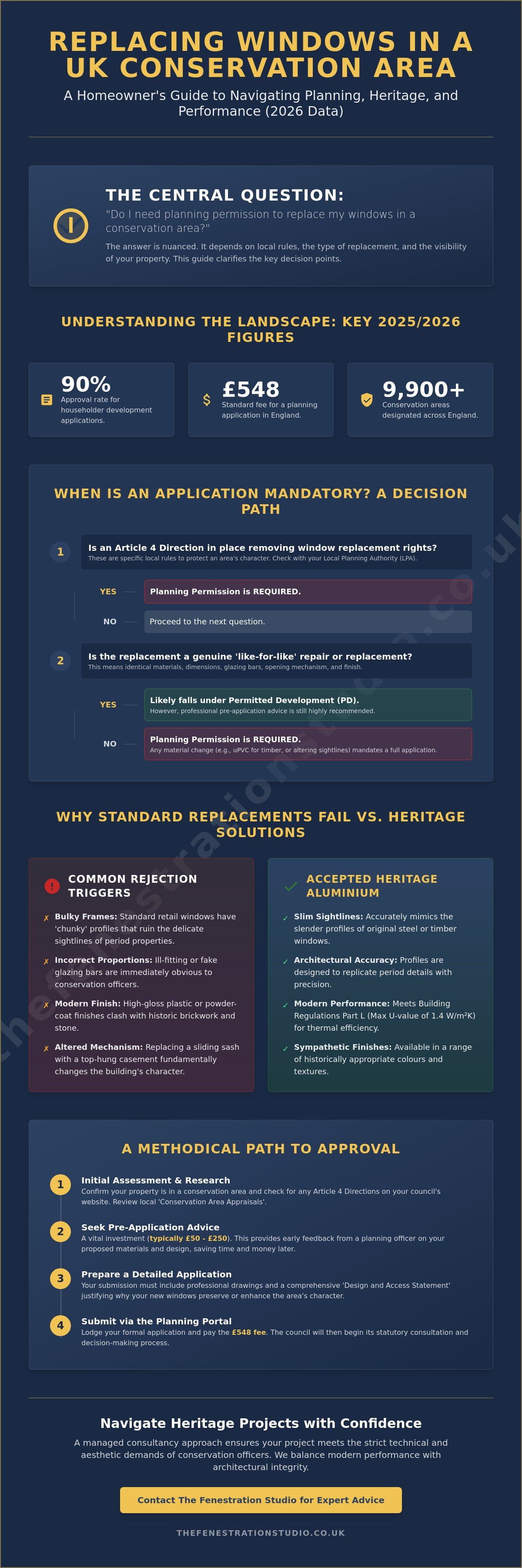
Did you know that despite the rigorous reputation of local planning authorities, 90% of householder development applications were successfully granted in the year ending December 2025? Even with high approval rates, the primary concern for many remains: Do I need planning permission to replace windows in a conservation area? It's natural to feel apprehensive when navigating Article 4 Directions or the prospect of a £548 planning application fee. You want to enhance your home's thermal performance without risking legal action or compromising the unique character of your local community.
We recognise that the balance between modern engineering and heritage aesthetics is a precise science. This 2026 guide provides a clear framework to ensure your project is both legally compliant and architecturally sympathetic. You'll gain a thorough understanding of your obligations under the Planning and Infrastructure Act 2025 and learn why conservation officers are increasingly accepting of high-grade heritage aluminium. We'll examine the technical requirements of Building Regulations Part L and outline a methodical path toward a more energy-efficient, beautiful home.
Key Takeaways
- Understand how local authorities balance the preservation of historical character with the necessity for modern, energy-efficient building upgrades.
- Identify the specific triggers, such as Article 4 Directions, that answer the core question: Do I need planning permission to replace windows in a conservation area?
- Debunk the misconception that only timber is permitted by exploring the growing acceptance of heritage aluminium amongst conservation officers for its architectural accuracy.
- Learn the methodical steps for a successful application, including the importance of professional surveys and securing vital pre-application advice.
- Discover how a managed consultancy approach can navigate technical hurdles whilst ensuring your project maintains strict architectural integrity.
Understanding Conservation Area Regulations for Windows
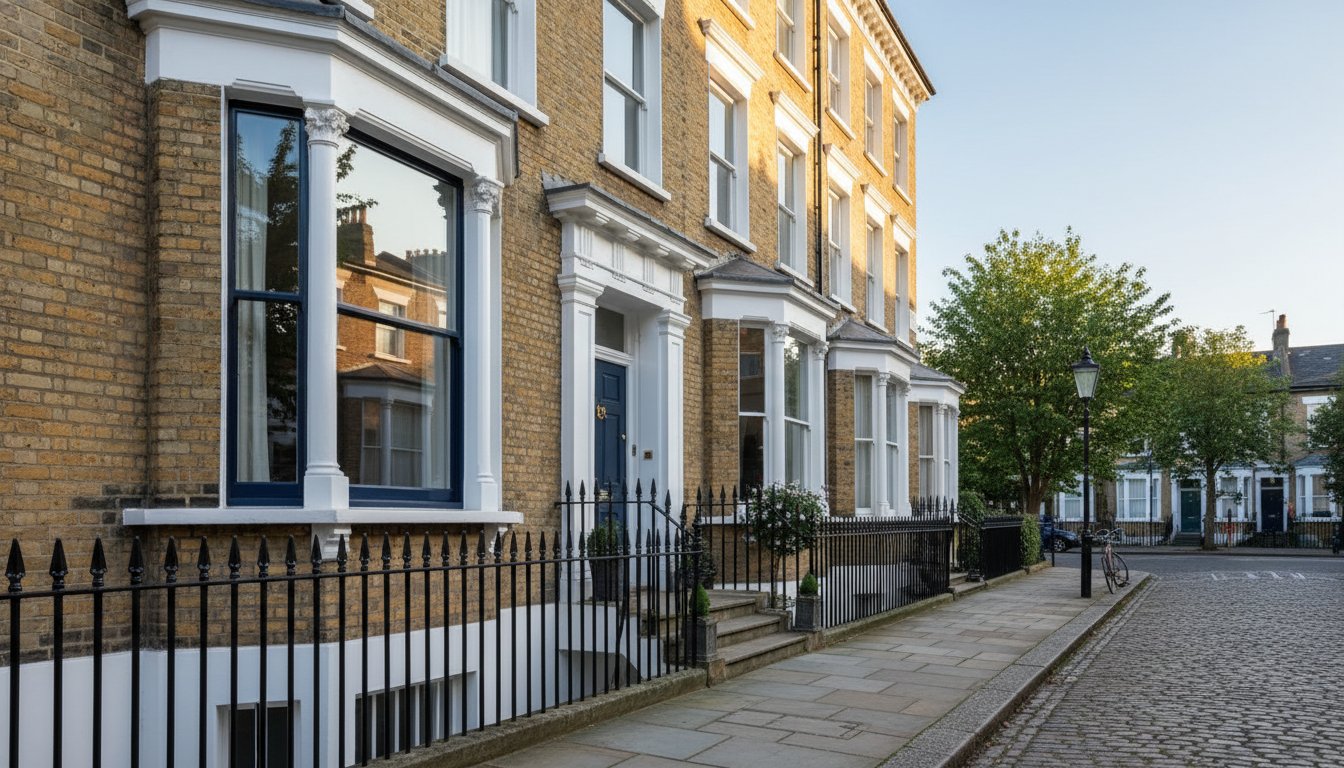
A conservation area is defined by its special architectural or historic interest, a status that currently applies to approximately 9,900 locations across England. When homeowners ask, "Do I need planning permission to replace windows in a conservation area?", they're essentially asking how their local authority interprets the duty to 'preserve or enhance' the area's character. For a deeper dive into these designations, Understanding Conservation Area Regulations provides a foundational perspective on how these protections function legally. Conservation officers typically view windows as 'primary character features'; they're the architectural 'eyes' of the building that define its period and personality.
Whilst modern Building Regulations Part L now mandate a maximum U-value of 1.4 W/m²K for replacements, the council's priority remains the visual integrity of the street scene. This creates a delicate tension between thermal efficiency and historical accuracy. Planners look for replacements that don't just mimic the original, but respect the building's heritage through precise material choice and profile depth. One nuance often overlooked by generic advice is the concept of 'elevation visibility'. Planners frequently apply far more stringent criteria to windows visible from the public highway than those on a secluded rear elevation, where modern innovations are sometimes more readily accepted.
The Role of the Local Planning Authority (LPA)
Every council operates under a unique set of 'Conservation Area Appraisals' that dictate which specific features define your neighbourhood's identity. When you submit an application, the 'Design and Access Statement' becomes your primary tool for justification. It's not merely about the new product; it's about proving how the replacement respects the building's original contribution to the wider streetscape. The LPA evaluates whether your existing windows are 'positive contributors' or if they're already unsympathetic additions from a previous era. Investing in pre-application advice, which typically costs between £50 and £250, can clarify whether high-performance aluminium windows with heritage profiles will meet their specific local criteria.
Why 'Standard' Replacements Often Fail Approval
Most rejections stem from a lack of technical precision. Standard retail windows often feature frames that are too deep or 'chunky', lacking the slim sightlines found in original timber or steel. Incorrectly proportioned glazing bars or a shift in the opening mechanism, such as replacing a traditional sliding sash with a side-hung casement, can fundamentally alter the property's rhythm. Planners also scrutinise the 'finish' of the frame; a high-gloss modern coating can look entirely out of place against 19th-century brickwork.
Executing unauthorised and unsympathetic alterations to a protected property can result in the local council issuing an enforcement notice, potentially forcing a complete and expensive reversal of the works.
Permitted Development vs Planning Permission: When is an Application Mandatory?
For many homeowners, the baseline for property alterations is Permitted Development (PD). These rights allow for various improvements without the need for a formal planning application. However, the presence of a conservation area designation often introduces a layer of complexity. You might find yourself asking, "Do I need planning permission to replace windows in a conservation area?" only to discover that the answer depends heavily on the specific 'Article 4 Directions' active in your street. Unlike a blanket ban, these directions are precision tools used by councils to withdraw specific PD rights to protect the architectural integrity of the neighbourhood.
The distinction between maintenance and replacement is a critical legal threshold. Generally, like-for-like repairs, such as replacing a single broken pane or repainting frames, do not require permission. Once you move toward a full unit replacement, the criteria for Permitted Development vs Planning Permission shift. If your property is a house, rather than a flat or maisonette, and no Article 4 Direction exists, you may still have PD rights to replace windows, provided the materials are of a "similar appearance" to the originals. This often hinges on whether the new frames maintain the same profile and sightlines as the existing ones.
Navigating Article 4 Directions
Councils implement Article 4 Directions to prevent the gradual erosion of a neighbourhood's unique character. These restrictions often focus on elevations visible from a highway, waterway, or public open space. It's a common misconception that Article 4 covers the entire house; frequently, it only applies to the front facade. You should check your local council's planning register to identify which specific directions are in force for your postcode. Even for minor alterations, you may need to obtain 'Prior Approval' to ensure your chosen aluminium windows meet the required architectural standards.
Listed Buildings vs Conservation Areas
It's vital to distinguish between a conservation area and a Listed Building. Conservation status protects the 'area', whilst Listing protects the specific 'fabric' of the building. Listed Building Consent is a separate, significantly stricter legal requirement. This protection often extends to 'curtilage' structures, meaning outbuildings or garden walls may also require consent. Never assume that because a neighbour in a conservation area replaced their glazing, you can do the same if your property is Listed. The rules are not applied equally, and the penalties for unauthorised work on a Listed property are severe.
If you're unsure how these regulations apply to your specific project, you can book a design consultation to review your requirements against local planning appraisals.
The 'Like-for-Like' Debate: Material Choices and Historical Accuracy
Conservation officers often use the term "like-for-like" to describe the ideal replacement standard. This refers to an exact match in materials, dimensions, and opening mechanisms. Historically, this meant timber was the only approved option. Today, the perspective is shifting. Do I need planning permission to replace windows in a conservation area? If you're moving away from original timber, the answer is almost certainly yes, but this doesn't mean your application is destined for rejection. The focus has moved from strict material mimicry to architectural sympathy.
The transition from wood to metal is technically considered a 'Material Change of Use'. Success in these applications relies on proving architectural harmony. Planners prioritise sightlines and profile depth over material alone. They want to ensure the new units don't look 'heavy' or out of place against the original masonry. The Planning Portal guidance on windows provides the essential framework for these requirements, highlighting that designated areas require a higher degree of scrutiny to prevent the erosion of local character.
The Rise of Heritage Aluminium
Modern aluminium windows have become a favourite amongst architects for heritage projects. Their structural integrity allows for slimline profiles that timber simply cannot achieve at scale. These systems provide the security and longevity of metal whilst respecting the delicate proportions of a period home. Key features that planners look for include:
- Putty Line Details: Advanced aluminium systems mimic the chamfered edge of traditional putty glazing.
- Glazing Bars: Applied bars can replicate the intricate patterns of Georgian or Victorian windows with precision.
- Colour Matching: Durable powder-coated finishes offer a matt texture that matches historical paint palettes perfectly.
Double Glazing in Conservation Areas
Integrating double glazing into a conservation setting was once a technical nightmare. Thick, 'stepped' units often ruined the appearance of slender frames. Today, vacuum glazing and ultra-slim units allow for high efficiency without the bulk. Since replacement windows must now meet the 1.4 W/m²K U-value standard set by Building Regulations Part L, upgrading is no longer just an aesthetic choice. This mandatory drive for better thermal performance serves as a significant justification for using modern materials that can house high-performance glazing whilst maintaining a traditional look.
Navigating the Planning Application Process for Replacement Glazing
Securing consent for property alterations in a protected area is a methodical exercise in transparency. Whilst many homeowners begin by asking, "Do I need planning permission to replace windows in a conservation area?", the real challenge lies in the execution of the application itself. The process typically spans eight to twelve weeks. During this time, the local authority will consult with neighbours and heritage bodies, making it essential that your proposal is robust enough to withstand public scrutiny. A successful outcome relies on a logical progression from initial documentation to final monitoring.
- Step 1: Professional Survey. You must document the current state of your glazing. Photographing existing decay or inefficiency provides a baseline justification for the upgrade.
- Step 2: Pre-Application Advice. Engaging with the conservation officer early helps identify potential hurdles before you commit to a full submission.
- Step 3: Technical Drawings. You require precise illustrations that show how the new units sit within the masonry. Surface-level sketches are rarely sufficient.
- Step 4: Design and Access Statement. This narrative is your opportunity to justify the change. It should explain how the new materials preserve the building's historical contribution.
- Step 5: Application Monitoring. Stay proactive. Respond to any public consultation comments or requests for clarification from the planning officer promptly.
The Importance of Technical Specifications
Cross-sectional drawings are the primary requirement for any successful planning approval. These diagrams must demonstrate the exact profile of the frames and how they sit within the existing masonry reveals. Planners look for "recess depth" to ensure the new windows don't appear flush with the brickwork if the originals were set back. To assist in this diagnostic phase, The Fenestration Studio provides the comprehensive technical data and CAD sections required to satisfy even the most discerning conservation officers.
Pre-Application Advice: Is it Worth the Fee?
Investing in pre-application advice is a strategic move that significantly reduces the risk of a flat refusal. Fees vary by council, but they provide a direct line to the decision-makers. This stage allows you to identify specific local preferences for finishes or glazing bar widths. You can then use this feedback to refine your Heritage Window selection, ensuring the final proposal aligns with the council's vision for the street scene. It's an unhurried approach that values precision over speed, ultimately leading to a smoother project lifecycle.
If you're ready to move forward with a compliant, high-performance solution, you can request a quote to receive a detailed breakdown for your project.
Heritage Aluminium Solutions: Modern Performance with Architectural Integrity
While the previous sections have clarified the legal framework, the physical selection of your windows determines the ultimate success of your project. Homeowners often start with the question, "Do I need planning permission to replace windows in a conservation area?", and end with the realisation that material choice is the pivot point for council approval. Our 'White Glove Service' manages these technical hurdles by aligning high-end engineering with historical requirements. Heritage aluminium offers a sophisticated resolution to the dilemma of modern living in a protected property. Unlike timber, which requires cyclical maintenance, or modern materials that planners often reject, aluminium provides structural rigidity with zero maintenance and high-level security.
These systems excel at achieving a 'crittall-style' or 'traditional timber' aesthetic through ultra-slim sightlines. This architectural integrity ensures that the replacement units remain sympathetic to the building's original design language. Professional installation is the final, non-negotiable key to planning compliance. A poorly fitted window can undermine the most detailed technical drawings, whereas a precision-engineered installation preserves the masonry reveals and ensures the thermal performance mandated by 2026 regulations.
Bespoke Design for Discerning Planners
Period accuracy is achieved through meticulous customisation. We offer a vast spectrum of RAL colours, allowing you to match the muted, lead-based paint schemes found in Regency or Victorian districts. Authentic hardware, such as 'monkey tail' handles and traditional peg stays, provides the tactile feedback expected of a heritage property. Our Heritage Style Windows & Doors represent the logical conclusion for conservation projects, offering the aesthetic of the past with the security of the present.
The Fenestration Studio: Your Architectural Partner
We move beyond simple product delivery toward a consultative, survey-led approach. By acting as your architectural partner, we ensure that every technical detail, from profile depth to glazing bar width, is documented for your local planning authority application. Our nationwide network of installers ensures that local expertise is present on every site, respecting the regional nuances of your specific conservation area.
Ready to upgrade? Book a Design Consultation to discuss your conservation requirements.
Securing Your Property’s Architectural Legacy
Achieving a balance between 2026 thermal standards and historical preservation requires a methodical, expert-led strategy. Success hinges on identifying specific Article 4 Directions and selecting materials that respect original sightlines whilst delivering modern security. Determining the answer to Do I need planning permission to replace windows in a conservation area? is merely the starting point of a journey toward a more efficient home. By choosing architectural-grade aluminium systems, you ensure your property meets rigorous Building Regulations without compromising its unique character.
We provide a comprehensive path through these technical hurdles. Our service includes expert technical surveying and a nationwide 'White Glove' installation experience designed for the most discerning homeowners. You don't have to navigate the complexities of local planning appraisals alone. With the right partner, the transition to high-performance glazing is a seamless, rewarding investment in your home's future.
Request a technical survey and quote for your heritage project and begin your property's transformation with confidence.
Frequently Asked Questions
Can I replace timber windows with aluminium in a conservation area?
Yes, you can replace timber with aluminium provided the new profiles accurately replicate the original sightlines and proportions. Modern heritage aluminium is increasingly accepted by conservation officers because it mimics traditional steel or timber frames whilst offering superior thermal efficiency. You must ensure the finish and glazing bars match the historical context of your specific street scene to secure approval.
What happens if I replace my windows without planning permission?
Replacing windows without required consent can result in the local council issuing an enforcement notice. This legal order may force you to remove the new installations and restore the property to its original condition at your own expense. Unauthorised work in a conservation area also complicates future property sales, as buyers' solicitors will invariably flag the lack of legal compliance during the conveyancing process.
Is double glazing allowed in all conservation areas?
Double glazing is permitted in most conservation areas, provided the units are 'slimline' and don't compromise the window's historical profile. Since Building Regulations Part L now mandate a maximum U-value of 1.4 W/m²K, planners are generally more receptive to modern glazing solutions. In some highly sensitive areas, you may be restricted to vacuum glazing or specific 'stepped' units to maintain architectural integrity.
How much does a planning application for windows cost in 2026?
A standard householder planning application for alterations to a single dwelling in England costs £548 as of May 2026. You should also budget for pre-application advice fees, which typically range from £50 to £250 depending on your local council's specific fee structure. These costs are separate from the professional architectural drawings and heritage statements required to support a successful submission.
What is an Article 4 Direction and how does it affect my windows?
An Article 4 Direction is a legal tool that removes your Permitted Development rights for specific alterations. This means that even a 'like-for-like' replacement will require a full planning application. These directions are common amongst the 9,900 conservation areas in England and often target windows visible from a public highway to prevent the gradual erosion of a neighbourhood's unique architectural character.
Do I need permission to change the colour of my window frames?
You usually need permission to change the colour of your frames if your property is subject to an Article 4 Direction. Conservation officers often specify a palette of approved historical colours to maintain a cohesive street scene. If you're asking, "Do I need planning permission to replace windows in a conservation area?", remember that the aesthetic finish is as critical as the material itself.
How long does the planning approval process usually take for windows?
The planning approval process typically takes between eight and twelve weeks from the date your application is validated. This timeframe includes a statutory consultation period where neighbours and heritage bodies can provide feedback. To avoid delays, ensure your application includes precise cross-sectional drawings and a comprehensive heritage statement that addresses the specific conservation appraisals for your local area.
Can a conservation officer force me to use a specific type of wood?
A conservation officer cannot strictly force you to use wood, but they can reject any material that doesn't accurately replicate the original's appearance. Whilst some councils historically preferred timber, modern heritage-grade aluminium is now widely accepted. If you choose aluminium, it must match the dimensions, opening mechanisms, and sightlines of the original units to satisfy the council's requirement for architectural sympathy.