What if your £50,000 bespoke glazing project was met with a local authority enforcement notice before the final seal was even applied? It's a scenario that keeps many homeowners awake at night. You likely believe that improving your home should be a straightforward investment in your property's value, yet the boundary between Permitted Development and a full application often feels like a moving target. These planning permission guides for homeowners are designed to eliminate that uncertainty, providing a professional framework for your next architectural project.
Mastering the 2026 UK regulations ensures your renovation remains legal, compliant, and protected from expensive delays. We'll help you distinguish between planning and building regulations while identifying the specific criteria that allow you to bypass the full application process entirely. You'll gain the confidence to instruct a premium installer, knowing your project is built on a foundation of technical accuracy and White Glove Service. This manual provides a clear roadmap for a stress-free home transformation.
Key Takeaways
- Distinguish between the legal requirements of the 1948 Town and Country Planning Act and structural building regulations to ensure your project remains fully compliant.
- Explore our comprehensive planning permission guides for homeowners to determine if your extension or loft conversion qualifies under Permitted Development rights for a more streamlined "deemed consent" route.
- Identify the specific glazing regulations for your property type, particularly when creating new structural openings for high-specification aluminium bifolding or sliding doors.
- Navigate the national Planning Portal with professional rigour by mastering the preparation of architectural drawings and technical specifications required for a successful submission.
- Understand how a "White Glove Service" approach to technical surveying and professional specifications can minimise project risks and prevent expensive installation delays.
Understanding Planning Permission: A Definitive Guide for British Homeowners
Comprehensive planning permission guides for homeowners are essential because every significant architectural change starts with a legal framework. Since the 1948 Town and Country Planning Act, homeowners have required formal consent for specific developments. This system ensures that our local environments remain cohesive and functional. Your Local Planning Authority (LPA) acts as the gatekeeper of regional architectural integrity. They assess how a project impacts the street scene, the usage of land, and the privacy of neighbours. For those researching Understanding Planning Permission in the UK, it's clear that this isn't just bureaucracy; it's a safeguard for property values. Our role as an expert mentor is to help you bypass the expensive mistakes that arise from a lack of technical foresight.
Planning Permission vs. Building Regulations
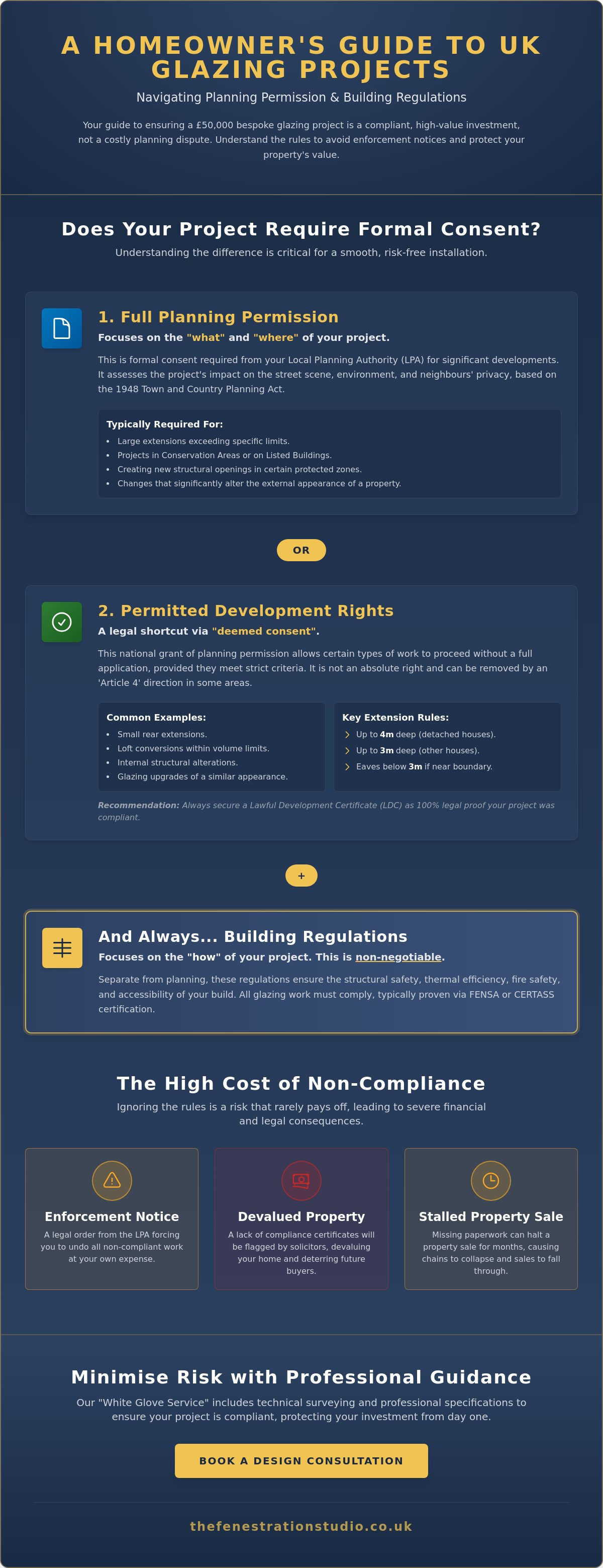
Planning permission focuses on the "what" and "where" of a project. It examines the aesthetic impact and the wider environment. Building regulations, however, focus on the "how." These standards ensure structural safety, thermal efficiency, and fire protection. You might find that even a high-specification aluminium window installation requires both. Whilst some glazing falls under Permitted Development, certain heritage zones or structural alterations demand full planning consent. All glazing works must also comply with building control, often evidenced through FENSA or CERTASS certification to prove thermal performance and safety standards.
The Consequences of Non-Compliance
Building without the correct paperwork is a risk that rarely pays off. If you ignore planning requirements, the LPA can issue an enforcement notice. This legal order can force you to undo completed work at your own expense. Beyond the immediate cost, a lack of compliance devalues your home amongst future buyers. Solicitors will scrutinise your documentation; missing certificates can stall a sale for months. We recommend securing a Lawful Development Certificate (LDC) even for Permitted Development projects. This document provides 100% legal proof that your home improvements were lawful at the time of construction. These planning permission guides for homeowners are designed to provide the clarity needed to protect your investment for the long term.
Professional guidance turns a complex hurdle into a managed process. You can book a design consultation to ensure your bespoke project meets every regulatory standard from the outset. Local Expertise. National Standards.
Permitted Development Rights: What Can You Build Without Formal Consent?
When researching planning permission guides for homeowners, the first concept to master is Permitted Development (PD). This effectively acts as a "deemed consent"; a legal shortcut that allows specific types of work to proceed without a full planning application. It's designed to reduce the burden on Local Planning Authorities (LPAs) whilst giving you the freedom to improve your property. Common projects falling under this umbrella include small-scale rear extensions, loft conversions within set volume limits, and internal structural alterations.
However, PD is not an absolute right. It's a set of strict criteria dictated by the Permitted Development Rights technical guidance. If your project exceeds a single measurement by even a few millimetres, the entire "deemed consent" vanishes. This is why many homeowners choose to book a design consultation before committing to a specific architectural plan.
The Scope of Permitted Development
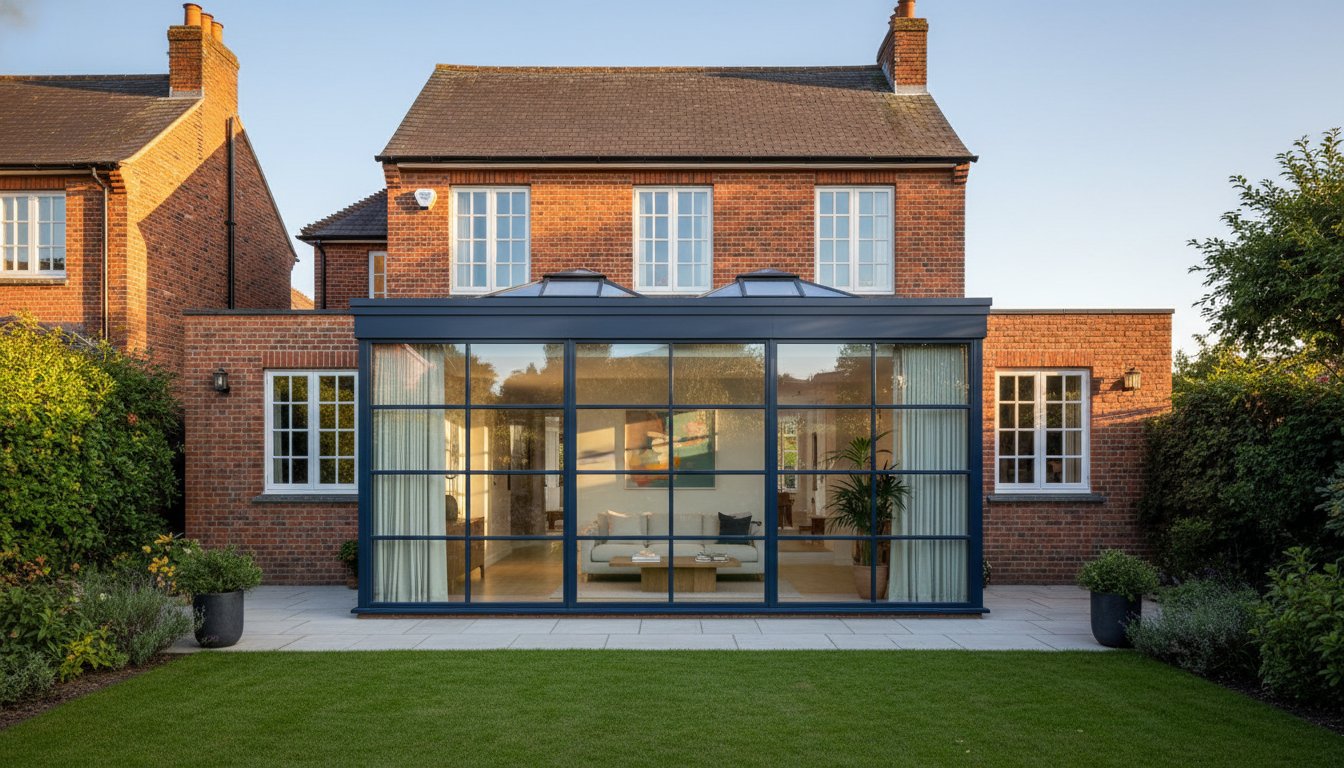
For most detached houses, you can typically add a single-storey rear extension up to 4 metres in depth, or 3 metres for semi-detached and terraced homes. Height is equally regulated; eaves cannot exceed 3 metres if the extension is within 2 metres of a boundary. Glazing upgrades are a frequent use of PD rights. You can often replace existing windows or install aluminium sliding doors within an existing opening without seeking formal approval, provided the materials are of a similar appearance to the original structure.
The 2026 landscape has introduced more flexible PD rights for sustainable home improvements. New regulations now streamline the installation of air-source heat pumps and solar panels, removing several previous "visual impact" restrictions. Despite these relaxations, the "volume" rule remains critical; loft conversions are generally capped at 40 cubic metres for terraced houses and 50 cubic metres for detached properties. Exceeding these figures by just 1% triggers a requirement for a full planning application.
When Permitted Development Rights are Revoked
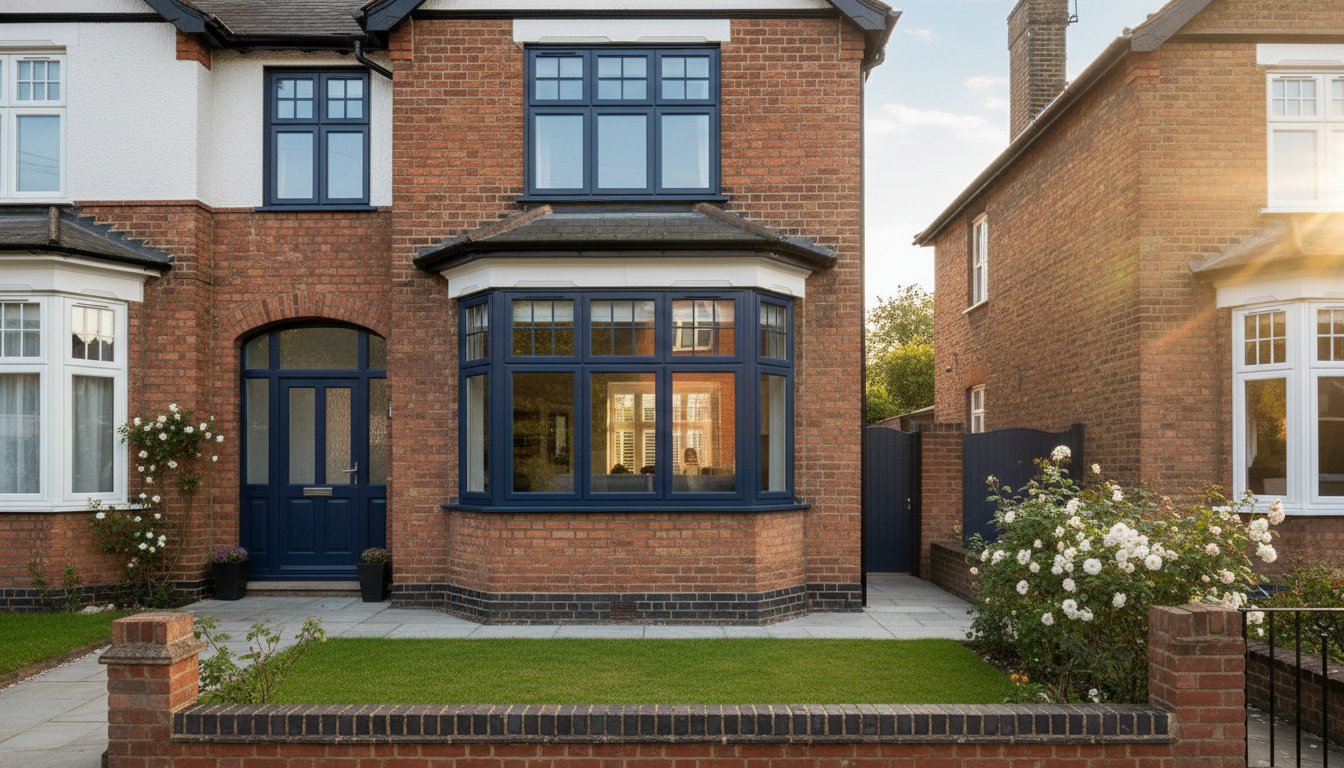
You must never assume PD rights are intact. LPAs have the power to issue Article 4 Directions, which remove these rights to protect the character of a specific area. This is common in Conservation Areas or Areas of Outstanding Natural Beauty (AONB). If an Article 4 Direction is in place, even minor changes like changing the colour of your window frames or installing a new front door may require formal permission.
Property type is the other major hurdle. Flats and maisonettes do not enjoy Permitted Development rights. Because these buildings involve shared structural integrity and communal aesthetics, almost any external change requires a full planning application. These nuances are why the most reliable planning permission guides for homeowners emphasise the need for a Lawful Development Certificate (LDC). An LDC is a legal document issued by your council that confirms your project was lawful at the time of construction. It is essential for future property sales, as 95% of specialist conveyancing solicitors will request this proof during the "due diligence" phase of a house move.
Glazing and Planning: Rules for Windows, Bifolds, and Sliding Doors
Replacing windows and doors is often the most impactful upgrade a property can receive. Whilst many replacements fall under Permitted Development, the "Material Change" rule remains a critical hurdle for the uninformed. Planners assess whether a new installation significantly alters the building's external appearance. Changing frame colours from white to black, or moving from thick uPVC to slimline aluminium, can sometimes trigger a requirement for a full application. Our planning permission guides for homeowners highlight that flats and maisonettes don't enjoy the same Permitted Development rights as houses; almost every external change requires formal consent.
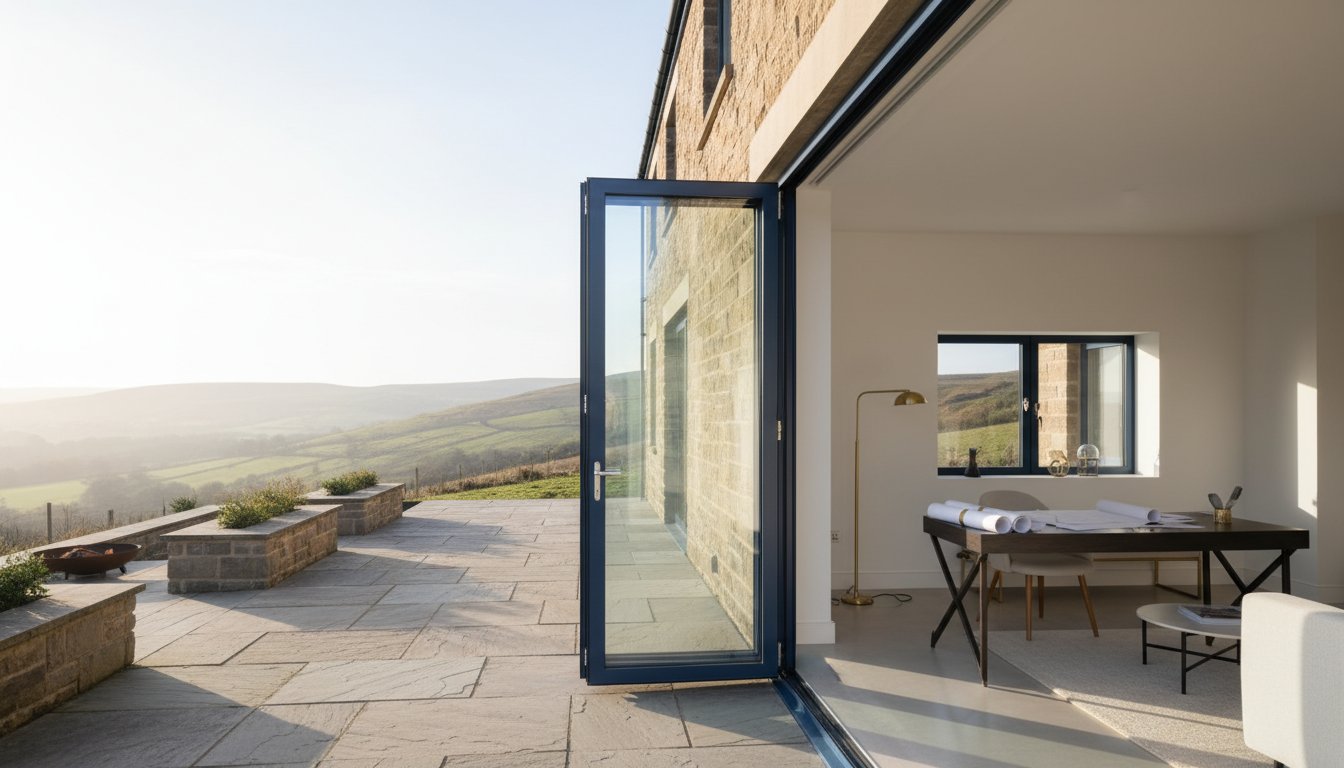
Structural integrity is the second major factor. Installing aluminium bifolding doors typically involves creating a wider opening than a standard patio door. If this requires a new lintel or steel beam, Building Regulations approval is mandatory. Planning permission is specifically required if the new opening is on the principal elevation or if the property is located in a restricted zone. Precision is vital here. A single centimetre of deviation from approved plans can result in an enforcement notice, making professional specification a necessity rather than a luxury.
Conservation Areas and Listed Buildings
In the UK’s 10,000 conservation areas, the priority is architectural continuity. Planners demand "like-for-like" replacements, which often complicates the transition to modern materials. However, heritage style windows and doors designed with slimline aluminium profiles are increasingly accepted. These frames mimic the narrow sightlines of traditional steel windows whilst providing 2026-compliant thermal performance. To succeed, you must submit a Design and Access Statement. This document provides the technical justification for the project, proving that the bespoke specification protects the building's heritage status.
New Openings and Privacy Concerns
Privacy regulations are rigid regarding side-facing glazing. Under the General Permitted Development Order, any new window on a side elevation above the ground floor must be obscure-glazed to a minimum of level 3. It must also be fixed shut, unless the opening parts are at least 1.7 metres above the floor of the room. Large-scale sliding doors on rear extensions can also face scrutiny. If a neighbour claims the glass creates an "overlooking" issue that compromises their privacy, planners may demand screening or reduced glass sizes. Using professional planning permission guides for homeowners helps you manage the "Right to Light" during the design phase, ensuring your new glazing doesn't unlawfully overshadow a neighbour's property.
The Application Process: Navigating the Planning Portal with Professional Rigour
The transition from a conceptual design to a formal submission requires a level of technical specification that many homeowners underestimate. Precision is paramount. The national Planning Portal serves as the digital gateway for all 317 local planning authorities in England, and it demands a methodical approach. Most planning permission guides for homeowners fail to emphasise that the validation stage is where many projects stall before they've even begun. A successful application follows a strict four-step framework:
- Step 1: Preparation. You must produce professional architectural drawings, including existing and proposed elevations at 1:50 or 1:100 scale, and a block plan showing the project in relation to site boundaries.
- Step 2: Submission. Applications are lodged via the Planning Portal. As of April 2024, the standard fee for a householder application in England is £258.
- Step 3: Consultation. Once validated, the council notifies neighbours and statutory bodies. They have a 21-day window to submit comments or objections.
- Step 4: The Decision. For standard residential projects, the statutory limit for a decision is 8 weeks, though complex heritage projects may extend to 12 weeks.
Preparing Your Documentation
Local Planning Authorities (LPAs) maintain a "zero tolerance" policy regarding "roughly sketched" plans. Hand-drawn diagrams or vague descriptions lead to immediate rejection at the validation desk. Your documentation must include a site location plan with a north point and clear boundary lines. When dealing with high-end fenestration, professional surveying is vital. It ensures that the proposed structural glazing or slimline frames fit within the legal framework of your specific property type. Accurate elevations prevent the "expensive mistakes" that occur when a planning officer misinterprets the scale of your new installation.
Handling Objections and Rejections
An objection from a neighbour isn't an automatic veto. Planning officers weigh feedback against national and local policy. We recommend a consultative approach; if an officer expresses concerns regarding "overlooking" or "overshadowing," it's often possible to negotiate. This might involve amending the design, perhaps by using obscured glass or adjusting the height of a roof lantern. If an application is refused, the officer's report will detail the specific policy conflicts. You can then refine the design for a resubmission, which is often free if submitted within 12 months. The appeal process remains a last resort, as it currently takes between 26 and 52 weeks to reach a conclusion through the Planning Inspectorate.
Ensuring your project meets these rigorous standards is the first step toward a successful installation. To align your vision with professional technical specifications, book a design consultation with our expert team today.
Professional Specifications: How We Minimise Planning Risks
Our White Glove Service represents a departure from the traditional high-pressure sales models that dominate the glazing industry. We operate as a technical consultancy. We focus on the precision of the framework rather than the speed of the transaction. By prioritising honest, transparent advice over aggressive closing tactics, we ensure your project rests on a foundation of structural integrity and legal compliance. Most planning permission guides for homeowners overlook the critical role of technical drawings, yet these documents are the primary tools used by local authorities to approve or reject a proposal.
Investing in professional surveying and technical specification fees at the outset is the most effective way to prevent installation delays. These fees cover the rigorous assessment of your property's specific requirements. They ensure that every component is engineered to fit the unique aperture of your home. This methodical approach eliminates the risk of expensive mistakes where products arrive on-site only to be rejected by building control or found incompatible with the existing structure. We provide a level of detail that transforms a standard home improvement into a sophisticated architectural project. This upfront investment typically saves homeowners between £2,000 and £5,000 in potential remedial costs caused by poor initial measurements.
Technical Precision in Glazing
Planners in 2026 demand exacting detail, particularly for heritage properties or homes within conservation areas. We provide the precise specifications required to satisfy these authorities. Whether you are installing ultra-slim aluminium windows or complex bespoke doors, our technical team ensures the sightlines, thermal performance, and structural loads meet national standards. We prioritise the long-term performance of the fenestration over the cheapest possible quote. This commitment to quality means your project maintains its aesthetic appeal while adhering to the latest Part L building regulations regarding energy efficiency and carbon reduction.
Your Project, Organised
We provide end-to-end management that bridges the gap between local installation expertise and national quality standards. Our process is unhurried and deliberate. We coordinate every phase from the initial consultation to the final handover, ensuring a seamless transition between the planning and construction stages. This systematic framework provides the relief and security homeowners need when managing complex renovations. Our "Local Expertise. National Standards." philosophy ensures that while the installation is handled by specialists familiar with your area's architecture, the technical rigour remains consistent with the highest industry benchmarks. If you are ready to move beyond generic planning permission guides for homeowners and secure a professional assessment for your property, you can Request a Quote to begin the specification process.
Securing Your Home’s Future with Professional Rigour
Successfully navigating the UK planning system requires more than a cursory glance at local regulations. As detailed in our planning permission guides for homeowners, the 2026 landscape demands technical precision, particularly regarding Part L thermal compliance and structural openings. Misinterpreting Permitted Development rights or failing to meet Article 4 directions can lead to enforcement notices and expensive remedial works. By prioritising architectural aluminium glazing and professional-grade specifications, you ensure your project remains compliant whilst enhancing your property's long-term value.
The Fenestration Studio operates as an independently run family business, providing transparent advice that avoids the pitfalls of aggressive sales tactics. Local Expertise. National Standards. Our comprehensive White Glove Service manages every detail from the initial technical survey through to dedicated aftercare. We specialise in premium architectural aluminium glazing, ensuring your home improvement meets the highest structural standards. Don't leave your investment to chance.
Book a Professional Design Consultation
We look forward to bringing your architectural vision to life with the precision it deserves.
Once your structural vision is realised, completing the aesthetic with premium artwork is the final step. For those seeking high-quality fine art, Galerie Prints offers an exceptional collection of collectable prints and cinema memorabilia to enhance any newly renovated space.
Frequently Asked Questions
Do I need planning permission for bifold doors if I am replacing existing French doors?
You don't usually need planning permission to replace French doors with bifold doors if the structural opening remains the same. This falls under Permitted Development rights, which are a core focus of planning permission guides for homeowners. If you're widening the aperture significantly or your property is a listed building, you'll need to submit a formal application. Always check for Article 4 directions in your local area that might restrict these rights.
What is the difference between planning permission and a Lawful Development Certificate?
Planning permission is a proactive request for the council to approve a specific design before construction begins. A Lawful Development Certificate (LDC) is a legal document confirming that your project is lawful under Permitted Development rules. While an LDC isn't mandatory, roughly 85% of solicitors recommend obtaining one to prevent issues during a future house sale. It provides the ultimate paper trail for your fenestration upgrades.
Can I install aluminium windows in a Conservation Area without consent?
You generally cannot install aluminium windows in a Conservation Area without planning consent if the new frames change the property's external character. Local authorities use Article 4 directions to protect the heritage of 10,000 conservation areas across England. If your current windows are timber, replacing them with slimline aluminium requires a detailed heritage statement to prove the new specification respects the local aesthetic.
How much does a typical planning application cost for a homeowner in 2026?
A standard householder planning application in England currently costs £258 following the fee increases introduced in December 2023. You should also budget for a £70 Planning Portal service charge. These costs exclude professional architectural drawings or technical specifications required for the submission. Comprehensive planning permission guides for homeowners suggest setting aside an additional £1,500 to £3,000 for professional design fees to ensure a high-quality application.
What happens if my neighbours object to my planning application for an extension?
Neighbour objections don't result in an automatic refusal. The local planning authority only considers "material considerations," such as loss of privacy, overshadowing, or traffic safety. In 2023, statistics showed that many applications with objections still receive approval if they align with the National Planning Policy Framework. Your case officer will weigh these concerns against local development plans before making a final decision.
Do roof lanterns require planning permission on a flat roof extension?
Roof lanterns don't require planning permission if they project less than 150mm from the existing roof plane. This is a strict limit set out in Class C of the General Permitted Development Order. If your lantern exceeds this height or extends above the highest part of the roof, a full application is necessary. We recommend using low-profile, slimline frameworks to stay within these legal boundaries whilst maximising natural light.
How long does planning permission last once it has been granted?
Planning permission typically lasts for 3 years from the date of the decision notice. You must begin "material operations" on-site before this period expires to keep the consent alive. Under Section 91 of the Town and Country Planning Act 1990, if you fail to start work within this 36-month window, the permission lapses and you'll need to reapply under potentially different local policies.
You don't need planning permission for internal glazing or structural room dividers. Section 55 of the Town and Country Planning Act 1990 clarifies that works affecting only the interior of a building don't constitute "development." This freedom allows you to install bespoke internal screens or steel-look partitions without council intervention—perfect for creating a home office. For those looking to launch an online business from their new space, livingthehustle.co.uk offers expert guidance on creating and selling digital products. However, if your property is one of the 400,000 listed buildings in England, you'll still require Listed Building Consent for internal changes.
You don't need planning permission for internal glazing or structural room dividers. Section 55 of the Town and Country Planning Act 1990 clarifies that works affecting only the interior of a building don't constitute "development." This freedom allows you to install bespoke internal screens or steel-look partitions without council intervention. However, if your property is one of the 400,000 listed buildings in England, you'll still require Listed Building Consent for internal changes.