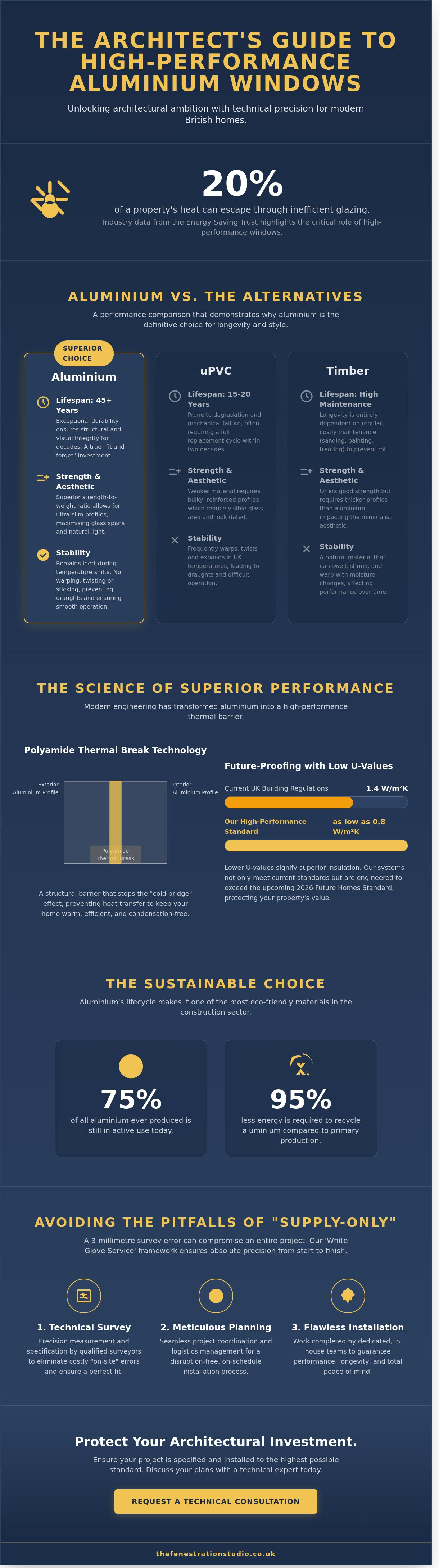
What if the most expensive mistake in your home renovation isn't the product you choose, but the three millimetres of tolerance your surveyor missed? Selecting premium aluminium windows is often a high-stakes balance between architectural ambition and technical precision. You likely recognise that whilst slimline profiles offer a sophisticated aesthetic, the underlying engineering determines whether your home remains a sanctuary or becomes a thermal liability. Industry data from organisations like the Energy Saving Trust indicates that up to 20% of a property's heat can escape through inefficient glazing; this makes technical mastery essential for any serious project.
We agree that navigating U-values, thermal breaks, and structural requirements can feel overwhelming when you're simply seeking a beautiful, durable result. This guide empowers you to master these technicalities and demonstrates how a professional survey protects your architectural investment from common industry pitfalls. We will examine the critical components of high-performance frames and the White Glove Service protocols that ensure your installation is as flawless as the design itself.
Key Takeaways
- Understand why the superior strength-to-weight ratio of high-end aluminium windows is essential for achieving the large glass spans required in modern British architecture.
- Navigate the complexities of 2026 building regulations and discover the science behind polyamide thermal breaks to ensure your project meets future efficiency standards.
- Avoid the costly pitfalls of "supply-only" deals by learning why professional technical surveys are critical to protecting your architectural investment.
- Master the art of profile selection to perfectly match your property’s era, whether you require minimalist slimline frames or a traditional heritage aesthetic.
- Gain insight into our methodical "White Glove Service" framework, designed to provide a seamless, stress-free journey from initial specification to final installation.
Why Aluminium Windows are the Definitive Choice for Modern British Architecture
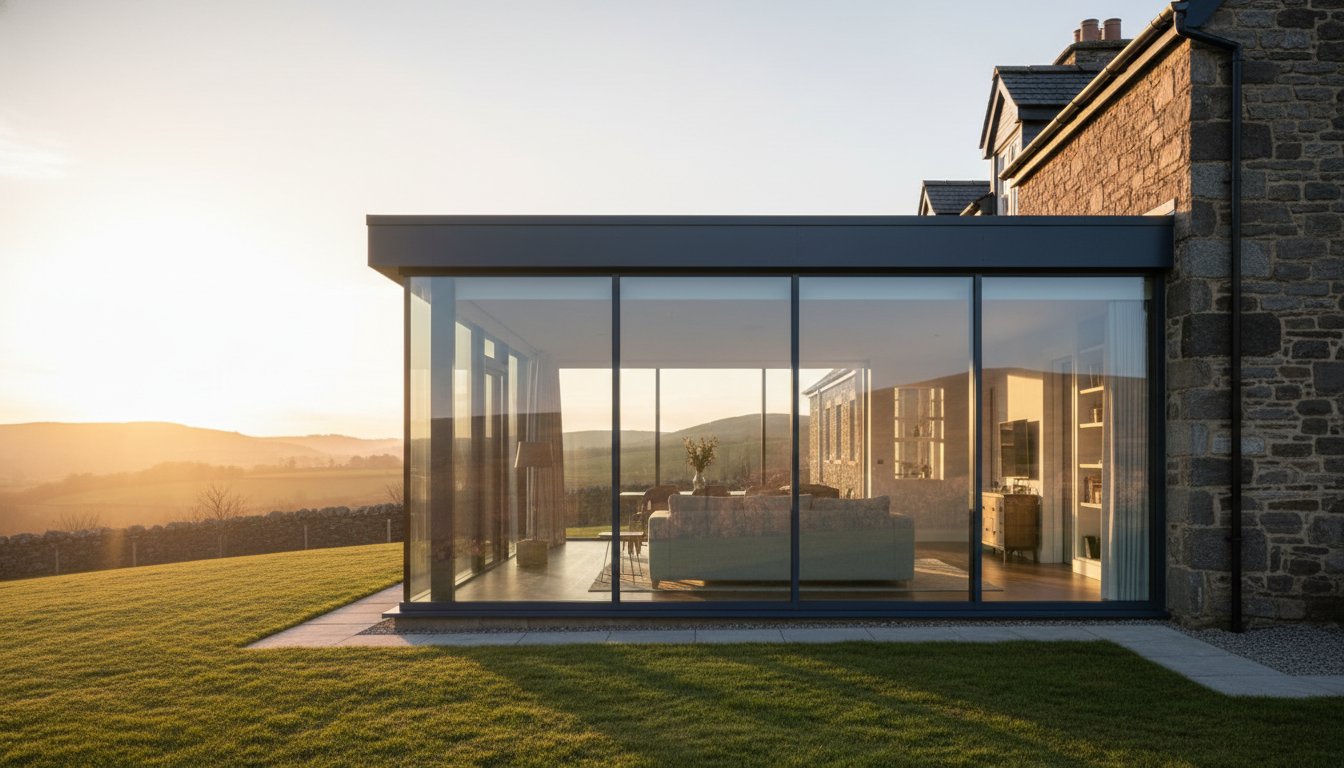
Aluminium has transitioned from a commercial staple to the gold standard for residential fenestration across the United Kingdom. Its adoption reflects a broader shift towards architectural precision and long-term structural integrity. This material provides a level of versatility that neither timber nor plastic can replicate, making it the primary specification for both minimalist new builds and sensitive heritage renovations. The core of its appeal lies in its remarkable strength-to-weight ratio. This physical property allows architects to design significantly larger glass spans, supporting the weight of heavy glazing units while maintaining remarkably thin frames.
The aesthetic impact of these slimline profiles is profound. By reducing the visible framework, aluminium windows maximise natural light penetration, which is scientifically linked to improved occupant well-being and productivity. Beyond the visual benefits, these systems represent a superior 45-year investment. While uPVC alternatives often show signs of degradation or mechanical failure within 15 to 20 years, aluminium remains structurally sound and visually consistent for decades. It's a choice that prioritises longevity over the false economy of low-cost materials.
Aluminium vs. uPVC and Timber: A Performance Comparison
Structural stability is where aluminium truly excels. Unlike plastic frames, which frequently warp, twist, or expand during the UK's volatile temperature shifts, aluminium remains inert. This prevents the common issue of sticking sashes and draughts that plague cheaper installations. Maintenance requirements are virtually non-existent; the advanced powder-coated finishes provide a "fit and forget" surface that won't flake or peel. Although the initial specification carries a higher price point, the value proposition is justified through immediate property appreciation and the avoidance of costly replacement cycles. Professional installers recognise that high-quality fenestration is a key metric in modern property valuation.
Sustainability and the Circular Economy in Glazing
Aluminium is one of the most eco-friendly materials in the construction sector due to its infinite recyclability. Approximately 75% of all aluminium ever produced is still in active use today. The energy lifecycle is equally impressive; recycling scrap aluminium requires only 5% of the energy used for primary production from bauxite mining. To ensure maximum efficiency, modern frames incorporate sophisticated thermal breaks to optimise the thermal performance of insulated glass units, significantly reducing a home's carbon footprint. This creates a high-performance building envelope that meets the strictest environmental standards.
Technical Excellence: Thermal Efficiency and Structural Integrity
Many homeowners still associate aluminium with the drafty, condensation-prone frames of the 1970s. This is an expensive misconception. Modern engineering has transformed aluminium windows into high-performance thermal barriers that often outperform timber and uPVC alternatives. The secret lies in the structural framework. By integrating a polyamide thermal break, manufacturers create a physical barrier between the internal and external profiles. This prevents the "cold bridge" effect that previously plagued metal fenestration, ensuring your interior surfaces remain warm to the touch even in mid-winter.
Professional specification requires a deep understanding of energy performance. The current UK Building Regulations for windows set strict limits on heat loss. While the current standard for replacements is 1.4 W/m²K, the industry is already preparing for the 2026 Future Homes Standard. Leading systems now achieve U-values as low as 0.8 W/m²K. This level of efficiency doesn't just lower bills; it future-proofs your property value against tightening environmental legislation.
Thermal Break Technology Explained
Polyamide is a glass-reinforced plastic with incredibly low thermal conductivity. These strips separate the inner and outer aluminium skins, trapping heat inside. Multi-chambered profiles further enhance this by creating pockets of still air that act as additional insulation layers. While double glazing is the standard for most UK projects, triple glazing in a 75mm or 90mm frame depth offers superior acoustic insulation. It's a strategic choice for urban homes near busy roads where decibel reduction is as vital as heat retention.
British weather demands resilience. High-end aluminium windows are tested to Class 9A water tightness standards, ensuring they withstand 600 pascals of wind-driven rain. This means your home remains dry and secure even during a typical UK gale. Before committing to a specific profile, it's wise to request a technical consultation to ensure your choice meets both aesthetic and regulatory needs.
Powder Coating and RAL Colours: Durability Meets Design
The finish on your frames is as much about protection as it is about aesthetics. We recommend marine-grade powder coating for any property within 5 kilometres of the coast. This process involves electrostatically applying polyester resin, which is then cured under intense heat. It creates a finish that won't peel, flake, or fade for decades.
- RAL 7016 Anthracite Grey: Still the dominant choice for 65% of modern UK installations.
- Dual Colour Options: Specify different colours for the interior and exterior to match your internal decor.
- Architectural Finishes: Choose between a 30% matt finish, high gloss, or textured metallic coats for a bespoke feel.
The result is a low-maintenance, architectural statement that requires nothing more than an occasional wipe with soapy water. Unlike timber, these frames won't warp or rot, maintaining their structural integrity for a 45-year life expectancy.
Beyond the Quote: Avoiding the Pitfalls of Cheap Aluminium Glazing
Choosing the lowest estimate for aluminium windows often feels like a victory for the project budget. It's usually a false economy. Lower prices frequently mask compromises in structural reinforcement or the use of generic, non-branded hardware that fails within 36 months. High-end fenestration requires a level of engineering precision that budget providers simply cannot sustain. Local Expertise. National Standards. This is the benchmark you should look for to avoid the "double-spend" scenario where frames require adjustment or replacement far sooner than expected.
Supply-only deals are particularly risky for the uninitiated. These contracts shift the entire technical liability onto the homeowner. If your measurements are off by even 3mm, the bespoke frame won't fit, and you'll face a 100% loss on that unit. Professional installers assume this risk, ensuring the product integrates perfectly with your home's structural openings. Furthermore, generic installers who primarily handle uPVC often lack the specific expertise required for aluminium. Aluminium behaves differently under thermal stress; without the correct expansion gaps and specialist fixings, frames can bow or seals can fail during the UK's seasonal temperature shifts.
Security should never be an optional extra or a secondary thought. At a minimum, your specification must include PAS24:2016 certification and Secured by Design (SBD) accreditation. These aren't just marketing badges. They represent rigorous physical testing against forced entry. If a quote doesn't explicitly mention these standards, the provider is likely cutting corners on the internal steel reinforcements or the locking mechanisms.
The Importance of a Professional Technical Survey
Precision is the foundation of every successful installation. A professional technical survey is a risk-mitigation tool that protects your investment. Our surveyors don't just measure the height and width; they evaluate the structural integrity of existing lintels and the condition of the damp-proof course (DPC). Identifying a sagging lintel or a compromised DPC before the order is placed prevents expensive remedial repairs later. Millimetre-perfect measurements are the only way to ensure that bespoke aluminium windows provide the airtight seal required for modern thermal efficiency.
Hardware and Security: The Vulnerable Points
The hardware is the engine of the window. High-performance casements should feature stainless steel multi-point locking systems and internal glazing beads. Internal beading is critical because it prevents intruders from removing the glass from the outside, a common vulnerability in budget systems. You'll find that hardware quality often determines the operational lifespan of the window, as inferior components frequently corrode or seize in high-exposure environments. Our White Glove Service ensures that every hinge, handle, and lock is tested for smooth, consistent operation before we sign off on the project.
Architectural Styles: From Heritage Charm to Minimalist Slimline Profiles
Selecting the right frame specification isn't just about aesthetics; it's about architectural integrity. Your choice of aluminium windows should reflect the period of your property whilst meeting modern performance standards. Since the update to Part L of the Building Regulations in June 2022, the technical demand on frames has increased significantly. Aluminium meets this challenge by offering structural rigidity that timber or uPVC cannot match without bulky, light-blocking profiles.
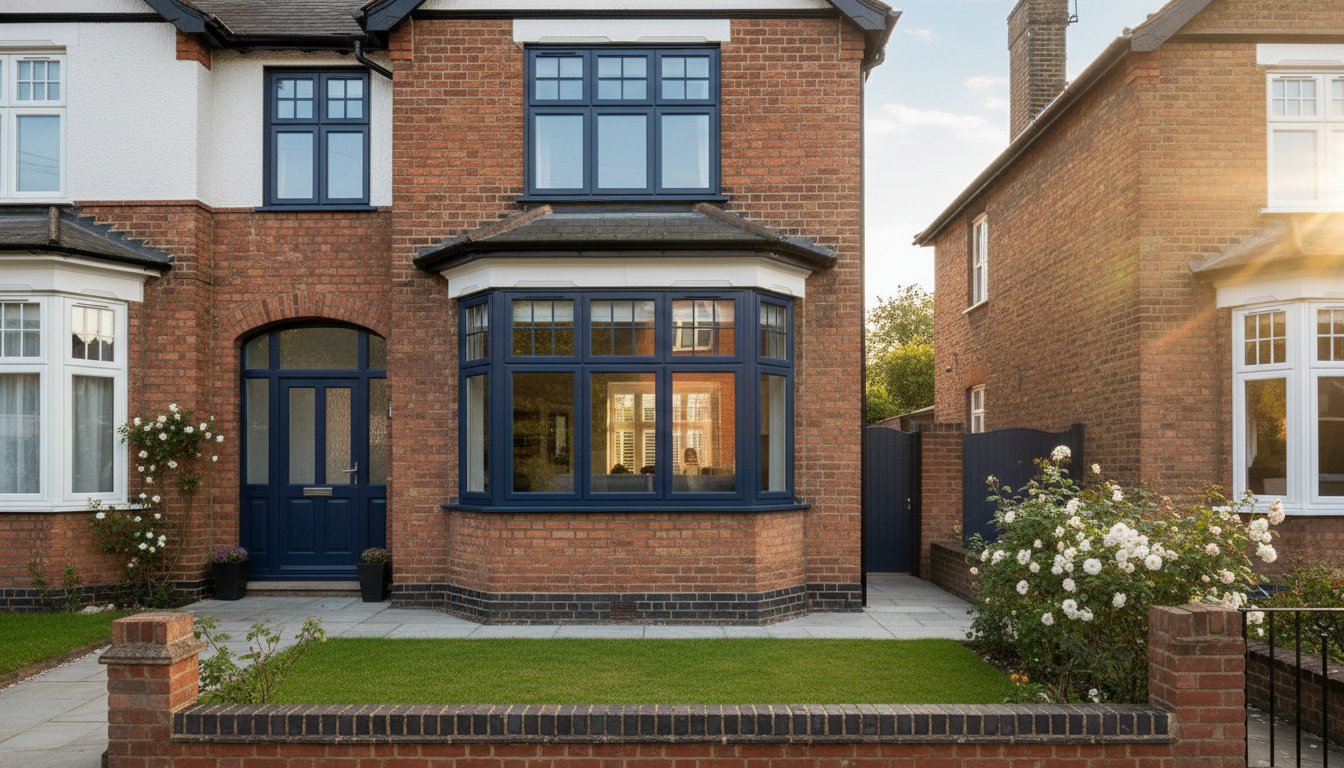
Modern fenestration allows for a seamless transition between different eras. Whether you're renovating a 1930s semi-detached home or designing a contemporary extension, the profile choice dictates the final character. Precision engineering ensures that these frames remain stable under high wind loads, even with the slim sightlines that UK homeowners now demand. We focus on providing a consultative approach to ensure your window specification aligns with both local planning requirements and your long-term energy goals.
Heritage and Crittall-Style Windows
The "Industrial Look" has seen a 25% increase in specification over the last three years, particularly for Victorian renovations and warehouse conversions throughout the country. These designs replicate the iconic steel windows of the early 20th century. By using applied astragal bars, we create an authentic grid pattern that respects the building's history. Unlike original cold-bridge steel, these modern aluminium alternatives offer superior thermal breaks. This prevents the heat loss and condensation issues that were common in older period-correct installations.
Modern Casement and Flush Sash Designs
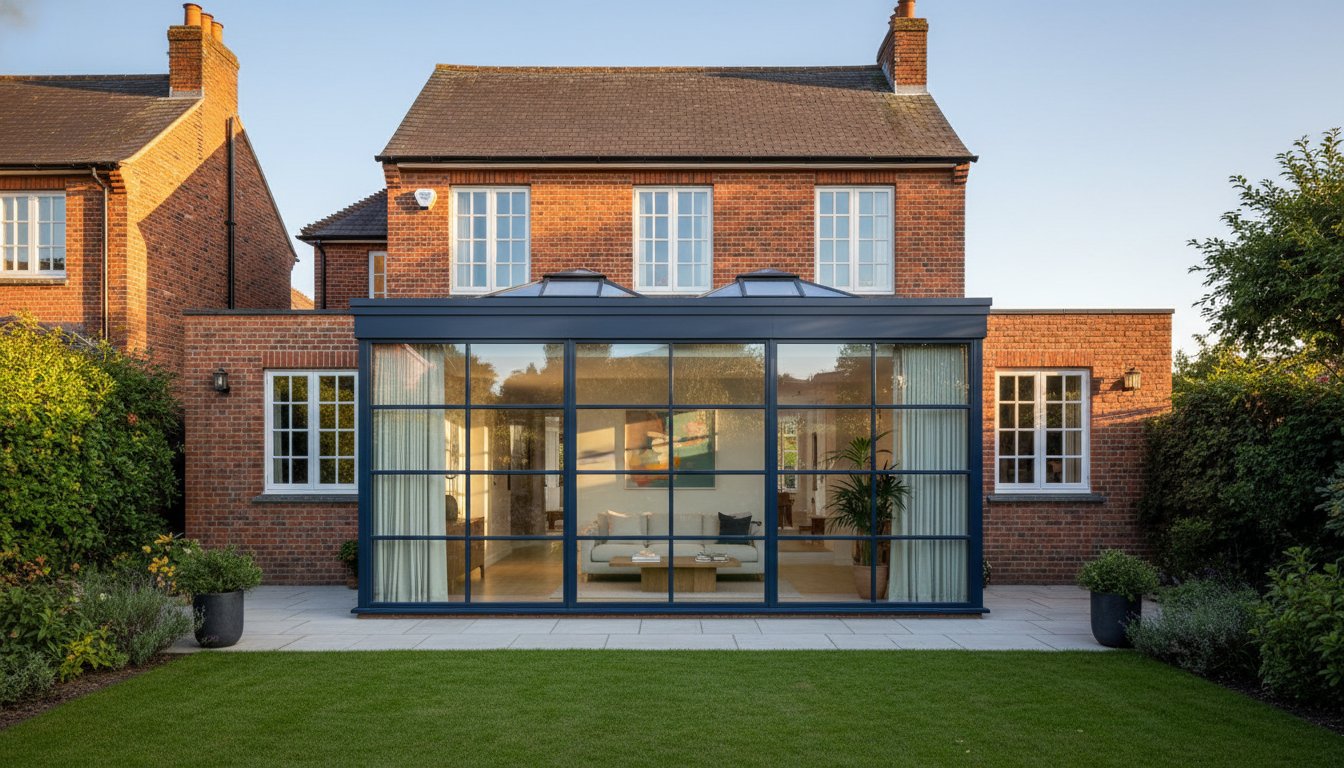
For those seeking a minimalist aesthetic, flush sash windows are the professional choice. The window sits level with the external frame, creating a flat, clean surface profile that mimics traditional joinery but with a modern edge. This design is frequently used in "wall of glass" extensions where the goal is to maximise natural light. If your project involves high-rise apartments or hard-to-reach upper floors, tilt and turn functionality is essential. It allows the glass to be cleaned safely from the inside whilst providing secure, draft-free ventilation. Slimline profiles can reduce visible framing by up to 30%, shifting the focus from the hardware to the view outside.
Creating such a seamless connection between the indoors and outdoors often inspires homeowners to invest in interior pieces of equal quality, such as handcrafted dining tables UK that anchor a newly glazed dining area. To complete the transition to your garden with durable, sustainable materials, visit Green Plank for high-performance composite decking and fencing systems.
Choosing an incorrect profile is an expensive mistake that can diminish your property's value and kerb appeal. Our framework ensures every detail, from the handle finish to the thermal spacer bar, is handled with professional rigour. We move beyond the standard sales pitch to act as your technical advisor throughout the project lifecycle.
Ensure your home renovation avoids common industry pitfalls. Book a design consultation with our expert team at The Fenestration Studio to find the perfect architectural match for your property.
The White Glove Service: A Methodical Approach to Installation
Selecting aluminium windows is a significant architectural investment. It requires a rigorous, technical framework to ensure long-term performance. The Fenestration Studio operates on a principle of "Local Expertise. National Standards." This approach ensures your project moves from a conceptual drawing to a high-performance reality without the common industry pitfalls that lead to expensive remedial work. We don't just sell products; we manage a complex engineering process through a dedicated consultancy model.
Step-by-Step: The Journey to New Windows
The process begins with an initial consultation to align your architectural vision with technical reality. This isn't a sales pitch. It's a professional specification phase where we assess structural openings, thermal requirements, and aesthetic goals. Following this, a professional survey provides the foundation of our "White Glove" experience. We measure to the millimetre to prevent the use of excessive "add-ons" or unsightly sealants that compromise the slimline profile of aluminium windows.
Expert fitting is the final, critical stage. The method of fixing and sealing determines the long-term acoustic and thermal performance of the unit. Our teams follow a methodical protocol, ensuring every frame is level, plumb, and weather-tight. On installation day, you can expect a high-end service that respects your property. Our technicians maintain a tidy site and follow a strict code of professional conduct to ensure your home is left in a pristine state.
- Full floor protection and dust mitigation strategies.
- Precision fixing using industry-approved structural fasteners.
- Comprehensive site clear-up and final inspection of all hardware.
Dedicated Aftercare and Guarantees
Peace of mind comes from a clear, robust warranty. Our framework provides comprehensive coverage for both the frames and the moving components. Most high-quality aluminium systems carry a 10-year guarantee, though the structural integrity of the metal often exceeds 40 years. We provide a full handover pack that includes all necessary FENSA certificates and technical maintenance instructions to protect your investment.
Maintenance is straightforward but essential for longevity. Clean the powder-coated frames with warm, soapy water every six months to remove atmospheric contaminants. Lubricate hinges and locking mechanisms annually with a light machine oil. These simple steps ensure your aluminium windows operate smoothly for decades. Our team remains available for long-term support, providing a continuity of service that budget installers cannot match.
Enquire about our White Glove Service for your next project to start your journey with a partner that values precision as much as you do.
Securing Your Architectural Legacy through Precision Engineering
Investing in premium aluminium windows isn't just a design choice; it's a long-term commitment to your home's structural integrity and energy performance. Modern thermal breaks now comfortably exceed the Building Regulations Part L 2022 requirement of 1.4 W/m²K for replacements. Choosing the right partner means moving past the lure of "budget" quotes that often hide inferior hardware and poor weather sealing. These choices frequently lead to expensive remedial work within just five years.
At The Fenestration Studio, we bridge the gap between local attention and national capability. Local Expertise. National Standards. As an independently run family business, we provide a bespoke technical specification for every project. This ensures your slimline or heritage profile performs as intended for decades. Our expert nationwide installation team delivers local regional support to guarantee a seamless transition. You don't have to navigate these technical complexities alone. Our White Glove Service ensures every detail is handled with professional rigour.
Request a Professional Consultation for Your Aluminium Windows
We look forward to helping you transform your property with the precision and care it deserves.