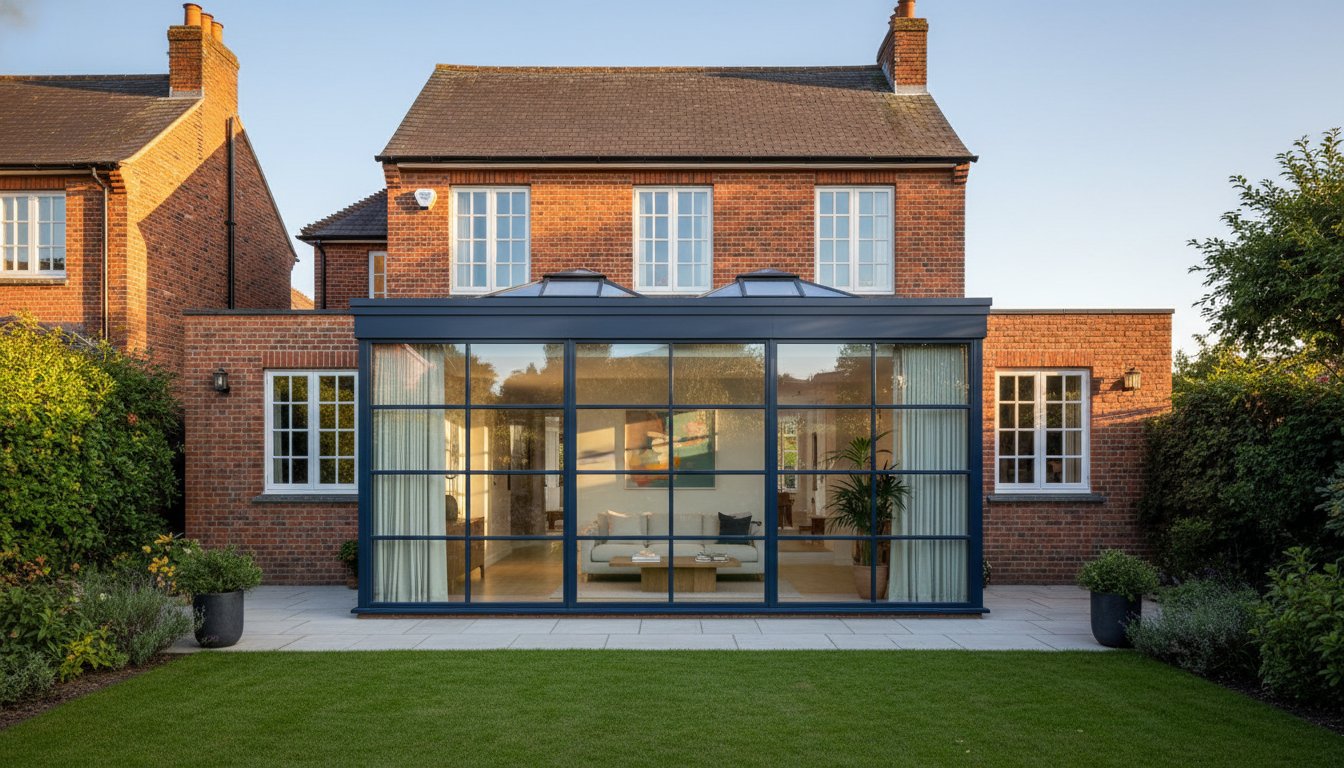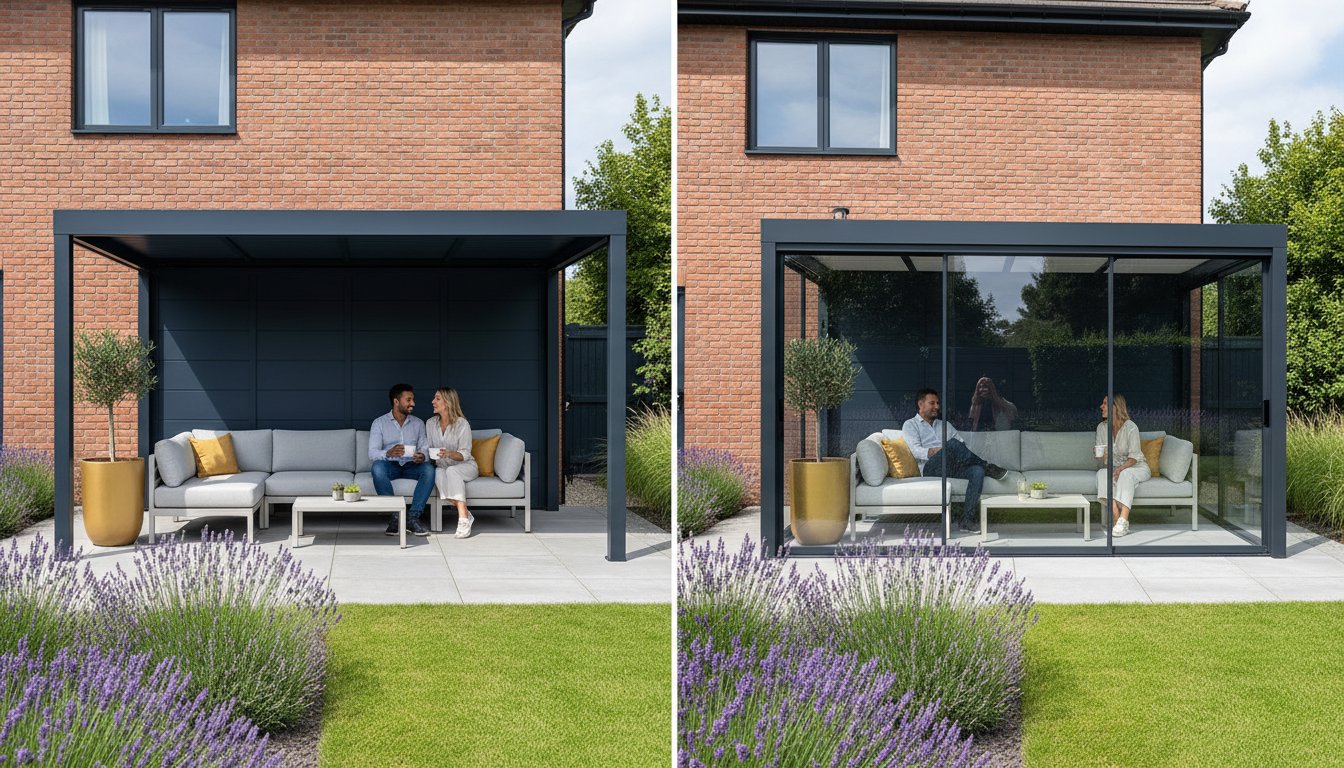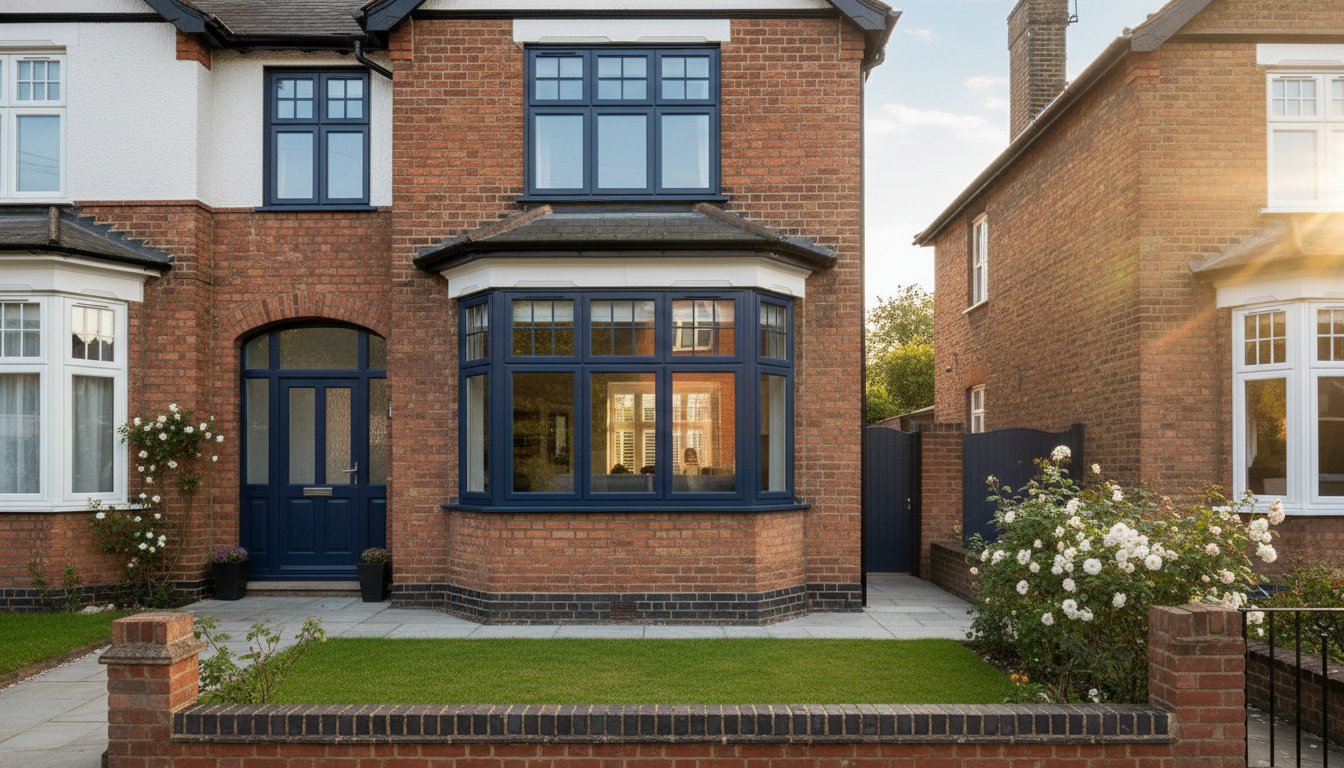
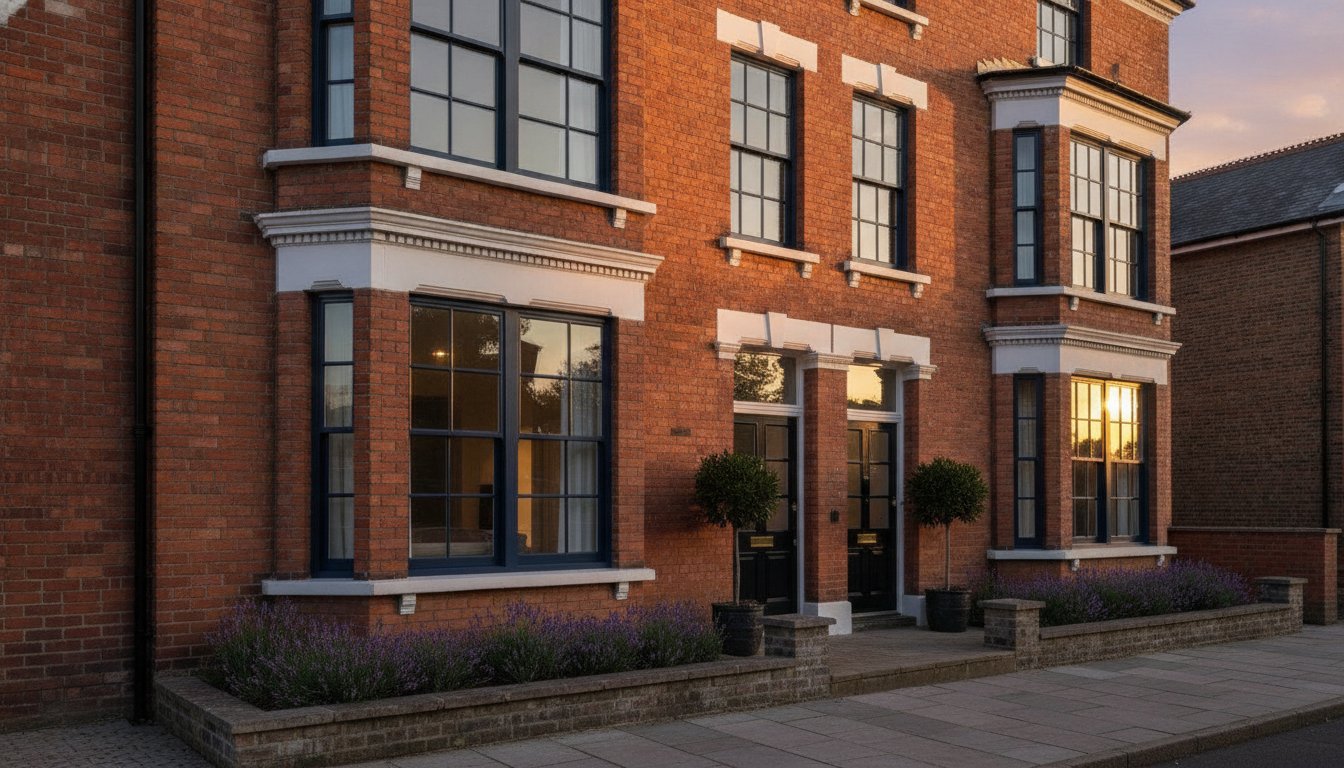
The wrong window choice doesn't just leak heat; it erodes the architectural soul and market value of an Exeter heritage home. Many homeowners believe that modernising their property requires a compromise between thermal efficiency and the slim, elegant sightlines of original steel frames. You shouldn't have to choose between a cold, draughty house and clunky frames that ruin your property's aesthetic. High-quality heritage style aluminium windows Exeter residents are now opting for prove that you can maintain a classic period look whilst dramatically improving your home's security and warmth.
We understand the anxiety surrounding planning permission in conservation areas and the technical confusion over modern U-values. This 2026 guide clarifies exactly how to meet the current 1.8 W/m²K building standards without sacrificing the historic character of your residence. You'll learn how a precision-engineered approach prevents common pitfalls like damp or cold spots, ensuring a stress-free transition to modern performance. We'll walk you through the technical specifications, local planning considerations, and the importance of a professional White Glove installation experience.
Key Takeaways
- Learn how to replicate the timeless 'steel-look' using heritage style aluminium windows Exeter homeowners trust to preserve architectural integrity.
- Discover the 2026 technical standards for thermal breaks and U-values that turn period properties into energy-efficient homes.
- Understand why modern aluminium provides a 'fit and forget' alternative to steel, offering superior insulation with minimal maintenance.
- Identify why bespoke technical surveying is non-negotiable for the irregular window openings typical of Exeter’s historic architecture.
- Explore the benefits of a consultative 'White Glove' installation process that prioritises architectural precision over high-pressure sales.
Defining the Heritage Aesthetic for Exeter’s Period Architecture
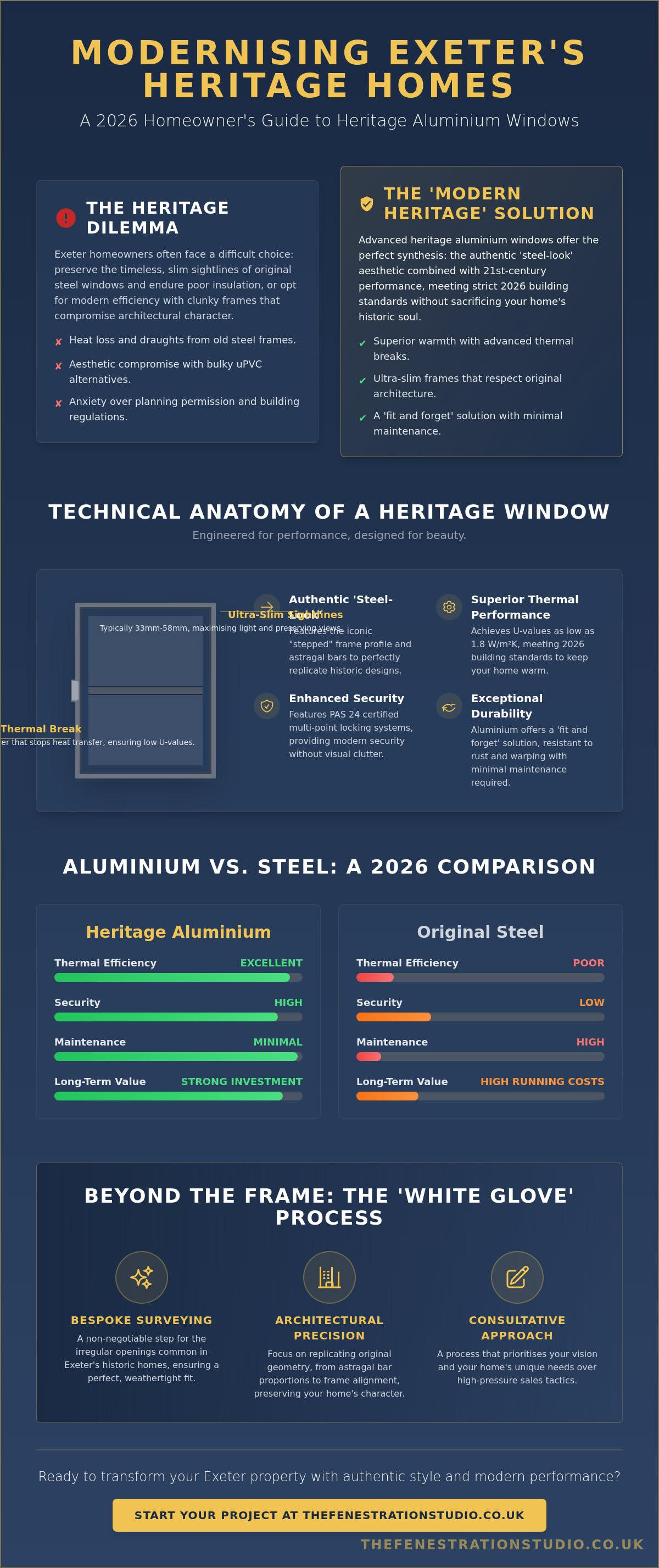
In 2026, the heritage aesthetic is defined by architectural precision rather than mere mimicry. For a property to maintain its soul, the glazing must respect the original design intent. Modern heritage style aluminium windows Exeter homeowners select are characterised by ultra-slim sightlines, typically ranging between 33mm and 58mm, and the iconic "stepped" frame profile. This design language pays homage to the industrial revolution and the subsequent Art Deco movement, where steel frames allowed for expansive glass and slender supports. These historical English architectural periods established a standard of elegance that clunky modern alternatives often fail to replicate.
The "steel-look" has evolved from its utilitarian warehouse origins into a premium residential staple. Whilst original steel windows are beautiful, they are notorious for thermal bridging and condensation. High-performance aluminium offers a sophisticated resolution. It provides the same sharp, minimalist lines but incorporates advanced thermal breaks to meet 2026 energy requirements. Choosing these aluminium windows ensures your home remains a sanctuary of warmth without sacrificing its historic silhouette.
Exeter residents are increasingly moving away from uPVC. The thick, plastic profiles of standard double glazing often look out of place on Devon’s red-brick Victorian terraces or Edwardian villas. Aluminium is inherently stronger, allowing for much thinner frames that maximise natural light. This shift isn't just about aesthetics; it's a strategic investment. Properties that retain or enhance their period character through high-quality materials consistently command higher resale values and greater kerb appeal in the local market.
Matching Exeter’s Local Architectural Character
Exeter’s architectural landscape is diverse, from the grand Victorian terraces of St Leonard’s to the industrial conversions near the Quay. Achieving a true heritage look requires attention to the glazing bars. Authentic horizontal astragal bars are essential for replicating the multi-pane appearance of 19th-century windows. We focus on the specific proportions of your property, ensuring that the bar thickness and placement align with the original window geometry. This level of detail is vital for preserving the character of both coastal properties and sensitive urban conservation areas.
The Shift from Steel to Aluminium in 2026
Original steel frames are no longer viable for homeowners who value thermal efficiency. With 2026 building regulations demanding stricter U-values, the cold-conduction of solid steel is a significant liability. Modern aluminium technology utilises polyamide thermal breaks to stop heat escaping. This creates a "Modern Heritage" trend, where homeowners use these slim profiles in contemporary extensions to create a seamless link between old and new. It’s a "fit and forget" solution that offers the security and insulation of the future with the timeless beauty of the past.
The Technical Anatomy of Heritage Style Aluminium Windows
The engineering behind heritage style aluminium windows Exeter homeowners select is what truly separates a premium installation from a standard replacement. A window is only as good as its thermal and structural integrity. In 2026, the industry standard relies on high-grade polyamide thermal breaks. These bridges sit between the internal and external aluminium profiles, acting as a barrier to heat transfer. This technology is a core focus for the Council for Aluminium in Building, ensuring that modern frames achieve the necessary 1.8 W/m²K U-values whilst remaining incredibly slim.
Security is equally paramount. Whilst original steel windows often relied on simple latches, modern aluminium versions incorporate sophisticated multi-point locking systems. These mechanisms secure the window at multiple points along the frame, providing peace of mind without cluttering the minimalist aesthetic. This blend of period charm and modern security is a hallmark of professional-grade glazing. It ensures your home is protected by hardware that meets current PAS 24 security standards, the benchmark for residential safety.
Durability has also seen a significant leap. Unlike traditional steel which requires regular painting to prevent rust, aluminium uses a marine-grade powder-coated finish. This process involves electrostatically applying a dry powder that is cured under heat to create a hard, resilient skin. It won't peel, flake, or fade, making it the ideal choice for the varying weather conditions found in Devon. This "fit and forget" nature is why aluminium has surpassed steel as the primary choice for heritage refurbishments.
Sightlines and Profile Depths
The visual success of a heritage project hinges on the profile depth. We typically utilise profiles between 33mm and 58mm to replicate the slender appearance of original steel. A common technical challenge is maintaining a consistent look between fixed panes and opening sashes. By using "stepped" profiles, we ensure the external sightlines remain uniform across the entire facade. This precision maximises the glass-to-frame ratio, which is particularly beneficial in the smaller window apertures common in Exeter’s older architecture.
Heritage RAL Colours and Textures
Choosing the right finish is where a project truly comes to life. Whilst classic black remains popular for an industrial warehouse look, 2026 trends have expanded into more nuanced palettes. Agate Grey and Heritage Green offer a softer, more traditional feel for cottage-style properties. For those seeking a tactile experience, the 'Sensations' range provides a textured finish that mimics the gritty feel of traditional cast iron. You can also opt for dual-colour frames, allowing you to match a specific heritage shade externally whilst keeping the interior frames a neutral white to suit your interior decor.
If you are beginning to plan your project, reviewing our aluminium products can help you visualise how these technical specifications translate into a finished design.
Aluminium vs. Steel: Balancing Historical Accuracy with 2026 Standards
Choosing between steel and aluminium is often a conflict between aesthetic romance and practical reality. Whilst original steel windows offer an undeniable historical charm, they struggle to meet the rigorous thermal demands of 2026. Traditional steel frames are essentially solid conductors of cold; they frequently result in heavy condensation and U-values that far exceed modern limits. For owners of period properties, heritage style aluminium windows Exeter provide the perfect equilibrium. You gain the sharp, slender sightlines of steel with a thermal performance that keeps your home habitable year-round.
The cost-benefit analysis also heavily favours aluminium. Steel is a premium material with a price point to match, often requiring specialist installers and long lead times. Aluminium offers a more accessible investment without compromising on the high-end architectural feel. It's a strategic choice for Devon homeowners who want to maximise their property value whilst minimising ongoing expenditure. Beyond the initial purchase, the "fit and forget" nature of aluminium means you won't be facing the expensive specialist repairs or repainting schedules associated with traditional metal or timber frames.
Deciding between an 'Industrial' or 'Residential' look depends on your property's specific era. The industrial aesthetic, characterised by larger glass panes and minimal bars, suits converted warehouses or modern extensions. Conversely, the residential heritage look utilises authentic astragal bars to replicate Victorian or Edwardian glazing patterns. Both styles are achievable with our heritage style windows and doors, ensuring the final result feels like a natural part of the building's history rather than a modern intrusion.
Thermal Efficiency and Part L Building Regulations
As of June 2026, replacement windows in existing dwellings must achieve a maximum U-value of 1.8 W/m²K to comply with Approved Document L. Achieving this in a slim heritage profile is a significant engineering feat. We utilise argon-filled double glazing and advanced polyamide thermal breaks to eliminate the cold bridging common in old steel frames. This technical precision doesn't just satisfy building control; it fundamentally changes the comfort of your living space by removing draughts and reducing energy bills.
Longevity and Weather Resistance in Devon
Devon's climate presents unique challenges, particularly for properties exposed to the salt-air corrosion of the South West coast. Whilst steel can rust and timber can rot or warp if not meticulously maintained, aluminium is naturally resistant to the elements. Modern powder-coated finishes are tested for longevity, ensuring the frames won't flake or peel even in harsh coastal conditions. A high-quality aluminium frame has a life expectancy that spans decades, offering a level of durability that traditional materials simply cannot match in a maritime environment.
The Critical Role of Technical Surveying in Heritage Installations
A heritage project lives or dies by the precision of the initial survey. Exeter’s historic architecture is defined by its character, but that character often includes structural irregularities. Period properties rarely possess perfectly square window openings. Over decades, masonry settles and apertures shift. If you rely on off-the-shelf measurements or standard tolerances, the result is often unsightly gaps, cold spots, or a frame that looks forced into the building fabric. Achieving the refined look of heritage style aluminium windows Exeter residents expect requires a forensic approach to measurement before any manufacturing begins.
Our technical survey acts as a diagnostic phase. We don't just measure the height and width; we assess the structural integrity of the entire opening. This involves checking the condition of original stone surrounds and identifying whether timber sub-frames need preservation or careful replacement. By identifying these variables early, we mitigate the risk of poor installation causing damp or draughts. This methodical preparation ensures that the slimline profiles sit perfectly within the masonry, maintaining the architectural rhythm of your home. You can learn about our professional surveying process to understand how we manage these site-specific complexities.
Precision is our primary safeguard against industry pitfalls. When dealing with ultra-slim sightlines, there is no margin for error. A discrepancy of even a few millimetres can compromise both the aesthetic and the thermal seal. Our surveyors work closely with the manufacturing team to ensure every bespoke frame is engineered to the exact contours of your property. This level of professional rigour is what facilitates a stress-free handover and long-term performance. If you are ready to move from inspiration to technical planning, you should book a design consultation to discuss your project’s specific requirements.
Identifying Site-Specific Challenges
Every Exeter terrace or industrial conversion presents unique challenges. We carefully assess the masonry condition and the integrity of internal plasterwork to plan a non-invasive installation. This includes specifying bespoke fixings that respect the original building fabric whilst ensuring modern security standards are met. By planning for these details during the survey, we protect your property from unnecessary damage and ensure a seamless integration of new glazing into old walls.
Technical Specifications for Custom Glazing
Customisation extends beyond the frame to the glass itself. For properties in Exeter city centre, acoustic insulation is often as important as thermal performance. We specify glass types that reduce urban noise pollution whilst maintaining the slim profiles required for a heritage aesthetic. This millimetre-perfect manufacturing approach ensures that your custom glazing provides a quiet, warm, and secure environment without compromising the historic silhouette of your residence.
Bespoke Heritage Glazing with The Fenestration Studio’s White Glove Service
A heritage project is an architectural undertaking that requires more than just a standard window fitter. At The Fenestration Studio, we've replaced the industry’s typical high-pressure sales tactics with a consultative, professional mentor approach. We understand that selecting heritage style aluminium windows Exeter homeowners can rely on for decades is a significant decision. Our family-run business prioritises transparency and integrity, ensuring you receive honest advice regarding the technical feasibility and aesthetic impact of your choices. This isn't just a product swap; it's a managed project lifecycle designed to protect your investment and your property’s historic character.
Our 'White Glove Service' is the framework that ensures this precision. It bridges the gap between a technical survey and a premium living experience. By utilising dedicated installation teams with specific regional expertise in Exeter, we ensure that every nuance of Devon’s architectural styles is respected. Whether you are refurbishing a Victorian villa or a mid-century industrial space, our local presence means we are always available for on-site support and long-term aftercare. We take full control of the project, from the initial diagnostic phase to the final handover, providing a stress-free journey that budget competitors simply cannot replicate.
The Consultation and Design Phase
Navigating the vast array of RAL colours, glazing bars, and hardware options can be overwhelming. During our design phase, we move beyond generic brochures to provide high-resolution imagery and technical drawings tailored to your specific building. We help you visualise how different profiles will interact with your masonry and internal decor. To begin this collaborative process, you can book a design consultation for your Exeter home. This ensures that every aesthetic choice is grounded in technical reality before manufacturing commences.
Expert Installation and Dedicated Aftercare
The installation of heritage systems requires a different skillset to standard glazing. Our teams specialise in the intricate nuances of aluminium heritage frames, ensuring that the stepped profiles and slim sightlines are perfectly aligned. The handover process is methodical; we don't consider a project complete until you are 100% satisfied with every fit and finish. Beyond the installation day, our commitment to your property continues through a dedicated aftercare programme. You are invited to explore our full range of aluminium windows to see the quality standards we bring to every Exeter residence.
Securing the Architectural Legacy of Your Exeter Home
Preserving a period property requires a delicate balance between historic aesthetics and 2026 performance standards. You've discovered how slim sightlines and advanced thermal breaks can transform your living environment without compromising the iconic "steel-look" character. Choosing heritage style aluminium windows Exeter homeowners select ensures that your residence remains warm, secure, and visually authentic for decades. The success of such a technical project relies entirely on the precision of the initial survey and the professional rigour of the installation process.
As an independently run family business with over 20 years of expertise, we provide the protective expertise needed for complex refurbishments. Our 'White Glove Service' manages the entire project lifecycle, utilising specialist heritage installers with deep local knowledge of Exeter’s unique building stock. Don't leave your property’s value to chance with standard retail solutions. Take the first step toward a high-end, stress-free experience by partnering with a consultant who understands the nuances of Devon’s architecture.
Book a Professional Design Consultation for Your Heritage Project
We look forward to helping you refine your home’s architectural future with confidence and precision.
Frequently Asked Questions
Do heritage style aluminium windows require planning permission in Exeter?
Planning permission is usually required if your property is a listed building or situated within one of Exeter’s designated conservation areas. Exeter City Council typically advises that any alteration to a building's external appearance in these zones requires formal approval. We recommend utilising the council's pre-application advice service to ensure your choice of heritage style aluminium windows Exeter meets local guidelines before manufacturing begins.
Are aluminium windows as slim as original steel Crittall windows?
Modern aluminium profiles achieve sightlines as slender as 33mm to 58mm, which very closely replicates the elegant proportions of original steel. Whilst solid steel remains the absolute thinnest material, it cannot meet 2026 thermal standards. Aluminium provides the closest viable alternative, offering the iconic stepped look and sharp lines whilst incorporating the polyamide thermal breaks necessary for modern energy efficiency.
How much do heritage style aluminium windows cost compared to uPVC?
Aluminium represents a higher initial investment than mass-produced uPVC, reflecting its superior structural strength and architectural longevity. Whilst uPVC is a budget-friendly option, it lacks the slim sightlines and historical accuracy required for sensitive period refurbishments. Aluminium is a strategic investment that typically enhances a property's resale value and kerb appeal far more effectively than standard plastic alternatives.
Can I have different colours on the inside and outside of my heritage windows?
You can specify different colours for the internal and external faces of your frames through a dual-colour powder coating process. This allows you to select a traditional heritage shade, such as Agate Grey or black, for the exterior whilst maintaining a neutral white or bespoke tone inside to complement your interior decor. It's a versatile solution for respecting both the street-side character and your personal style.
Will heritage style windows improve the energy rating of my period home?
Replacing original single-glazed steel or timber windows with thermally broken aluminium will drastically improve your home’s thermal performance. Modern heritage systems are engineered to meet the June 2026 Building Regulations, which mandate a maximum U-value of 1.8 W/m²K for replacements in existing dwellings. Utilising argon-filled double glazing and high-performance seals eliminates the draughts and cold bridging common in historic Exeter properties.
How long does the installation of heritage aluminium windows usually take?
A standard residential installation typically takes between two and five days, depending on the number of apertures and the complexity of the masonry. Period properties in Exeter often require more time for the careful removal of old frames to protect original stone or timber surrounds. Our White Glove Service ensures that the timeline is managed precisely, with a focus on minimising disruption to your daily routine.
Are heritage style aluminium windows secure against intruders?
Heritage aluminium windows are exceptionally secure, featuring modern multi-point locking systems that meet current PAS 24 standards. Unlike the simple latches found on original steel windows, these systems secure the sash at multiple points along the frame. The inherent strength of high-grade aluminium also makes the frames highly resistant to forced entry, providing a level of protection that matches their premium aesthetic.
Can I replace windows in a Conservation Area with heritage aluminium?
It is often possible to use heritage aluminium in many of Exeter’s conservation areas, provided the design closely mimics the original windows. Success depends on matching sightlines, glazing bar patterns, and finishes to the satisfaction of local planning officers. Our technical team can provide the necessary drawings and specifications to support your application for replacement heritage style aluminium windows Exeter in these sensitive locations.