What if the most expensive mistake in your home renovation isn't the choice of glass, but a single millimetre of structural misalignment during installation? It's a concern we hear frequently from discerning homeowners. You understand that installing sliding doors external to your property should create a flawless, light-filled transition to your garden, yet the reality of technical jargon and the fear of poor workmanship often creates hesitation. You deserve a solution that balances architectural beauty with uncompromising engineering.
A 2023 industry report indicated that 40% of homeowners worry that large glazed elevations will lead to significant heat loss during the winter months. This guide provides the professional clarity you need to move past that uncertainty and master the technical specifications of premium aluminium glazing. You'll learn how to evaluate U-values, understand the rigour of PAS24 security standards, and identify the structural requirements for a successful project. We will examine the precision of slimline frameworks and the "White Glove" installation protocols that ensure your bespoke system delivers peak thermal performance and security for decades to come.
Key Takeaways
- Identify why high-performance glazing systems are surpassing bifold doors as the preferred choice for modern British architectural projects.
- Master the technical specifications required for thermal efficiency, focusing on the 1.4 W/m²K U-value benchmark and advanced thermal breaks.
- Evaluate the mechanical precision of "Lift and Slide" technology to ensure the effortless operation of expansive, premium glazing panes.
- Protect your project from costly structural errors by understanding the necessity of a professional survey for sliding doors external installations.
- Configure a bespoke aesthetic using RAL powder-coated finishes and innovative pocket door designs that disappear seamlessly into your structural walls.
The Rise of External Sliding Doors in Modern British Architecture
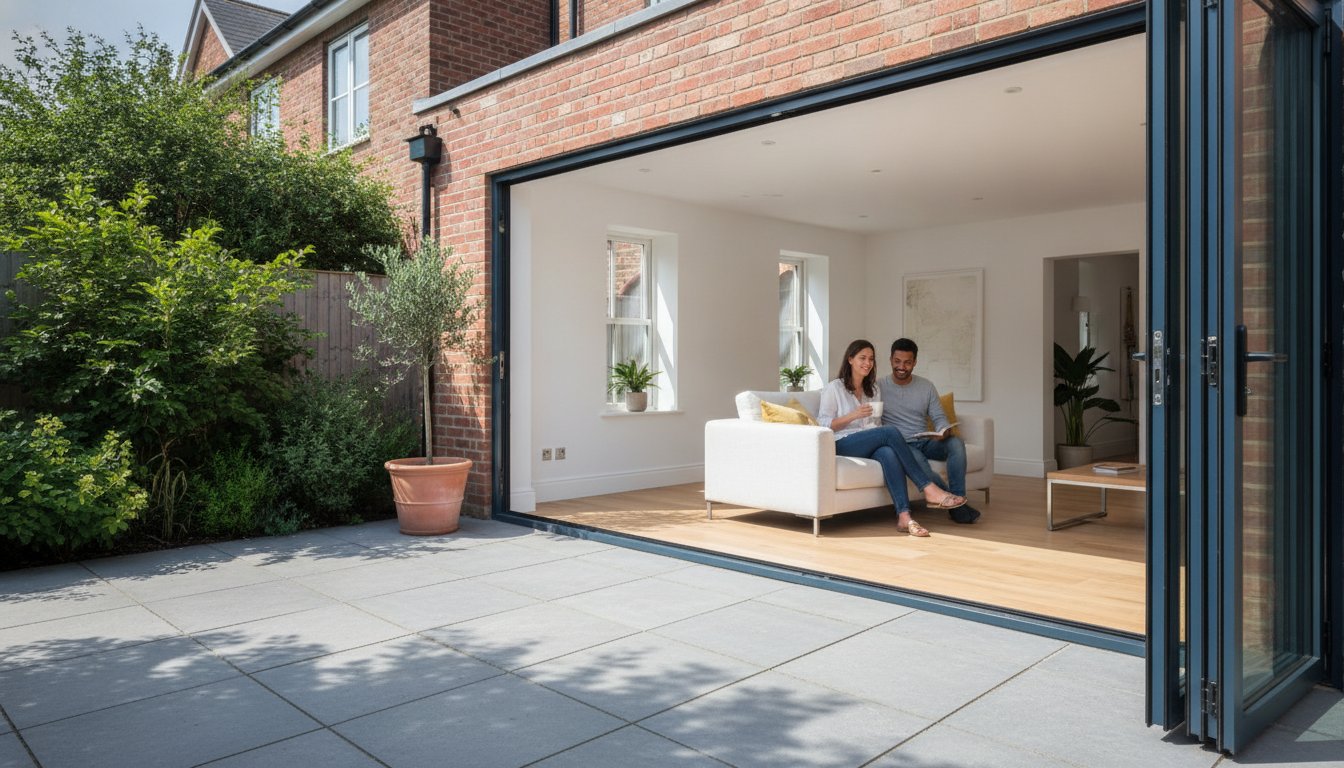
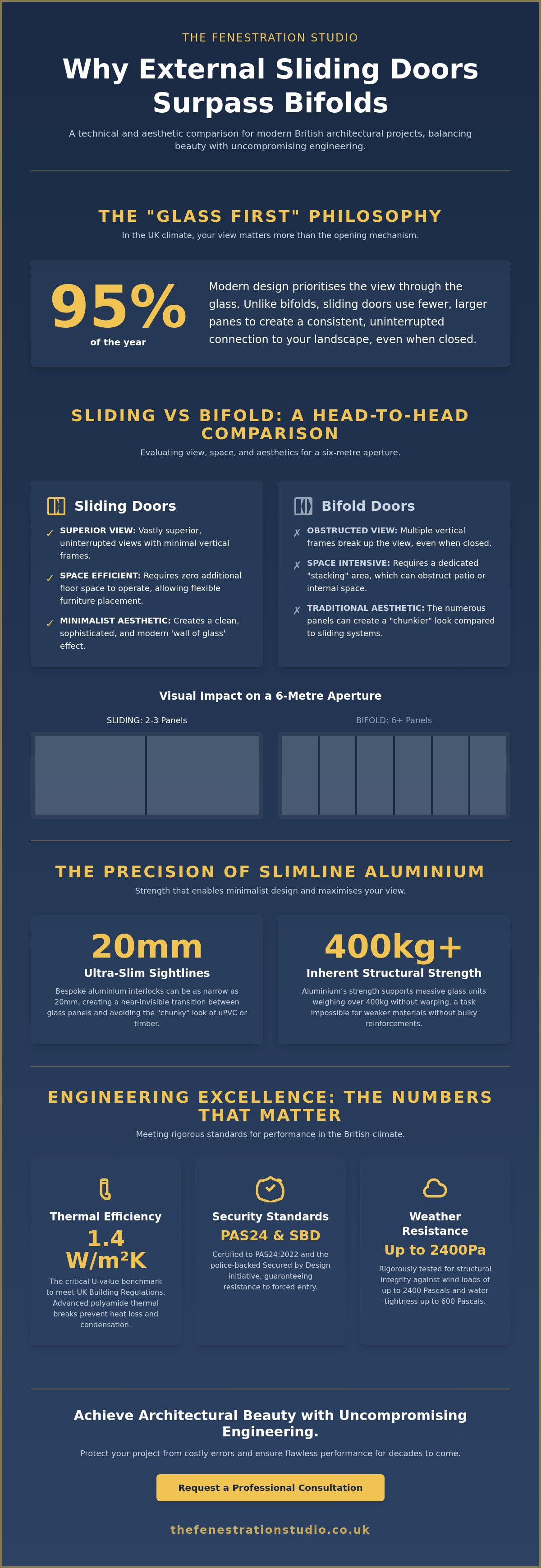
Modern British architecture is undergoing a significant shift in how we connect internal living spaces with the outdoors. For over a decade, bifold doors were the default choice for high-end extensions. However, as we approach 2026, premium renovations are increasingly favouring sliding doors external systems. These are high-performance glazing solutions engineered to support massive glass weights whilst maintaining minimal frame profiles. Unlike traditional patio doors, modern sliding glass doors prioritise a "Glass First" philosophy. This architectural approach recognises that in the UK climate, doors remain closed for roughly 95% of the year. By prioritising the view through the glass rather than the folding mechanism, homeowners achieve a more consistent, uninterrupted connection to their landscape.
The technical specification of these systems has evolved to meet rigorous energy standards. High-performance aluminium frames now incorporate advanced polyamide thermal breaks. These components ensure that even with glass panes exceeding three metres in height, the thermal envelope of the building remains secure. You don't have to sacrifice warmth for light. The result is a structure that feels expansive and airy, flooding the floor plan with natural light without compromising the home's energy rating.
Sliding Doors vs Bifold Doors: Which is Right for You?
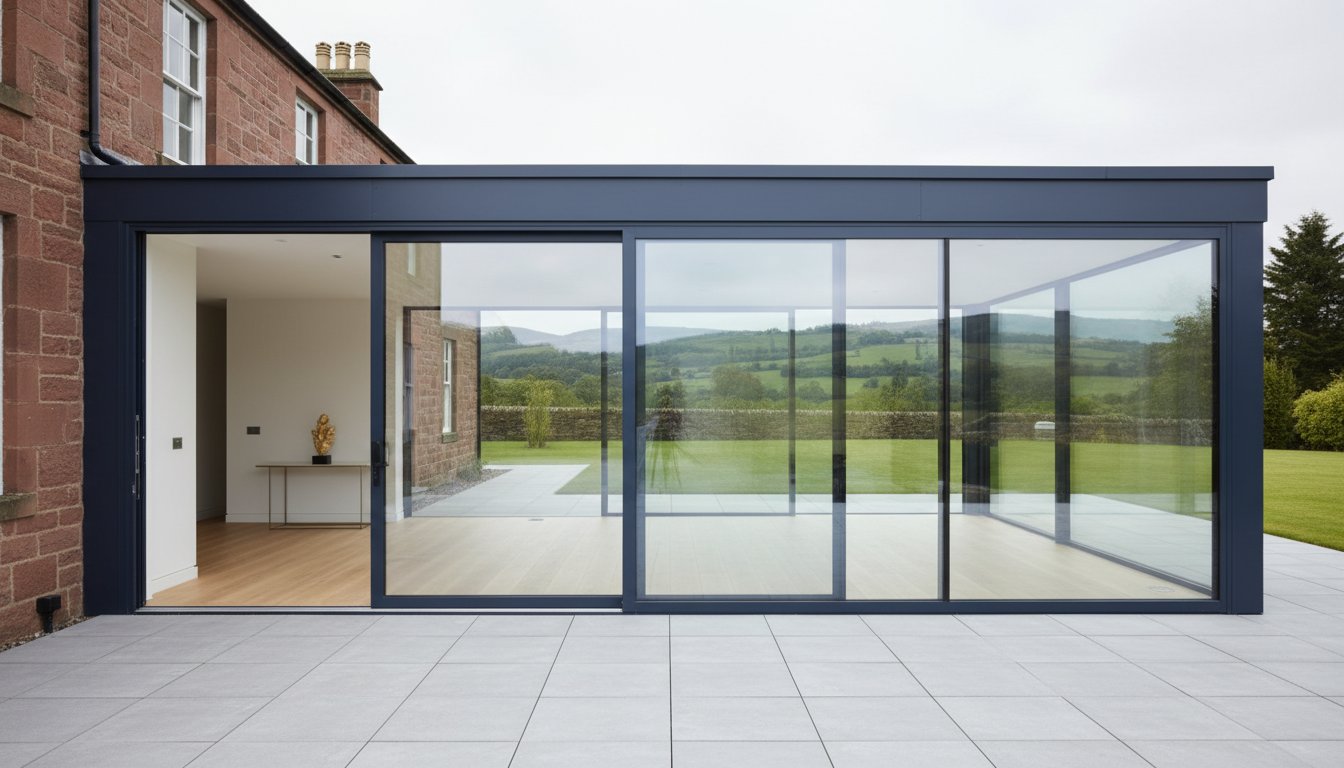
Choosing between these systems often comes down to how you use your square footage. Bifold doors require a "stacking" area where the panels sit when open, which can often obstruct patio space or internal walkways. Sliding doors operate on a parallel track, meaning they require zero additional floor space to function. This efficiency allows for more flexible furniture placement right up to the glass line. Because sliding systems use fewer vertical frames, they offer vastly superior views when closed. A six-metre aperture might require six separate bifold panels, but only two or three large sliding panes. This reduction in vertical "breaks" creates a cleaner, more sophisticated aesthetic that many homeowners now prefer for long-term value.
The Aesthetic Impact of Slimline Aluminium Frames
In the world of premium fenestration, "sightlines" are the most critical metric for minimalist design. This term refers to the visible width of the frame where two glass panels meet. Aluminium is the material of choice here because of its inherent structural strength. It can support glass units weighing over 400kg with ease, a task that would cause uPVC or timber frames to warp or require bulky reinforcements. By opting for bespoke aluminium, architects can specify interlock widths as narrow as 20mm. These slim profiles create a seamless transition, making the glass almost invisible. It's a precise, engineered solution that avoids the "chunky" look of budget alternatives, ensuring your investment looks as good in ten years as it does on the day of installation.
Technical Specifications: Thermal Efficiency and Security Standards
Selecting sliding doors external requires a focus on engineering precision rather than just aesthetics. For modern installations, a U-value of 1.4 W/m²K serves as the critical benchmark. This figure represents the rate of heat transfer through the unit; the lower the number, the more efficient the door. Meeting these Building Regulations for thermal efficiency ensures your home remains insulated against the volatile British climate. Premium aluminium frames utilise polyamide thermal breaks to bridge the gap between internal and external profiles. Without this structural barrier, aluminium’s natural conductivity would lead to significant heat loss and persistent condensation on the inner frame.
Security isn't an afterthought in high-end fenestration. We specify systems that meet PAS24:2022 standards and the police-backed Secured by Design (SBD) initiative. These certifications guarantee the frame and locking mechanism can withstand professional forced entry attempts. Performance also extends to weather resistance. Every door undergoes rigorous testing against wind loads of up to 2400 Pascals and water tightness reaching 600 Pascals. It’s about structural integrity under pressure. You can explore these technical benchmarks in detail through our sliding doors external specifications.
Thermal Performance and Solar Gain
Glass choice defines your daily comfort. Low-emissivity (Low-E) coatings are standard, reflecting internal heat back into the room during winter months. If you're designing a south-facing extension, solar control glass is essential. It filters out up to 70% of solar heat while maintaining high light transmission, preventing the "greenhouse effect" in summer. We also utilise warm-edge spacer bars between panes. These composite materials replace traditional aluminium spacers, reducing cold spots at the glass edge by up to 50% and preventing perimeter condensation.
Multi-Point Locking and Toughened Glass
High-security sliding doors rely on multi-point locking systems that engage at several intervals along the frame. This creates a unified seal that's virtually impossible to jemmy. We use 6mm toughened glass as a minimum for its impact resistance. For higher security specifications, laminated glass is recommended; it features a polyvinyl butyral (PVB) interlayer that holds the glass together if shattered. Internal glazing beads are equally vital. By ensuring the glass is fitted from the inside, we eliminate the risk of intruders removing the panes from the exterior. If you are planning a project and require technical guidance, you may wish to book a design consultation with our technical team.
Inline vs Lift and Slide: Choosing the Right Mechanism
Selecting the correct mechanism for your sliding doors external is a decision that impacts both architectural impact and long-term usability. It isn't merely a matter of price. It's a choice between two distinct engineering philosophies. Whether you are aiming for vast, floor-to-ceiling glass or a minimalist transition to a terrace, the internal hardware dictates how the system will behave after a decade of use.
The Mechanics of the Lift and Slide System
The lift and slide system is the industry standard for expansive architectural spans. By rotating the handle 180 degrees, the user engages a specialised carriage system that physically lifts the sash away from the weather seals. This allows for the effortless movement of glass panes weighing up to 400kg. When closed, the door drops back onto the track, creating a compression seal that excels in exposed, high-wind locations. This mechanism is a key component in achieving official police security standards, as the sheer weight of the dropped door acts as a primary deterrent against manual lifting or prying.
Inline Sliders: Simplicity and Slim Profiles
Inline sliders offer a different set of advantages, primarily centred on minimalist design and immediate movement. These doors remain in permanent contact with the rollers at all times. This mechanical simplicity allows for some of the narrowest sightlines in the fenestration industry, with interlock profiles often measuring just 20mm. While they lack the mechanical "lift" of their counterparts, they provide a smooth glide that suits smaller to mid-sized openings. They are frequently the preferred choice for homeowners seeking a truly flush floor finish between the internal living space and the patio, as the track depth is often more compact than lift and slide alternatives.
Longevity in either system is non-negotiable. We specify 304-grade stainless steel for all rollers and tracks to ensure the glide remains consistent over a 25-year lifespan. Cheaper nylon or plastic rollers often flat-spot within 36 months, leading to a "thumping" sensation during operation. To maintain the "White Glove" feel of your aluminium sliding doors, we recommend a disciplined maintenance schedule:
- Clear debris and grit from the bottom tracks every 90 days using a vacuum.
- Wipe down the stainless steel running gear with a microfibre cloth twice annually to prevent salt or pollutant build-up.
- Avoid heavy grease or oil-based lubricants, as these attract abrasive particles that can score the tracks.
- Inspect the weather gaskets for signs of compression set to ensure the thermal break remains uncompromised.
A well-maintained stainless steel track ensures that even a 3-metre tall door can be operated with a single finger, preserving the premium feel of the installation for years to come.
Avoiding Costly Mistakes: The Importance of Professional Surveying
Purchasing sliding doors external systems on a "supply-only" basis is a gamble that rarely pays off for the homeowner. Whilst the initial invoice might look lower, it shifts the entire burden of structural risk onto you or a general builder who may lack specialised glazing experience. Aluminium is a rigid, unforgiving material. It cannot be "trimmed to fit" on-site if the measurements are slightly off. A discrepancy of just 3mm in a structural opening can render a premium door set impossible to install correctly. Precision is everything.
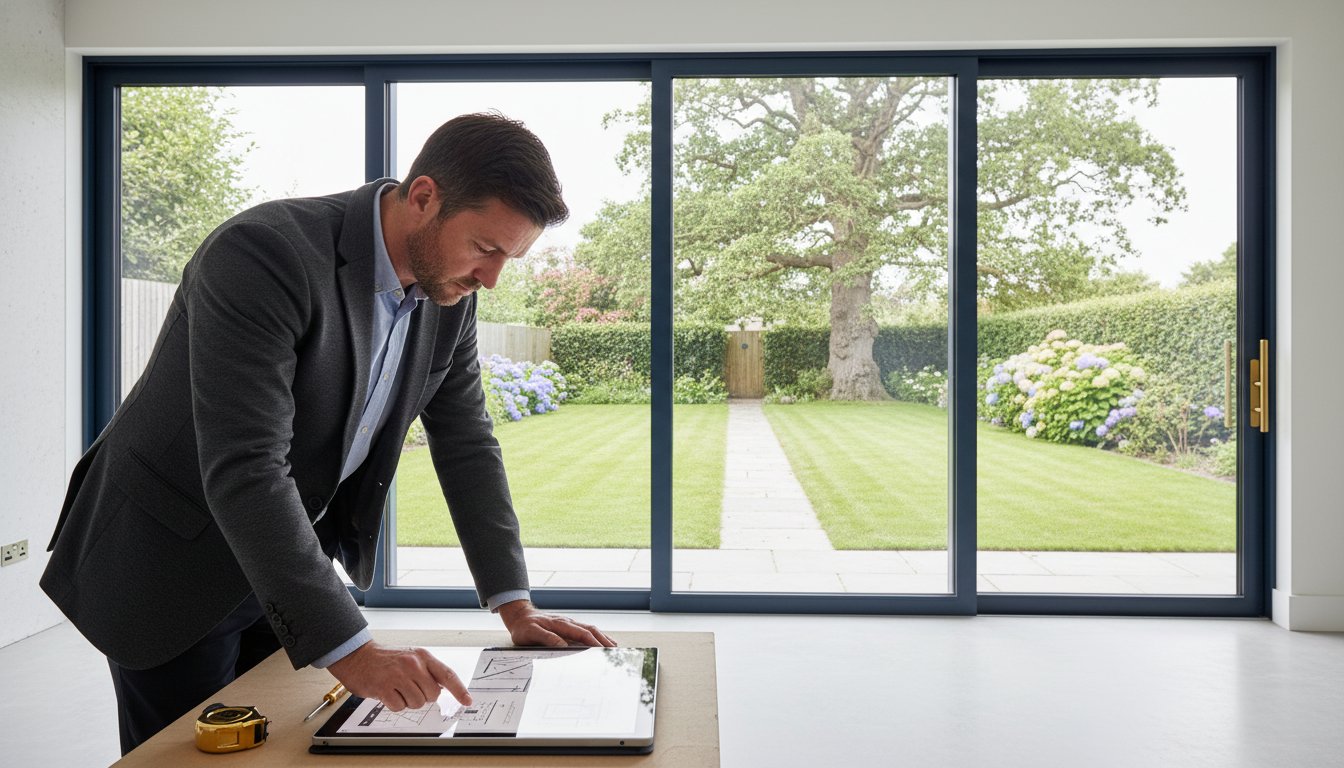
A professional technical survey acts as the foundation of a successful project. Our surveyors look beyond simple width and height. They assess the lintel requirements to ensure the head of the opening will not deflect under the weight of the masonry above, which is a common cause of sticking doors. We also focus on integrated drainage paths. Without a correctly specified cill and a clear route for water escape, moisture will eventually track back into your home, damaging internal floor finishes. Professional oversight. Technical certainty.
Structural Considerations for Large Glass Spans
Large-scale aluminium glazing exerts immense pressure on a building's framework. A single triple-glazed panel can weigh over 220kg, requiring a head track that remains perfectly level to prevent the rollers from binding over time. We operate with millimetre-perfect tolerances to account for this. Standard size doors often fail in bespoke architectural openings because they do not account for the subtle structural shifts found in 80% of UK renovation projects. Expert specification ensures your sliding doors external installation remains effortless to operate for decades.
The Installation Lifecycle: From Survey to Aftercare
The "White Glove" approach means we manage every variable from the initial measurement to the final adjustment. You will work with a dedicated project manager who coordinates the logistics, ensuring the site is protected and the installation is executed with surgical precision. This end-to-end accountability is vital for your long-term security. Learn more about our professional survey process to see how we protect your investment. Expert aftercare also ensures your warranty stays intact, as many manufacturers void coverage if the doors are not installed by certified professionals according to the 2022 Building Regulations (Part L) standards.
Don't risk the structural integrity of your home with guesswork. Book your technical site survey with our architectural consultants to ensure a perfect fit.
Bespoke Design: Configuring Your Perfect External Sliding Doors
Designing your sliding doors external aperture requires more than just picking a size. It's a technical specification that dictates how you interact with your home for the next two decades. You'll choose between 2-pane systems for standard openings, 3-pane configurations that offer a 66% clear opening, or sophisticated pocket doors. Pocket doors represent the pinnacle of architectural engineering; they slide entirely into a wall cavity, removing the physical barrier between your living space and the terrace.
Aesthetics are defined by the RAL powder coating process. This isn't a simple paint finish; it's a durable, heat-bonded coating that resists the corrosive effects of British weather. While Anthracite Grey (RAL 7016) currently accounts for approximately 60% of modern aluminium installations, bespoke palettes allow you to match internal joinery or external stonework with precision. Hardware choices should be equally deliberate. Selecting high-grade stainless steel handles or minimalist "D" grips provides the tactile confirmation of quality every time you operate the system.
- 2-Pane: Ideal for smaller apertures, offering a classic 50/50 split.
- 3-Pane: Provides greater flexibility, with the ability to stack panes to the left or right.
- Pocket Doors: Engineered to disappear into the building fabric for an unobstructed transition.
Configuring for Lifestyle: Traffic Flow and Furniture
Consider your daily habits before locking in a configuration. A "master" door is a specific pane designed for primary use, allowing you to access the garden quickly without sliding back an entire multi-pane system. You should also plan your furniture layout in advance. If a sofa is positioned near the glass, ensure the sliding pane moves away from the seating area to prevent draughts or obstructed views. For those requiring integrated shading, we specify internal blinds housed within the 28mm or 32mm double-glazed units, keeping your interior lines clean and dust-free.
The Ultimate Architectural Statement: Corner Sliders
For a truly transformative project, a "moving corner" removes the structural post entirely. This design requires a cantilevered roof, where the weight of the upper floor is supported by hidden steel beams rather than the door frame. When the doors are retracted, the corner of the room simply vanishes. It's a complex engineering feat that requires precision surveying. You can discover our bespoke corner sliding door solutions to see how this technical approach redefines open-plan living.
Finalising Your Specification
The journey from an initial concept to a White Glove handover is methodical and transparent. We move from structural surveys to precision manufacturing, ensuring every millimetre is accounted for. This rigor prevents the expensive mistakes often found with budget, off-the-shelf alternatives. Once your specification is finalised, our dedicated installation teams manage the site delivery and fitting to ensure the thermal and structural performance matches the design intent. You can book a design consultation to start your project and secure a professional partner for your renovation.
Securing Your Architectural Vision with Precision Glazing
The selection of sliding doors external for your project is a decision that defines your property's thermal performance and structural integrity for decades. Modern British architecture requires more than simple aesthetic appeal; it demands strict adherence to the 2022 Building Regulations Part L, which sets a maximum U-value of 1.4 W/m²K for glazing in existing dwellings. Whether you select the effortless operation of a lift and slide mechanism or the slimline profile of an inline system, every specification must meet PAS 24 security standards to ensure long-term peace of mind.
Avoiding expensive installation errors starts with precise measurement. We eliminate the risk of misaligned frames by including expert technical surveys as a standard part of our framework. Our end-to-end White Glove Service, delivered by nationwide UK installation teams, ensures that every bespoke configuration is executed with professional rigour. Local Expertise. National Standards. We're here to guide you through the technical complexities of premium fenestration to achieve a flawless finish.
Request a bespoke quote for your sliding door project and begin your home's transformation with a partner you can trust.
Frequently Asked Questions
Do external sliding doors need planning permission?
Most installations fall under Permitted Development rights established in the Town and Country Planning Order 2015. You won't usually need permission unless your property is a listed building or situated within one of the UK’s 8,000+ Conservation Areas. Check with your local planning authority if Article 4 directions apply to your postcode. Professional installers always verify these technical specifications before any structural work begins on site.
Are sliding doors more expensive than bifold doors?
Premium sliding doors external systems often command a higher investment than bifolds due to the advanced engineering required for larger glass panes. While a standard bifold might use more aluminium framing, a sliding door requires heavy duty stainless steel tracks and high performance rollers to manage glass weights exceeding 400kg. The final specification, including bespoke hardware and marine grade finishes, dictates the total project investment.
How do I keep my sliding door tracks clean and functional?
Maintain functionality by vacuuming the tracks every 3 months to remove grit that can degrade the rollers. Use a soft cloth and mild detergent to wipe the drainage channels, ensuring the 8mm weep holes remain clear of debris. Don't use WD-40 or heavy grease; instead, apply a dry silicone spray to the tracks twice a year. This simple maintenance routine prevents the mechanical strain that leads to expensive structural repairs.
Can I have a flush threshold with external sliding doors?
You can achieve a seamless transition between your interior floor and the patio by specifying a flush threshold for your sliding doors external project. This requires a weathered track to be recessed into the floor slab during the initial build phase. To prevent water ingress, we integrate a dedicated slot drain that handles up to 30 litres of water per minute. Proper technical planning ensures your home remains watertight.
What is the maximum size for an aluminium sliding door pane?
Structural aluminium allows for expansive glass panes that can reach widths of 3 metres and heights of 3.2 metres per panel. Some ultra slim systems accommodate even larger dimensions, though these require specialised crane lifting equipment for a safe installation. These specifications are governed by wind load calculations and the 10mm thickness of the toughened glass used. We ensure every bespoke framework meets the British Standard BS 6375-1 for weather tightness.
Are aluminium sliding doors thermally efficient enough for winter?
Modern aluminium frames feature a polyamide thermal break that prevents heat transfer between the interior and exterior. Current Building Regulations, specifically Approved Document L, require a maximum U-value of 1.4 W/m²K for replacement doors, but premium systems often achieve 1.2 W/m²K or lower. These thermal specifications ensure your living space stays warm during sub-zero British winters whilst reducing your energy consumption. It's a performance-led approach to architectural glazing.
How secure are modern sliding patio doors?
Security is a core component of our architectural specification. Look for doors tested to PAS 24:2022 standards, which involve rigorous physical attacks on the glass and locking mechanisms. Our systems utilise multi-point locking systems with 5 or more steel hooks and anti-lift blocks that prevent the panels from being forced out of the track. These features provide a robust framework that satisfies the most stringent home insurance requirements in the UK.
What is the difference between double and triple glazed sliding doors?
Triple glazing adds a third pane of glass and an extra argon-filled cavity, which can improve thermal performance by approximately 35% compared to double glazing. Whilst double glazing is sufficient for most UK homes, triple glazing offers superior acoustic insulation, reducing external noise by up to 40 decibels. It's a strategic choice for properties near busy roads or those aiming for Passivhaus energy standards. The extra pane also adds significant structural weight.