What if the very feature designed to connect you with the outdoors became your home's greatest thermal liability during a British winter? Many homeowners favour the striking aesthetic of aluminium bifold doors but feel an understandable anxiety regarding drafts, security ratings, and the technical complexity of the 2026 building regulations. You deserve a seamless transition to your garden without the risk of a poorly executed installation or a cold living room.
We believe that a high-performance door is a precision-engineered system rather than a simple retail commodity. This guide provides the professional clarity you need to choose and configure premium glazing that transforms your space with architectural rigour. You'll learn how to navigate U-values and PAS 24 standards to ensure your home remains secure, warm, and light-filled. We'll examine the methodical process of selecting a system that meets the upcoming Future Homes Standard, ensuring your investment adds lasting value to your property through expert engineering and disciplined installation.
Key Takeaways
- Understand how the structural integrity of aluminium enables slimmer architectural sightlines and larger glass apertures than traditional materials.
- Learn to configure aluminium bifold doors with the optimal panel count and 'traffic door' options for effortless daily utility.
- Identify the essential security benchmarks and thermal U-values required to ensure your living space remains energy-efficient and PAS 24 compliant.
- Discover why a managed professional installation is critical to the long-term performance and tangible value of your architectural investment.
What is an Aluminium Bifold Door? Understanding the Architectural Impact
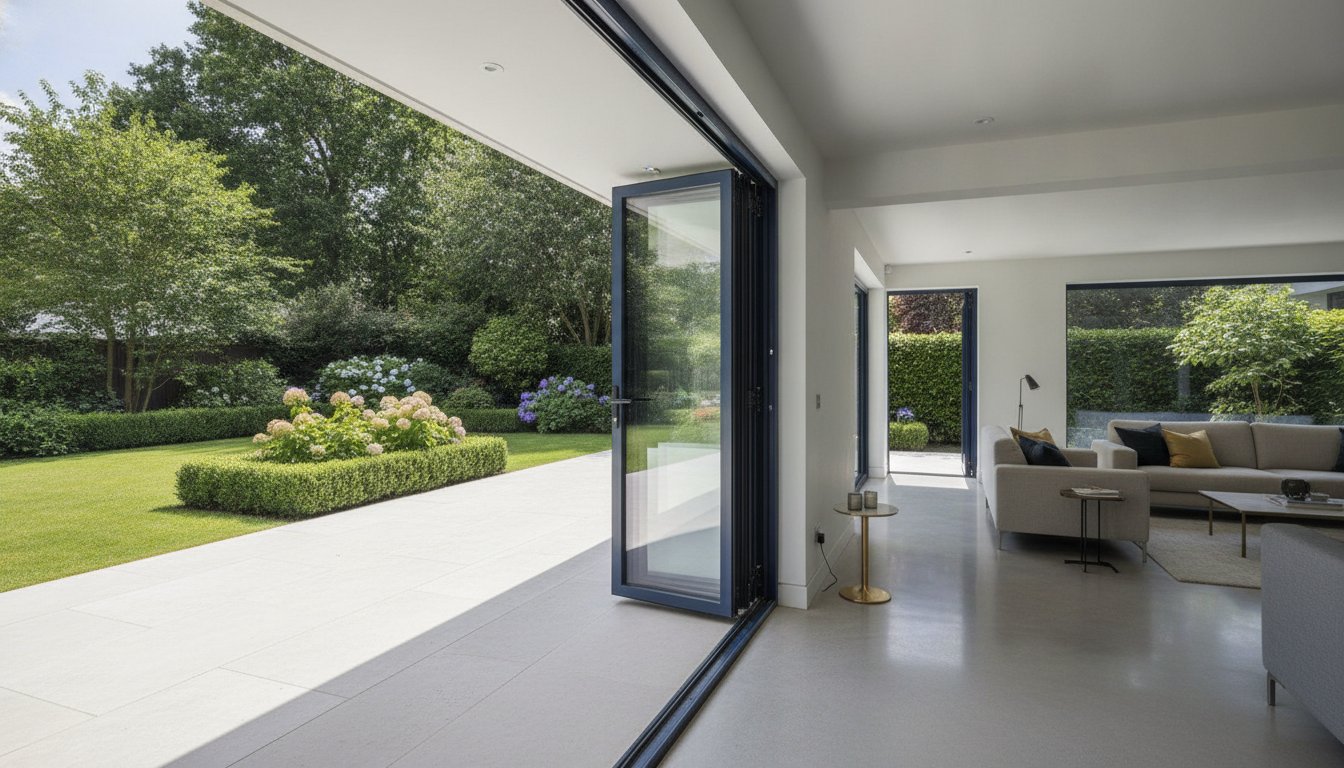
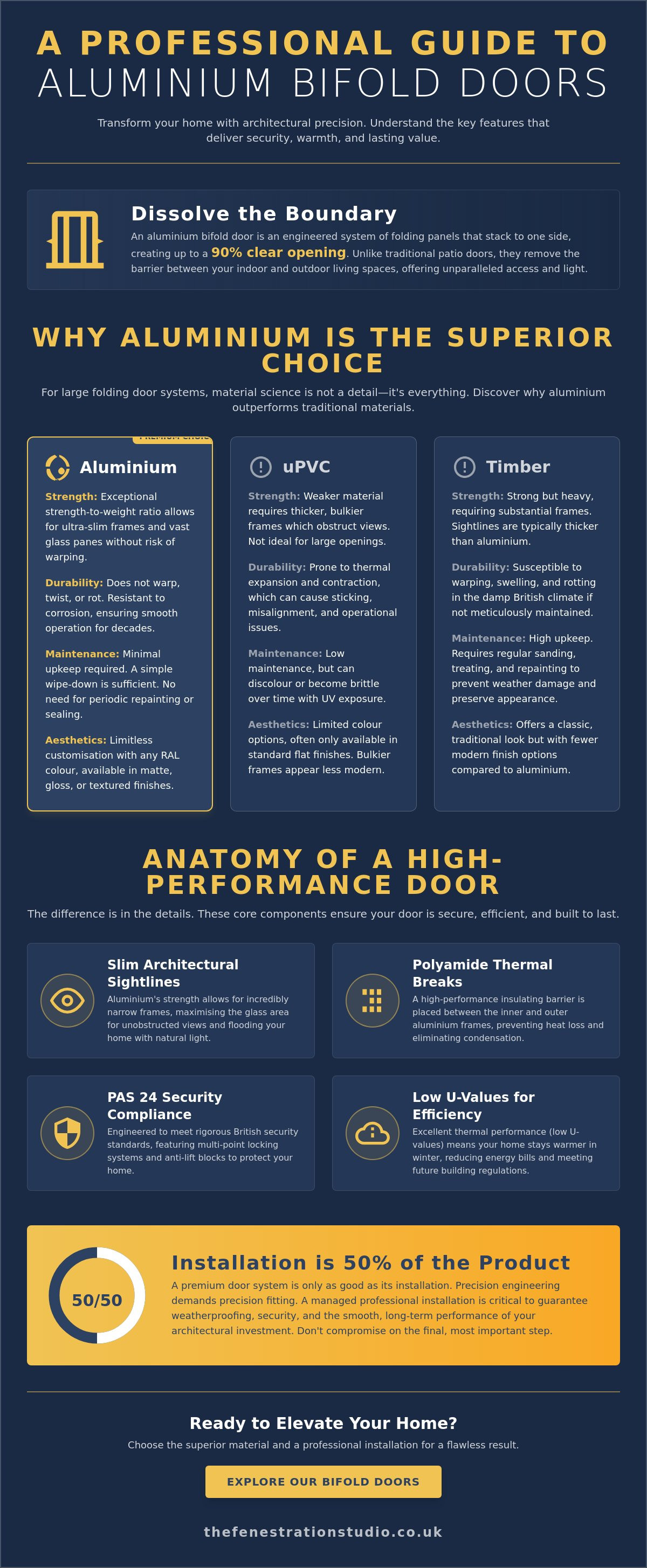
An aluminium bifold door is more than a simple exit to the garden. It is a precision-engineered architectural system. By definition, these systems consist of multiple glazed panels that slide on a track, folding and stacking against one another to create a 90% clear aperture. When homeowners ask What is a bifold door?, they are often seeking a way to dissolve the physical boundary between their interior living space and the outdoors. In British English, you might hear them referred to as 'folding doors' or 'concertina doors'. These terms are largely interchangeable, though 'bifold' remains the industry standard for professional specifications.
The evolution of these systems is remarkable. Early iterations relied on bulky commercial frames that obstructed views. Today, modern aluminium bifold doors utilise high-strength alloys to support expansive glass panes with ultra-slim architectural sightlines. This structural integrity allows for maximum natural light whilst maintaining the rigorous security standards required for the UK market. If you are planning a renovation, viewing our professional range of aluminium bifolding doors can help you visualise how these configurations work in practice.
Bifold vs. Sliding Doors: Which Suits Your Lifestyle?
Choosing between these two systems depends on how you use your space. Bifolds offer an unrivalled clear opening, making them the superior choice for maximum airflow and unobstructed garden access. However, you must plan for the 'stack', the bundle of folded panels, when the doors are fully retracted. This can affect furniture placement on your patio or inside the room. For those seeking a seamless transition, we recommend prioritising a flush threshold. This removes the step-over, creating a level floor from your kitchen to your terrace.
Internal vs. External Folding Systems
Whilst the mechanism remains similar, the technical requirements differ significantly. External aluminium bifold doors must prioritise weatherproofing, multi-point locking, and thermal efficiency to withstand fluctuating British weather. Internal dividers, conversely, favour minimalist tracks and acoustic privacy. They act as elegant partitions for modern open-plan living. For any external aperture, choosing external-grade specifications is vital to avoid the structural warping or thermal leaks often found in budget alternatives.
Why Aluminium is the Superior Material for Folding Doors
Choosing the right material for a large-scale glazing project is a decision that dictates the long-term performance of the installation. Whilst timber and uPVC are common in the industry, they often fail to meet the rigorous demands of a folding system. The inherent properties of aluminium make it the only logical choice for high-end residential projects. It offers a superior strength-to-weight ratio. This allows aluminium bifold doors to support massive panes of glass within remarkably slim profiles, ensuring your views remain the priority.
Precision engineering is the cornerstone of a reliable folding door. Unlike other materials, aluminium does not warp or twist under the weight of the glass. This ensures the folding mechanism remains effortless and smooth for decades. For modern aluminium bifolding doors, thermal efficiency is achieved through polyamide thermal breaks. These high-performance inserts act as a barrier between the internal and external frames. They effectively eliminate the cold bridging issues that once plagued older metal systems, keeping your home warm during the harshest British winters.
Aluminium vs. uPVC and Timber
uPVC is a thermoplastic that expands and contracts significantly with temperature changes. In a folding system, this movement often leads to misaligned tracks and sticking panels. Timber offers a classic look but requires substantial maintenance in the damp British climate. It is prone to rotting and warping if not repainted regularly. Aluminium remains stable. It provides the structural integrity needed for ultra-slim sightlines without the risk of seasonal expansion or constant upkeep.
Customisation and Aesthetic Versatility
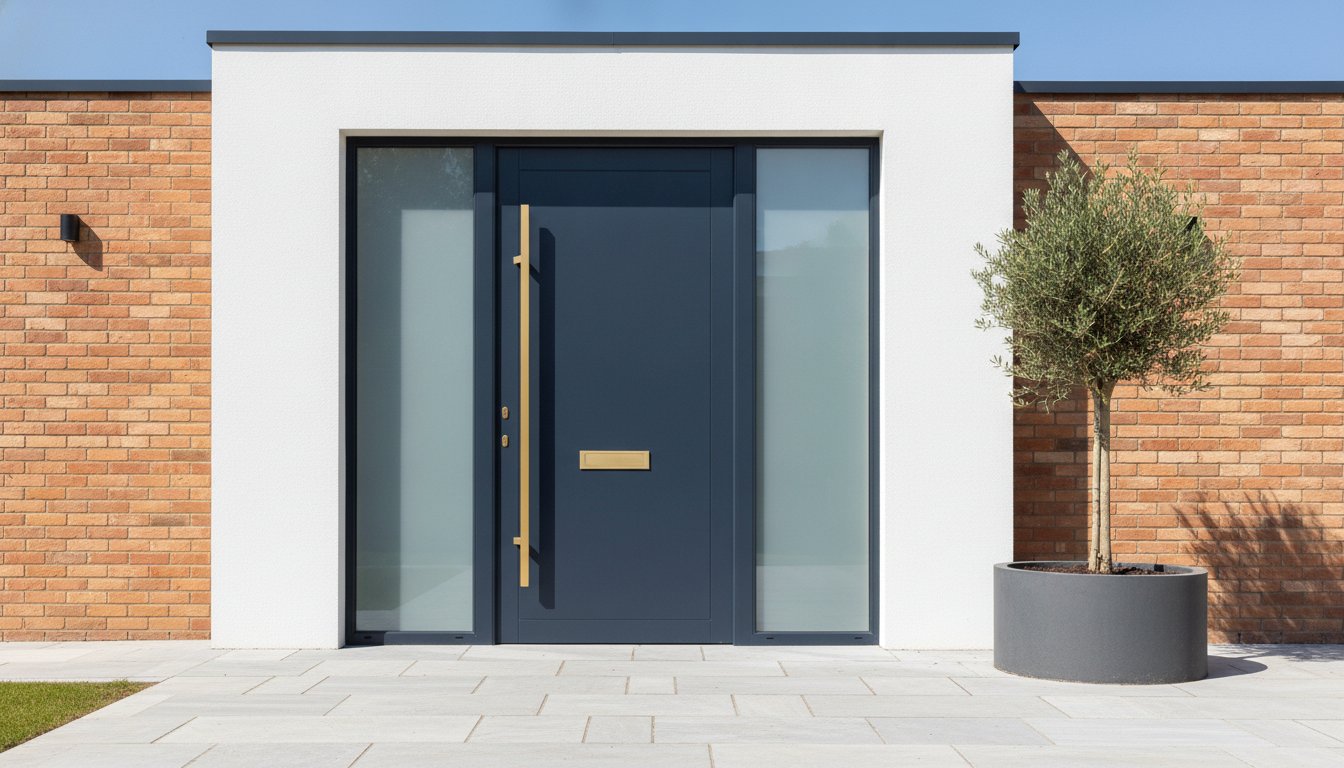
Aesthetic flexibility is a primary advantage of this material. Through RAL colour matching, you can select a shade that perfectly complements your home's architectural character. Beyond simple colours, you can choose between matte, gloss, or contemporary textured coatings. These 'sensations' finishes provide a tactile, premium feel that resists fingerprints and scratches. Matching your hardware is equally important. Selecting hinges and handles that align with your interior design scheme ensures a cohesive finish. You can explore our full range of finishes to find the ideal match for your property.
Configurations and Practical Planning for Your Home
Successful integration of aluminium bifold doors begins long before the first panel is manufactured. It requires a methodical approach to configuration. You can specify anything from compact 2-panel sets to expansive 7-panel architectural systems. The choice depends entirely on your aperture width and desired aesthetic balance. A well-planned layout ensures the system feels like a natural extension of your home's architecture rather than an afterthought.
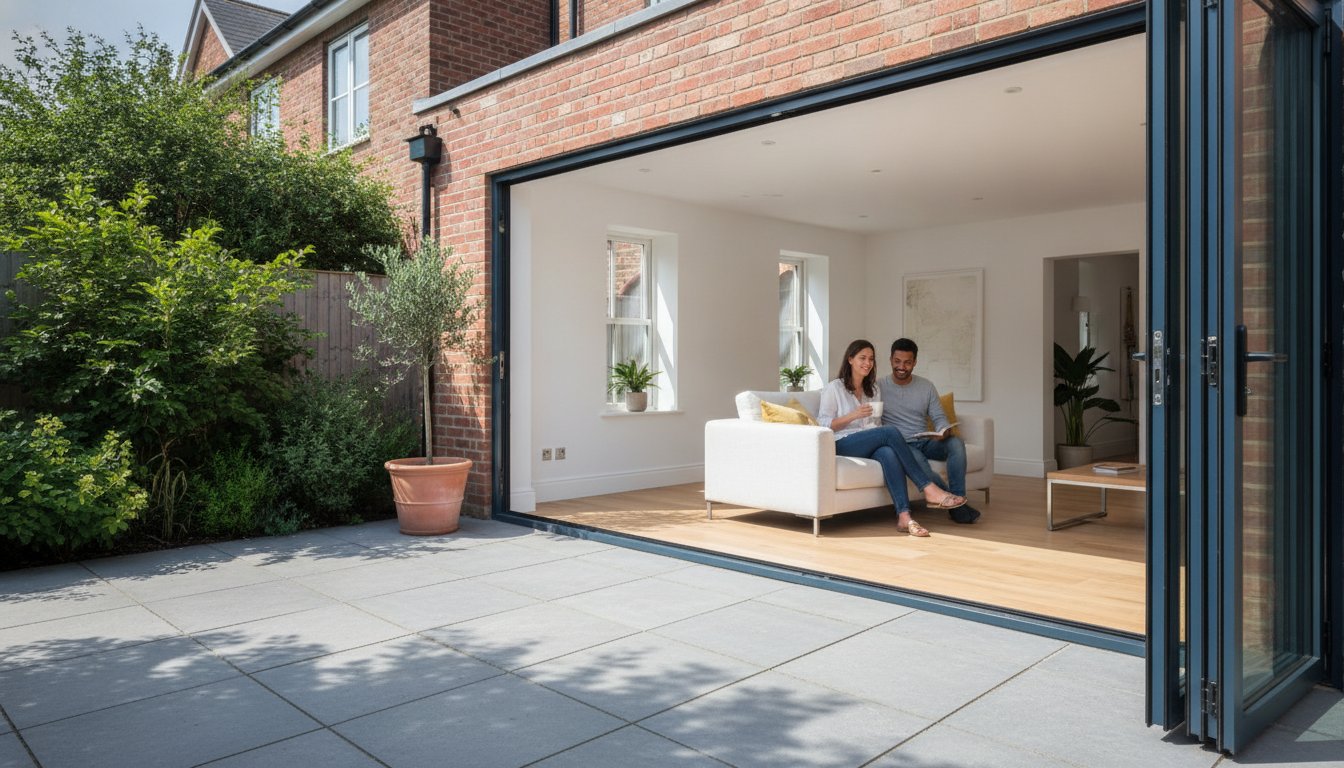
For daily utility, we recommend a configuration that includes a 'traffic door'. This single leaf operates independently. It allows for quick access to the garden without the need to retract the entire glazed wall. This is a practical necessity for the British climate. You must also decide on the stacking logic. Will the panels fold left, right, or split in the centre? Open-out configurations remain the most popular choice amongst UK homeowners. They preserve internal floor space for furniture and movement whilst ensuring the 'stack' remains outside. All configurations must adhere to UK building regulations regarding safety and means of escape. If you are unsure which layout suits your property, you can book a design consultation to explore the options.
Measuring for Success: The Technical Survey
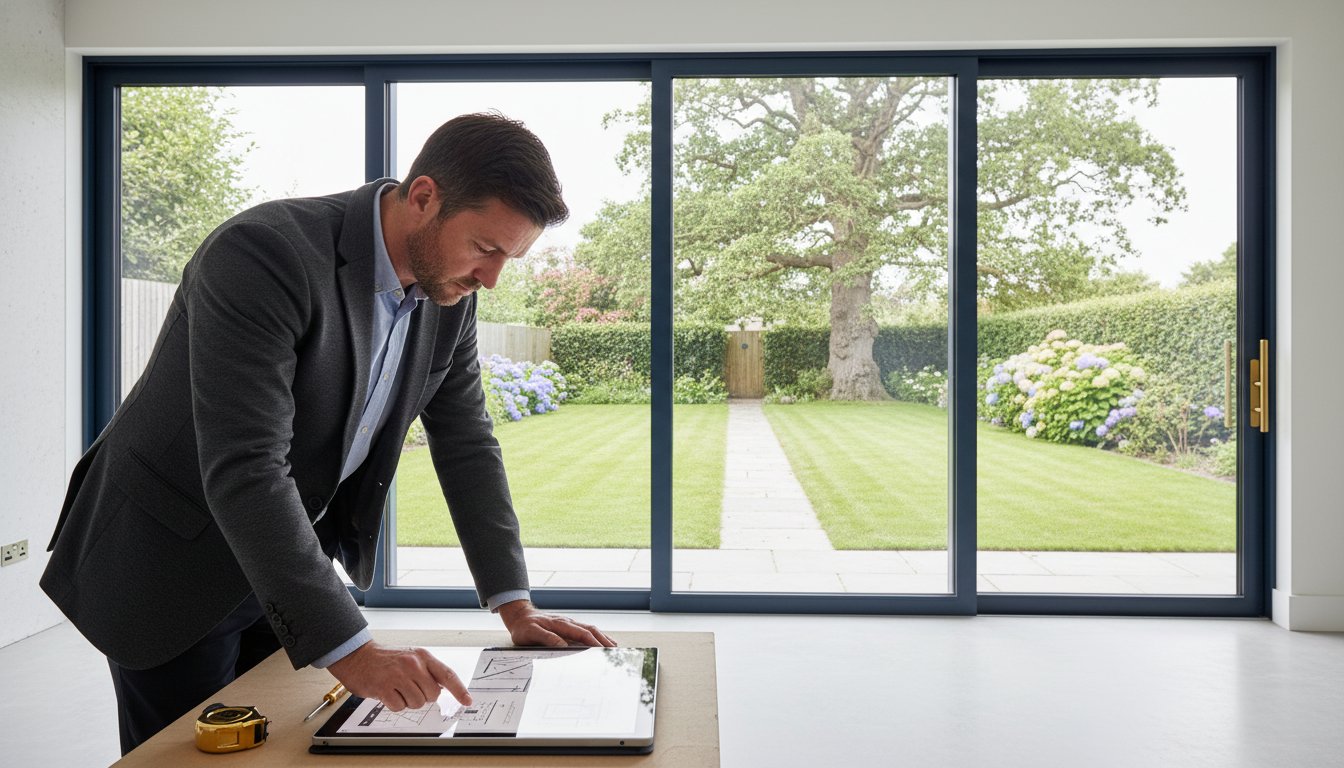
Precision is the hallmark of a high-end installation. A professional technical survey accounts for structural openings, lintel deflection, and finished floor levels. We measure to the millimetre to ensure the folding mechanism operates with zero resistance. DIY measurements often lead to catastrophic installation failures and voided warranties.
Glazing Options for Comfort and Security
Your choice of glass impacts both thermal performance and peace of mind. Double glazing provides excellent results, yet triple glazing is increasingly specified to exceed current building standards. If your living area is south-facing, solar control glass prevents overheating whilst maintaining natural light. For ground-floor security, laminated glass acts as a vital deterrent. It remains intact even if struck, protecting your home from forced entry.
Security and Efficiency: The Invisible Essentials
While the architectural impact of aluminium bifold doors is immediate, their true value lies in the engineering you can't see. Security and thermal performance are the invisible essentials that define a premium system. In the UK, the gold standards for domestic security are PAS 24 and Secured by Design. These certifications ensure the entire door set, including the frame, locks, and glass, has undergone rigorous physical testing to resist forced entry. Modern systems don't rely on a single latch. Instead, a multi-point locking system secures each panel individually into the track, creating a unified, uncompromising barrier.
Thermal efficiency is equally critical for long-term comfort. We measure this through U-values; the lower the number, the better the door retains heat. As of June 2026, Part L of the Building Regulations mandates a maximum U-value of 1.4 W/m²K for new doors. Achieving these figures requires more than just thick glass. It demands precision-engineered weather testing to ensure the system remains airtight against driving rain and gale-force winds. High-performance aluminium bifold doors are designed to withstand the harshest UK conditions whilst significantly reducing energy bills. If you're concerned about meeting these strict performance requirements, you can request a quote for a fully compliant, high-specification system.
Thermal Efficiency in the British Climate
British winters demand a robust approach to insulation. We utilise high-quality EPDM gaskets to create airtight seals that remain flexible even in freezing temperatures. These gaskets work alongside polyamide thermal breaks to prevent 'cold bridging'. This technology stops the external cold from transferring to the internal frame, preventing condensation and drafts. Compliance with the 2026 Part L Building Regulations is a legal necessity that ensures your home remains a sanctuary of warmth, regardless of the weather outside.
Advanced Locking Mechanisms
Security is built into the core of the aluminium profile. Hidden shootbolts and hardened steel hooks provide maximum resistance against leverage and forced entry. We specify high-security cylinders as standard to protect against common intrusion techniques such as lock snapping. Internal glazing beads also ensure the glass cannot be removed from the outside. This systematic approach to security provides peace of mind, ensuring your home's protected by a professional-grade defensive system.
The Professional Path: Why Installation is 50% of the Product
A common industry pitfall involves treating aluminium bifold doors as off-the-shelf retail items. In reality, a folding door is a complex mechanical system that requires surgical precision during fitting. The danger of 'supply-only' deals cannot be overstated; even the most expensive profiles will fail if the track is out of level by a fraction of a millimetre. We believe that the installation process is just as critical as the manufacturing itself. This is why we provide a comprehensive guarantee that covers both our aluminium products and the expert labour involved in their deployment.
The Fenestration Studio's 'White Glove Service' represents a managed end-to-end journey that removes technical risk from the homeowner. By combining nationwide technical expertise with dedicated local installation teams, we ensure that every project benefits from regional support grounded in high-level industry standards. This methodical approach ensures that your investment performs exactly as intended from the day of handover. Precision is valued over speed. A steady, disciplined rhythm during the installation phase reinforces the promise of a premium, stress-free experience.
The Project Lifecycle: From Consultation to Handover
The journey begins with an initial design consultation to select the configuration that best suits your property's architectural character. Following this, a professional technical survey is conducted to eliminate any structural ambiguity before manufacturing begins. Inaccurate DIY measurements frequently result in catastrophic installation failures that compromise structural integrity and immediately void manufacturer warranties. Finally, our expert fitters ensure the track is perfectly level. This result is the effortless, 'one-finger' operation that defines a high-performance system.
Aftercare and Long-Term Reliability
Maintaining the performance of your doors is straightforward with the right guidance. We recommend routine maintenance, such as keeping the bottom tracks clear of debris and ensuring the EPDM seals are lubricated to remain weather-resistant. As a family-run business, we prioritise honest, expert advice over aggressive sales tactics. We act as a professional mentor throughout the lifecycle of your project, ensuring your living space remains secure and light-filled for decades. To begin your journey with a trusted advisor, Book a design consultation to discuss your specific requirements.
Future-Proofing Your Home's Architectural Vision
Investing in aluminium bifold doors represents a calculated commitment to your property's long-term value. Throughout this guide, we've detailed the methodical approach required to balance architectural impact with the rigorous technical demands of the 2026 building regulations. You now understand that a successful transition between home and garden depends as much on the technical survey as the material itself. Precision is the foundation of performance.
As premium aluminium glazing specialists, our independently run family business provides the protective expertise you need to navigate this complex process. Our Nationwide White Glove installation service ensures that every detail is handled with professional rigour. This removes the anxiety of measuring errors or poor thermal performance. You've gained the clarity to choose a system that stands out amongst standard retail alternatives. It's an investment that promises to elevate your daily living experience whilst adding tangible value to your home.
Request a bespoke quote for your aluminium bifold doors and partner with a team dedicated to architectural precision. We look forward to guiding you through this transformative journey.
Frequently Asked Questions
Is a folding door the same as a bifold door?
Yes, these terms are used interchangeably within the British glazing industry. Whilst "bifold" is the standard technical specification, "folding doors" accurately describes the concertina mechanism where panels stack against one another. Both terms refer to the same multi-panel glazed systems designed to create wide, clear apertures.
Are aluminium bifold doors secure enough for ground-floor extensions?
Modern aluminium bifold doors are exceptionally secure when engineered to PAS 24 standards. These systems incorporate multi-point locking mechanisms that secure each panel into the track at multiple intervals. This high-level specification ensures compliance with Approved Document Q of the Building Regulations for ground-floor installations.
How much do aluminium bifold doors cost in the UK?
The final investment for a folding system depends on several bespoke factors. Panel count, glazing specifications, and the complexity of the structural opening all influence the total. We recommend a professional consultation to determine the exact requirements for your property rather than relying on generic retail estimates.
Can I install bifold doors into an existing patio door opening?
You can certainly install these systems into existing openings, provided the structure is suitable. A professional technical survey is vital to assess if the current lintel can support the weight of a folding glazed wall. In some instances, a structural engineer may specify a new RSJ to ensure the mechanism operates correctly.
How long does it take to install a set of aluminium folding doors?
A standard installation for a three or four-panel set typically takes one working day. If your project requires structural modifications or the removal of existing masonry, the process may extend to two or three days. Our disciplined approach ensures the track is perfectly level before the final handover.
Do bifold doors open inwards or outwards?
These systems can be configured to open either inwards or outwards depending on your preference. Most UK homeowners favour an open-out configuration because it preserves internal floor space for furniture and movement. This ensures the stacked panels remain on the patio whilst the doors are fully retracted.
Are aluminium bifold doors energy efficient enough for winter?
High-performance aluminium bifold doors are specifically engineered for the British climate. By utilising polyamide thermal breaks and EPDM gaskets, these systems achieve the low U-values required by the 2026 Part L Building Regulations. This ensures your home remains warm and energy-efficient even during the coldest winter months.
What is the maximum width for a bifold door system?
Maximum widths vary by profile, but individual panels can often reach 1.2 metres in width. A multi-panel configuration can span apertures exceeding 8 metres in total. We recommend staying within engineered panel limits to ensure the folding mechanism remains effortless and smooth for decades of use.