What if the narrowest frame you see in a brochure actually leaves your home unable to meet the 2026 thermal standards? It's a common dilemma for modern homeowners; the desire for a 20mm interlock often clashes with the fear of a cold, draughty living space. Finding the best slimline sliding door systems UK manufacturers offer requires more than just measuring a sightline. It demands a balance between architectural beauty and the rigorous 1.4 W/m²K U-value requirements mandated by the latest Part L Building Regulations. Whilst a minimalist aesthetic is the goal, it shouldn't come at the cost of structural integrity or thermal comfort.
You've likely felt the anxiety of choosing between high-end design and long-term performance. We understand that a premium glazing project is a significant investment that shouldn't be undermined by poor efficiency or complex installation risks. This guide provides a definitive framework for evaluating the market's leading systems, focusing on technical precision and verified security standards. You'll discover our curated ranking of the top systems for 2026, gain clarity on the newest thermal mandates, and learn how a professional end-to-end service ensures your home remains both secure and exceptionally warm.
Key Takeaways
- Learn how the 2026 Part L Building Regulations mandate a 1.4 W/m²K U-value, making thermal efficiency a primary design driver for modern homes.
- Compare the best slimline sliding door systems UK market leaders offer, focusing on the visual impact of 20mm interlocks versus standard profiles.
- Understand the strategic transition to triple glazing as the industry standard for achieving superior insulation in expansive glass facades.
- Discover how to tailor your specification to your property's environment, including the critical use of marine-grade powder coatings for coastal projects.
- Recognise why technical surveys and a professional installation service are vital for translating architectural vision into a high-performance reality.
Defining the Best Slimline Sliding Door Systems in the UK for 2026
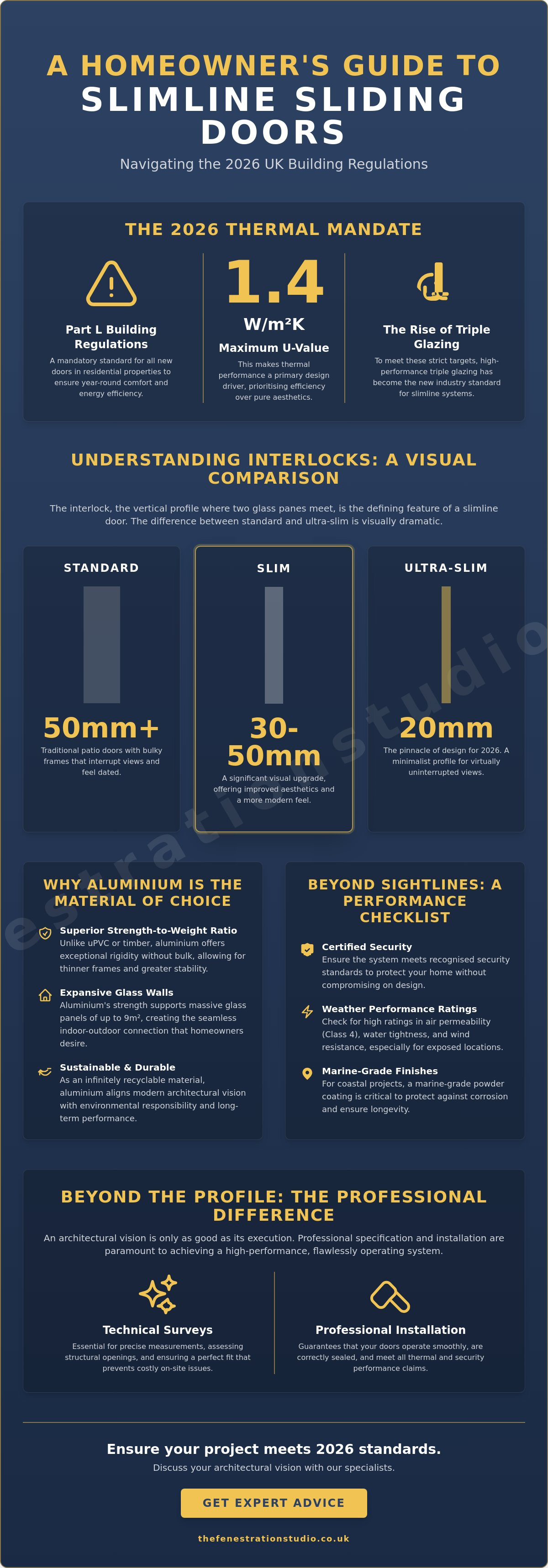
The 2026 UK glazing market has moved far beyond the bulky uPVC frames of the past. Today, the definition of a truly slimline system is dictated by the interlock; the vertical section where two panes meet. In 2026, an interlock width of 20mm has become the industry benchmark for high-end residential projects. Homeowners are increasingly rejecting traditional patio doors in favour of these minimalist aluminium structures. This shift isn't merely about fashion. It's about a desire for uninterrupted vistas and a seamless connection between internal living spaces and the garden. You aren't just buying a door; you're investing in a structural element that defines the character of your home.
A modern sliding glass door is a feat of precision engineering. It comprises three primary components: the outer frame, the threshold, and the interlock. Whilst the interlock receives the most attention for its aesthetic impact, the threshold and outer frame are equally vital. In 2026, the best slimline sliding door systems UK architects specify must maintain structural integrity despite their reduced mass. As frames become thinner, the pressure on the aluminium profiles to support massive glass weights increases. This requires high-grade alloys and sophisticated internal geometries to prevent bowing or operational failure, especially in exposed UK locations.
The Anatomy of an Ultra-Slim Sliding Door
The 'mullion' or interlock is the most critical measurement in modern glazing. We categorise systems into two distinct tiers. 'Slim' systems typically feature interlocks between 30mm and 50mm, offering a significant upgrade over standard frames. However, 'ultra-slim' systems, which measure under 20mm, represent the pinnacle of current design. To achieve this whilst meeting the 1.4 W/m²K thermal requirements of 2026, these doors utilise advanced polyamide thermal breaks. These glass-reinforced plastic strips sit between the inner and outer aluminium profiles, acting as a barrier against heat loss and ensuring the system remains energy efficient despite the narrow frame.
Why Aluminium is the Material of Choice
Aluminium dominates the premium market due to its exceptional strength-to-weight ratio. Unlike uPVC, which lacks the rigidity for large spans, or timber, which requires significantly deeper profiles to avoid warping, aluminium stays slim and stable. This strength allows for expansive glass panels of up to 9m², creating the 'glass wall' effect so many homeowners crave. By 2026, the industry has also embraced the sustainability of circular-economy aluminium. Choosing aluminium sliding doors means investing in a material that is infinitely recyclable, aligning your architectural vision with environmental responsibility and long-term durability.
Technical Benchmarks: Thermal Efficiency, Security, and 2026 Regulations
In 2026, technical compliance is no longer a secondary consideration for UK homeowners. The regulatory landscape has shifted significantly, making thermal performance a primary design driver. Under the latest updates to Approved Document L, all new doors in residential dwellings must achieve a maximum U-value of 1.4 W/m²K. This isn't just a recommendation; it's a mandatory standard that ensures modern homes remain energy efficient and comfortable year-round. Selecting the best slimline sliding door systems UK suppliers offer now requires a rigorous check of these thermal certifications before any aesthetic decisions are made.
To meet these stringent targets whilst maintaining expansive glass areas, triple glazing has transitioned from a niche premium option to the industry standard. High-performance systems now frequently utilise 44mm or 52mm triple-glazed units to reach U-values as low as 0.8 W/m²K, comfortably exceeding current requirements. Beyond heat retention, weather performance ratings for air permeability, water tightness, and wind resistance are vital. For a project in an exposed or coastal location, you should look for Class 4 air permeability and Class 9A water tightness to ensure the system can withstand the volatile British climate without compromise.
Achieving 2026 U-Values with Slimline Profiles
Reducing frame mass creates a technical challenge: preventing cold bridging. Because aluminium is a natural conductor, a thinner profile requires a more sophisticated polyamide thermal break to isolate the internal and external faces. The most advanced 2026 systems combine these breaks with low-E glass coatings and argon or krypton gas fills. When evaluating products, aim for a target U-value of 1.2 W/m²K or lower. This provides a safety margin against future regulatory tightening and ensures your living space remains thermally stable even during the coldest winter months.
Security Engineering in Minimalist Frames
Minimalism must never come at the cost of safety. The current benchmark for security is PAS 24:2022, a standard that tests the entire doorset against opportunistic attack. Elite slimline systems integrate multi-point locking mechanisms directly into the slender stiles, often featuring stainless steel bolts that engage at multiple heights. Anti-lift devices are equally critical; they prevent the sliding panels from being forced out of their tracks from the outside. If you're concerned about long-term protection, exploring high-performance aluminium sliding doors with "Secured by Design" accreditation is a sensible step, as these products are proven to reduce burglary risk by 75%.
Precision in the technical survey is the only way to guarantee these security features function as intended. Even the most robust lock is ineffective if the frame isn't perfectly plumb and square. This is why professional, accredited installation is paramount; it ensures the system's structural integrity and validates the manufacturer's security certifications.
Comparing Profile Sightlines: From 20mm Interlocks to Structural Glass
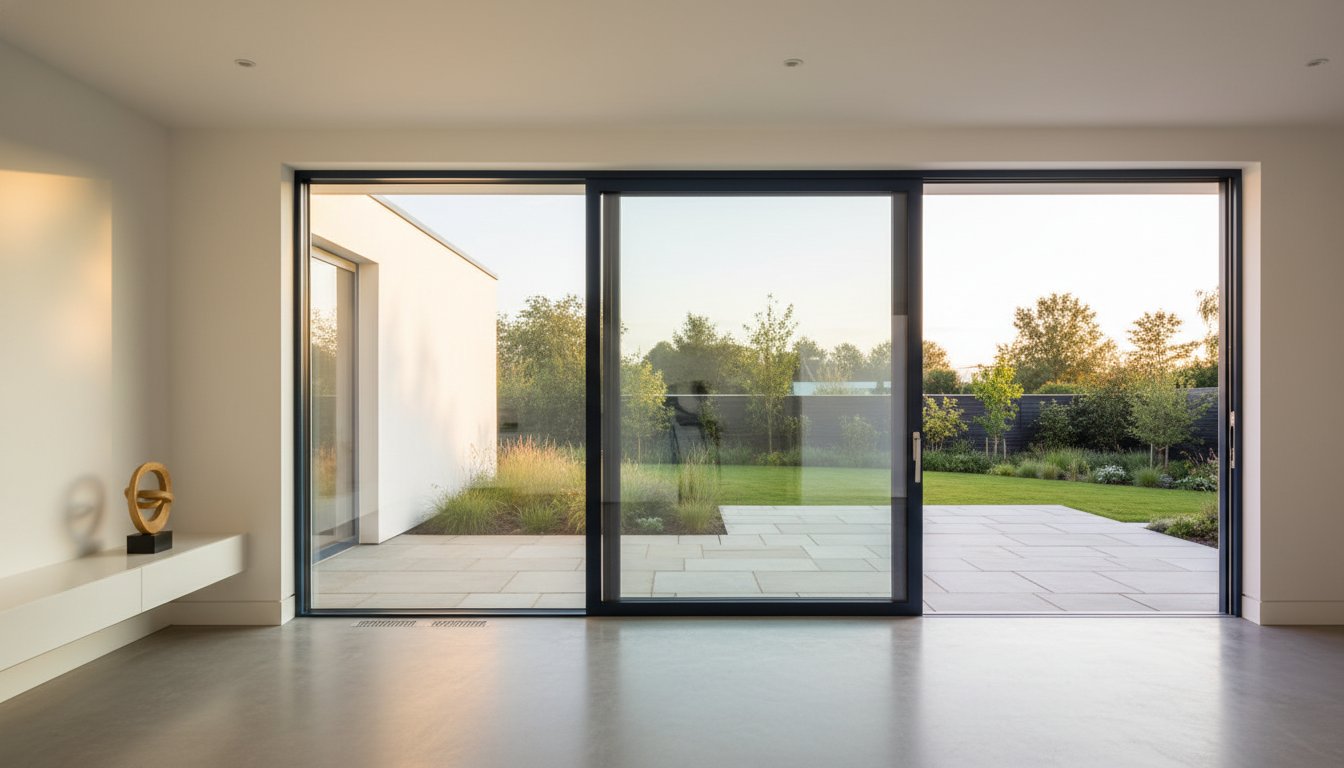
Visual clarity is the ultimate luxury in modern architecture. When evaluating the best slimline sliding door systems UK homeowners can select, the interlock width is the primary metric of success. A standard 50mm interlock, whilst functional, creates a noticeable vertical interruption that can fragment a panoramic view. In contrast, a 20mm interlock is barely wider than a thumb, allowing the eye to pass over it almost effortlessly. Some specialist systems push this further to 17mm, but these often come with height restrictions that limit their application in grand-scale renovations. The transition from 50mm to 20mm isn't just a 60% reduction in frame; it's a fundamental change in how a room relates to the landscape.
For those seeking the absolute limit of minimalism, structural glass systems offer a frameless aesthetic. In these configurations, the outer frames are recessed into the floor, ceiling, and walls, leaving only the glass and the ultra-slim interlocks visible. This relies on the glass itself to provide structural rigidity. However, there is a technical trade-off. Ultra-slim profiles may limit the maximum panel size. Whilst a 30mm system might comfortably support a 4-metre high pane, a 20mm system might be capped at 3 metres to ensure it can still meet the PAS 24 security standard and resist wind deflection in exposed UK locations.
The 20mm Standard: The Sweet Spot of Modern Glazing
The 20mm interlock has become the industry benchmark for high-end contemporary projects for good reason. It offers the perfect equilibrium between aesthetic minimalism and structural performance. These aluminium sliding doors are incredibly versatile, capable of housing the heavy triple-glazed units required for 2026 thermal efficiency. They are engineered to handle standard UK wind loads and the rigours of daily domestic traffic without the frame bowing or the rollers sticking. It's the point where engineering precision meets architectural ambition.
Hidden Frames and Open Corner Solutions
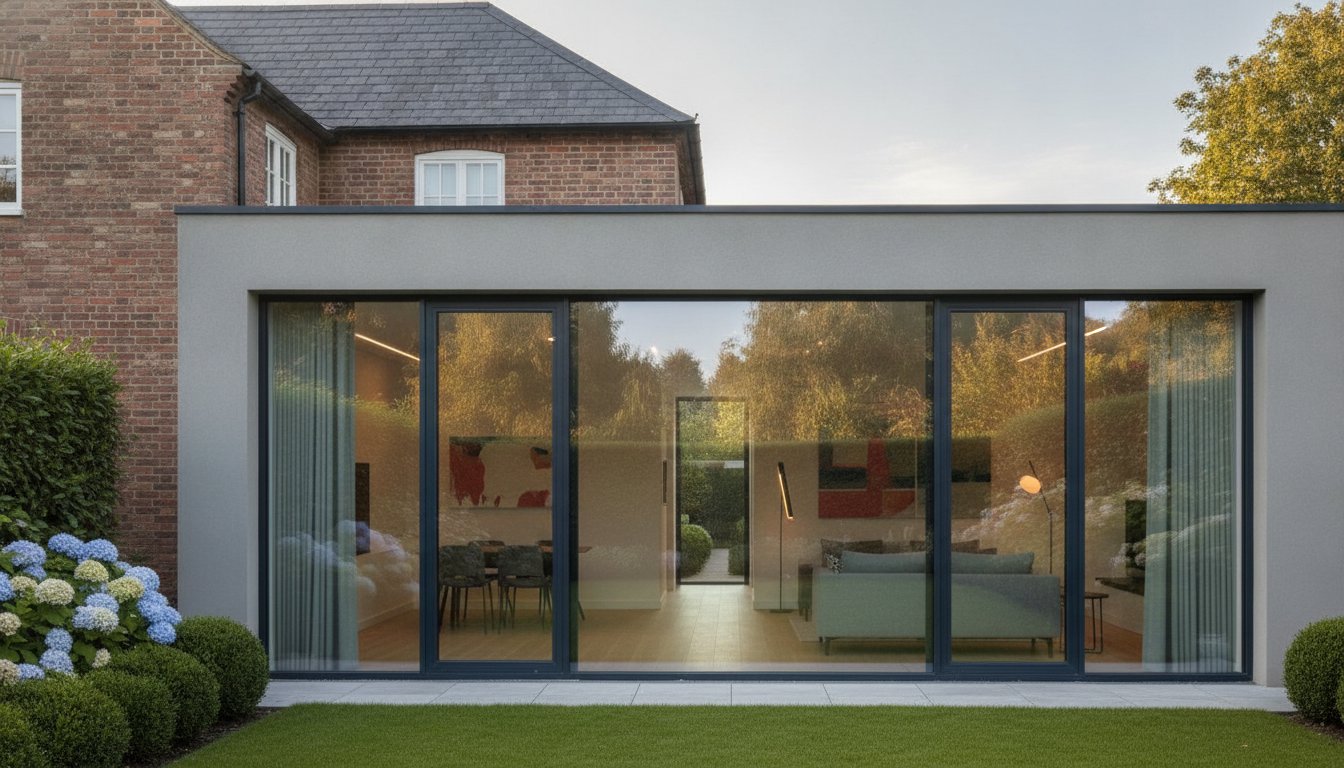
Architectural impact is often about what you don't see. By utilising recessed tracks, the threshold becomes completely flush, removing trip hazards and creating a seamless floor finish. The use of corner sliding doors takes this further, allowing two glass walls to meet without a fixed corner post. When opened, the entire corner of the building disappears. Pocket door configurations offer a similar magic; the panels slide entirely into a wall cavity, leaving a 100% clear opening. These solutions transform a simple extension into a sophisticated, indoor-outdoor living space that feels entirely connected to the garden.
Selection Strategy: Matching Door Systems to Your Architectural Vision
Choosing the best slimline sliding door systems UK market specialists provide involves more than aesthetic preference. It requires a diagnostic approach to your property's specific location and structural constraints. A system that performs perfectly in a sheltered urban courtyard may fail prematurely on an exposed coastal cliffside or a windswept upland site. Your selection strategy must account for wind loading, salt exposure, and the intended lifestyle use of the space. Architectural beauty is only sustainable when it's underpinned by correct technical specification.
We often see homeowners tempted by 'supply-only' deals from online retailers. These transactions frequently lack the rigorous technical oversight required for ultra-slim systems. Without a professional survey and a managed installation, you risk inheriting a system that is technically compliant on paper but functionally flawed in practice. Precision engineering demands precision fitting. This is especially true for systems with 20mm interlocks, where even a few millimetres of structural movement can lead to operational failure or air leakage.
Coastal vs. Inland: Finish and Hardware Considerations
In the UK, proximity to the coast necessitates a 'marine-grade' specification. This isn't a marketing upsell; it's a technical necessity for any property within five kilometres of the sea. You should look for the Qualicoat Seaside standard. This ensures the powder coating is applied to a pre-anodised surface to prevent filiform corrosion, a common issue where salt air penetrates the paint layer. Hardware is equally susceptible. Whilst standard rollers might suffice inland, coastal projects require high-grade stainless steel components to resist the abrasive nature of salty air. When selecting your favourite RAL colour, prioritise UV-stable finishes to prevent fading under intense sunlight.
Renovation vs. New Build: Structural Requirements
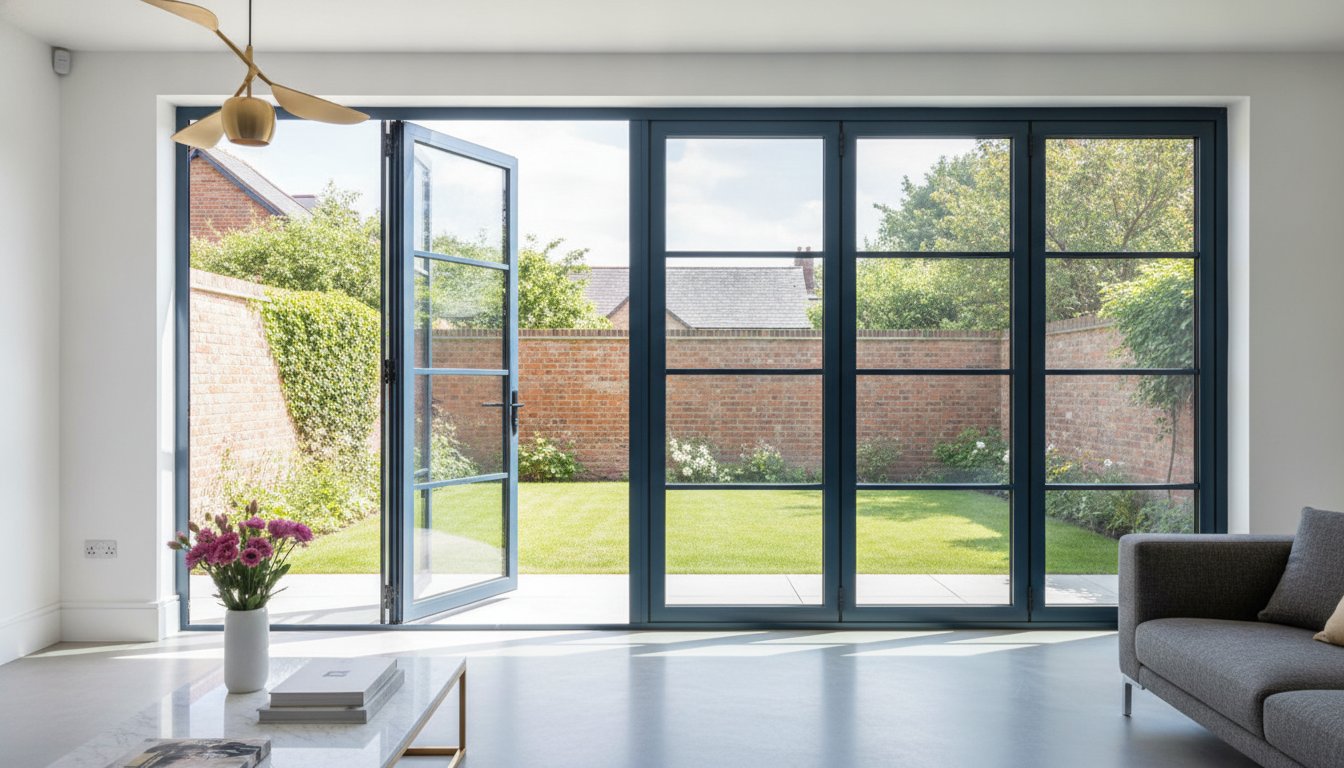
Integrating ultra-slim glazing into a renovation presents unique challenges compared to a new build. Achieving a truly flush threshold requires precise coordination of internal and external floor heights during the early construction phase. You must also account for the immense weight of triple-glazed panels. A standard lintel often won't suffice for the expansive openings required for the best slimline sliding door systems UK homeowners desire. Structural engineers must specify lintels with minimal deflection to prevent the frame from being crushed or the rollers from binding. The choice between sliders and aluminium bifolding doors often comes down to your view; bifolds provide a wider opening, but sliders offer the uninterrupted glass that defines modern architecture.
For a bespoke assessment of your project's technical requirements and to ensure your architectural vision is matched with the correct system, you can book a design consultation with The Fenestration Studio's architectural specialists.
Beyond the Profile: Why Professional Specification and Installation are Paramount
The pursuit of architectural perfection often ends at the point of purchase, yet the true success of a project is determined during the installation phase. Even the best slimline sliding door systems UK market leaders manufacture are essentially high-grade raw materials until they're correctly integrated into your property. A 20mm interlock offers no benefit if the track is out of level by even a single millimetre, causing the rollers to bind and the locking points to misalign. We believe that professional specification is the only way to safeguard your investment and ensure the long-term performance of your glazing.
Many competitors highlight long-term warranties as a primary selling point. It's a common trap; these guarantees are frequently conditional on correct installation. If a third-party builder or an unaccredited fitter handles the project, the manufacturer may void the warranty at the first sign of trouble. This leaves you vulnerable to the costs of hardware failure or structural movement. Investing in the best slimline sliding door systems UK suppliers provide requires a managed service to secure a chain of accountability, covering everything from the initial CAD drawings to the final adjustment of the stainless steel rollers.
The Critical Nature of the Technical Survey
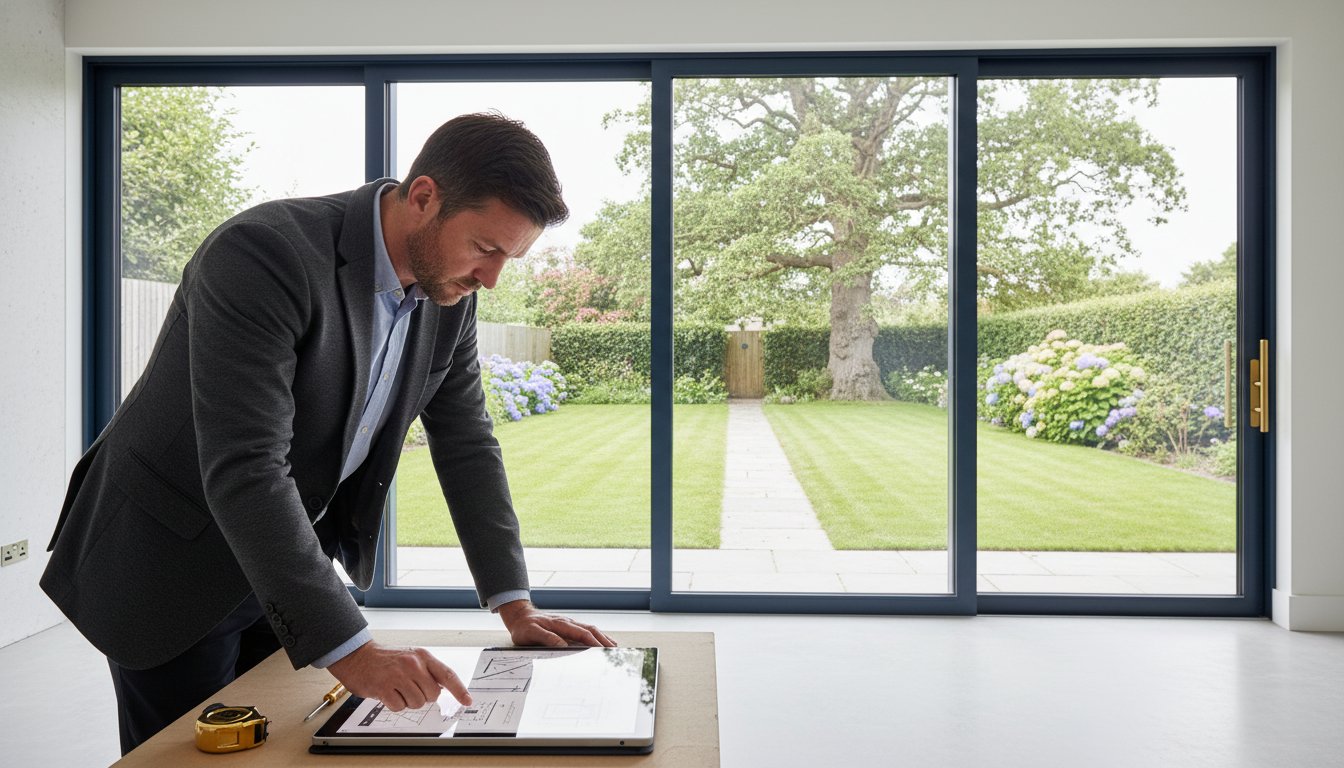
A professional technical survey is much more than a simple measurement exercise. It's a diagnostic process where our specialists identify potential drainage complications and structural limitations before fabrication begins. For ultra-slim systems, millimetre-perfect accuracy is non-negotiable. A slight error in the floor level can prevent a truly flush threshold, whilst a misunderstanding of the perimeter sealing requirements can lead to moisture ingress and internal damp. Our surveyors ensure that every structural lintel and drainage channel is perfectly prepared to receive the new system, ensuring that 400kg glass panels maintain 'one-finger' operation for years to come.
The Fenestration Studio Advantage
We position ourselves as a consultative partner rather than a mere supplier. As an independent, family-run business, we offer a level of personal integrity that larger national retailers often struggle to replicate. Our 'White Glove Service' acts as the industry benchmark, combining national UK coverage with the nuances of local installation expertise. This methodical approach ensures that every project lifecycle is handled with professional rigour, from the first consultation to the final quality sign-off. We don't just deliver products; we manage the entire architectural journey.
Precision engineering deserves a precision finish. To ensure your architectural vision is realised without technical compromise, book a design consultation with our expert team today.
Securing Your Architectural Legacy for 2026 and Beyond
The transition to ultra-slim glazing is more than a design trend; it's a commitment to a more open, energy-efficient way of living. By prioritising the best slimline sliding door systems UK manufacturers offer, you're ensuring that your home meets the rigorous 2026 thermal standards whilst maintaining a flawless, minimalist aesthetic. Success lies in the delicate balance between the 20mm interlock you desire and the structural precision required to support expansive triple-glazed units. As we've explored, even the most sophisticated profile is only as effective as the technical survey and installation that support it.
As an independently run family business, we provide the professional advocacy you need to navigate this technical landscape. Our comprehensive White Glove Service manages every detail from the initial survey to the final handover, backed by national UK coverage and expert local installation teams. You're not just purchasing a product; you're securing a high-end, stress-free experience. Request a bespoke technical quote for your sliding door project today. We look forward to helping you translate your architectural vision into a precise, high-performance reality.
Frequently Asked Questions
What is the thinnest sightline available for sliding doors in the UK?
The thinnest vertical interlock sightline currently available for the best slimline sliding door systems UK homeowners can select is typically 20mm. Whilst some specialist structural glass systems can push this boundary to 17mm, the 20mm profile remains the industry benchmark. It provides the ideal equilibrium between minimalist aesthetics and the structural rigidity required to support heavy triple-glazed units.
Are slimline sliding doors as secure as standard patio doors?
Slimline sliding doors are exceptionally secure provided they are tested to the PAS 24:2022 security standard. These systems aren't weaker due to their thin frames; they integrate multi-point locking mechanisms and anti-lift devices directly into the reinforced aluminium stiles. When combined with toughened or laminated security glass, they offer protection that equalises or exceeds traditional, bulkier patio doors.
Do slimline sliding doors meet 2026 Document L thermal regulations?
All high-performance slimline systems must meet the 2026 Document L mandate of a 1.4 W/m²K maximum U-value for residential dwellings. Achieving this standard in a minimalist frame requires advanced polyamide thermal breaks and high-specification glazing. Most elite systems now utilise triple glazing as standard to comfortably exceed these regulatory requirements and ensure long-term energy efficiency.
What is the difference between a bonded and a non-bonded sliding door?
A bonded sliding door has the glass structurally glued to the aluminium frame, whereas a non-bonded door uses traditional mechanical gaskets. Bonding is a hallmark of ultra-slim engineering as it allows the glass to provide structural support to the frame. This technique is often essential for 20mm systems to maintain rigidity and prevent the slender profiles from bowing under wind pressure.
Can I have a flush threshold with slimline sliding doors?
You can achieve a completely flush threshold by recessing the outer track into the floor structure during the early stages of your project. This creates a seamless transition from your internal living space to the garden without any trip hazards. Success depends on a millimetre-perfect technical survey to ensure that drainage channels are correctly positioned to manage water run-off effectively.
How much do high-end slimline sliding doors cost in the UK?
High-end slimline systems carry a premium of approximately 20% to 40% over standard aluminium sliding doors with 50mm interlocks. This investment reflects the complex engineering, structural bonding, and precision installation required for ultra-slim profiles. Total costs are influenced by the number of tracks, the choice of double or triple glazing, and specific architectural requirements like open corners or pocket configurations.
Are ultra-slim doors suitable for coastal or exposed locations?
Ultra-slim doors are perfectly suitable for coastal properties if they are specified with a marine-grade powder coating. This pre-anodising process protects the aluminium from the corrosive effects of salt spray. It's also vital to select stainless steel hardware and rollers to ensure the sliding mechanism remains smooth and reliable despite the abrasive coastal air.
What is the maximum panel size for a 20mm slimline sliding door?
The maximum panel height for a 20mm slimline system is typically capped at 3 metres to ensure structural stability. Whilst width can often extend to 2.5 metres or more per panel, the overall glass area is limited by the weight the rollers can support and the wind load of the location. Professional calculation of wind deflection is essential when specifying large glass spans in the UK.